
Efficient, low-hassle heat for Sampson County homes.
From Clinton to Newton Grove, Roseboro, and the farm roads in between, pellet stoves give Sampson County homeowners clean, thermostat-controlled warmth without splitting a single log. Find the right unit and connect with a trusted local dealer.
Every Project Starts From One of These Five Situations
Consistent warmth without the wood-splitting, in the largest county in North Carolina.
Sampson County stretches across nearly 950 square miles of southeastern North Carolina farmland—the largest county by land area in the state, and home to Clinton, Newton Grove, Roseboro, Salemburg, and the smaller crossroads communities scattered through it. The climate here is mild by national standards: Climate Zone 3A, a winter low average of 32°F, and about 3,022 heating degree days a year, which is less than half of what a place like Minneapolis, MN sees in a typical winter. That mild profile shapes how pellet stoves get used locally—less as a whole-house survival necessity and more as an efficient, low-maintenance primary or supplemental heat source for a farmhouse, a den, or a shop.
Sampson County's economy runs on hog and turkey farming and row-crop agriculture, and a lot of the housing stock here is rural—older farmhouses, manufactured homes, and outbuildings that benefit from a stove that heats a defined space well without the upkeep of a wood-burning setup. Regional pellet brands including Lignetics, Hamer Pellet Fuel, and Greenway Renewable Energy supply the area, so fuel sourcing isn't a concern. Sampson County has no air quality non-attainment status and no winter inversion or curtailment restrictions, so there's nothing standing between you and running a stove whenever you want heat. The one thing worth planning for: pellet stoves need electricity to run the auger and blower, and eastern North Carolina sees its share of hurricane-season and severe-storm outages, so a battery backup or small generator is worth budgeting for if you're leaning on pellet heat as anything more than supplemental warmth.
Three steps. No salesperson until you're ready.
Tell us about your project
Your zip code, your situation, and the fuel you're leaning toward—or let the answers point you to one.
See what's actually available
The brands dealers within 100 miles genuinely carry—real options, never a catalog mirage.
Get your dealer & Project Guide
A trusted local dealer, plus the free Project Guide & Parts List that names every component of the job.
Frequently Asked Questions
How much does a pellet stove installation cost in Sampson County?
A typical pellet stove installation runs $3,000 to $6,000 depending on the unit, whether you're installing into an existing fireplace opening as an insert or placing a freestanding stove on a new hearth pad, and how far the vent run has to travel through an exterior wall. Sampson County's mostly single-story, rural housing stock keeps venting straightforward in most cases—no multi-story chimney work like you'd see in older town homes. Local dealers serving Clinton, Newton Grove, and Roseboro will give a firm number after an in-home look at your space.
What size pellet stove do I need for my home?
Because Sampson County's winters are mild—a 32°F average low and around 3,022 heating degree days—most homes here don't need the biggest unit on the showroom floor. A small to mid-size pellet stove (rated for 1,000 to 1,800 square feet) comfortably heats a main living area or an open-plan farmhouse layout, and many homeowners run it as supplemental heat alongside a central system rather than as the sole heat source. Larger, older farmhouses with less insulation or high ceilings may need to size up. A local dealer will walk your space and size it based on square footage, insulation, and how you plan to use it.
Where can I find certified pellet stove installers near me?
Look for installers with NFI (National Fireplace Institute) certification, which covers pellet appliance venting and clearance requirements specifically. Sampson County doesn't have a large hearth-retail presence of its own, so many homeowners work with dealers based in Clinton or nearby Fayetteville and Goldsboro that service the county. Whoever you use, make sure the same company handling the sale is doing the install—that keeps warranty coverage and venting work aligned, and avoids the mismatched clearances that come from a handyman install.
What's the difference between a pellet stove and a pellet insert?
A pellet stove is a freestanding appliance that sits on a hearth pad and vents through an exterior wall or existing chimney—it can go almost anywhere in a room with the right clearances. A pellet insert is built to slide into an existing masonry fireplace opening, converting an old wood-burning fireplace into an efficient, thermostat-controlled heat source while reusing the existing chimney chase for venting. In Sampson County's older farmhouses with existing brick fireplaces, an insert is often the simpler and cheaper path since it uses infrastructure that's already there. Homes without an existing fireplace opening are better suited to a freestanding stove.
Do I need a permit to install a pellet stove in Sampson County?
Most jurisdictions require a building permit for a new pellet stove installation, particularly for the vent penetration through an exterior wall. In Sampson County, that means checking with the Sampson County Building Inspections Department if you're outside town limits, or your local town hall in Clinton, Newton Grove, or Roseboro if you're within city boundaries. Most local dealers handle the permit paperwork as part of the installation, so it's rarely something a homeowner has to manage alone.
What's the best pellet stove for Sampson County's climate?
Because winters here rarely see extended stretches below freezing, homeowners in Sampson County generally don't need the largest, longest-burning units built for northern climates. Mid-size units from manufacturers like Harman or Englander—commonly stocked by regional dealers—deliver plenty of heat for a main living space or open farmhouse floor plan without running constantly. If you're planning to use the stove as a true backup during power outages (a real consideration in hurricane season here), ask your dealer about models with low standby power draw so a small battery backup or generator can keep it running.
How often does a pellet stove need to be cleaned and serviced?
Plan on cleaning the burn pot and ash pan weekly during regular use, a full interior cleaning of the hopper, auger, and heat exchanger once a season, and an annual professional inspection of the venting and blower components. Pellet stoves don't require the chimney sweeping that wood stoves do, but skipping the annual venting check can lead to poor draft and inefficient burns. Most dealers who sell pellet stoves in the Clinton and Roseboro area also offer seasonal service visits.
Where can I buy pellet fuel in Sampson County?
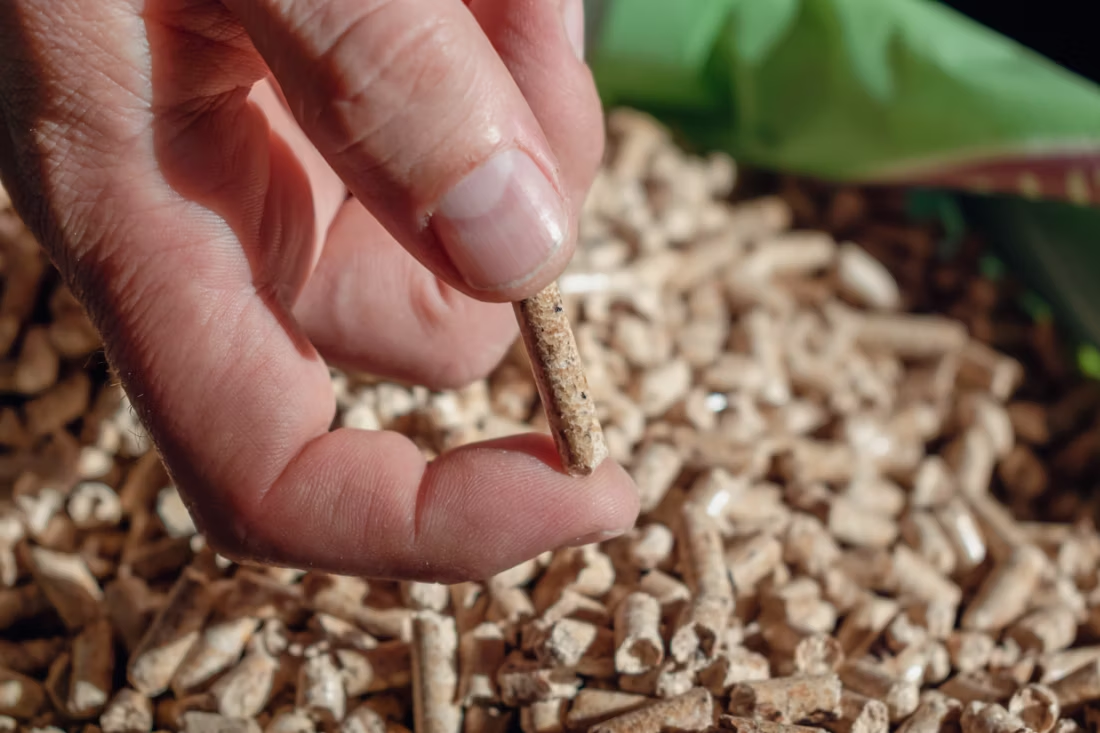
Regional pellet brands including Lignetics, Hamer Pellet Fuel, and Greenway Renewable Energy supply hardware stores and farm supply retailers throughout southeastern North Carolina, and many are available seasonally through local farm and feed stores around Clinton and Newton Grove. Pellets typically run in the $250 to $300 per ton range in this part of the state, and buying a full season's supply (roughly one to three tons for a supplemental-use home) before cold weather hits usually gets the best pricing.
Pellet stove vs. wood stove—which is right for my home?
Wood stoves burn cordwood—oak, hickory, maple, and pine are all common species around Sampson County—and work with zero electricity, which matters if you want a true backup heat source during a hurricane-season power outage. They require more hands-on tending: splitting, stacking, and feeding the fire. Pellet stoves are far more convenient—load the hopper, set the thermostat, and let the auger do the work—and they burn cleaner with less ash, but they need continuous power to run the auger and combustion blower. Given Sampson County's mild winters, most homeowners here choose pellet for everyday convenience and reserve wood heat, if they have it, for extended outages.
How often does a pellet stove need cleaning?
A clean pellet stove is a happy pellet stove. Plan on cleaning the burn pot about once a week when you're burning regularly—ash and clinkers gum up the air holes just like a pellet barbecue. Most pellet stove problems trace back to skipped cleaning that nobody explained up front. Some designs make it easy with a trapdoor burn pot: pull a lever and the gunk drops into the ash pan.
Can a pellet stove heat a whole house?
It genuinely can. I burned a pellet stove as my only heat source for years after a furnace died, and it kept the entire house warm. Pellets feed automatically from a hopper, so you get wood-heat economics with thermostat-style control. Two honest caveats: it needs weekly cleaning during the season, and most models need electricity to run—ask about battery backup if outages are a concern.
Can a fireplace actually lower my heating bill?
Yes—by creating a comfort zone. A furnace heats every square foot of the house just to warm the one room you're in; a gas fireplace on low burns roughly a sixth of the gas a typical furnace does. Set the furnace around 55–60 degrees as a baseline, then heat the rooms your family actually uses. Families who heat this way commonly save $20–$60 a month.
Can I install a fireplace myself?
If you're putting a fire in your house on purpose, it's best to work with an expert. Unless you're genuinely experienced in framing, gas line, vent pipe, and the national code on clearances to combustibles, have a professional do it—and ideally the same company that sells you the fireplace, so warranty, service, and liability all live under one roof.
Stove and Fireplace Dealers in Sampson County
Pellet Brands Stocked Around Sampson County
Manufacturers will point you to the nearest stocking dealer.
Find your pellet stove in Sampson County.
Tell us a bit about your home and we'll match you with a trusted local dealer and send over a free Project Guide & Parts List—the exact parts, including the vent kit, for your pellet project in Sampson County.
Find Your Fireplace →