
Keep Your Family Warm and Safe—No Matter What
From the old farmhouses along the Dan River to newer homes outside Reidsville and Eden, wood heat still makes sense in Rockingham County's mixed-hardwood Piedmont. Find the right stove or insert, and connect with a trusted local dealer.
Every Project Starts From One of These Five Situations
Wood heat fits the Piedmont's mild-but-real winters.
Rockingham County sits in the north-central Piedmont along the Virginia border, with Wentworth as the county seat and larger populations in Eden, Reidsville, Madison, and Mayodan. With an average winter low near 27°F and a heating season that's just a fraction as demanding as a place like Burlington, Vermont—but it's still cold enough, often enough, that a supplemental or primary wood heat source matters through a real December-to-February stretch, including the occasional hard freeze when arctic air pushes down from the north.
The county's rolling hardwood forests—oak, hickory, and maple mixed with pine—have made wood heat a practical, low-cost option for generations of Rockingham households, and there's no non-attainment designation or winter inversion issue here the way there is in some Western burning areas, so there's no curtailment schedule to work around. Cutting permits through George Washington & Jefferson National Forest run about $20 per cord during the May-to-October season, which keeps self-sourced firewood realistic for rural landowners. Whatever the setup, the right stove or insert—sized correctly and vented to code by a local installer—turns an old farmhouse fireplace or an unheated addition into real, reliable heat.
Firewood Cutting Permits Near Rockingham County
Three steps. No salesperson until you're ready.
Tell us about your project
Your zip code, your situation, and the fuel you're leaning toward—or let the answers point you to one.
See what's actually available
The brands dealers within 100 miles genuinely carry—real options, never a catalog mirage.
Get your dealer & Project Guide
A trusted local dealer, plus the free Project Guide & Parts List that names every component of the job.
Frequently Asked Questions
How much does a wood stove installation cost in Rockingham County?
Most wood stove installations in Rockingham County land somewhere between $3,500 and $8,500, depending on the stove, whether an existing masonry chimney can be reused with a liner, and whether a new hearth pad is needed for clearance requirements. Converting an existing fireplace to a wood insert typically runs toward the lower half of that range if the flue is in good shape. Homes without an existing chimney—a common situation in newer construction outside Reidsville and Eden—cost more once Class A pipe and roof penetration are added. A permit is required through Rockingham County Building Inspections, and most local installers handle that paperwork as part of the job.
What size wood stove or insert do I need for my home?
Sizing depends on square footage, insulation, and whether the stove is meant as primary or supplemental heat. As a rough guide: small stoves suit a single room or cabin up to about 1,000 square feet, medium stoves cover most main living areas up to 2,000 square feet, and large stoves can carry a well-insulated whole home beyond that. Rockingham County's older farmhouses—many built with less insulation and taller ceilings than modern construction—often need to size up a step compared to a newer home of the same footprint. A local dealer will walk your space and size it for free; oversizing leads to smoldering, low-temperature fires and creosote buildup, while undersizing leaves you cold on the coldest nights of the year.
Where can I find certified wood stove installers near me?
Look for NFI (National Fireplace Institute) or CSIA (Chimney Safety Institute of America) certification—both indicate real training in wood-burning appliance installation, not just general contracting experience. Hearth dealers serving Rockingham County typically cover the whole county from a shop in Reidsville or Eden, with a modest travel charge for more rural addresses out toward Stoneville, Ruffin, or Huntsville. Sticking with a certified installer matters most on venting and clearance work—the two things that cause the vast majority of chimney fires when done wrong.
What's the difference between a wood stove and a wood insert?
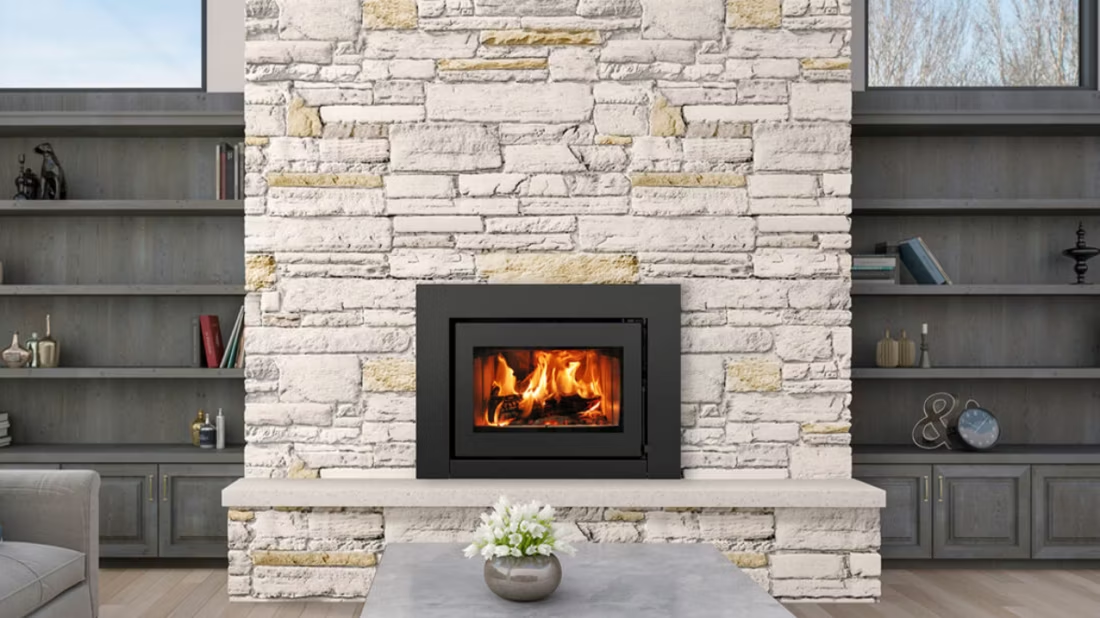
A wood stove is a freestanding unit on its own hearth pad, vented through a chimney, and can go almost anywhere in a home with the right clearances. A wood insert is built to slide into an existing masonry fireplace opening, turning a drafty open hearth into a sealed, high-efficiency heat source using the chimney you already have. Many older homes throughout Rockingham County—especially farmhouses and mid-century construction near Wentworth and Madison—already have a working masonry fireplace, which makes an insert the more direct upgrade. Newer homes without an existing fireplace are usually better candidates for a freestanding stove.
Do I need a permit to install a wood stove in Rockingham County?
Yes—new wood stove and insert installations require a building permit through Rockingham County Building Inspections, and the unit needs to meet current EPA emissions standards. Most local hearth dealers include the permit process as part of the installation, so it's rarely something the homeowner has to manage directly. Unlike parts of the Mountain West or Pacific Northwest, Rockingham County has no winter air-quality non-attainment designation, so there's no curtailment schedule that restricts burning on certain days—you're free to run a certified stove whenever you need the heat.
What's the best wood stove for Rockingham County's climate?
Because Rockingham County sits in a moderate mixed-humid climate rather than the extreme cold of a place like Duluth or Fargo, most homes here do fine with a mid-size, non-catalytic stove from a brand like Pacific Energy, Lopi, or Vermont Castings rather than the biggest 24-hour-burn catalytic units built for sub-zero Upper Midwest nights. If the stove is meant to carry an older, less-insulated farmhouse as a primary heat source through the coldest weeks, sizing up one step and choosing a model with a larger firebox is worth discussing with a local dealer who knows the housing stock in your part of the county.
How often should my chimney be inspected and cleaned?
The CSIA recommends an annual inspection for any wood-burning appliance, and Rockingham County is no exception—plan on a sweep and Level 1 inspection once a year, ideally in late summer before the first cold snap arrives. Households burning wood as a primary heat source through a full Piedmont winter may need a mid-season check if creosote builds up faster than expected, particularly with softer pine mixed into the wood pile. Skipping this step is the single biggest preventable cause of chimney fires.
Where can I get firewood in Rockingham County?
Rockingham County's hardwood forests—heavy on oak, hickory, and maple, with pine mixed in—support a good supply of local firewood, whether from a rural landowner selling by the cord or a self-cut permit. Cutting permits through George Washington & Jefferson National Forest run about $20 per cord and are valid during the May-to-October season, giving self-sufficient households a low-cost way to stock up before winter. Locally sold firewood is typically priced by the cord, with oak and hickory commanding a premium over pine for longer, hotter burns.
Wood stove vs. pellet stove—which is right for me?
Wood stoves burn cordwood, work without electricity—a real advantage during ice-storm power outages, which do happen in Rockingham County—and pair naturally with the oak and hickory already common on rural properties. Pellet stoves burn compressed pellets from regional suppliers like Lignetics, Hamer Pellet Fuel, or Greenway Renewable Energy, run cleaner with less ash, and are simpler to operate day to day, but they need electricity for the auger and blower, so they go dark in an outage unless paired with a battery backup. For county residents who value backup heat during winter storms, wood tends to win; for in-town homeowners who prioritize convenience over self-sufficiency, pellet is a solid alternative. Local dealers carry both.
Why won't my new wood stove get going like my old one?
New wood stoves are 70%+ efficient, so far less heat goes up the flue—which also means less draft to get a fire established. The rule: build a genuinely hot fire for about 45 minutes before you choke it down. Skip that and you get smoke in the room, creosote in the chimney, and a fire that never takes off. Most performance complaints trace straight back to this.
What's the difference between an insert and a zero-clearance fireplace?
An insert is a fireplace that slides into a pre-existing wood-burning fireplace—if you don't have one, there's nothing to insert it into. A zero-clearance fireplace is built into a framed wall, which makes it the answer for remodels and new construction. Simple test: existing masonry fireplace means insert; blank or framed wall means zero-clearance.
Can a fireplace actually lower my heating bill?
Yes—by creating a comfort zone. A furnace heats every square foot of the house just to warm the one room you're in; a gas fireplace on low burns roughly a sixth of the gas a typical furnace does. Set the furnace around 55–60 degrees as a baseline, then heat the rooms your family actually uses. Families who heat this way commonly save $20–$60 a month.
Does a fireplace add value to my home?
On average, a fireplace adds back to the home about the same amount you spent installing it. Add the monthly savings from heating the rooms you actually use instead of the whole house—often hundreds of dollars a year—and the value case is strong before you even count what a fire does for how your family uses the room.
Stove and Fireplace Dealers in Rockingham County
Find your wood stove in Rockingham County.
Tell us about your home and heating goals, and we'll match you with a trusted local dealer and send over a free Project Guide & Parts List—the exact stove or insert, vent kit, and installation plan for your Rockingham County home.
Find Your Fireplace →