
Consistent, low-maintenance heat for Richmond County's mild winters.
From Rockingham to Hamlet and the Sandhills communities in between, pellet stoves deliver clean, thermostat-controlled warmth without the wood-splitting. Find the right unit and connect with a trusted local dealer.
Every Project Starts From One of These Five Situations
Set it, forget it—heat that fits a Sandhills winter.
Richmond County sits in North Carolina's Sandhills region, where climate zone 3A winters are short and mild—average lows hover around 33°F and the county has a light overall winter heating load, a fraction of what a Northern Plains or New England county sees (Fargo, ND runs far colder with a much heavier heating load). That milder profile is exactly where pellet stoves shine: rather than firing a stove around the clock for months, most Richmond County homeowners use pellet heat as targeted, thermostat-controlled warmth for a living room or den during the cooler stretches from November through February, with central heat picking up the rest.
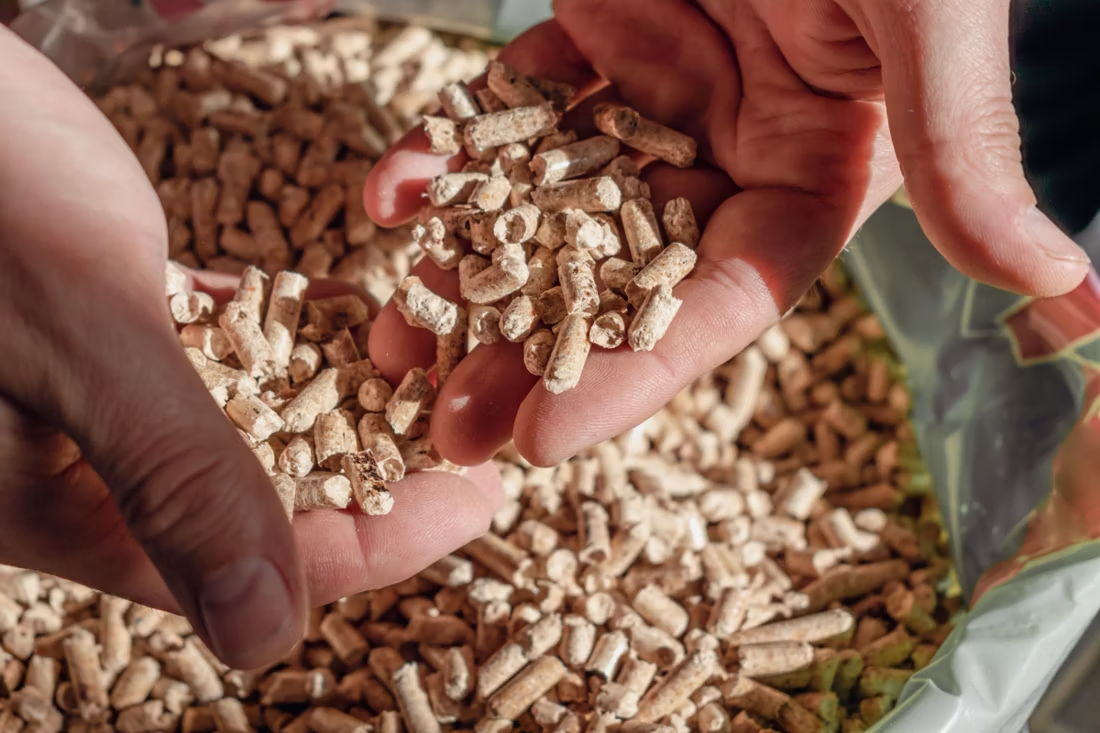
The county's pine-heavy Sandhills forests and mixed oak-hickory-maple stands feed into a regional timber and biomass economy, and that supply chain shows up directly in pellet availability—Lignetics, Hamer Pellet Fuel, and Greenway Renewable Energy all distribute in and around North Carolina, so bags are generally easy to find at hardware stores and farm supply retailers in Rockingham and Hamlet without the seasonal scramble colder regions face. Combine automated auger feed, low ash output, and no air quality restrictions on file for the county, and pellet becomes a low-fuss way to add supplemental heat or backup warmth during winter storms.
Three steps. No salesperson until you're ready.
Tell us about your project
Your zip code, your situation, and the fuel you're leaning toward—or let the answers point you to one.
See what's actually available
The brands dealers within 100 miles genuinely carry—real options, never a catalog mirage.
Get your dealer & Project Guide
A trusted local dealer, plus the free Project Guide & Parts List that names every component of the job.
Frequently Asked Questions
How much does a pellet stove installation cost in Richmond County?
Most pellet stove and insert installations in Richmond County run in the $3,000 to $6,500 range, depending on whether you're installing a freestanding stove that vents through an exterior wall or converting an existing masonry fireplace into a pellet insert. Because pellet stoves use direct-vent PL pipe rather than a full masonry chimney, installs are typically simpler and less expensive than a comparable wood stove project. A local dealer will size the venting run and give you a firm quote after seeing your hearth or wall setup.
Do I need a permit to install a pellet stove in Richmond County?
Most new pellet stove installations require a building permit, since you're adding a vent penetration through a wall or roof and, in some cases, running a new electrical circuit for the stove's auger and blower. Richmond County's building inspections office handles permitting for unincorporated areas, while Rockingham and Hamlet each run their own permit process for in-town installs. A reputable local dealer will typically pull the permit as part of the installation and schedule the inspection, so it's worth asking upfront whether that's included in your quote.
Where can I buy pellets in Richmond County?
Bagged pellets from brands like Lignetics, Hamer Pellet Fuel, and Greenway Renewable Energy are distributed throughout the North Carolina Piedmont and Sandhills, and are typically stocked at farm supply stores and hardware retailers around Rockingham and Hamlet, especially as temperatures drop in late fall. Given the county's mild winters, demand is lighter than in colder states, so you're less likely to run into the pellet shortages that hit harder-heating regions in a cold snap—but it's still smart to buy a season's supply, roughly one to two tons for typical supplemental use, before December rather than waiting for the coldest week.
How do pellet stoves compare to wood stoves for a Richmond County home?
Pellet stoves offer thermostat-style control, longer unattended burn times from a single hopper load, and a cleaner burn with far less ash than cordwood—appealing in a county where oak, hickory, and pine are all locally available, but not everyone wants to split and stack wood for a mild four-month heating season. The tradeoff is that pellet stoves need electricity to run the auger and blower, so they won't provide heat during a power outage unless paired with a battery backup. Wood stoves, by contrast, work fully off-grid—useful during the ice storms that occasionally hit the Sandhills. Many Richmond County homeowners choose pellet for daily convenience and keep a wood option, or a generator, as a backup plan.
What size pellet stove do I need for my home?
Given Richmond County's mild 3A climate and light overall winter heating load, most homes here don't need a large, primary-heat-rated pellet stove the way a colder region would. A small to mid-size unit rated for roughly 1,000 to 1,800 sq ft is usually enough to heat a living area or open-concept downstairs as supplemental or zone heat. Homes using pellet as the sole heat source, or larger or older farmhouses around Ellerbe and Norman with less insulation, may want to size up. A local dealer can walk your space and recommend a specific model.
Will my pellet stove work during a power outage?
Not without a backup power source. Pellet stoves rely on an electric auger to feed fuel and a blower to distribute heat, so a standard unit shuts down when the power goes out. Richmond County sees occasional ice storm outages in winter, and homeowners who want heat during those events either add a battery backup system (many newer pellet stoves are designed to accept one) or keep a small generator on hand. If off-grid backup heat is your priority, a wood stove is the more dependable choice for that specific scenario.
How often does a pellet stove need to be cleaned and serviced?
Pellet stoves need more frequent light maintenance than wood stoves, but far less heavy cleaning. Plan to empty and vacuum the ash pan every few days during regular use, clean the burn pot weekly, and have the venting and hopper mechanism professionally serviced once a year, typically in late summer before the heating season starts. Given Richmond County's shorter, milder burn season, most homeowners here get by with a single annual service visit rather than the mid-season cleanings that heavy users in colder climates need.
Can I convert my existing fireplace into a pellet insert?
Yes—a pellet insert slides into an existing wood-burning masonry fireplace and vents through a smaller stainless liner rather than requiring a full chimney rebuild, which makes it one of the more straightforward upgrades for older homes around Rockingham and Hamlet with an existing hearth. The insert still needs an electrical outlet nearby for the auger and blower, which is something to flag with your installer if your fireplace doesn't already have power run to it.
Pellet vs. gas—which is right for my Richmond County home?
Gas fireplaces offer instant on-off convenience with no fuel handling or hopper refilling, and many models can run during a power outage on battery backup. Pellet stoves offer a real flame and radiant heat with lower fuel costs per BTU in most cases, using a renewable, regionally sourced fuel from suppliers like Lignetics and Hamer Pellet Fuel. For Richmond County's mild winters, either fuel comfortably handles supplemental zone heating—the choice usually comes down to whether you want the ritual of loading a hopper and the character of a real flame, or the flip-a-switch convenience of gas.
What's the difference between an insert and a zero-clearance fireplace?
An insert is a fireplace that slides into a pre-existing wood-burning fireplace—if you don't have one, there's nothing to insert it into. A zero-clearance fireplace is built into a framed wall, which makes it the answer for remodels and new construction. Simple test: existing masonry fireplace means insert; blank or framed wall means zero-clearance.
Why is a fireplace insert so efficient?
An insert does two things: it seals the chimney completely, so you stop losing air you already paid to heat, and it radiates warmth into the room through the firebox and glass. Most add a heat-exchange fan that pulls cool room air underneath, wraps it around the hot firebox, and pushes it back out warm. Your home is more efficient before you've even lit the first fire.
Can a fireplace actually lower my heating bill?
Yes—by creating a comfort zone. A furnace heats every square foot of the house just to warm the one room you're in; a gas fireplace on low burns roughly a sixth of the gas a typical furnace does. Set the furnace around 55–60 degrees as a baseline, then heat the rooms your family actually uses. Families who heat this way commonly save $20–$60 a month.
How much should I budget for a fireplace?
For an average home—covering the fireplace, the vent pipe, and basic installation—a budget between $3,900 and $5,500 gives you a lot of options across wood, gas, and pellet. By the time you add finish work, gas line, and electrical, the average complete installation lands between $5,000 and $12,000 all-in. In a remodel or new build, a good rule is to put about 2.5% of the total project cost toward the fireplace.
Stove and Fireplace Dealers in Richmond County
Pellet Brands Stocked Around Richmond County
Manufacturers will point you to the nearest stocking dealer.
Find your pellet stove in Richmond County.
Tell us a bit about your home and we'll match you with the right pellet stove or insert, plus a free Project Guide & Parts List, and connect you with a trusted local dealer in Richmond County.
Find Your Fireplace →