
Real flame-look ambiance, zero venting required, in Pitt County.
Zone heat and real flame-look ambiance for Greenville, Winterville, Ayden, and every community across Pitt County's mild eastern North Carolina winters. Find the right electric fireplace and connect with a trusted local dealer.
Every Project Starts From One of These Five Situations
Pitt County's mild winters make electric an easy fit.
Pitt County sits in the warm-humid coastal plain of eastern North Carolina, home to Greenville, East Carolina University, and roughly 154,000 residents spread across Winterville, Ayden, Farmville, Bethel, and the surrounding towns. Winters here are mild by national standards—average lows sit around 33°F and the county sees a fairly short, light heating season each year, a fraction of what a home in Fargo, ND deals with over the same stretch. That climate reality (classified Zone 3A) means most Pitt County homes lean on a heat pump for primary heat, which leaves plenty of room for a fireplace that's chosen for ambiance and zone comfort rather than raw BTU output.
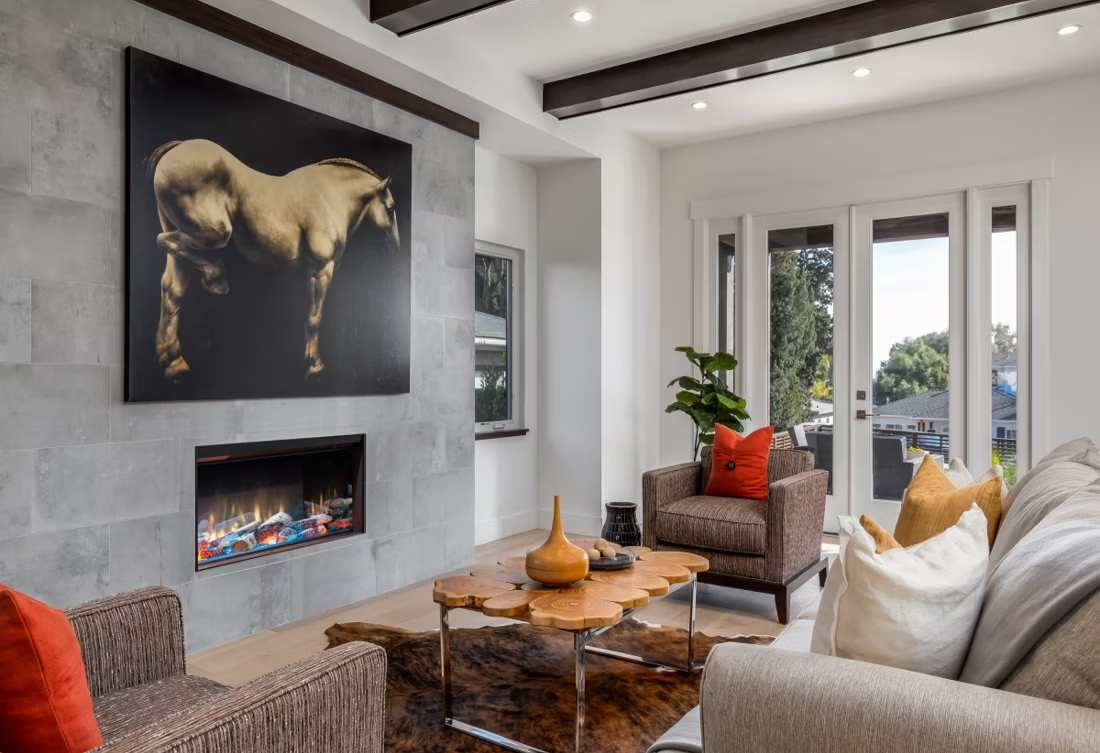
That's exactly where electric fireplaces fit. There's no chimney to build, no gas line to run, and no wood to source or stack—a plug-in unit or a wall-mounted insert on a dedicated circuit can go into a den, a bonus room, or a bedroom in an afternoon. It's a particularly good match for the apartment and rental market around ECU, where landlords often won't allow anything requiring venting, and for newer construction in Winterville and Ayden where homeowners want the look of a fireplace without adding a masonry chimney to the plan. With no combustion and no emissions, it's also a clean option for anyone managing allergies or air-quality sensitivities in the household.
Three steps. No salesperson until you're ready.
Tell us about your project
Your zip code, your situation, and the fuel you're leaning toward—or let the answers point you to one.
See what's actually available
The brands dealers within 100 miles genuinely carry—real options, never a catalog mirage.
Get your dealer & Project Guide
A trusted local dealer, plus the free Project Guide & Parts List that names every component of the job.
Frequently Asked Questions
How much does an electric fireplace installation cost in Pitt County?
Costs vary by type more than by location, and Pitt County's mild climate means most homeowners don't need a major project to add one. Plug-in freestanding units and mantel packages that run off a standard 120-volt outlet typically land between $300 and $1,500 installed, with no electrician required beyond outlet access. Built-in wall units or linear inserts that need a dedicated 240-volt circuit generally run $1,500 to $4,000 once a licensed electrician runs the circuit and a carpenter builds out the surround. Since winter heating demand here is light—average lows in the low 30s and a fairly short, light heating season each year—many Pitt County homeowners choose the simpler plug-in route rather than a full built-in.
Will an electric fireplace actually heat my Pitt County home?
Electric units are built for supplemental, room-level heat rather than whole-house heating, which lines up well with how Pitt County homes actually use them. With average winter lows around 33°F and a fairly short, light heating season each year—well below what colder-climate homes deal with—most households here rely on a heat pump for primary heat and use the fireplace to take the edge off a den, bonus room, or bedroom on the coldest mornings. A typical 1,500-watt unit comfortably heats 400 to 600 square feet, which covers most single-room uses in the county's ranch homes and ECU-area rentals.
Do I need a permit to install an electric fireplace in Pitt County?
Plug-in units that use an existing standard outlet generally don't require a permit. If you're installing a built-in wall unit or insert that needs a new dedicated circuit, the electrical work typically requires a permit through Pitt County Inspections, or the City of Greenville's permitting office if you're inside city limits. There's no chimney, flue, or gas line involved, which is one reason electric projects tend to move faster than a wood or gas installation—when paperwork is needed at all, it's limited to the electrical circuit itself.
Why don't more people in Pitt County burn wood or use pellet stoves?
Pitt County sits in a warm-humid climate zone (3A) with mild winters—average lows in the low 30s and a fairly short, light heating season each year—so full-time wood or pellet heat never became the local default the way it did in colder regions. A handful of rural households with woodlots do keep a stove going for backup heat or atmosphere, usually burning local oak, hickory, or pine, but it's a minority use case rather than a primary heating strategy. Pellet appliances see even less use here for the same reason: the heating season is short enough that most homeowners don't see a payback on a dedicated system. Electric fireplaces fill the ambiance role without requiring a wood supply, chimney, or venting.
What types of electric fireplaces are available for Pitt County homes?
The main categories are inserts (which slide into an existing masonry or wood-burning firebox), built-in wall units (recessed into new framing, common in ECU-area remodels and newer Greenville-area construction), freestanding or mantel units (furniture-style, plug-and-go), and electric log sets (drop into an existing fireplace opening). Given Pitt County's mix of newer housing stock and a large rental market around East Carolina University, plug-in mantel units and log sets are especially popular since they require no wiring changes and can move with a tenant.
Which electric utility serves Pitt County?
Inside Greenville, Greenville Utilities Commission (GUC) provides electric service along with natural gas and water. Outside city limits, most of the rest of Pitt County is served by Duke Energy Progress or a regional electric membership cooperative covering eastern North Carolina's rural areas. Either way, running an electric fireplace is inexpensive—a typical 1,500-watt unit used a few hours an evening adds only a small amount to a monthly bill, especially compared to what it would cost to heat an entire home through a cold snap.
Are electric fireplaces safe for apartments and rentals near ECU?
Yes—electric fireplaces are one of the few hearth options that work in rental housing, since they produce no flame, no combustion byproducts, and require no venting. That makes them a common choice in the apartment and duplex market around East Carolina University, where landlords and HOAs often restrict anything needing a chimney or gas line. A plug-in unit can be unplugged and taken along at move-out, which isn't an option with a built-in gas or wood appliance.
Electric vs. gas fireplace—which is right for my Pitt County home?
Gas is a standard option in Pitt County too—natural gas runs through Greenville Utilities Commission inside city limits, and propane covers the unincorporated parts of the county—and it puts out more heat than an electric unit, which matters if you want the fireplace to meaningfully offset your heat pump on a cold morning. Electric wins on installation simplicity (no gas line, no venting, often no permit), lower upfront cost, and the flexibility to add heat anywhere there's an outlet. For a primary living space where stronger heat output and a more traditional flame look matter, gas is often the better call; for bedrooms, bonus rooms, rentals, or a quick low-cost upgrade, electric is usually the simpler answer. A local dealer can walk through both against your specific room.
How do I know which electric fireplace will actually fit my space?
Sizing an electric fireplace comes down to matching wattage to room size and picking a form factor that fits your wall or existing firebox opening—there's no chimney or venting math involved like there is with wood or gas. A local Pitt County dealer will measure your firebox or wall opening, confirm whether your panel has capacity for a dedicated 240-volt circuit if you're going with a larger built-in unit, and make sure the heater output matches the space you're trying to warm, whether that's a den in a Farmville farmhouse or a bonus room in a new Winterville build.
Does an electric fireplace need a vent or chimney?
No—that's its superpower. An electric fireplace needs a wall and an outlet, period. No vent pipe, no gas line, no clearances to design around, which is why it works in bedrooms, offices, apartments, and walls where venting a gas or wood unit would be impractical or impossible. Installation is typically the simplest and least expensive of any fireplace type.
Can I put a TV above my fireplace?
Yes—with an asterisk. Fireplaces are hot and TVs don't like heat. Either put a mantel between them to deflect rising warmth, or choose a fireplace with heat-management technology that creates a cool zone on the wall above—the wall stays around 125 degrees, barely warm, while the room still gets full heat. If you like clean lines and don't want a mantel, heat management is the answer.
What is an in-home preview and do I need one?
It's a visit where a hearth professional measures your space, confirms the model you picked actually works in your home, and walks the specs—framing, gas line, venting, finish work—before anything is ordered. Some details you just can't know until you see the house. Never make a down payment without one; it's the single most-skipped step that burns buyers.
How much should I budget for a fireplace?
For an average home—covering the fireplace, the vent pipe, and basic installation—a budget between $3,900 and $5,500 gives you a lot of options across wood, gas, and pellet. By the time you add finish work, gas line, and electrical, the average complete installation lands between $5,000 and $12,000 all-in. In a remodel or new build, a good rule is to put about 2.5% of the total project cost toward the fireplace.
Stove and Fireplace Dealers in Pitt County
Find your electric fireplace in Pitt County.
Tell us about your room and we'll match you with the right electric fireplace, insert, or wall unit, then send you a free Project Guide & Parts List—the exact parts and a recommended local dealer for your Pitt County project.
Find Your Fireplace →