
Find dependable pellet heat for Perquimans County homes.
Clean, thermostat-controlled warmth for the mild winters of the Albemarle Sound region—from Hertford to Winfall and Belvidere. Get matched with a trusted local dealer who can size and install it right.
Every Project Starts From One of These Five Situations
A modest heating season, but real cold spells worth planning for.
Perquimans County sits in North Carolina's Inner Banks, along the Albemarle Sound, with under 3,000 residents spread across a mostly rural landscape of farms, waterfront homes, and small towns like Hertford and Winfall. Climate zone 3A puts the county in a mixed-humid category with an average winter low around 34 degrees and roughly 2,868 heating degree days a year—a fraction of what a place like Duluth, MN sees in a typical winter. Most homes here run on electric heat pumps or propane as primary heat, but that doesn't mean the county goes without a real cold snap. Nor'easters and occasional Arctic blasts off the Sound can drop temperatures fast, and a pellet stove gives homeowners a reliable, easy-to-run secondary heat source for those stretches without babysitting a wood fire or running up a propane bill.
Pellet stoves have a natural fit in a county like this: no chimney to build or maintain, direct-vent installation through an exterior wall, and consistent, thermostat-set heat rather than the constant tending a wood stove demands. Regional pellet supply runs through brands like Lignetics, Hamer Pellet Fuel, and Greenway Renewable Energy, all commonly stocked by dealers serving northeastern North Carolina—so fuel isn't hard to come by even in a county this size. Air quality here isn't a concern the way it is in western mountain valleys, so there's no burning-restriction complication to work around; it's simply a matter of getting the right unit sized and vented correctly.
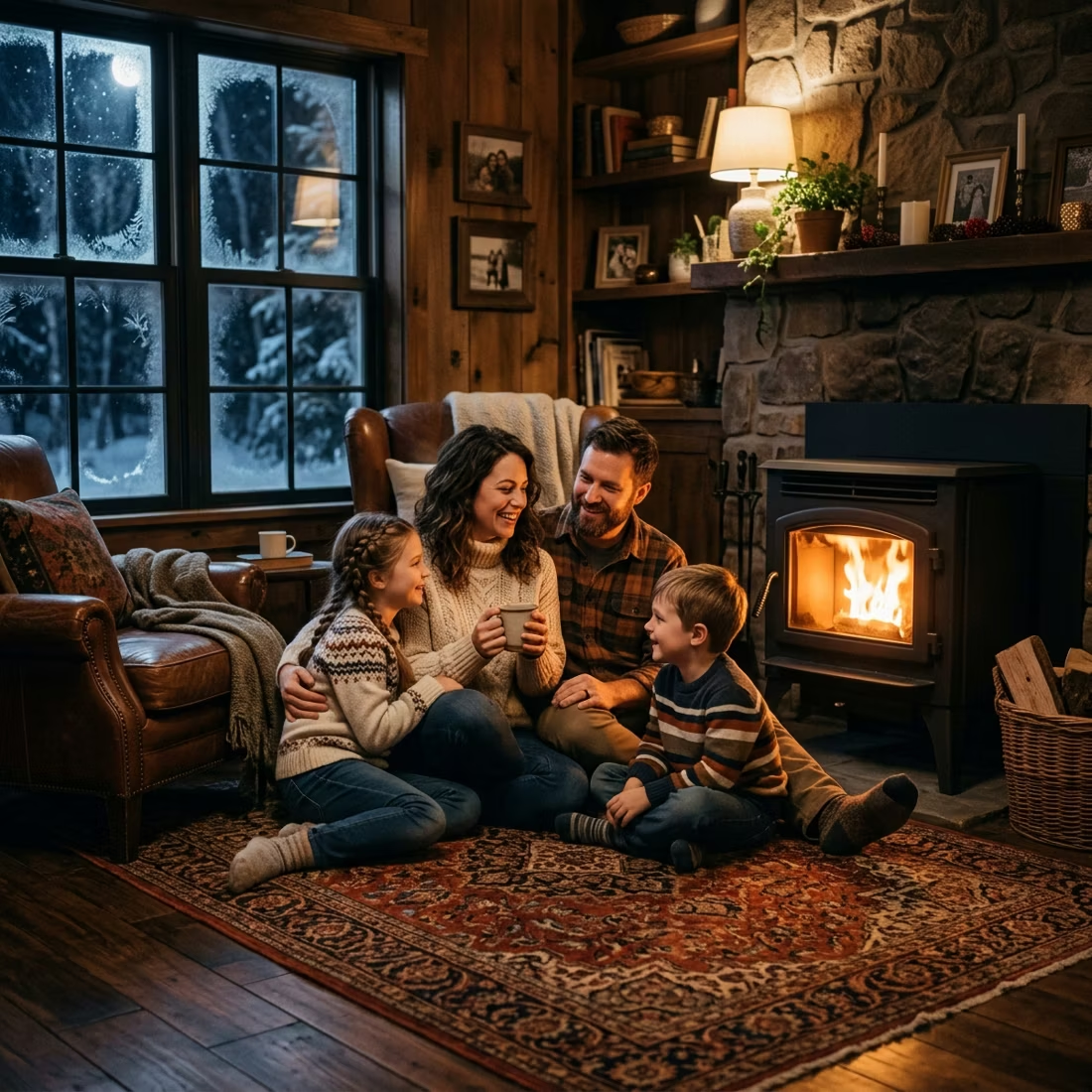
Three steps. No salesperson until you're ready.
Tell us about your project
Your zip code, your situation, and the fuel you're leaning toward—or let the answers point you to one.
See what's actually available
The brands dealers within 100 miles genuinely carry—real options, never a catalog mirage.
Get your dealer & Project Guide
A trusted local dealer, plus the free Project Guide & Parts List that names every component of the job.
Frequently Asked Questions
How much does a pellet stove installation cost in Perquimans County?
Pricing depends on the stove model, the venting path through an exterior wall, and whether a hearth pad or clearance modification is needed. Homes with a straightforward exterior wall for direct venting tend to land toward the lower end of typical pellet installs; installations that need longer vent runs, electrical work for the auger and blower circuit, or a new hearth pad will run higher. Because the county has a small population and a handful of dealers covering the area, a firm number really depends on an in-home look—a local installer can walk your space and give you an exact quote rather than a rough estimate.
What size pellet stove do I need for my home?
Given Perquimans County's mild climate zone 3A and roughly 2,868 heating degree days, most homes here are using a pellet stove as supplemental heat alongside an existing heat pump or propane furnace rather than as the sole heat source. That typically means a small-to-medium unit is enough for a single large room or open living area—you generally don't need the largest whole-home-rated stoves that colder-climate counties require. If you're aiming to offset most of your winter heating bill in a well-insulated ranch or farmhouse, a medium unit sized to your square footage still makes sense. A local dealer can size it against your specific floor plan and insulation.
Where can I find pellet stove dealers near me in Perquimans County?
With under 3,000 residents countywide, Perquimans doesn't have a large in-county hearth retail presence—most homeowners here work with dealers based in Hertford or nearby Elizabeth City who cover the broader Albemarle region, including Winfall, Belvidere, and the rural stretches along US-17. That regional coverage is normal for a county this size and doesn't mean you're stuck with fewer qualified options—it just means confirming your installer services your specific road or community before scheduling.
What's the difference between a pellet stove and a pellet insert?
A pellet stove is a freestanding unit that sits on its own hearth pad and vents through an exterior wall or existing chimney—it can go almost anywhere in a room with the right clearances. A pellet insert is built to slide into an existing masonry fireplace opening, using the chimney as a vent chase while sealing off the old open hearth. For Perquimans County homes with an older brick fireplace that rarely gets used for wood, an insert is often the more efficient upgrade since it repurposes what's already there. Homes without an existing fireplace opening are usually better matched to a freestanding stove.
Do I need a permit to install a pellet stove in Perquimans County?
Most new solid-fuel appliance installations require a building permit, and pellet stoves are typically included even though they burn cleaner than wood. In practice, the dealer or installer handling your project usually manages the permit paperwork with the county's building inspections office as part of the install—it's worth confirming this is included in your quote before work begins, since inspection sign-off matters for insurance and any future home sale.
What's the best pellet stove for Perquimans County's climate?
Because winter lows here average around 34 degrees rather than the sustained sub-zero stretches seen farther north, you don't need the most aggressive cold-climate-rated pellet stove on the market. Mid-range units from mainstream pellet stove manufacturers handle the county's occasional cold snaps comfortably, especially when paired with locally available fuel from brands like Lignetics or Hamer Pellet Fuel. Prioritize hopper capacity and burn-time-per-load if you want fewer refills during multi-day cold stretches, and ask your dealer about auto-ignition features that make day-to-day use easier for supplemental heat.
Where do I buy pellet fuel in Perquimans County?
Regional pellet brands including Lignetics, Hamer Pellet Fuel, and Greenway Renewable Energy are commonly stocked at farm supply stores and hardware retailers serving northeastern North Carolina, and many hearth dealers who sell the stoves also carry bagged fuel or can point you to a nearby supplier. Buying by the pallet (roughly a ton, in 40-pound bags) ahead of the winter season is the usual approach for households running a pellet stove regularly, since availability can tighten during the coldest weeks statewide.
Will my pellet stove work during a power outage?
No—pellet stoves rely on electricity to run the auger that feeds fuel and the blower that distributes heat, so a power outage stops the stove even with a full hopper. This matters in Perquimans County given the region's exposure to nor'easters and tropical systems off the Albemarle Sound, which can knock out power for days. If backup heat during outages is a priority, ask your dealer about battery backup options for the stove or plan for a small generator to keep it running—otherwise, a wood-burning unit is the better fit for true off-grid emergency heat.
Pellet stove vs. wood stove—which is right for my home?
Perquimans County has plenty of local oak, hickory, and maple that make wood burning a viable and low-cost option for anyone with the space to store and season firewood, plus wood stoves keep working through power outages that pellet units can't handle. Pellet stoves trade that off-grid resilience for convenience—load the hopper, set the thermostat, and get consistent heat with far less ash and no chimney to sweep as often. For a county with mild winters where the stove is mostly supplemental, many homeowners lean toward pellet for the lower day-to-day effort; households more concerned about storm-related outages sometimes choose wood, or keep both. A local dealer can walk through the trade-offs against your specific home.
How often does a pellet stove need cleaning?
A clean pellet stove is a happy pellet stove. Plan on cleaning the burn pot about once a week when you're burning regularly—ash and clinkers gum up the air holes just like a pellet barbecue. Most pellet stove problems trace back to skipped cleaning that nobody explained up front. Some designs make it easy with a trapdoor burn pot: pull a lever and the gunk drops into the ash pan.
What's the difference between an insert and a zero-clearance fireplace?
An insert is a fireplace that slides into a pre-existing wood-burning fireplace—if you don't have one, there's nothing to insert it into. A zero-clearance fireplace is built into a framed wall, which makes it the answer for remodels and new construction. Simple test: existing masonry fireplace means insert; blank or framed wall means zero-clearance.
What is an in-home preview and do I need one?
It's a visit where a hearth professional measures your space, confirms the model you picked actually works in your home, and walks the specs—framing, gas line, venting, finish work—before anything is ordered. Some details you just can't know until you see the house. Never make a down payment without one; it's the single most-skipped step that burns buyers.
Can a fireplace actually lower my heating bill?
Yes—by creating a comfort zone. A furnace heats every square foot of the house just to warm the one room you're in; a gas fireplace on low burns roughly a sixth of the gas a typical furnace does. Set the furnace around 55–60 degrees as a baseline, then heat the rooms your family actually uses. Families who heat this way commonly save $20–$60 a month.
Stove and Fireplace Dealers in Perquimans County
Pellet Brands Stocked Around Perquimans County
Manufacturers will point you to the nearest stocking dealer.
Find your pellet stove in Perquimans County.
Tell us a bit about your home and we'll match you with a trusted local dealer and send over a free Project Guide & Parts List—sized, vented, and ready to install.
Find Your Fireplace →