
Reliable Heat for Northampton County—No Chimney Required.
From Jackson to Rich Square to Gaston and the farmland in between, electric fireplaces give Northampton County homes clean, plug-in or hardwired warmth without a flue, a gas line, or a woodpile. Find the right unit and connect with a trusted local dealer.
Every Project Starts From One of These Five Situations
Simple, Safe Heat for Northampton County's Farms and Family Homes.
Northampton County sits in North Carolina's Climate Zone 4A, along the Roanoke River near the Virginia line—mild by national standards, but winters here still bring real chill, with lows regularly dipping into the 20s and the occasional ice storm that snaps power lines and closes county roads for a day or two. Homes here range from farmhouses that have stood for a century to newer manufactured homes on rural lots outside Jackson, Rich Square, Gaston, and Woodland. Wood heat has deep roots in this county—oak, hickory, maple, and pine are all cut and split locally—but electric fireplaces have become a common, low-fuss addition, especially in homes where running a new gas line or adding a chimney isn't practical.
Electric service throughout most of Northampton County runs through Roanoke Electric Cooperative, and that reliability matters when you're deciding how to heat a room. A built-in electric insert or wall-mounted unit gives you instant, adjustable heat for a bedroom, den, or sunroom without venting, without combustion byproducts, and without the upkeep a wood stove or pellet stove demands. For manufactured and modular homes—common throughout the county's rural tracts—electric is often the only fireplace option that doesn't require structural changes. It won't replace a woodstove during an extended ice-storm outage, but for everyday zone heating and ambiance, it's the lowest-maintenance option on the table.
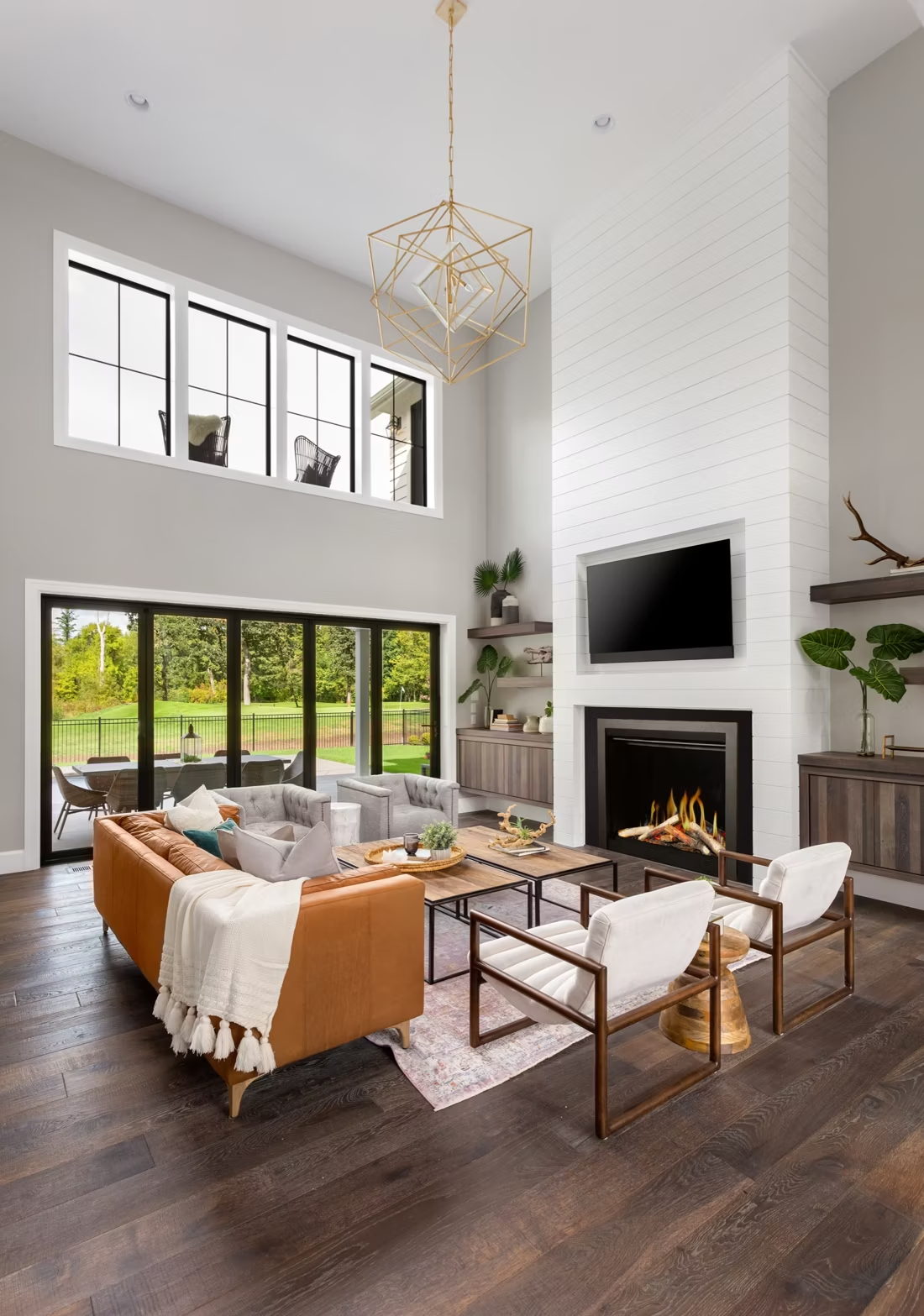
Three steps. No salesperson until you're ready.
Tell us about your project
Your zip code, your situation, and the fuel you're leaning toward—or let the answers point you to one.
See what's actually available
The brands dealers within 100 miles genuinely carry—real options, never a catalog mirage.
Get your dealer & Project Guide
A trusted local dealer, plus the free Project Guide & Parts List that names every component of the job.
Frequently Asked Questions
How much does an electric fireplace installation cost in Northampton County?
Most electric fireplace projects in Northampton County run $350 to $1,500. A plug-in insert or freestanding unit that drops into an existing fireplace opening or media console sits at the low end—no electrician needed, just a standard outlet. A built-in wall unit or a larger insert that requires a dedicated 240-volt circuit and some framing or drywall work runs higher, especially in older farmhouses around Jackson or Rich Square where the electrical panel may need updating first. Local dealers will give you a firm number after seeing your wall, your existing wiring, and your fireplace opening, if you have one.
What size electric fireplace do I need for my room?
Electric fireplaces are rated for supplemental zone heating, not whole-home heat, so sizing is more about room dimensions than county-wide climate. A compact 1,000–1,500 watt insert comfortably takes the chill off a bedroom or small den in a Northampton County farmhouse. Larger open living areas—common in the newer homes going up around Gaston and Woodland—usually call for a 1,500 watt unit or a wider linear model to actually feel the heat across the room. Because these homes vary widely in age and insulation, a local dealer walking the room in person will get you a more accurate answer than a square-footage chart.
Do I need an electrician to install an electric fireplace in Northampton County?
It depends on the unit. Plug-in inserts and freestanding electric stoves just need a standard 120-volt outlet—no electrician required, and no permit either. Built-in wall units and larger inserts that call for a dedicated 240-volt line do need a licensed electrician, and that work should be pulled through Northampton County Planning and Inspections. Skipping the permit on a hardwired unit is a common shortcut that causes problems later, particularly at resale, so it's worth doing right the first time.
How does an electric fireplace compare to a wood or gas fireplace here?
Wood is the traditional choice in Northampton County—oak, hickory, and pine are locally cut, and a wood stove keeps working through an ice-storm power outage, which matters given how often Roanoke Electric Cooperative lines come down in winter weather. Gas, where propane service is available, offers instant heat without the ash and chimney upkeep of wood. Electric is the simplest of the three: no venting, no fuel deliveries, no annual chimney sweep—but it stops working the moment the power does, and it won't carry a whole house through a cold spell the way a wood stove will. Many county homeowners use electric for daily convenience in a den or bedroom while keeping wood or propane as backup for the main living space.
Do I need a permit for an electric fireplace in Northampton County?
A plug-in electric fireplace or stove doesn't require a permit—it's treated like any other appliance you plug into the wall. A built-in electric insert or wall unit that requires new wiring or a dedicated circuit does need an electrical permit through Northampton County Planning and Inspections. Most licensed electricians and hearth dealers handle that paperwork as part of the install, so you're not filing anything yourself.
What's the best electric fireplace for Northampton County homes?
For most Northampton County homes, a mid-size electric insert or linear wall unit from a brand like Dimplex, Napoleon, or Touchstone covers the job—realistic flame effects, a built-in thermostat, and enough wattage for zone heating in a den or bedroom. For older farmhouses with plaster walls and older wiring, a plug-in freestanding stove is often the easier retrofit than cutting into walls for a built-in. For newer construction around Gaston or Rich Square where the electrical panel has more capacity, a hardwired linear unit gives a cleaner, more modern look. A local dealer can match the unit to your wiring and your wall before you buy.
Will my electric fireplace work if the power goes out?
No—electric fireplaces run on grid power, so an outage takes them offline along with everything else in the house. That's worth planning around in Northampton County, where ice storms and downed lines through Roanoke Electric Cooperative's service territory can knock out power for a day or more during a hard winter. If backup heat during outages matters to you, pair an electric fireplace for everyday convenience with a wood stove or propane heater that can run independent of the grid.
How much maintenance does an electric fireplace need?
Very little. There's no chimney to sweep, no ash to remove, and no annual inspection required. Occasional dusting of the heater vents and a wipe-down of the glass front is about all that's needed. LED flame elements are rated for tens of thousands of hours and typically outlast the unit itself. If the heater fan gets noisy or the flame effect dims, that's usually a sign the internal fan or LED strip needs replacing—most local dealers can service this without a full unit swap.
Electric vs. pellet stove—which is right for my home?
Pellet stoves, using bagged fuel from regional suppliers like Lignetics, Hamer Pellet Fuel, or Greenway Renewable Energy, put out real heat output and can serve as a home's primary heat source—but they need electricity to run the auger and blower, plus regular ash cleanout and an annual service. Electric fireplaces are simpler and lower-maintenance but are built for supplemental zone heat, not whole-home heating. For a Northampton County homeowner wanting a low-hassle heat source for a single room, electric is the easier path. For someone wanting to offset propane or electric heating bills across a whole house, a pellet stove is the better investment.
Do electric fireplaces actually produce heat?
Yes—most put out around 4,800–5,000 BTUs from a standard outlet, which comfortably warms a bedroom, office, or den as a comfort-zone heater. What they won't do is carry a whole house the way wood, gas, or pellet can. Think of electric as ambiance-first with honest supplemental heat: flames on with no heat in July, flames plus warmth in January.
Can I put a TV above my fireplace?
Yes—with an asterisk. Fireplaces are hot and TVs don't like heat. Either put a mantel between them to deflect rising warmth, or choose a fireplace with heat-management technology that creates a cool zone on the wall above—the wall stays around 125 degrees, barely warm, while the room still gets full heat. If you like clean lines and don't want a mantel, heat management is the answer.
Can a fireplace actually lower my heating bill?
Yes—by creating a comfort zone. A furnace heats every square foot of the house just to warm the one room you're in; a gas fireplace on low burns roughly a sixth of the gas a typical furnace does. Set the furnace around 55–60 degrees as a baseline, then heat the rooms your family actually uses. Families who heat this way commonly save $20–$60 a month.
What is an in-home preview and do I need one?
It's a visit where a hearth professional measures your space, confirms the model you picked actually works in your home, and walks the specs—framing, gas line, venting, finish work—before anything is ordered. Some details you just can't know until you see the house. Never make a down payment without one; it's the single most-skipped step that burns buyers.
Find your electric fireplace in Northampton County.
Tell us a bit about your home and we'll match you with the right electric fireplace or insert, plus a free Project Guide & Parts List with your recommended local dealer in Northampton County.
Find Your Fireplace →