
Find the right fireplace for your Northampton County home.
Wood, gas, pellet, and electric fireplace resources for every town along the Roanoke River corridor—from Jackson and Rich Square to Woodland, Gaston, Seaboard, and Conway. Connect with a trusted local hearth retailer who knows the county.
Every Project Starts From One of These Five Situations
Warming rural homes across Northampton County, North Carolina.
Northampton County sits in the northeastern corner of North Carolina, bordered by the Roanoke River to the south and Virginia to the north, with Lake Gaston drawing weekenders to its western edge. It's farm country—soybeans, cotton, and peanuts share the landscape with hardwood bottomlands and pine plantations. Climate zone 4A means winters here are moderate compared to the northern tier of the country—nowhere near the sustained cold of a place like Burlington, VT—but overnight lows in the 20s are routine from December through February, and a wood stove or insert still earns its keep on those nights. With around 5,500 residents spread across a mostly rural county, oak, hickory, maple, and pine are the everyday firewood species, most of it cut from local woodlots rather than trucked in.
This hub rounds up hearth retailers, service technicians, and fuel suppliers covering every fuel type across Northampton County—Jackson (the county seat), Rich Square, Woodland, Gaston, Seaboard, Conway, Garysburg, Severn, Lasker, Pendleton, and Margarettsville. Pick your fuel below for local dealer listings, installation costs, and unit recommendations specific to your project. Whether you're heating a farmhouse outside Rich Square or a lake cabin near Lake Gaston, this is the starting point.
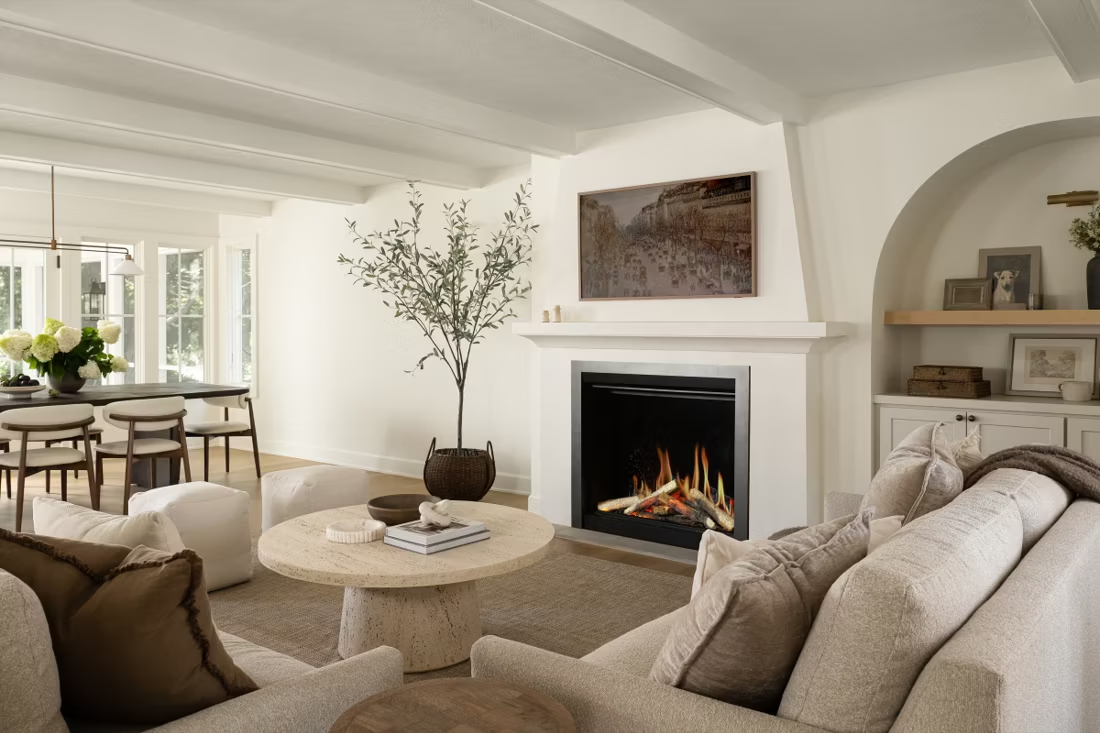
Four fuels. One honest answer for Northampton County.
Wood
See what's available near Northampton County.
Find your wood stove →Gas
See what's available near Northampton County.
Find your gas fireplace →Pellet
See what's available near Northampton County.
Find your pellet stove →Electric
See what's available near Northampton County.
Find your electric fireplace →Three steps. No salesperson until you're ready.
Tell us about your project
Your zip code, your situation, and the fuel you're leaning toward—or let the answers point you to one.
See what's actually available
The brands dealers within 100 miles genuinely carry—real options, never a catalog mirage.
Get your dealer & Project Guide
A trusted local dealer, plus the free Project Guide & Parts List that names every component of the job.
Frequently Asked Questions
Which fuel works best in Northampton County?
It depends on the home and how you use it. Wood remains a practical choice in rural Northampton County—oak and hickory woodlots are common on family land, and a cast-iron or steel stove handles the occasional hard freeze without relying on the grid. Propane is the dominant convenience fuel out here since municipal natural gas lines don't reach most of the county; a propane insert or stove gives instant heat with none of the wood-splitting labor. Pellet stoves are a solid middle option, and Lignetics and Hamer Pellet Fuel are both available through regional suppliers, though buyers should plan ahead since pellet stock isn't stacked as deep here as it is in denser markets. Electric fireplaces work well as supplemental heat in bedrooms or additions, especially for homes served by Roanoke Electric Cooperative, but they're not built to be a primary heat source through a county winter. Most Northampton County homes end up mixing fuels—wood or propane for the main living space, electric for a secondary room.
Do I need a permit to install a fireplace in Northampton County?
In most cases, yes. New wood stoves, wood inserts, gas appliances, and pellet stoves require a building permit through the Northampton County Building Inspections Department, and any gas hookup—propane or otherwise—needs a licensed gas installer and a separate gas permit. Electric fireplaces that plug into an existing outlet typically don't need a permit, but a built-in electric unit that requires new wiring or a dedicated circuit does. Because Northampton County doesn't sit in an air-quality non-attainment area, there's no additional local emissions review beyond standard North Carolina Building Code compliance—but the appliance still has to meet current EPA emissions standards to be installed new. Most local hearth retailers pull the permit as part of the installation, so it's rarely something the homeowner has to manage directly.
Are there any air quality restrictions on wood burning in Northampton County?
No—Northampton County has no air quality non-attainment designation and no winter burn bans or curtailment periods like counties in smoke-prone western basins deal with. That said, new wood stove installations still need to meet current EPA emissions certification, and it's worth having a chimney swept annually regardless of local regulation—creosote buildup is a fire risk whether or not the county is watching your smoke. If you're burning green or unseasoned wood cut from your own land, expect more smoke and less heat output than well-seasoned oak or hickory that's had six months to a year to dry.
Can one local hearth retailer handle all four fuel types?
Given the county's small population—just over 5,500 residents spread across a mostly agricultural landscape—Northampton County itself doesn't support a large number of standalone hearth showrooms. Many homeowners here end up working with retailers based in nearby Roanoke Rapids, Ahoskie, or across the Virginia line near Emporia, several of which carry wood, gas/propane, pellet, and electric lines under one roof. If you're cross-shopping fuels, a multi-fuel dealer can walk you through working floor models and talk through what actually fits your home's venting and heating needs rather than steering you toward whatever's in stock.
How does fireplace service work in a rural county like this?
Most chimney sweeps and gas/pellet technicians who service Northampton County are based outside it—commonly in Roanoke Rapids, Ahoskie, or the Lake Gaston area—and travel in for appointments. Expect a modest trip fee for calls out to more remote parts of the county like Pendleton or Lasker, and expect to book further ahead than you would in a denser market, especially for pre-season tune-ups in September and October. If you're heating with wood as your primary source, scheduling your annual sweep before the first cold snap avoids the scramble that hits every technician's calendar once temperatures drop.
What's the typical cost range for fireplace installation across all fuel types in Northampton County?
Costs run a bit below national averages given regional labor rates. Wood stove or insert installation: roughly $3,800–$7,500 for a typical install, more if new chimney or hearth work is needed. Propane fireplace, insert, or stove: about $3,500–$8,500 depending on whether an existing propane tank and line are in place or need to be added. Pellet stove or insert: typically $4,000–$6,500. Electric fireplace: $200–$2,500 for the unit itself, plus $300–$1,000 in labor for anything beyond a simple plug-in—most wall-mount and insert electric units fall in that range. Ask your local dealer for a written quote that breaks out unit, venting, and labor separately so you can compare it against these ranges.
Does a fireplace add value to my home?
On average, a fireplace adds back to the home about the same amount you spent installing it. Add the monthly savings from heating the rooms you actually use instead of the whole house—often hundreds of dollars a year—and the value case is strong before you even count what a fire does for how your family uses the room.
Can I install a fireplace myself?
If you're putting a fire in your house on purpose, it's best to work with an expert. Unless you're genuinely experienced in framing, gas line, vent pipe, and the national code on clearances to combustibles, have a professional do it—and ideally the same company that sells you the fireplace, so warranty, service, and liability all live under one roof.
Can a fireplace actually lower my heating bill?
Yes—by creating a comfort zone. A furnace heats every square foot of the house just to warm the one room you're in; a gas fireplace on low burns roughly a sixth of the gas a typical furnace does. Set the furnace around 55–60 degrees as a baseline, then heat the rooms your family actually uses. Families who heat this way commonly save $20–$60 a month.
How much should I budget for a fireplace?
For an average home—covering the fireplace, the vent pipe, and basic installation—a budget between $3,900 and $5,500 gives you a lot of options across wood, gas, and pellet. By the time you add finish work, gas line, and electrical, the average complete installation lands between $5,000 and $12,000 all-in. In a remodel or new build, a good rule is to put about 2.5% of the total project cost toward the fireplace.
Stove and Fireplace Dealers in Northampton County
Listings include WhyFire partner dealers, dealers we have verified as authorized for the brands we recommend, and established local businesses that carry hearth products. Every listing shows which one it is. The ones marked Preferred run on WhyFire's software, so they can show you real pricing and book your appointment right here. No manufacturer pays for placement. How we verify dealers →
Parker Oil Company
Daughtridge Gas & Oil Company
Jernigan Oil & Gas- Ahoskie
Williams Fuel
Super Flame Gas Company
Area – Bracey, Va
Daughtridge Gas & Oil Company
Find your fireplace match in Northampton County.
Tell us about your project and we'll match you with a trusted local dealer, plus send a free Project Guide & Parts List—the exact parts, vent kit, and recommended dealer for your fuel and your Northampton County home.
Find Your Fireplace →