
Add fireplace ambiance to any room in New Hanover County—no chimney required.
From downtown Wilmington's historic district to condos on Wrightsville Beach and Carolina Beach, electric is the easiest way to add real heat and a real flame look without venting, gas lines, or masonry work. Find the right unit and connect with a trusted local dealer.
Every Project Starts From One of These Five Situations
The Cape Fear coast's mild winters make electric the practical choice.
New Hanover County sits in climate zone 3A with an average winter low around 36°F and roughly 2,326 heating degree days a year—a fraction of what a place like Duluth, Minnesota logs in a single season. Most New Hanover County homes need a heat source for a handful of cold snaps between December and February, not a workhorse burning around the clock. That reality, combined with a coastline of barrier islands, historic masonry homes, and dense condo development, is exactly the environment where electric fireplaces make the most sense.
Wood stoves and pellet stoves are essentially absent here—the mild climate doesn't generate enough sustained heating demand to justify them, and salt air plus HOA rules in beach communities like Wrightsville Beach, Carolina Beach, and Kure Beach make solid-fuel appliances impractical anyway. Electric sidesteps all of it: no chimney, no combustion byproducts, no venting through a roof that has to survive nor'easters and salt spray. It also solves a specific downtown Wilmington problem—historic district homes where the Wilmington Historic Preservation Commission restricts exterior changes, including new flues and vent terminations. An electric insert into an existing masonry firebox, or a built-in unit on an interior wall, delivers real supplemental warmth and a convincing flame without touching the building envelope.
Three steps. No salesperson until you're ready.
Tell us about your project
Your zip code, your situation, and the fuel you're leaning toward—or let the answers point you to one.
See what's actually available
The brands dealers within 100 miles genuinely carry—real options, never a catalog mirage.
Get your dealer & Project Guide
A trusted local dealer, plus the free Project Guide & Parts List that names every component of the job.
Frequently Asked Questions
How much does an electric fireplace installation cost in New Hanover County?
Plug-in electric inserts and stoves that need no wiring work typically run $300 to $1,200 installed, since most just slide into an existing firebox or sit against a wall on a standard outlet. Built-in wall units or larger linear electric fireplaces that require a dedicated 240-volt circuit run higher, often $1,500 to $3,500, once an electrician is involved—common in newer construction in areas like Porters Neck and Monkey Junction, or during a full remodel of an older Wilmington home. Units installed into a masonry firebox in a historic downtown home sometimes need custom surround work to fit properly, which adds to the total. Local retailers will give a firm number after seeing the space.
REMOVE
REMOVE
Do electric fireplaces hold up in a humid, salt-air coastal climate?
Yes, and it's actually one of the reasons electric is popular in New Hanover County's beach communities. Because there's no venting, no chimney cap, and no metal flue exposed to salt spray, electric units avoid the corrosion problems that plague gas venting hardware on homes near Wrightsville Beach, Carolina Beach, and Kure Beach. The main humidity consideration is on the electrical side—units installed in sunrooms, three-season porches, or anywhere near an exterior wall with high moisture exposure should use a model rated for the location and ideally sit on a GFCI-protected circuit. A local dealer familiar with coastal installs can flag this during a walkthrough.
Do I need a permit for an electric fireplace in the Wilmington Historic District or elsewhere in New Hanover County?
A simple plug-in electric insert or freestanding unit generally doesn't require a permit since there's no new wiring or structural change. A built-in wall unit that needs a new dedicated circuit does require an electrical permit, handled through New Hanover County Building Safety or City of Wilmington Development Services depending on the property's location. For homes inside the Wilmington Historic District, the Historic Preservation Commission reviews exterior changes—but because electric fireplaces need no venting or flue penetration, they're one of the few heating upgrades that typically clear historic district review without issue, unlike gas or wood options that would require a new chimney.
Can I install an electric fireplace in my condo or a home with HOA restrictions?
In most cases, yes—and it's often the only fireplace option HOAs in New Hanover County's beach and downtown condo buildings allow. Many condo associations along Wrightsville Beach and in downtown Wilmington high-rises prohibit gas lines and solid-fuel appliances due to fire code and venting restrictions in shared-wall buildings, but a plug-in or hardwired electric unit typically isn't classified as an open-flame appliance, so it clears those restrictions. Always check your specific HOA documents first, since rules vary building to building, but electric is the path of least resistance for most multi-family properties in the county.
What's the difference between an electric insert, electric stove, and wall-mounted electric fireplace?
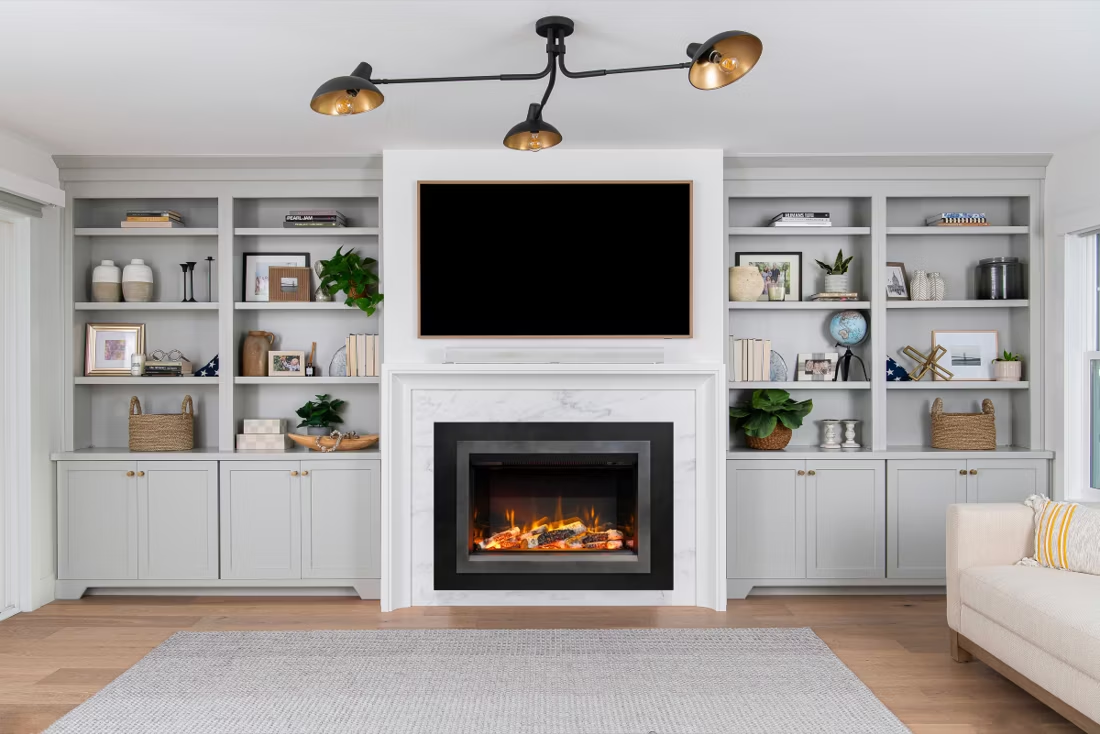
An electric insert is built to slide into an existing masonry or prefab firebox, which makes it the natural choice for older Wilmington homes converting an unused wood fireplace. An electric stove is a freestanding cabinet-style unit that sits on the floor like a traditional wood stove, working well in a room with no existing fireplace. A wall-mounted or built-in linear electric fireplace mounts flush into a wall or entertainment center—popular in newer New Hanover County construction and coastal rebuilds where a clean, modern look is the goal. All three plug in or hardwire depending on size, and none require venting.
Do I need an electrician, or can I just plug it in?
Smaller electric fireplaces and inserts (typically under 1,500 watts) run on a standard 120-volt outlet and just plug in—no electrician needed. Larger units, some linear wall models, and anything drawing close to or over 1,500 watts often call for a dedicated circuit to avoid tripping breakers, especially in older New Hanover County homes with older electrical panels that weren't sized for modern appliance loads. A local dealer can tell you which category a given model falls into, and Duke Energy Progress account holders with older service panels should have an electrician confirm capacity before a larger install.
REMOVE
REMOVE
Electric vs. gas—which is right for my New Hanover County home?
Gas fireplaces remain common in New Hanover County, with natural gas available through much of the Wilmington area and propane covering the rest, and they deliver more heat output for homes that actually need it during the county's occasional hard freezes. Electric costs less to install, needs no gas line or venting, and works in situations gas can't—historic district homes facing exterior-change restrictions, condos with HOA bans on open flame, or beach cottages where corrosion and venting through salt air are real concerns. Wood and pellet stoves, by contrast, are essentially non-existent here; the mild climate zone 3A winters and roughly 2,326 heating degree days a year don't generate enough sustained demand to justify a solid-fuel appliance, even though regional pellet suppliers like Lignetics and Hamer Pellet Fuel serve the broader region. For most New Hanover County homes, the choice comes down to electric for ambiance-plus-convenience versus gas for homes wanting more serious backup heat.
Do electric fireplaces actually produce heat?
Yes—most put out around 4,800–5,000 BTUs from a standard outlet, which comfortably warms a bedroom, office, or den as a comfort-zone heater. What they won't do is carry a whole house the way wood, gas, or pellet can. Think of electric as ambiance-first with honest supplemental heat: flames on with no heat in July, flames plus warmth in January.
Does an electric fireplace need a vent or chimney?
No—that's its superpower. An electric fireplace needs a wall and an outlet, period. No vent pipe, no gas line, no clearances to design around, which is why it works in bedrooms, offices, apartments, and walls where venting a gas or wood unit would be impractical or impossible. Installation is typically the simplest and least expensive of any fireplace type.
Does a fireplace add value to my home?
On average, a fireplace adds back to the home about the same amount you spent installing it. Add the monthly savings from heating the rooms you actually use instead of the whole house—often hundreds of dollars a year—and the value case is strong before you even count what a fire does for how your family uses the room.
What is an in-home preview and do I need one?
It's a visit where a hearth professional measures your space, confirms the model you picked actually works in your home, and walks the specs—framing, gas line, venting, finish work—before anything is ordered. Some details you just can't know until you see the house. Never make a down payment without one; it's the single most-skipped step that burns buyers.
Stove and Fireplace Dealers in New Hanover County
Find your electric fireplace in New Hanover County.
Tell us a bit about your home and we'll match you with the right electric fireplace, insert, or wall unit—plus a free Project Guide & Parts List and a trusted local dealer to install it.
Find Your Fireplace →