
Find the Right Fireplace for New Hanover County's Mild Winters.
Fireplace resources for Wilmington, Wrightsville Beach, Carolina Beach, Kure Beach, and every unincorporated community in New Hanover County. Options exist too—we'll tell you honestly where they fit.
Every Project Starts From One of These Five Situations
Mild coastal winters, modest heating demand in New Hanover County.
New Hanover County anchors North Carolina's southern coast—Wilmington, Wrightsville Beach, Carolina Beach, and Kure Beach sit within a Zone 3A warm-humid climate where the average winter low is a mild 36°F and the county logs roughly 2,326 heating degree days a year. That's a fraction of what a place like Duluth, Minnesota racks up in a single winter (upwards of 9,000 HDD)—sustained hard freezes are the exception here, not the rule, and the heating season is genuinely short, running from December into February most years. Wood-burning fireplaces and pellet stoves are largely off the table as practical primary heat: a handful of historic downtown Wilmington homes near Market Street still have working masonry fireboxes that get lit occasionally on the rare night that dips into the 20s, and a few rural county homeowners keep a wood stove around as hurricane-season backup, but neither fuel sees meaningful new-installation demand. Gas—natural gas from Piedmont Natural Gas inside city limits, propane out toward Castle Hayne and Murrayville—and electric fireplaces are the fuels that actually fit this climate: low install lift, no chimney upkeep, and heat output sized for occasional evenings rather than months of hard burning.
What you'll find on this hub: hearth retailers, service technicians, and fuel suppliers covering New Hanover County's coastal geography—from downtown Wilmington out to the barrier islands (Wrightsville Beach, Carolina Beach, Kure Beach) and inland to Castle Hayne, Murrayville, and Monkey Junction. Because wood and pellet appliances are uncommon here, most of what's listed below skews toward gas and electric dealers and technicians—that's an accurate reflection of local demand, not a gap in our research. Pick your fuel below for cost ranges, recommended units, and dealer matches specific to your project.
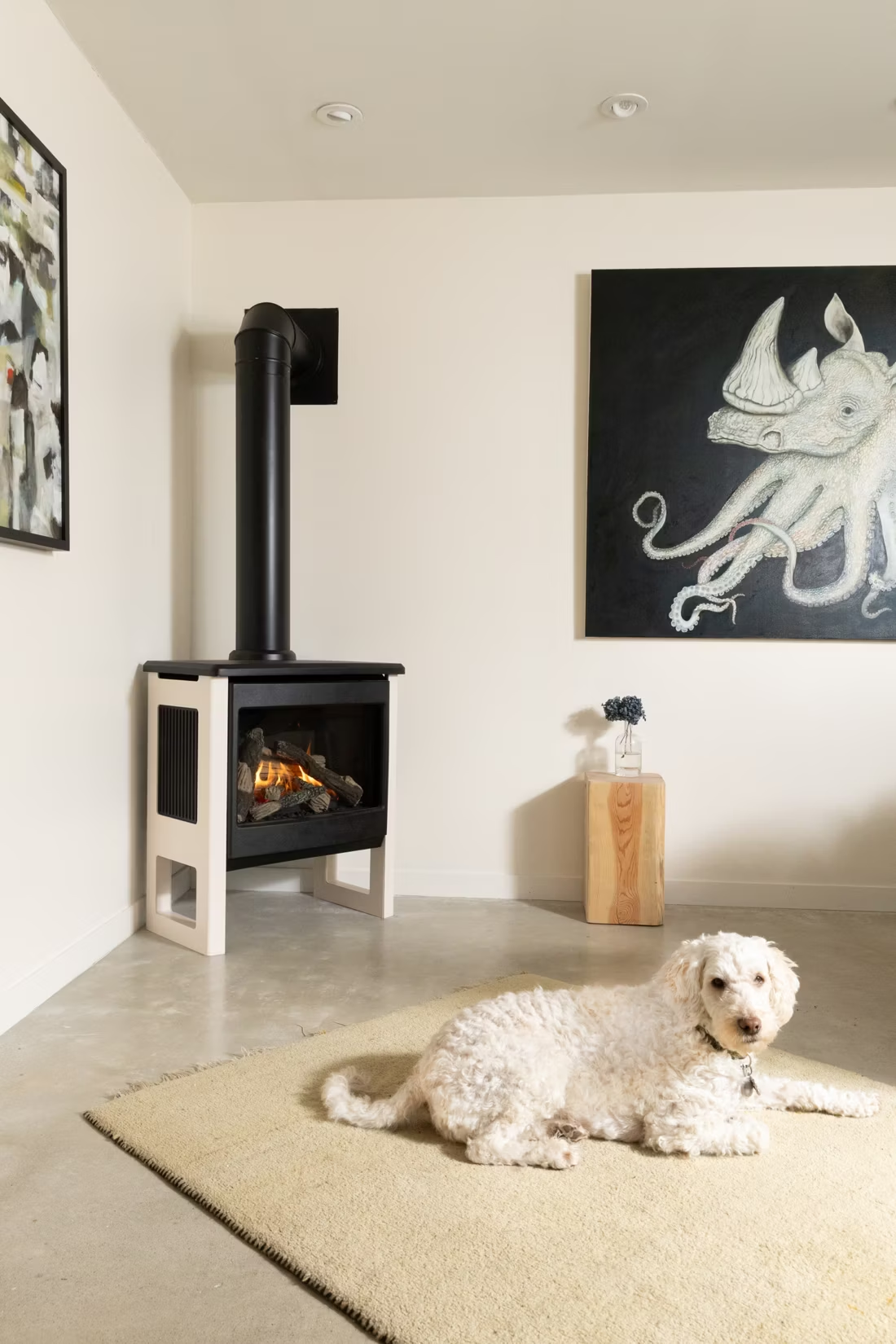
Four fuels. One honest answer for New Hanover County.
Wood
55 models available near New Hanover County.
Find your wood stove →Gas
358 models available near New Hanover County.
Find your gas fireplace →Pellet
See what's available near New Hanover County.
Find your pellet stove →Electric
11 models available near New Hanover County.
Find your electric fireplace →Three steps. No salesperson until you're ready.
Tell us about your project
Your zip code, your situation, and the fuel you're leaning toward—or let the answers point you to one.
See what's actually available
The brands dealers within 100 miles genuinely carry—real options, never a catalog mirage.
Get your dealer & Project Guide
A trusted local dealer, plus the free Project Guide & Parts List that names every component of the job.
Frequently Asked Questions
Which fuel works best in New Hanover County?
In this climate, gas is the practical primary choice for most New Hanover County homeowners—natural gas from Piedmont Natural Gas inside city limits, propane out toward Castle Hayne and Murrayville—instant heat without the venting a real wood system requires. Electric fireplaces are the other mainstream option, especially in condos along Wrightsville Beach and Carolina Beach where retrofitting a chimney isn't realistic. Wood-burning fireplaces exist mostly in older homes downtown near Market Street and the Cotton Exchange district, where original masonry fireboxes get lit occasionally on the handful of nights that dip into the 20s; new wood installs are rare. Pellet stoves see almost no local demand—the mild roughly 2,326 heating-degree-day climate doesn't generate enough sustained cold to justify the fuel-handling routine, though bags of Lignetics or Greenway Renewable Energy pellets still move through regional suppliers for the occasional inland household or hurricane-backup setup.
Do I need a permit to install a fireplace in New Hanover County?
Usually, yes. Inside city limits, permits run through the City of Wilmington Development Services Center; in unincorporated areas, the New Hanover County Building Safety Department handles it, and Wrightsville Beach, Carolina Beach, and Kure Beach each have their own inspections offices, so it's worth confirming which jurisdiction applies to your address. Gas fireplace and insert installs need a building permit plus a licensed gas-fitter's sign-off on the line; electric built-ins that involve new wiring need an electrical permit, while a plug-in electric unit generally doesn't. Wood installs, though uncommon here, still require a permit and must meet current emissions standards. Most local dealers handle the permitting as part of installation.
Are there air quality restrictions on wood burning in New Hanover County?
No—New Hanover County isn't a non-attainment area and doesn't see the winter temperature inversions that trap wood smoke in mountain or high-desert basins elsewhere in the country. There's no seasonal burn-curtailment program tied to hearth heating here. The county does occasionally issue outdoor burning restrictions during drought conditions in the pocosin wetlands north of Wilmington, but that's aimed at brush and yard debris, not fireplace use. With so few homes relying on wood heat, air quality simply isn't the fuel-choice driver here that it is in inland or high-elevation counties.
Can one local retailer handle both gas and electric fireplaces here?
Most New Hanover County hearth dealers concentrate on gas and electric, since that's where local demand actually sits. A few also keep a wood-burning insert or two in the showroom for historic-home customers, but it's a small side of the business, not the focus. If you're restoring an original masonry fireplace in a downtown Wilmington home, ask specifically whether a dealer stocks wood inserts sized for older flues—not every gas-and-electric-focused shop carries them.
How does hearth service work for homes on the barrier islands?
Salt air and humidity are the two things that matter most for equipment upkeep near Wrightsville Beach, Carolina Beach, and Kure Beach—gas fireplace igniters, control valves, and vent terminations corrode faster in beachfront homes than they would inland, so annual service checks matter even for units that only run a handful of nights a winter. Electric units hold up well overall but benefit from a yearly check of wiring connections in salt-spray-exposed homes. Technicians covering the islands typically build bridge-crossing time into scheduling, so booking ahead of hurricane season in June or before the first real cold snap in November beats waiting for an emergency call.
What's the typical cost range for fireplace installation across fuel types in New Hanover County?
Gas fireplace, insert, or stove: $4,000–$9,500, depending on whether a gas line already reaches the room. Electric fireplace: $200–$2,800 for the unit, plus $300–$1,000 in labor for anything beyond a plug-and-play wall unit. Wood-burning insert or masonry restoration, mostly relevant for the county's older downtown Wilmington homes: $5,000–$11,000, often running higher than in colder-climate markets simply because so few local specialists handle it regularly. Pellet stove installs are infrequent enough that most dealers quote them case-by-case rather than off a standard range.
Does a fireplace add value to my home?
On average, a fireplace adds back to the home about the same amount you spent installing it. Add the monthly savings from heating the rooms you actually use instead of the whole house—often hundreds of dollars a year—and the value case is strong before you even count what a fire does for how your family uses the room.
Can I install a fireplace myself?
If you're putting a fire in your house on purpose, it's best to work with an expert. Unless you're genuinely experienced in framing, gas line, vent pipe, and the national code on clearances to combustibles, have a professional do it—and ideally the same company that sells you the fireplace, so warranty, service, and liability all live under one roof.
How much should I budget for a fireplace?
For an average home—covering the fireplace, the vent pipe, and basic installation—a budget between $3,900 and $5,500 gives you a lot of options across wood, gas, and pellet. By the time you add finish work, gas line, and electrical, the average complete installation lands between $5,000 and $12,000 all-in. In a remodel or new build, a good rule is to put about 2.5% of the total project cost toward the fireplace.
Can a fireplace actually lower my heating bill?
Yes—by creating a comfort zone. A furnace heats every square foot of the house just to warm the one room you're in; a gas fireplace on low burns roughly a sixth of the gas a typical furnace does. Set the furnace around 55–60 degrees as a baseline, then heat the rooms your family actually uses. Families who heat this way commonly save $20–$60 a month.
Stove and Fireplace Dealers in New Hanover County
Listings include WhyFire partner dealers, dealers we have verified as authorized for the brands we recommend, and established local businesses that carry hearth products. Every listing shows which one it is. The ones marked Preferred run on WhyFire's software, so they can show you real pricing and book your appointment right here. No manufacturer pays for placement. How we verify dealers →
J.t. Lee & Sons
Coastal Eco Leisure & Buck Stove
Parker Gas
Backyard Specialist
Coastal Fireplace
Ron's Fireside Shop
Sharp Energy
Stricks Lp Gas
What The Grill
Progress Plumbing Inc.
Mansfield Brothers Lp Gas, Inc.
Get matched with a New Hanover County hearth dealer.
Pick your fuel below and I'll match you with a trusted local dealer, plus send a free Project Guide & Parts List sized for your home, your fuel, and your New Hanover County address.
Find Your Fireplace →