
Warm up your Nags Head beach house without the wait.
Instant, low-maintenance heat for Outer Banks winters and the guests who rent your cottage between them. Find the right gas fireplace and connect with a trusted local dealer.
Every Project Starts From One of These Five Situations
Gas fits Nags Head's mild, damp winters better than wood ever could.
Nags Head sits at just 5 feet of elevation on a barrier island, where winter lows average a relatively mild 36°F and the heating season is short and mild—a fraction of what inland Carolina or mountain towns see. Climate zone 3A means the real heating challenge here isn't brutal cold, it's persistent salt-laden humidity that works its way into everything, including firewood, chimneys, and metal hardware left outdoors. Most Nags Head homes are also built up on pilings to meet coastal flood requirements, which changes how a fireplace gets vented compared to a slab-on-grade house inland.
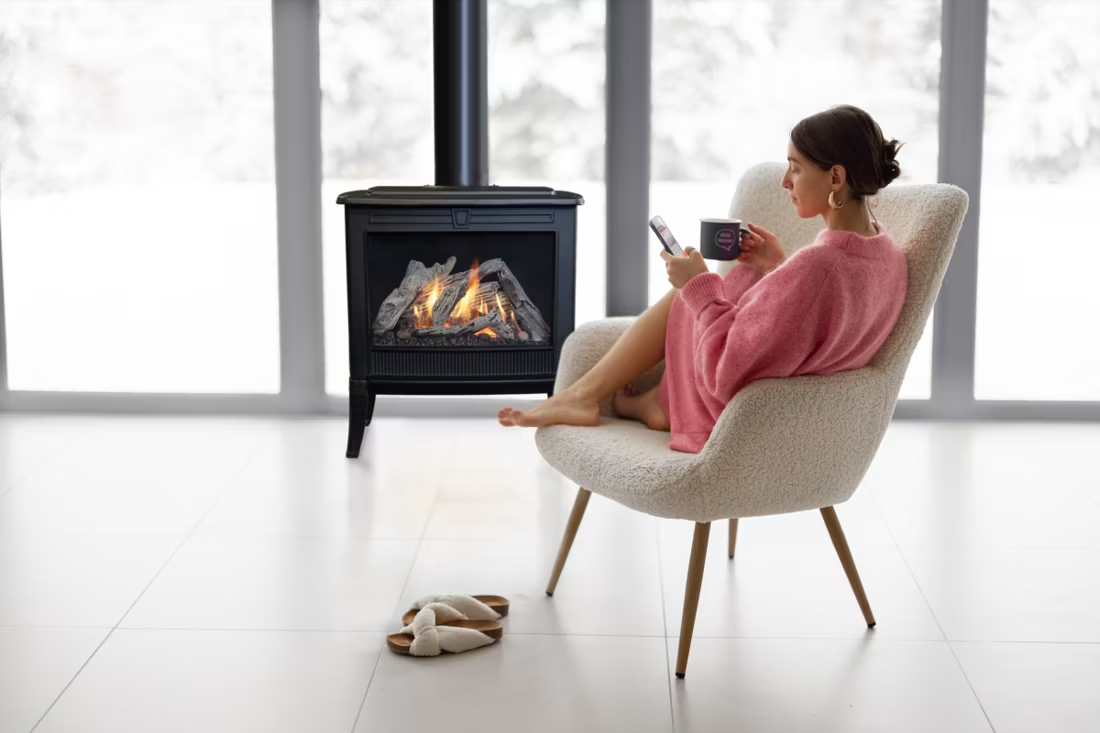
There's no natural gas main running out to the Outer Banks—Dare County homes that want gas heat run on propane, typically from a tank set near the pilings. That's not a drawback so much as the local norm: a direct-vent propane fireplace or insert gives homeowners and vacation-rental managers the same push-button ambiance and heat without the wood storage, ash, and moisture problems that come with burning cordwood in a salt-air climate. For a property that turns over renters every week in season, a gas unit that starts and stops with a switch is simply easier to manage than a wood stove nobody's trained to run.
Three steps. No salesperson until you're ready.
Tell us about your project
Your zip code, your situation, and the fuel you're leaning toward—or let the answers point you to one.
See what's actually available
The brands dealers within 100 miles genuinely carry—real options, never a catalog mirage.
Get your dealer & Project Guide
A trusted local dealer, plus the free Project Guide & Parts List that names every component of the job.
Frequently Asked Questions
How much does a gas fireplace installation cost in Nags Head?
Most gas fireplace and insert installations in Nags Head run $4,500 to $10,500, with the spread driven mainly by how far the unit sits from the propane tank and how the vent run has to navigate an elevated, piling-built home. A straightforward direct-vent unit installed during new construction, before walls are closed up, sits at the lower end. Retrofits into an existing elevated cottage—where the installer has to route venting through floor joists, soffits, or a crawlspace under the house—cost more. Homes without an existing propane tank also need to budget for tank installation and the initial fuel fill from a local supplier.
Can I convert an existing wood-burning fireplace to gas in Nags Head?
It's possible, but less common here than in inland North Carolina towns, since most Nags Head homes are newer stick-built or piling construction rather than older masonry houses with a traditional wood fireplace and chimney already in place. If your cottage does have an existing wood-burning fireplace, a local installer can typically run a stainless liner and drop in a direct-vent or vented propane insert, giving you the same footprint with push-button heat. For the more typical Nags Head home with no existing fireplace at all, a new built-in gas fireplace or freestanding gas stove is the more realistic project.
Do I need natural gas, or is propane the only option in Nags Head?
Propane is effectively the only option—there's no natural gas utility serving Nags Head or the rest of Dare County's barrier islands. Homeowners either have an existing propane tank (often shared with a water heater, range, or dryer) or need one installed as part of the fireplace project. Regional propane suppliers that service the Outer Banks handle tank installation, delivery, and refills; your hearth installer can typically coordinate that piece for you rather than leaving you to arrange it separately.
Will my gas fireplace still work if the power goes out?
This matters more in Nags Head than almost anywhere else in North Carolina—nor'easters and hurricane-season outages are a normal part of life on the Outer Banks, and some last for days. Most gas fireplaces with intermittent pilot ignition (IPI) run on a small battery backup that kicks in automatically when the grid drops, so the fireplace still lights on demand. Valor's gas fireplaces go a step further: their pilot assembly generates its own electricity through the thermocouple, so there's no battery to remember or replace. For a barrier-island home that loses power every storm season, ask your local dealer specifically about the ignition system before you decide on a model.
Should I get a gas fireplace, insert, or freestanding stove?
Because so many Nags Head homes are newer construction on pilings without a pre-existing masonry fireplace, a built-in direct-vent gas fireplace or a freestanding gas stove is usually the right fit rather than an insert. Inserts make the most sense when you're upgrading an existing wood fireplace and chimney, which is the exception here rather than the rule. A freestanding stove works well in an open great room or a raised living level, while a built-in unit fits cleanly into new construction or a remodel where the wall cavity and venting can be planned from scratch.
Do I need a permit to install a gas fireplace in Nags Head?
Yes. The Town of Nags Head requires a building permit and mechanical/gas permit for any new gas fireplace or propane line installation, and because the town sits in a coastal flood zone, appliance and gas-line placement also has to respect base flood elevation requirements tied to your home's CAMA setback and elevation certificate. Most established hearth installers who work regularly on the Outer Banks are familiar with these rules and handle the permitting and inspection scheduling as part of the job.
Should I choose a vented or vent-free gas fireplace for a coastal home?
Vented, direct-vent units are the better choice for Nags Head. Vent-free fireplaces release combustion byproducts—including water vapor—directly into the room, and that's the last thing a home already fighting constant coastal humidity and salt-air moisture needs inside its walls. A sealed direct-vent unit exhausts everything outside, which keeps indoor humidity, and the mold and corrosion risk that comes with it, in check. North Carolina allows vent-free units with proper room sizing, but most local installers on the Outer Banks will steer you toward vented for exactly this reason.
How often should a gas fireplace be serviced in a place like Nags Head?
Plan on an annual inspection, and don't skip it here—salt air accelerates corrosion on burner components, gas valves, and venting hardware faster than it would inland. A technician will check the pilot or ignition system, clean the burner and glass, inspect the venting for salt-related deterioration, and test gas connections. For seasonal rental properties, the smart timing is right before the spring rental season starts, so the unit is dialed in before guests arrive and before the off-season storm months when you'll want reliable heat.
Why don't I see many wood-burning fireplaces in Nags Head?
Wood-burning fireplaces and stoves are genuinely uncommon on the Outer Banks—this is a mild coastal climate at 5 feet of elevation with only a short, mild heating season each year, so the deep cold-climate case for wood heat that you'd find in the mountains or Piedmont just isn't there. There's also no local firewood industry to speak of on the barrier islands; oak, hickory, and pine firewood common elsewhere in Dare County has to be trucked in and then kept dry in a climate that makes outdoor wood storage a losing battle against humidity and salt air. A handful of older inland Dare County properties still burn wood, but for Nags Head specifically, gas and electric are by far the more practical and more common choices.
Why is my open fireplace making my house colder?
Open fireplaces suck—literally. As the fire burns, it consumes air your furnace already paid to heat and pulls it out through the chimney, so the house is actually colder after the fire goes out than before you lit it. An insert fixes this: it seals the chimney, puts fixed glass across the front, and turns that hole in your house into a real heat source.
Why is a fireplace insert so efficient?
An insert does two things: it seals the chimney completely, so you stop losing air you already paid to heat, and it radiates warmth into the room through the firebox and glass. Most add a heat-exchange fan that pulls cool room air underneath, wraps it around the hot firebox, and pushes it back out warm. Your home is more efficient before you've even lit the first fire.
How much should I budget for a fireplace?
For an average home—covering the fireplace, the vent pipe, and basic installation—a budget between $3,900 and $5,500 gives you a lot of options across wood, gas, and pellet. By the time you add finish work, gas line, and electrical, the average complete installation lands between $5,000 and $12,000 all-in. In a remodel or new build, a good rule is to put about 2.5% of the total project cost toward the fireplace.
Can I install a fireplace myself?
If you're putting a fire in your house on purpose, it's best to work with an expert. Unless you're genuinely experienced in framing, gas line, vent pipe, and the national code on clearances to combustibles, have a professional do it—and ideally the same company that sells you the fireplace, so warranty, service, and liability all live under one roof.
Nearby Dealers
Hearth shops serving Nags Head and the surrounding area. Every listing shows whether it is a WhyFire partner, a dealer we have verified as authorized for the brands we recommend, or a local business carrying hearth products. No manufacturer pays for placement. How we verify dealers →
We’ve paused dealer listings for this connection today. Enter your zip or postal code above to find dealers near you, or come back tomorrow.
Popular Gas Brands
Where each brand came from, what's inside it today, and every current model. No brand pays to be here. Not every dealer carries every brand, so enter your zip code to see what's sold near Nags Head.
Kozy Heat
Kozy Heat was founded in 1976 by Dudley Hussong in Lakefield, Minnesota, and incorporated as Hussong Manufacturing Co., Inc. in 1978.
28 gas models →Fireplace Xtrordinair
Fireplace Xtrordinair, now often called FireplaceX, is the fireplace brand of Travis Industries, Inc., of Mukilteo, Washington.
25 gas models →Town & Country
Town & Country Fireplaces is the luxury gas fireplace brand of Pacific Energy Fireplace Products Ltd., of Duncan, British Columbia.
14 gas models →Lopi
Lopi is a wood, pellet, and gas stove brand founded by Kurt Rumens in Bellevue, Washington, in 1979.
7 gas models →Forge & Flame
Forge & Flame is the stove brand Hearth & Home Technologies introduced in August 2023 to bring Vermont Castings, Harman, and Quadra-Fire under one name.
6 gas models →Vermont Castings
Vermont Castings was founded in 1975 by Duncan Syme, the designer, and his brother-in-law Murray Howell, the business partner, in Randolph, Vermont.
6 gas models →Find your gas fireplace in Nags Head.
Tell us about your Nags Head home and we'll help you find the right gas fireplace, insert, or stove—plus a free Project Guide & Parts List with the exact parts, vent kit, and your recommended local dealer.
Find Your Fireplace →