
Pellet heat that runs itself through Catawba County winters.
Set the thermostat, load the hopper, and let a pellet stove carry the heat load through Mountain View's foothill winters—then get matched with a trusted local dealer.
Every Project Starts From One of These Five Situations
A hands-off alternative to cutting your own cordwood.
Mountain View sits in the Catawba County foothills at just over 1,100 feet, in climate zone 4A with a winter heating season that's modest—less than half the heating load of genuinely cold-winter cities like Duluth, MN or Burlington, VT. Still, with winter lows averaging around 30°F, this part of the North Carolina foothills sees several real months of heating season, and plenty of local homes lean on supplemental wood or pellet heat to take the load off electric resistance heat or an aging heat pump.
Oak, hickory, maple, and pine are all abundant in the surrounding Catawba County woodlands, and cutting your own firewood is genuinely an option through Nantahala-Pisgah National Forests permits (about $20 per cord, May through October season). But a lot of homeowners here would rather skip the splitting, stacking, and creosote and just load a hopper. Regional pellet brands like Lignetics, Hamer Pellet Fuel, and Greenway Renewable Energy are all sold within reach of Mountain View, and a pellet stove pairs well with Duke Energy Carolinas electric service as a lower-cost supplement to running electric heat all winter.
Three steps. No salesperson until you're ready.
Tell us about your project
Your zip code, your situation, and the fuel you're leaning toward—or let the answers point you to one.
See what's actually available
The brands dealers within 100 miles genuinely carry—real options, never a catalog mirage.
Get your dealer & Project Guide
A trusted local dealer, plus the free Project Guide & Parts List that names every component of the job.
Frequently Asked Questions
How much does a pellet stove installation cost in Mountain View?
Most pellet stove or insert installations in the Mountain View area run somewhere between $3,000 and $6,500, depending on the unit, whether it's a freestanding stove or an insert going into an existing masonry fireplace, and how much venting work is needed. A pellet insert into an existing fireplace with a straightforward through-wall vent kit tends to land on the lower end; a freestanding stove in a new location, requiring longer venting runs and a new hearth pad, pushes toward the higher end. A local dealer can give you a firm number after seeing your home.
Is a pellet stove or a wood stove the better fit for my home?
Catawba County has plenty of oak, hickory, maple, and pine, and cutting your own firewood through a Nantahala-Pisgah National Forests permit runs about $20 a cord during the May-to-October season—so wood is genuinely cheap here if you're willing to do the work of cutting, splitting, stacking, and seasoning it. A pellet stove trades that labor for a bagged fuel you buy by the ton and load into a hopper, with a thermostat that holds a steady temperature without you tending a fire. For a lot of Mountain View homeowners who want real supplemental heat without the wood-handling commitment, pellet is the more livable option day to day.
Where can I buy pellet fuel near Mountain View?
Regional pellet brands including Lignetics, Hamer Pellet Fuel, and Greenway Renewable Energy are all distributed through farm supply and hearth retailers in the Hickory area, a short drive from Mountain View. Prices vary by brand and hardwood-vs-softwood blend, so it's worth asking a local hearth dealer which brand runs cleanest in the specific stove model you're considering—pellet quality affects ash output and auger wear more than most people expect.
Does a pellet stove work if the power goes out?
Not without a backup power source. Unlike a wood stove, a pellet stove depends on electricity to run the auger that feeds pellets and the blower that pushes heat into the room—if Duke Energy Carolinas service drops during an ice storm, the stove stops. Some homeowners in this area pair a pellet stove with a small battery backup or generator specifically to keep it running through outages, since ice storms are the more common winter power-loss event in the Catawba County foothills. If backup heat during outages is the priority, a wood stove is worth comparing.
Do I need a permit to install a pellet stove in Mountain View?
Yes—new pellet stove and insert installations typically require a building permit through the Catawba County Building Inspections Department, since venting and hearth clearances have to meet current code. Most established local hearth dealers handle the permit paperwork as part of the installation, so you generally don't have to file it yourself. It's worth confirming with your installer before work starts, especially if you're converting an existing wood-burning fireplace to a pellet insert.
What size pellet stove do I need for my home?
With Mountain View's relatively mild winter heating season and winter lows averaging around 30°F, many homes here don't need the largest units on the market. A small to mid-size pellet stove (rated for roughly 1,000 to 1,800 square feet) is often plenty for supplemental heat in a single living area, while a larger unit makes sense if you're trying to offset most of your electric heating bill across an open floor plan. A local dealer will size the unit to your actual square footage and insulation rather than a generic chart.
How much maintenance does a pellet stove need?
Pellet stoves need more routine attention than a gas unit but less than a wood stove's annual chimney sweep. Plan on emptying the ash pan every few days during regular use, cleaning the burn pot weekly to keep the flame consistent, and running a full glass and interior cleaning monthly. Most manufacturers also recommend an annual professional inspection of the venting, auger motor, and exhaust fan—the local dealers who sell pellet stoves in this area typically offer that service as a seasonal tune-up.
What's the difference between a pellet stove and a pellet insert?
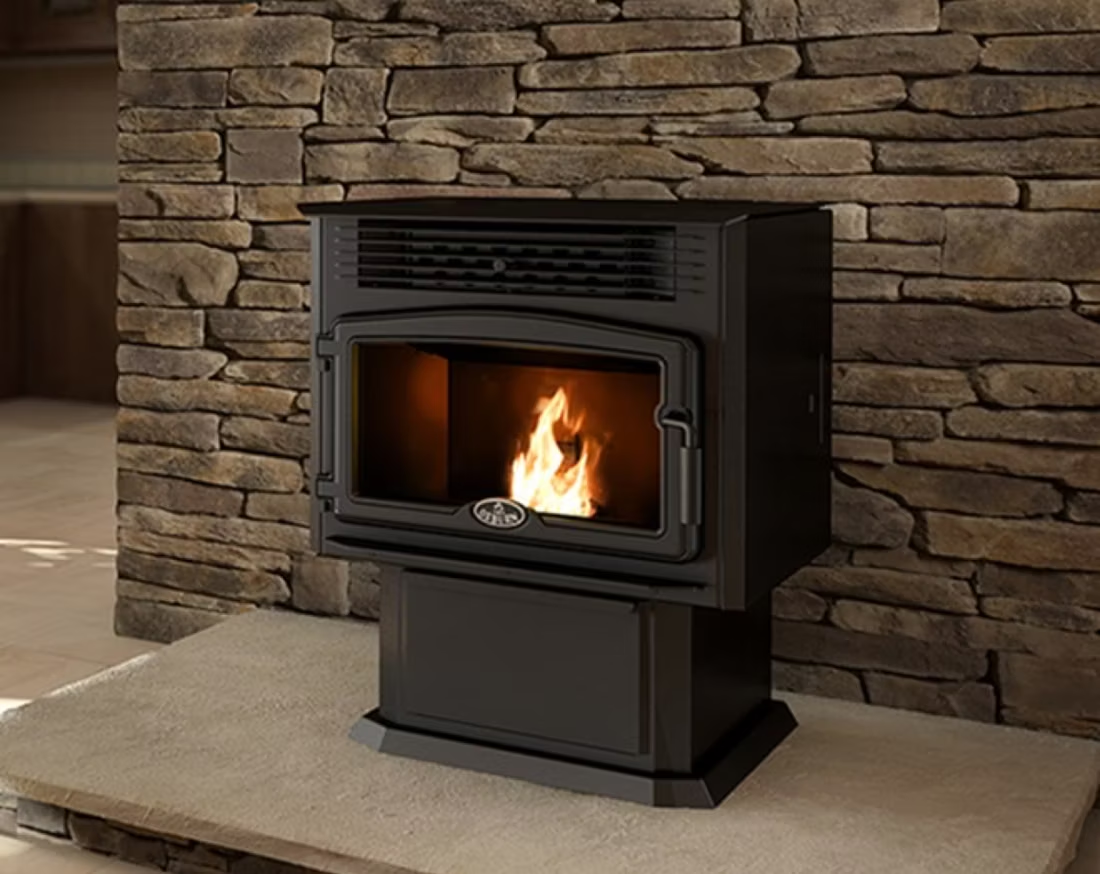
A pellet stove is a freestanding unit that sits on its own hearth pad and vents through a wall or existing chimney chase—it can go almost anywhere in a home with the right clearances. A pellet insert is built to slide into an existing masonry fireplace opening, using your current firebox and often the existing chimney (relined for pellet venting) to convert an old wood fireplace into an efficient, thermostat-controlled heat source. For Mountain View homes with an existing but underused fireplace, an insert is usually the simpler retrofit.
Pellet stove or propane heater—which makes more sense here?
Natural gas service is limited in this part of Catawba County, so propane is the more common piped-fuel option for homes that don't want to rely on electric heat alone. A pellet stove and a propane heater both offer thermostat-style convenience, but pellet fuel is generally cheaper per BTU than propane and doesn't require a tank rental or delivery contract—you just buy bags or bulk-ton pellets from a local supplier like Lignetics or Hamer Pellet Fuel. The tradeoff is that pellet stoves need electricity to run, while some propane heaters don't. A local dealer can walk through the real cost comparison for your specific home.
How often does a pellet stove need cleaning?
A clean pellet stove is a happy pellet stove. Plan on cleaning the burn pot about once a week when you're burning regularly—ash and clinkers gum up the air holes just like a pellet barbecue. Most pellet stove problems trace back to skipped cleaning that nobody explained up front. Some designs make it easy with a trapdoor burn pot: pull a lever and the gunk drops into the ash pan.
What's the difference between an insert and a zero-clearance fireplace?
An insert is a fireplace that slides into a pre-existing wood-burning fireplace—if you don't have one, there's nothing to insert it into. A zero-clearance fireplace is built into a framed wall, which makes it the answer for remodels and new construction. Simple test: existing masonry fireplace means insert; blank or framed wall means zero-clearance.
How much should I budget for a fireplace?
For an average home—covering the fireplace, the vent pipe, and basic installation—a budget between $3,900 and $5,500 gives you a lot of options across wood, gas, and pellet. By the time you add finish work, gas line, and electrical, the average complete installation lands between $5,000 and $12,000 all-in. In a remodel or new build, a good rule is to put about 2.5% of the total project cost toward the fireplace.
Can I install a fireplace myself?
If you're putting a fire in your house on purpose, it's best to work with an expert. Unless you're genuinely experienced in framing, gas line, vent pipe, and the national code on clearances to combustibles, have a professional do it—and ideally the same company that sells you the fireplace, so warranty, service, and liability all live under one roof.
Nearby Dealers
Hearth shops serving Mountain View and the surrounding area. Every listing shows whether it is a WhyFire partner, a dealer we have verified as authorized for the brands we recommend, or a local business carrying hearth products. No manufacturer pays for placement. How we verify dealers →
Blossman Gas, Inc.
Sawmills Hardware And Supply
Carolina Energies
Quality Propane
Carolina Fireplace & Granite
Kamin Fireplace & Service
Pellet Brands Stocked Around Mountain View
Manufacturers will point you to the nearest stocking dealer.
Find your pellet stove in Mountain View.
Tell us about your home and heating goals, and we'll match you with a trusted local dealer and a free Project Guide & Parts List—the exact parts, vent kit, and recommended installer for your Mountain View pellet project.
Find Your Fireplace →