
Keep Your Family Warm and Safe—No Matter What
Monroe winters rarely demand a wood stove for survival, but plenty of Union County homeowners still want one for ice-storm backup, ambiance, and the smell of oak and hickory on a cold night. We'll match you with a local dealer who can size the job right.
Every Project Starts From One of These Five Situations
A supplemental fire, not a primary furnace.
Monroe sits in climate zone 3A with about 3,199 heating degree days and an average winter low near 30°F—a fraction of what a place like Duluth, MN or Burlington, VT sees in a typical January. Most homes here already heat with a gas furnace or electric heat pump from Duke Energy Carolinas, Union Electric Membership Corp, or the City of Monroe's own utility, and that system runs the house through winter without much trouble. Wood heat, as a result, isn't the backbone of home heating in Union County the way it is farther north.
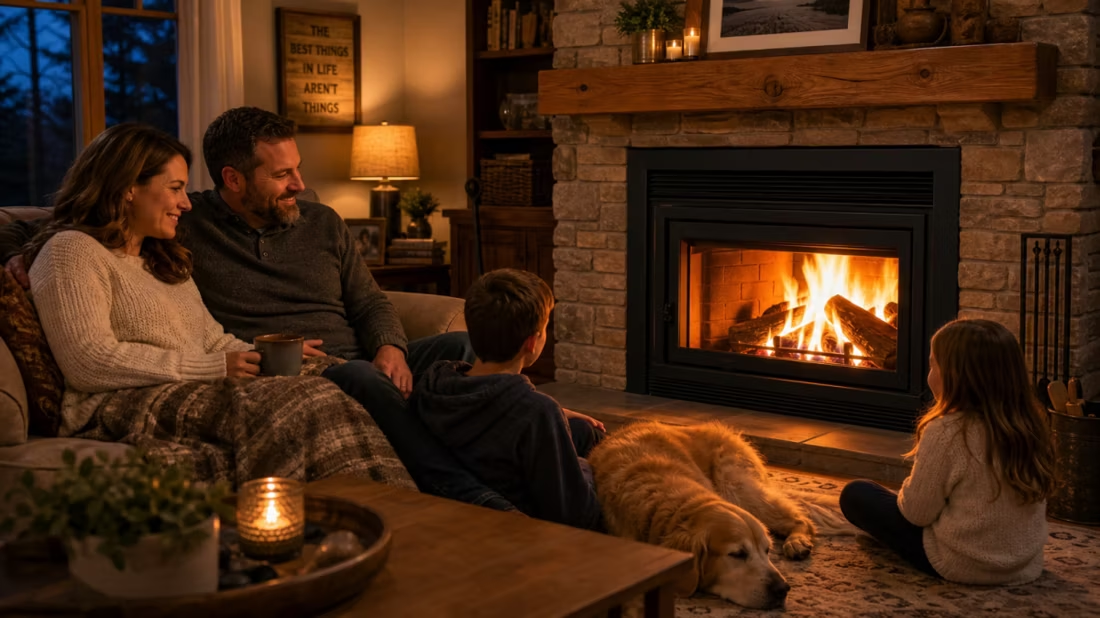
That doesn't mean wood stoves have no place here. Union County still has plenty of wooded acreage with mature oak, hickory, maple, and pine, and a fair number of homeowners on larger lots put in a stove or insert for supplemental heat, backup during winter ice storms that can knock out power for days, or simply the ambiance of a real fire in an older farmhouse with an existing masonry fireplace. If that's your reason for looking, a local dealer can help you size a unit that makes sense for occasional, not constant, use—rather than something built for a colder climate than the one you actually live in.
Three steps. No salesperson until you're ready.
Tell us about your project
Your zip code, your situation, and the fuel you're leaning toward—or let the answers point you to one.
See what's actually available
The brands dealers within 100 miles genuinely carry—real options, never a catalog mirage.
Get your dealer & Project Guide
A trusted local dealer, plus the free Project Guide & Parts List that names every component of the job.
Frequently Asked Questions
How much does a wood stove installation cost in Monroe?
For Monroe, plan on roughly $3,000 to $7,000 for a wood stove or insert installation, depending on the unit and whether you're working with an existing masonry chimney or starting from scratch. Converting an existing fireplace into a high-efficiency wood insert—common in older Monroe and Union County homes built with a traditional masonry hearth—tends to land on the lower end. New freestanding stove installations that require fresh Class A chimney pipe and roof penetration run higher. Local installers will confirm the number after seeing your chimney and hearth setup in person.
Does wood heat actually make sense in Monroe's climate?
For most Monroe homes, wood isn't the primary heat source—with only about 3,199 heating degree days and winter lows averaging around 30°F, a gas furnace or heat pump from Duke Energy Carolinas or Union Electric Membership Corp comfortably carries the house through the season. Where wood stoves earn their keep locally is as backup heat during ice storms (Union County sees its share of outages that last a day or two), as supplemental heat for a large or drafty room, or simply for the atmosphere of a real fire on the handful of genuinely cold nights each winter. If you're weighing whether it's worth it, that's the honest framing.
What size wood stove makes sense for supplemental heat in Monroe?
Since most Monroe installs are supplementing an existing HVAC system rather than replacing it, you generally don't need—or want—a large-capacity stove built for round-the-clock heating in a cold climate. A small to mid-size stove rated for 1,000 to 1,500 square feet is usually plenty to take the chill off a living room or den and knock down your gas or electric bill on the coldest nights. Oversizing a stove for a climate this mild just means you'll be damping it down constantly, which builds creosote faster. A local dealer can size this correctly based on the room you actually plan to heat.
Should I install a freestanding stove or a wood insert?
If your Monroe home already has a masonry fireplace—common in homes built through the 1970s and 80s in Union County—a wood insert is usually the better call. It slides into the existing firebox, uses the chimney you already have, and turns a fireplace that loses most of its heat up the flue into a genuine heat source. A freestanding stove makes more sense if you don't have an existing fireplace, want to heat a converted garage, sunroom, or workshop, or are starting from scratch on a new build. Either way, EPA-certified units are the standard your local dealer will install.
Do I need a permit to install a wood stove in Monroe?
Yes—a new wood stove or insert install requires a building permit, either through Union County Building Standards or the City of Monroe's building inspections office depending on where your property sits. The stove itself needs to meet current EPA 2020 NSPS emissions standards, which any legitimate hearth dealer will already be selling. The good news for Monroe is there's no non-attainment designation or winter burn-curtailment program like you'd find in some western cities, so there are no seasonal burn bans to plan around once the stove is installed and permitted.
What's the best wood stove for a Monroe home?
Since Monroe stoves are typically running for supplemental heat rather than 20-hour overnight burns at sub-zero temperatures, you don't necessarily need a high-end catalytic model built for extreme cold. Mid-range non-catalytic stoves from brands like Jøtul, Pacific Energy, or Vermont Castings, sized for a single large room or open floor plan, are a common and practical fit. If you do have a larger, older farmhouse and want the stove to genuinely carry more of the heating load during cold snaps, a catalytic model will hold a longer, steadier burn—worth asking a local dealer about if that's your goal.
How often should my chimney be inspected if I only burn occasionally?
Even with light, occasional use—which is typical in Monroe given the mild winters—the CSIA still recommends an annual inspection. Ironically, intermittent burning can actually build creosote faster than steady daily use, since the stove and flue don't stay hot enough to fully combust the smoke on a quick weekend fire. Plan on a sweep and inspection each fall before the first cold snap, especially if the stove sat unused most of the previous year.
Where can I get firewood in Monroe?
Oak, hickory, maple, and pine are all common species around Union County, and most residential firewood here comes from local tree services, land-clearing operations, and independent firewood dealers rather than public forest permits—Union County doesn't have national forest land nearby the way parts of the mountains or western states do. Seasoned oak and hickory typically run $250 to $350 a cord locally and burn longer and hotter than pine, which is more often sold as a cheaper option for kindling or shoulder-season fires.
Wood stove vs. relying on my gas furnace or heat pump—which makes more sense?
For day-to-day heating, your gas furnace or Duke Energy Carolinas-powered heat pump is almost certainly more practical in Monroe's mild climate—it's automatic, even, and doesn't require tending. A wood stove earns its place as a backup that keeps working when the power goes out during an ice storm, and as a way to take the edge off a big room on the coldest nights without running the whole system harder. Very few Monroe homes rely on wood as their sole heat source; most that install a stove or insert are adding a second option, not replacing the first one.
What's the difference between an insert and a zero-clearance fireplace?
An insert is a fireplace that slides into a pre-existing wood-burning fireplace—if you don't have one, there's nothing to insert it into. A zero-clearance fireplace is built into a framed wall, which makes it the answer for remodels and new construction. Simple test: existing masonry fireplace means insert; blank or framed wall means zero-clearance.
What do I measure to size a fireplace insert?
Four numbers tell you what fits: the front width, the front height, the back width, and the overall depth of your existing fireplace opening. Grab a tape measure, jot those down, and snap a photo of the wall—those two things do more to move your project forward than anything else you can do today.
What is an in-home preview and do I need one?
It's a visit where a hearth professional measures your space, confirms the model you picked actually works in your home, and walks the specs—framing, gas line, venting, finish work—before anything is ordered. Some details you just can't know until you see the house. Never make a down payment without one; it's the single most-skipped step that burns buyers.
Does a fireplace add value to my home?
On average, a fireplace adds back to the home about the same amount you spent installing it. Add the monthly savings from heating the rooms you actually use instead of the whole house—often hundreds of dollars a year—and the value case is strong before you even count what a fire does for how your family uses the room.
Nearby Dealers
Hearth shops serving Monroe and the surrounding area.
Find your wood stove in Monroe.
Tell us about your home and how you plan to use a wood stove—backup heat, ambiance, or a supplemental fire—and we'll match you with a trusted local dealer and a free Project Guide & Parts List sized to your space.
Find Your Fireplace →