
Find the right electric fireplace for Lenoir County's mild winters.
From Kinston to La Grange, Pink Hill, and Deep Run, Lenoir County winters rarely call for a serious heating system—they call for warmth you can flip on in a room that needs it. Find the right electric unit and connect with a trusted local dealer.
Every Project Starts From One of These Five Situations
A mild climate made for simple, safe heat.
Lenoir County sits in climate zone 3A, with an average winter low around 35°F and just 2,503 heating degree days a year—a fraction of what colder states carry. That's a mild heating load by any measure, closer to what you'd see across most of the coastal plain than what you'd find in a place like Buffalo, NY or Duluth, MN. For most homes in Kinston and the surrounding towns, a full wood- or gas-fired heating appliance is more capacity than the climate actually demands. An electric fireplace fills that gap: real visual warmth and supplemental heat for a bedroom, den, or sunroom, without a chimney, gas line, or masonry work.
Lenoir County is agricultural country—tobacco, cotton, soybeans—with a population just over 24,000 spread between Kinston and smaller communities like La Grange and Pink Hill. Wood stoves and pellet stoves are genuinely uncommon here; the county isn't a non-attainment area and the mild winters simply don't generate the heating demand that makes cordwood or pellet fuel worth the investment for most households, even with oak, hickory, and pine readily available locally. Gas fireplaces remain a solid option where natural gas or propane service is already in place. But for renters, mobile homes, older houses without a chimney, or anyone who wants fireplace ambiance without a construction project, electric is often the simplest and most practical answer in Lenoir County.
Three steps. No salesperson until you're ready.
Tell us about your project
Your zip code, your situation, and the fuel you're leaning toward—or let the answers point you to one.
See what's actually available
The brands dealers within 100 miles genuinely carry—real options, never a catalog mirage.
Get your dealer & Project Guide
A trusted local dealer, plus the free Project Guide & Parts List that names every component of the job.
Frequently Asked Questions
How much does an electric fireplace installation cost in Lenoir County?
Electric fireplaces are the most budget-friendly hearth option available, and Lenoir County is no exception. A plug-in electric insert or freestanding unit can often be set up in an afternoon with no electrical work beyond a standard outlet. A built-in wall unit or one requiring a dedicated 240-volt circuit costs more, since it involves a licensed electrician running new wiring—but even then, electric installs typically land far below what a wood or gas project would run, since there's no chimney, venting, or gas line involved. A local dealer can give you a firm number once they know the model and whether new wiring is needed.
What size electric fireplace do I need for my home?
Most electric fireplaces are sized by heat output (measured in BTUs) rather than the whole-home sizing you'd do for a wood stove. For a bedroom or den in a Kinston-area home, a standard 1,500-watt unit (roughly 5,000 BTU) is usually enough to noticeably warm the room on a cold morning. Larger open living spaces may call for a bigger insert or two smaller units placed strategically. Because Lenoir County's heating degree days are low, you're rarely trying to heat an entire house with one unit—most homeowners here are using electric fireplaces as supplemental heat or straight ambiance, layered on top of central HVAC.
Do I need a permit to install an electric fireplace in Lenoir County?
In most cases, no. A plug-in electric fireplace or insert that runs off an existing standard outlet typically doesn't require a permit. If you're having a built-in unit wired on a new dedicated circuit, that electrical work generally does require a permit pulled by your licensed electrician—check with Lenoir County's building inspections office if you're unsure about your specific project. This is one of the appeals of electric over wood or gas: there's no chimney inspection, no gas-line permit, and none of the code hurdles that come with combustion appliances.
What's the difference between an electric fireplace, insert, and stove?
An electric fireplace is typically a built-in or wall-mounted unit designed to look like a framed hearth. An electric insert is sized to slide into an existing masonry fireplace opening, which is a popular option for older Kinston-area homes with a fireplace that's no longer used for wood burning. An electric stove is a freestanding cabinet-style unit that mimics a wood or pellet stove's footprint but plugs into a standard outlet. All three produce the same basic result—a realistic flame effect and, in most models, a built-in fan heater—the choice comes down to whether you're retrofitting an existing opening, filling a wall, or want a stove-style look in a room without one.
Why aren't wood stoves more common in Lenoir County?
It comes down to climate. With an average winter low around 35°F and only about 2,503 heating degree days a year, Lenoir County simply doesn't have the sustained cold that makes wood heat worth the investment for most households—nothing like the demand you'd see in a northern climate such as Fargo, ND or Madison, WI. Local oak, hickory, maple, and pine are all available, and a handful of homeowners still keep a wood-burning fireplace for atmosphere on the occasional cold night, but it's not a primary heating strategy here the way it is in colder parts of the country. Pellet stoves see the same limited demand for the same reason.
Electric vs. gas fireplace—which is right for my Lenoir County home?
Gas fireplaces make sense where natural gas or propane service is already run to the house and you want a stronger, more consistent heat source—they're a standard, well-supported option throughout the county. Electric fireplaces make sense almost everywhere else: no gas line, no venting, lower upfront cost, and the flexibility to add one to nearly any room, including rentals and mobile homes where gas work isn't practical. Given how mild Lenoir County winters run, many homeowners find that an electric unit provides all the ambiance and supplemental warmth they actually need, reserving gas for homes that want a stronger heat source in a main living area.
Will an electric fireplace raise my power bill much?
A typical electric fireplace heater draws about 1,500 watts when the heat function is running, which costs a modest amount per hour of use depending on your rate with Duke Energy Progress, the utility serving Kinston and most of Lenoir County. Running it for ambiance only, with the heater off, uses very little power—the LED flame effect draws a fraction of what the heater does. Most homeowners here use it as supplemental heat in one room rather than running it constantly, which keeps the added cost manageable.
Are electric fireplaces safe for homes with kids or pets?
Yes, generally more so than a wood or gas unit. The glass front on most electric fireplaces stays cool to the touch since there's no real flame or combustion heat behind it, which matters if you've got young kids or curious pets around the hearth. There's no open flame, no soot, no gas line, and no risk of carbon monoxide. The main safety consideration is the same as any electric heater—don't run an extension cord to it, and make sure it's on a circuit rated for the draw, especially for built-in units pulling more wattage.
Can an electric fireplace look as realistic as a real wood fire?
Modern electric fireplaces have come a long way—many use LED-lit flame effects over a reflective medium (crystals, faux logs, or water vapor in higher-end models) that read convincingly as a real fire, especially at night. They won't replicate the crackle, smell, or radiant heat of an actual wood fire, which is part of why wood fireplaces still have a niche following even in a mild climate like Lenoir County's. But for most homeowners who want fireplace ambiance without the maintenance, chimney, or heating output tradeoffs, today's electric units deliver a convincing look with none of the upkeep.
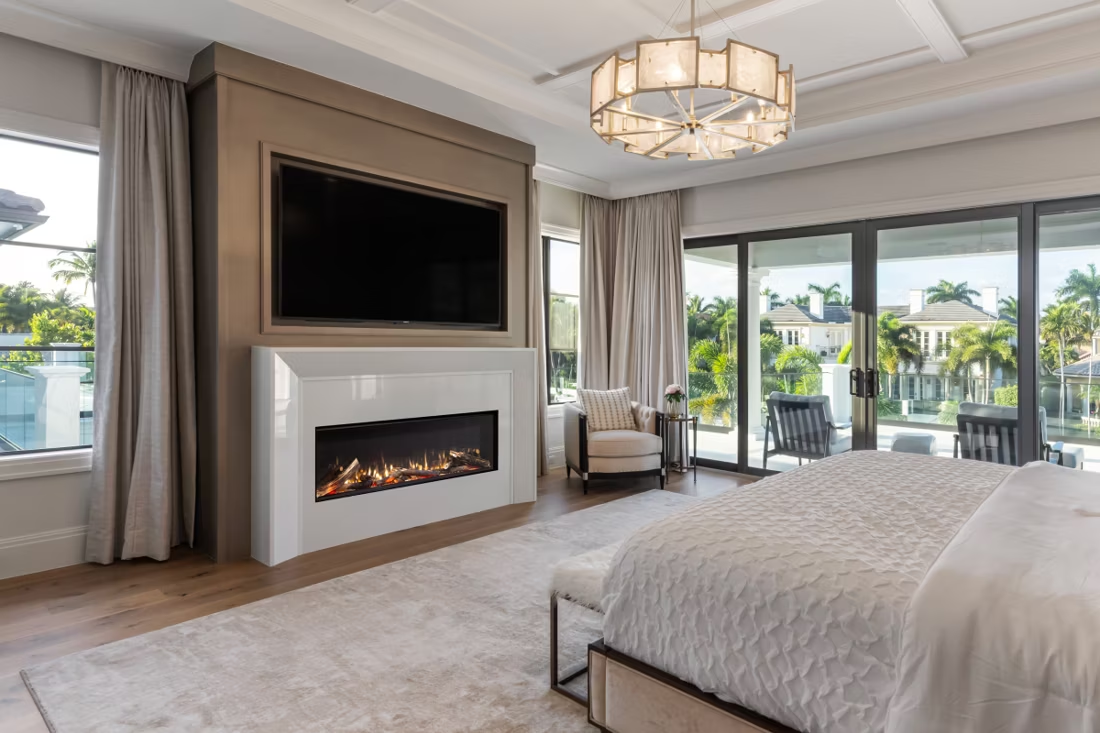
Can I put a TV above my fireplace?
Yes—with an asterisk. Fireplaces are hot and TVs don't like heat. Either put a mantel between them to deflect rising warmth, or choose a fireplace with heat-management technology that creates a cool zone on the wall above—the wall stays around 125 degrees, barely warm, while the room still gets full heat. If you like clean lines and don't want a mantel, heat management is the answer.
Does an electric fireplace need a vent or chimney?
No—that's its superpower. An electric fireplace needs a wall and an outlet, period. No vent pipe, no gas line, no clearances to design around, which is why it works in bedrooms, offices, apartments, and walls where venting a gas or wood unit would be impractical or impossible. Installation is typically the simplest and least expensive of any fireplace type.
How much should I budget for a fireplace?
For an average home—covering the fireplace, the vent pipe, and basic installation—a budget between $3,900 and $5,500 gives you a lot of options across wood, gas, and pellet. By the time you add finish work, gas line, and electrical, the average complete installation lands between $5,000 and $12,000 all-in. In a remodel or new build, a good rule is to put about 2.5% of the total project cost toward the fireplace.
Can I install a fireplace myself?
If you're putting a fire in your house on purpose, it's best to work with an expert. Unless you're genuinely experienced in framing, gas line, vent pipe, and the national code on clearances to combustibles, have a professional do it—and ideally the same company that sells you the fireplace, so warranty, service, and liability all live under one roof.
Stove and Fireplace Dealers in Lenoir County
Find your electric fireplace in Lenoir County.
Tell us a bit about your home and we'll put together a free Project Guide & Parts List—the right electric fireplace or insert for your space, plus a matched local dealer in the Kinston area who can install it correctly.
Find Your Fireplace →