
Find the Right Fireplace for Lenoir County's Mild Winters.
Gas and electric fireplace resources for Kinston, La Grange, Pink Hill, and every community across Lenoir County—plus honest guidance on where wood and pellet units still make sense.
Every Project Starts From One of These Five Situations
Comfort heat for eastern North Carolina's coastal plain.
Lenoir County sits in the flat coastal plain of eastern North Carolina, centered on Kinston along the Neuse River. Winters here are short and mild—the average winter low is 35°F, and the county's winter heating load is roughly a third of what a home in Duluth, Minnesota racks up over the same stretch. Climate zone 3A means humid summers matter far more to local building decisions than deep winter cold. Bottomland hardwood forests along the Neuse still produce plenty of oak, hickory, maple, and pine, and plenty of Lenoir County landowners cut their own firewood—but that wood mostly feeds backyard fire pits, the occasional evening fire, and backup heat during ice storms rather than serving as a home's primary heat source.
Because of that climate, this hub leans toward gas and electric fireplace options—the two fuel types that actually make sense as everyday supplemental heat or year-round ambiance in a county where sub-freezing nights are the exception, not the rule. Wood-burning fireplaces are still common in older Kinston and La Grange homes, mostly for atmosphere and as a manual backup when ice storms knock out power. Pellet stoves are rare locally; the regional pellet supply (Lignetics, Hamer Pellet Fuel, Greenway Renewable Energy) mostly serves colder markets to the west and north. Pick your fuel below to see local dealers, realistic installation costs, and the resources that actually fit a Lenoir County home.
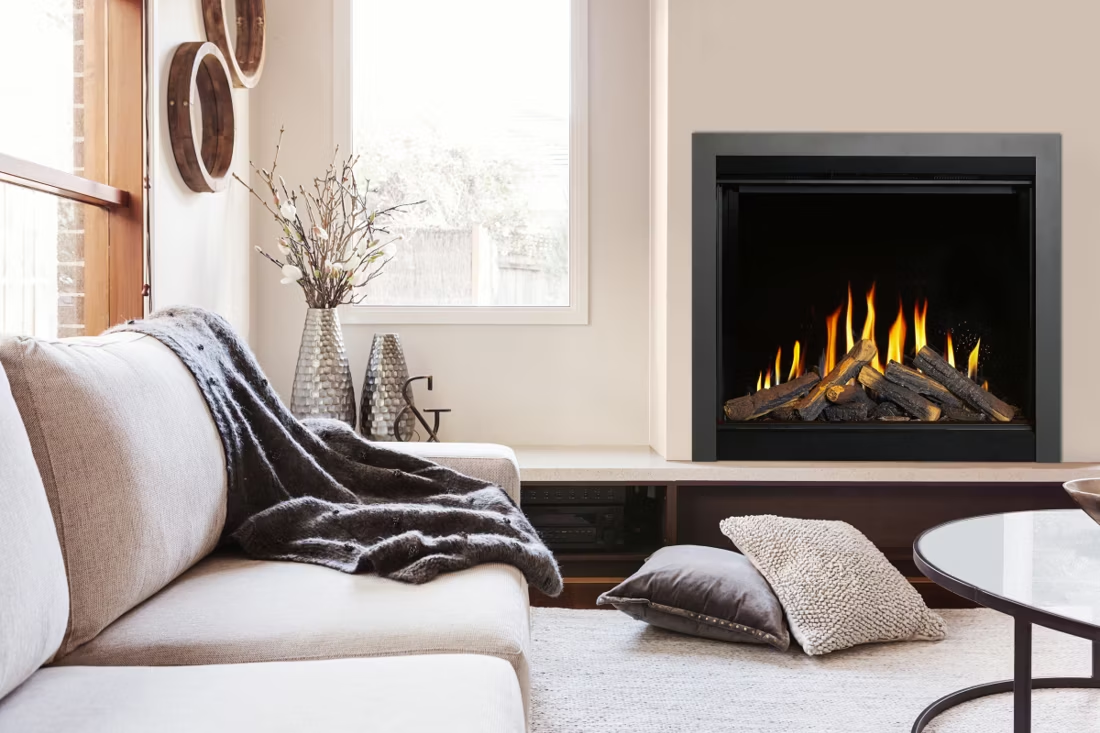
Four fuels. One honest answer for Lenoir County.
Three steps. No salesperson until you're ready.
Tell us about your project
Your zip code, your situation, and the fuel you're leaning toward—or let the answers point you to one.
See what's actually available
The brands dealers within 100 miles genuinely carry—real options, never a catalog mirage.
Get your dealer & Project Guide
A trusted local dealer, plus the free Project Guide & Parts List that names every component of the job.
Frequently Asked Questions
Which fuel works best in Lenoir County?
For most homes here, it comes down to gas or electric. With an average winter low around 35°F and only a light winter heating load, Lenoir County just doesn't get the sustained cold that makes wood or pellet stoves worth the investment as primary heat—that math changes dramatically in a place like Duluth, Minnesota, but not here. Gas fireplaces and inserts are the popular choice for reliable supplemental heat and instant ambiance, running on propane in most rural stretches and natural gas in and around Kinston where service is available. Electric fireplaces are just as common, especially for bedrooms, sunrooms, and homes where running a gas line isn't practical. Wood-burning fireplaces still exist in plenty of older Kinston and La Grange homes, mostly for atmosphere and as manual backup heat during ice storms, when the power grid—not the furnace—is what fails first.
Do I need a permit to install a fireplace in Lenoir County?
Generally yes, for anything beyond a plug-in electric unit. Gas fireplace, insert, or stove installs require a building permit plus a separate gas-line permit and licensed gas-fitter for the connection work. Within Kinston, permits run through the city; outside city limits, they go through the Lenoir County building inspections office. Built-in electric fireplaces that need new wiring or a dedicated circuit typically require an electrical permit, while a plug-and-play electric unit usually doesn't need one at all. Most local retailers handle this paperwork as part of the installation, so homeowners rarely have to navigate it solo.
Is wood heat practical in Lenoir County's climate?
Not as a primary heat source, and it's worth being upfront about that. Lenoir County's mild coastal-plain winters mean a full-time wood stove rarely pencils out the way it would in a genuinely cold-climate market. That said, plenty of homes here still have a wood-burning fireplace, and the county's bottomland hardwoods—oak, hickory, and maple, plus pine for kindling—make self-cut firewood easy to come by. The most common real-world use case: occasional evening fires for atmosphere, and a manual backup heat source during the ice storms that periodically knock out power across eastern North Carolina. If that's your use case, a basic wood-burning insert or a well-maintained existing masonry fireplace covers it—you likely don't need a high-output catalytic stove built for 20-hour overnight burns.
Are pellet stoves available in Lenoir County?
They're uncommon, and for the same reason wood isn't a primary heat fuel here—the mild winters don't create enough demand to justify the appliance or the fuel logistics. Regional pellet brands like Lignetics, Hamer Pellet Fuel, and Greenway Renewable Energy do supply the broader Southeast, but most of that product moves toward colder markets rather than staying in Lenoir County. A small number of rural homeowners install pellet stoves as backup heat for extended outages, since pellets store more compactly than firewood, but it's a minority choice—most local retailers carry gas and electric as their core lineup and can special-order pellet equipment on request.
What's the difference between propane and natural gas fireplace options in Lenoir County?
It mostly comes down to where you live. Properties in and around Kinston may have access to natural gas service, which means a direct-connect fireplace with no on-site fuel storage. Out in La Grange, Pink Hill, Deep Run, and the rest of the county's rural stretches, propane is the standard—either a buried tank with scheduled delivery or a smaller above-ground tank for a single appliance. Installation costs are similar either way; the real difference is ongoing fuel logistics. If you're not sure what's available at your address, a local retailer can check before you commit to a unit.
What's the typical cost range for fireplace installation across fuel types in Lenoir County?
Gas fireplace, insert, or stove: roughly $4,000–$9,000 depending on whether it's a straightforward conversion or requires new gas line and venting work. Electric fireplace: $200–$2,500 for the unit itself, with $300–$1,000 in labor for anything beyond a plug-in install—which covers most wall-mount and insert projects. Wood-burning fireplace or insert: $3,500–$8,000 for a typical retrofit, on the higher end because fewer local installers specialize in it given lower demand. Pellet stove: similar to wood, often with a longer lead time since it's a special-order item for most Lenoir County dealers rather than something kept in stock.
Can a fireplace actually lower my heating bill?
Yes—by creating a comfort zone. A furnace heats every square foot of the house just to warm the one room you're in; a gas fireplace on low burns roughly a sixth of the gas a typical furnace does. Set the furnace around 55–60 degrees as a baseline, then heat the rooms your family actually uses. Families who heat this way commonly save $20–$60 a month.
Wood, gas, pellet, or electric—how do I choose?
Match the fuel to your life, not the other way around. Wood: lowest fuel cost and total power-outage independence, but you're hauling and stacking. Gas: press a button, set a thermostat, no maintenance to speak of. Pellet: wood economics with automatic feeding, in exchange for weekly cleaning and a need for electricity. Electric: plugs in anywhere with honest supplemental heat. Nobody regrets the fuel that fits how they actually live.
What are the biggest mistakes people make buying a fireplace?
Five come up constantly: budgeting for the unit but not the full job (vent, gas line, electrical, finish work); drowning in options instead of starting from style and fuel; buying without an in-home preview; handing installation to a handyman instead of a pro; and giving up out of sheer indecision. Every one is avoidable with a clear plan—step one, step two, step three.
How much should I budget for a fireplace?
For an average home—covering the fireplace, the vent pipe, and basic installation—a budget between $3,900 and $5,500 gives you a lot of options across wood, gas, and pellet. By the time you add finish work, gas line, and electrical, the average complete installation lands between $5,000 and $12,000 all-in. In a remodel or new build, a good rule is to put about 2.5% of the total project cost toward the fireplace.
Stove and Fireplace Dealers in Lenoir County
Listings include WhyFire partner dealers, dealers we have verified as authorized for the brands we recommend, and established local businesses that carry hearth products. Every listing shows which one it is. The ones marked Preferred run on WhyFire's software, so they can show you real pricing and book your appointment right here. No manufacturer pays for placement. How we verify dealers →
Rand Wade Oil Company
Mallard Oil & Gas
Affordable Energy Solutions
Hart's Hearth & Homestead
Rutherford Equipment, Inc.
Get matched with a Lenoir County hearth dealer.
Tell us about your project and we'll match you with a trusted local retailer and send a free Project Guide & Parts List—the right unit, the vent kit, and a plan built for your home in Lenoir County.
Find Your Fireplace →