
A Pellet Stove Is a Specialty Choice in Leland's Mild Winters.
With only 2,326 heating degree days a year, most Leland homes don't need a dedicated pellet appliance—but for the right homeowner, one still makes sense. We'll help you figure out if it's you.
Every Project Starts From One of These Five Situations
Coastal Carolina winters rarely call for it.
Leland sits at just 18 feet of elevation near the Cape Fear coast, in climate zone 3A, where the average winter low is a mild 36°F and the heating season adds up to only 2,326 heating degree days a year. Compare that to a place like Duluth, Minnesota, which racks up more than 9,000—and it's clear why pellet stoves, built for sustained cold-weather heating loads, aren't a mainstream fixture in Brunswick County. Most Leland homes rely on heat pumps or gas for the handful of genuinely cold nights each winter.
That said, a small number of Leland homeowners do install pellet stoves—usually for the ambiance of a real flame, as supplemental heat in a sunroom or detached space, or because they split time with a property further inland or up north where pellet heat makes more sense. If that's you, I can still connect you with a dealer who carries pellet units and knows how to size and vent one correctly for a coastal Carolina home. Just know going in that this is a specialty install here, not a default one—and your dealer options will be fewer than in a place where pellet heat is the norm.
Three steps. No salesperson until you're ready.
Tell us about your project
Your zip code, your situation, and the fuel you're leaning toward—or let the answers point you to one.
See what's actually available
The brands dealers within 100 miles genuinely carry—real options, never a catalog mirage.
Get your dealer & Project Guide
A trusted local dealer, plus the free Project Guide & Parts List that names every component of the job.
Frequently Asked Questions
Are pellet stoves actually used in Leland, NC?
Not commonly, no. With average winter lows around 36°F and a short, mild heating season, most Brunswick County homes heat with a heat pump or gas rather than a wood-pellet appliance. Pellet stoves are built for climates that need many hours of sustained output—think the Upper Midwest or northern New England—and Leland's climate simply doesn't demand that. The homeowners who do install one here are usually after the look and feel of a real fire, a secondary heat source for a sunroom or garage, or they have ties to a colder-climate property. It's a legitimate but niche choice locally.
How much does a pellet stove installation cost in Leland?
Nationally, a pellet stove or insert installation typically runs $3,000 to $6,500 depending on the unit, venting path, and whether an existing chimney or masonry fireplace is being converted. Leland doesn't have the installer density of a higher-demand pellet market, so expect fewer competing quotes and possibly a bit of travel time built into the estimate from whichever regional dealer takes the job. A vented, direct-vent pellet insert into an existing fireplace tends to land on the lower end; a new freestanding unit with fresh venting and electrical work for the auger and blower runs higher.
Where can I buy pellets near Leland?
Because pellet heat isn't heavily used along the Brunswick County coast, you won't find pellets stacked at every hardware store the way you might in a colder market. Regional brands like Lignetics, Hamer Pellet Fuel, and Greenway Renewable Energy supply the Carolinas and are the most likely options a local dealer will special-order or keep limited stock of. Expect to plan ahead and buy in bulk once or twice a season rather than picking up a bag on demand—your dealer can set up a standing order if you go this route.
Will a pellet stove keep my house warm during a hurricane outage?
Not on its own. Pellet stoves rely on an electric auger and blower to feed fuel and circulate heat, so when Duke Energy Progress power goes down after a coastal storm, a pellet stove goes down with it unless you have a battery backup or generator running. If storm-driven outages are your main concern, a propane or natural gas fireplace with a standing pilot is the more resilient choice for Leland—it can operate with little or no electricity. Pellet heat here is better thought of as everyday supplemental warmth, not emergency backup.
What size pellet stove does a Leland home actually need?
Smaller than you'd guess. With only 2,326 heating degree days a year and winter lows rarely dropping much below the mid-30s, most Leland homeowners who add a pellet stove are heating a single room, a sunroom, or a detached space rather than the whole house. A small to mid-size unit (rated for 1,000–1,500 sq ft) is plenty for the vast majority of local installs. Oversizing is a real risk here—a stove sized for a Midwest winter will run you out of the room on all but the coldest nights Leland sees.
Do I need a permit to install a pellet stove in Leland?
Yes—pellet stove and insert installations typically require a building permit through Brunswick County, along with an electrical permit if new wiring is run for the appliance's auger and blower. Because pellet installs are uncommon locally, it's worth confirming with your installer that they're familiar with the county's process rather than assuming it's routine paperwork. There are no air quality restrictions or burn bans to navigate in Leland—Brunswick County has no listed air quality concerns—so permitting here is strictly a building and electrical code matter.
Pellet stove or gas fireplace—which makes more sense in Leland?
For most Leland homes, gas wins. Natural gas and propane fireplaces are the standard choice here, they don't need a fuel hopper refilled or ash emptied, and they can be set up with a standing pilot that works through power outages—a meaningful advantage in hurricane season. A pellet stove offers a more authentic flame and lower fuel cost per BTU in climates that burn it heavily, but in a market with only 2,326 heating degree days, most homeowners don't burn enough to make that math matter. Pellet tends to be the choice of someone who specifically wants the pellet-stove experience, not someone comparison-shopping on efficiency alone.
Is a pellet stove cheaper to run than my heat pump here?
Probably not by much, and possibly not at all. Duke Energy Progress residential rates in Leland run about 15.5 cents per kWh, and with a mild climate zone 3A winter, a heat pump doesn't have to work very hard most days. Pellet fuel has to be purchased, hauled, and stored, and pellet appliances still draw electricity for the auger and blower. In a colder market with a long heating season, pellets often beat electric resistance heat on cost—but Leland's short season narrows or erases that gap. Run the numbers with a local dealer before assuming pellet saves you money here.
What's the difference between a pellet stove and a pellet insert?
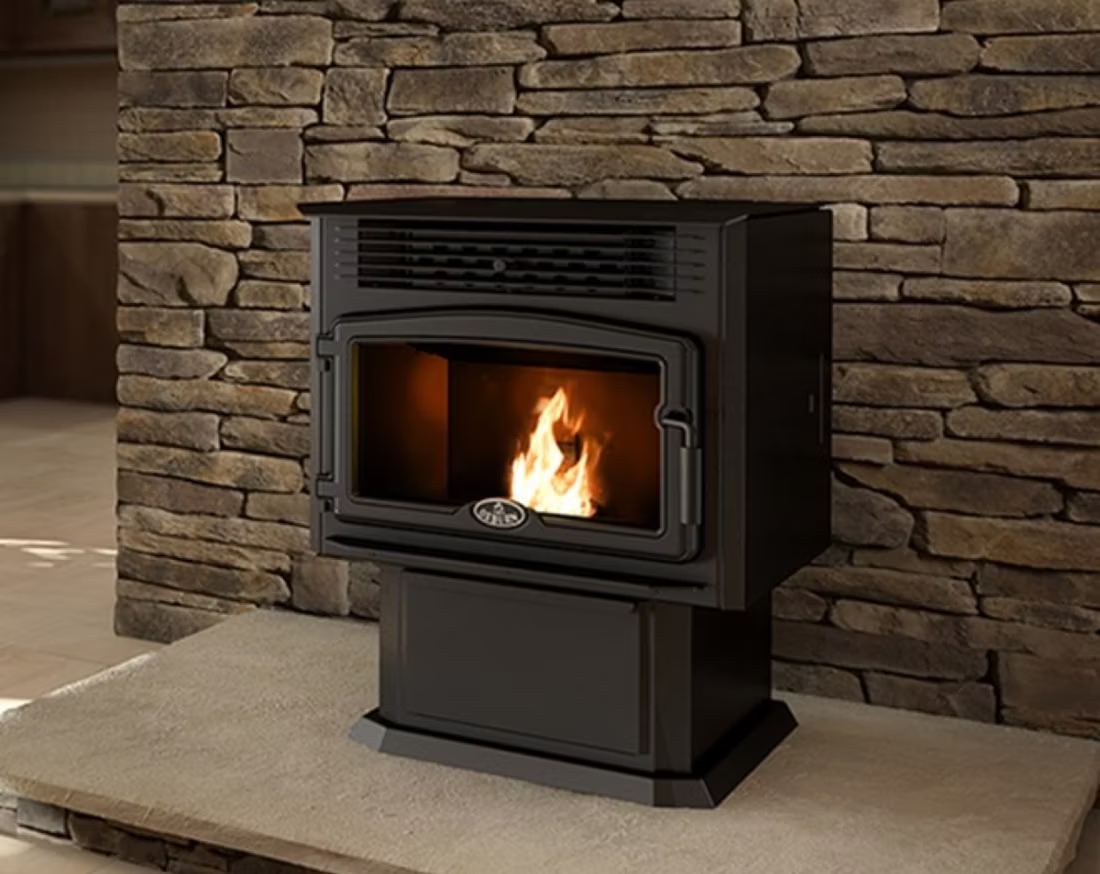
A pellet stove is a freestanding unit that sits on its own hearth pad and vents out through a wall or roof—it can go almost anywhere with the right clearances. A pellet insert is built to slide into an existing masonry fireplace opening, using a liner run up the existing chimney for venting. Leland has relatively few older homes with masonry fireplaces compared to a legacy coal- or wood-heating region, so freestanding pellet stoves are somewhat more common locally when this fuel is chosen at all. A dealer can tell you quickly which fits your specific fireplace situation, if you have one.
Why is a fireplace insert so efficient?
An insert does two things: it seals the chimney completely, so you stop losing air you already paid to heat, and it radiates warmth into the room through the firebox and glass. Most add a heat-exchange fan that pulls cool room air underneath, wraps it around the hot firebox, and pushes it back out warm. Your home is more efficient before you've even lit the first fire.
What's the difference between an insert and a zero-clearance fireplace?
An insert is a fireplace that slides into a pre-existing wood-burning fireplace—if you don't have one, there's nothing to insert it into. A zero-clearance fireplace is built into a framed wall, which makes it the answer for remodels and new construction. Simple test: existing masonry fireplace means insert; blank or framed wall means zero-clearance.
Can a fireplace actually lower my heating bill?
Yes—by creating a comfort zone. A furnace heats every square foot of the house just to warm the one room you're in; a gas fireplace on low burns roughly a sixth of the gas a typical furnace does. Set the furnace around 55–60 degrees as a baseline, then heat the rooms your family actually uses. Families who heat this way commonly save $20–$60 a month.
Does a fireplace add value to my home?
On average, a fireplace adds back to the home about the same amount you spent installing it. Add the monthly savings from heating the rooms you actually use instead of the whole house—often hundreds of dollars a year—and the value case is strong before you even count what a fire does for how your family uses the room.
Nearby Dealers
Hearth shops serving Leland and the surrounding area.
Pellet Brands Stocked Around Leland
Manufacturers will point you to the nearest stocking dealer.
Find your pellet stove in Leland.
Tell us about your home and whether pellet heat is the right fit for your situation. We'll match you with a local dealer who actually carries and installs pellet appliances in this market, and send over a free Project Guide & Parts List—including the vent kit—for your project.
Find Your Fireplace →