
Real Heat, Zero Venting, for Lake Junaluska Cottages.
No chimney, no gas line, no exterior venting—just plug-in or hardwired warmth for the lake's historic cottages and retreat-center rooms. Find the right unit and connect with a trusted local dealer.
Every Project Starts From One of These Five Situations
Simple heat for a lake town built on historic cottages.
Lake Junaluska sits at 2,674 feet in the Haywood County foothills outside Waynesville, built up around the lake and the Lake Junaluska Assembly, the United Methodist retreat and conference center whose cottages and lodges date back to the early 1900s. Winters here average a low of 24°F with a moderate winter heating load for the Blue Ridge—roughly half of what a place like Duluth, Minnesota logs in a typical winter. Central heat pumps do most of the work in newer homes, but a lot of the lake's older cottages and Assembly buildings were framed without masonry chimneys or gas service, which makes adding zone heat to a single sunroom or bedroom a real problem for wood or gas.
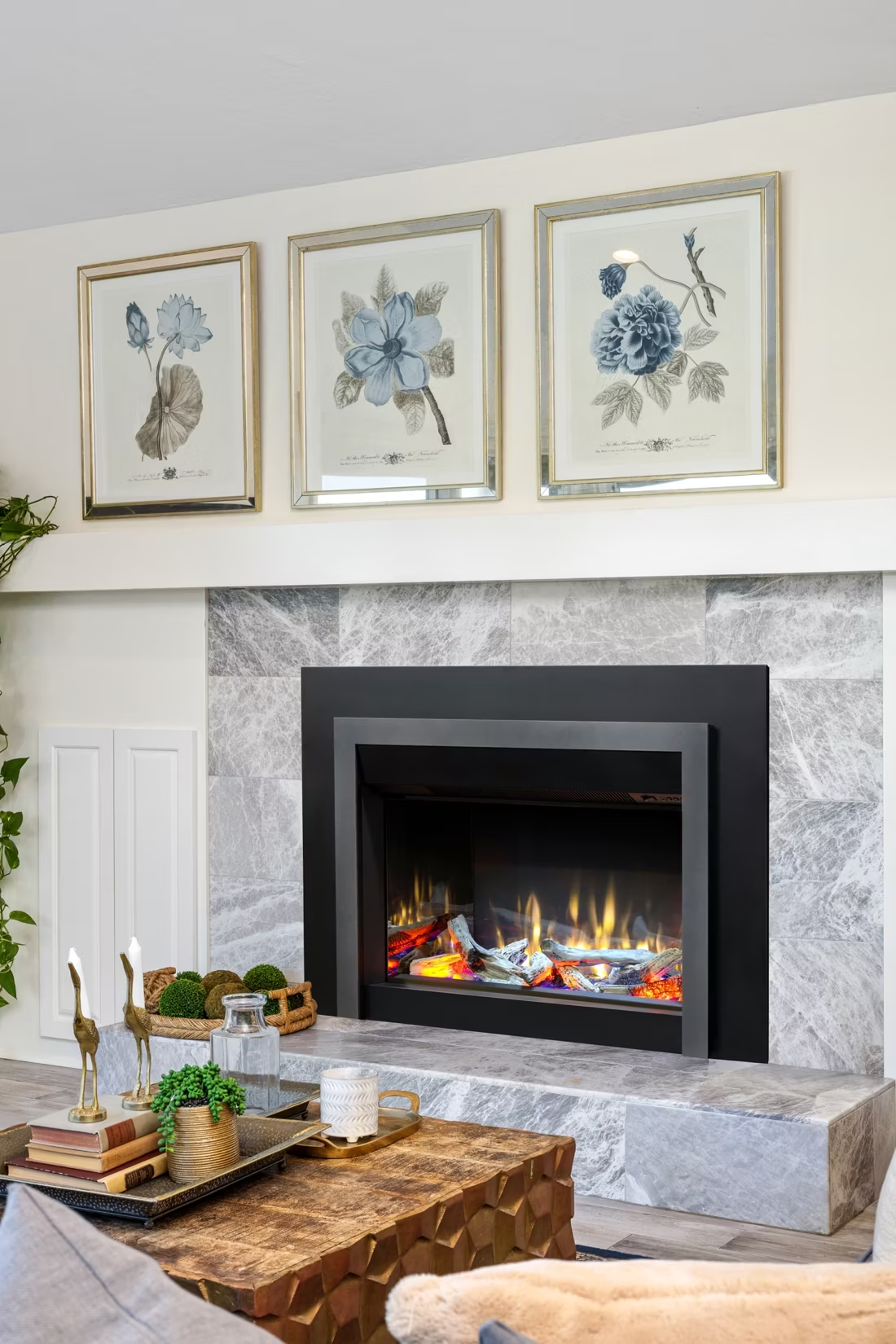
That's where electric fireplaces fit. There's no flue to run through a historic roofline, no gas line to trench in from the street, and no combustion byproducts to worry about in a tightly built retreat-center room. Duke Energy Progress serves the area at roughly 15.5 cents per kWh, which keeps a supplemental electric unit affordable to run for zone heat even though it isn't meant to replace a home's primary heat pump on the coldest nights. For seasonal cottage owners, renters, and residents of the Assembly's age-restricted housing, that combination of low install cost, no permitting hassle, and instant on-off operation is usually the deciding factor.
Three steps. No salesperson until you're ready.
Tell us about your project
Your zip code, your situation, and the fuel you're leaning toward—or let the answers point you to one.
See what's actually available
The brands dealers within 100 miles genuinely carry—real options, never a catalog mirage.
Get your dealer & Project Guide
A trusted local dealer, plus the free Project Guide & Parts List that names every component of the job.
Frequently Asked Questions
How much does it cost to install an electric fireplace in Lake Junaluska?
Plug-in electric inserts that drop into an existing masonry firebox or a simple wall-mounted unit typically run $300 to $900 installed, since they use a standard household outlet and don't require an electrician. Built-in electric fireplaces set into a new wall or mantel surround, which often need a dedicated 240-volt circuit run by a licensed electrician, land closer to $1,500 to $2,500 once framing and trim work are included. For Lake Junaluska's older cottages, the plug-in insert route into an existing fireplace opening is by far the more common project, since it avoids opening up historic wall assemblies.
Do I need a permit for an electric fireplace in Haywood County?
Generally no—because electric units don't involve combustion, venting, or gas piping, most plug-in inserts and freestanding electric stoves fall outside the building permits Haywood County requires for wood or gas appliances. If your installer is running a new dedicated circuit for a built-in unit, that electrical work typically does require a permit and inspection, which a licensed electrician will pull as part of the job. This is one of the reasons electric is the fastest path to adding heat in a cottage governed by the Lake Junaluska Assembly's architectural review guidelines—there's no exterior chimney or vent cap to get approved.
How much does it cost to run an electric fireplace here?
At Duke Energy Progress's residential rate of about 15.5 cents per kWh, a typical 1,500-watt electric fireplace running 5 hours an evening costs roughly $1.15 a day, or about $35 a month if used nightly through the cooler months. Most owners in Lake Junaluska run these units as supplemental zone heat in a single room—a sunroom, a lakeside cottage bedroom, or a retreat-center guest room—rather than as whole-home heat, which keeps the actual electric bill impact modest even at the higher wattage settings.
Will my electric fireplace still work if the power goes out?
No—and this matters in the mountains around Haywood County, where winter ice storms occasionally knock out Duke Energy Progress service for a day or more. An electric fireplace is entirely dependent on grid power, unlike a wood stove or a battery-backed gas unit. If backup heat during outages is a priority for a year-round residence here, most local dealers recommend pairing an electric fireplace for everyday convenience with a wood stove or gas insert elsewhere in the home for outage coverage, rather than relying on electric alone.
Can I put an electric fireplace into a historic cottage without changing its exterior?
Yes, and this is the main reason electric is popular around the lake. Many Lake Junaluska Assembly cottages fall under architectural guidelines that restrict exterior alterations, including new chimneys or vent terminations. An electric insert set into an existing fireplace opening, or a slim wall-mounted unit, changes nothing about the building's exterior and typically doesn't trigger the same review process a new gas line or masonry chimney repair would. It's the option that lets owners add real supplemental heat to a 1920s or 1950s cottage without touching the roofline.
What type of electric fireplace works best for a small lake cottage?
For the compact footprints common around Lake Junaluska, a firebox insert sized to an existing masonry opening or a freestanding electric stove (styled like a small wood stove but with no venting) both work well and heat a single room effectively. Larger built-in wall units with mantel surrounds suit primary living rooms in newer construction near Waynesville. Because most electric fireplaces here are used for zone heat rather than whole-home heating, sizing is more about matching the unit's look to the room than hitting a specific BTU target—a local dealer can walk through the options during an in-home look.
What's the difference between an electric insert and a plug-in electric stove?
An electric insert is built to slide into an existing fireplace firebox, giving an old masonry opening a finished, glowing look without any venting work—a natural fit for the lake's older cottages that already have a fireplace but no working chimney liner. A freestanding electric stove sits on the floor like a wood stove and can go anywhere near an outlet, which suits rooms without an existing fireplace at all, such as an Assembly guest room or a converted porch. Both run on standard household current and neither requires the gas line or masonry work a wood or gas unit would.
Electric vs. wood—which makes more sense for a Lake Junaluska property?
Wood remains a practical option here—oak, hickory, and maple are all common through the Nantahala-Pisgah National Forests, where a personal-use cutting permit runs about $20 per cord during the May-to-October season, and a wood stove keeps working through a power outage. But wood requires a real chimney and clearances that many of the lake's historic cottages and Assembly buildings simply weren't built with, and installing one can mean cutting into a wall or roofline that's subject to architectural review. Electric skips all of that: no chimney, no permit fight, and a straightforward retrofit into an existing firebox. For a seasonal lake cottage or a retreat-center room used a few nights at a time, electric is usually the simpler and cheaper answer; for a year-round home where wood heat and outage backup matter more, wood is worth the extra installation complexity.
How much heat can I actually expect from an electric fireplace in this climate?
Most residential electric fireplaces put out 4,000 to 9,000 BTUs, which comfortably heats a single room in Lake Junaluska's relatively mild mountain winters—24°F average lows and a winter heating load well short of harsher inland climates. That's plenty for supplemental warmth in a bedroom, sunroom, or den, but it's not designed to replace a central heat pump on the coldest nights of the year. Think of it as zone heat for the room you're actually using, not a whole-house solution.
Can I put a TV above my fireplace?
Yes—with an asterisk. Fireplaces are hot and TVs don't like heat. Either put a mantel between them to deflect rising warmth, or choose a fireplace with heat-management technology that creates a cool zone on the wall above—the wall stays around 125 degrees, barely warm, while the room still gets full heat. If you like clean lines and don't want a mantel, heat management is the answer.
How much does an electric fireplace cost to run?
With the heater on, a typical unit draws about 1,500 watts—at average electric rates that's roughly 20 cents an hour. Run the flame effect alone and it costs pennies; the flames are LED-driven and use about as much power as a light bulb. There's no pilot light, no fuel delivery, and essentially no maintenance.
Can I install a fireplace myself?
If you're putting a fire in your house on purpose, it's best to work with an expert. Unless you're genuinely experienced in framing, gas line, vent pipe, and the national code on clearances to combustibles, have a professional do it—and ideally the same company that sells you the fireplace, so warranty, service, and liability all live under one roof.
Can a fireplace actually lower my heating bill?
Yes—by creating a comfort zone. A furnace heats every square foot of the house just to warm the one room you're in; a gas fireplace on low burns roughly a sixth of the gas a typical furnace does. Set the furnace around 55–60 degrees as a baseline, then heat the rooms your family actually uses. Families who heat this way commonly save $20–$60 a month.
Nearby Dealers
Hearth shops serving Lake Junaluska and the surrounding area. Every listing shows whether it is a WhyFire partner, a dealer we have verified as authorized for the brands we recommend, or a local business carrying hearth products. No manufacturer pays for placement. How we verify dealers →
We’ve paused dealer listings for this connection today. Enter your zip or postal code above to find dealers near you, or come back tomorrow.
Popular Electric Brands
Where each brand came from, what's inside it today, and every current model. No brand pays to be here. Not every dealer carries every brand, so enter your zip code to see what's sold near Lake Junaluska.
Fireplace Xtrordinair
Fireplace Xtrordinair, now often called FireplaceX, is the fireplace brand of Travis Industries, Inc., of Mukilteo, Washington.
5 electric models →DaVinci
DaVinci Custom Fireplaces is a brand of Travis Industries, Inc., of Mukilteo, Washington, the company behind Lopi and Fireplace Xtrordinair.
5 electric models →Kozy Heat
Kozy Heat was founded in 1976 by Dudley Hussong in Lakefield, Minnesota, and incorporated as Hussong Manufacturing Co., Inc. in 1978.
3 electric models →Forge & Flame
Forge & Flame is the stove brand Hearth & Home Technologies introduced in August 2023 to bring Vermont Castings, Harman, and Quadra-Fire under one name.
1 electric model →Electric Service in Lake Junaluska
An electric fireplace's heater draws about 1,500 watts—pennies per hour at local rates.
Duke Energy Progress - (Nc)
Find your electric fireplace in Lake Junaluska.
Tell us a bit about your cottage or home and we'll help you find the right electric fireplace or insert, plus a free Project Guide & Parts List and a trusted local dealer to install it.
Find Your Fireplace →