
Warmth and ambiance, built for barrier-island living.
No chimney, no gas line, no venting through a home on pilings—just a fireplace that works with how Kitty Hawk actually builds. Find the right unit and connect with a trusted local dealer.
Every Project Starts From One of These Five Situations
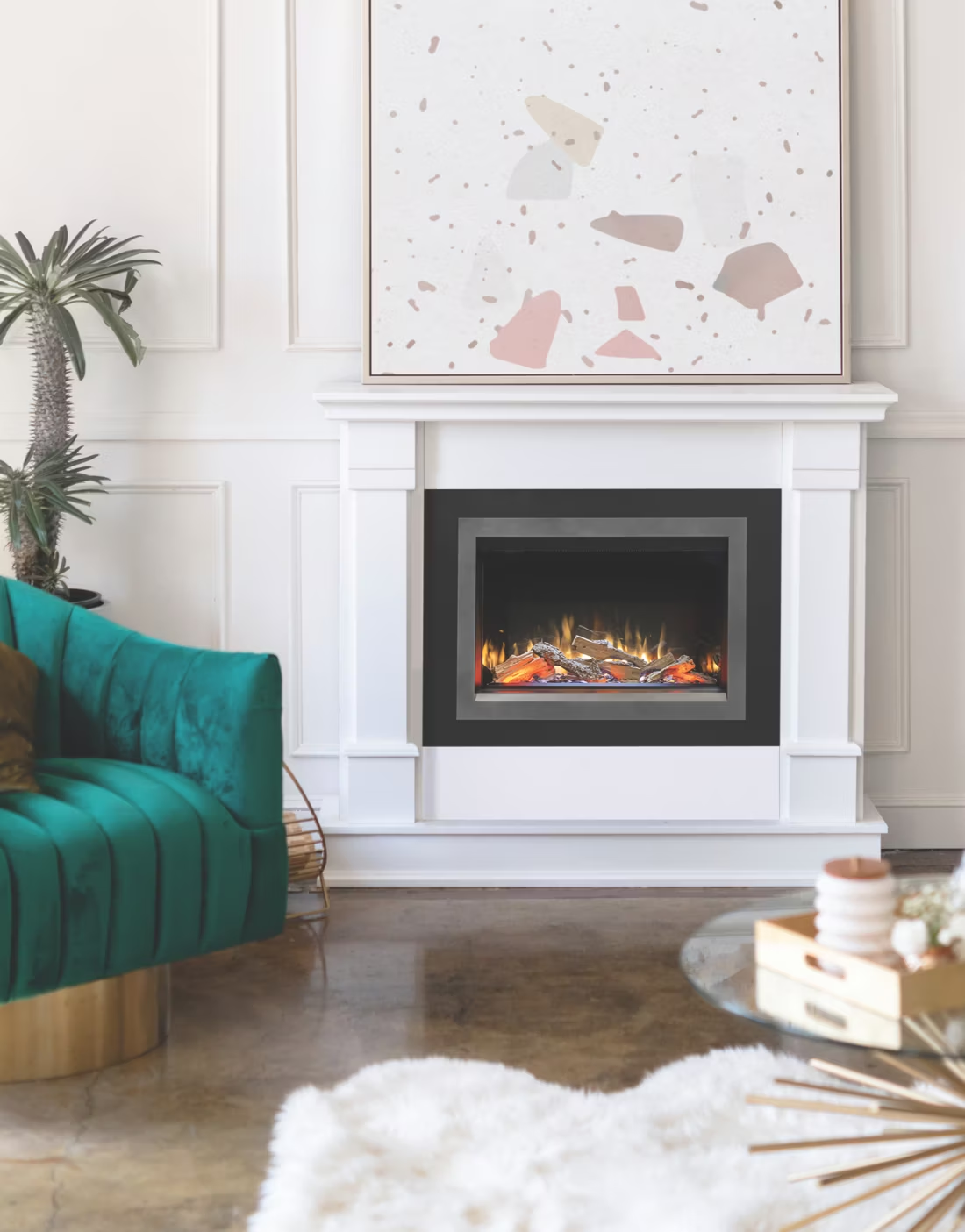
The Outer Banks calls for a fireplace that skips the chimney.
Kitty Hawk sits at 11 feet of elevation on the Outer Banks barrier island, where winter lows average a mild 36°F and the area has a winter heating load that's a fraction of what a place like Duluth, MN sees in a single hard winter. This is Climate Zone 3A: coastal, humid, and mild enough that most homes need supplemental warmth on cold nights, not a primary heating system running around the clock.
Most homes here are elevated on pilings to meet flood-zone construction requirements, which makes running a masonry chimney or exterior gas vent through the structure impractical for a lot of owners—and many properties in Kitty Hawk turn over as vacation rentals, where insurance carriers and property managers favor appliances with no open flame and no combustion byproducts. An electric fireplace plugs into an existing circuit or runs off a dedicated line an electrician adds in an afternoon, delivers real supplemental heat on the rare 30-degree night, and runs on power from either Virginia Electric & Power Co (Dominion Energy) or Tideland Electric Membership Corporation, depending on which side of town you're on.
Three steps. No salesperson until you're ready.
Tell us about your project
Your zip code, your situation, and the fuel you're leaning toward—or let the answers point you to one.
See what's actually available
The brands dealers within 100 miles genuinely carry—real options, never a catalog mirage.
Get your dealer & Project Guide
A trusted local dealer, plus the free Project Guide & Parts List that names every component of the job.
Frequently Asked Questions
How much does an electric fireplace installation cost in Kitty Hawk?
A plug-in electric stove or mantel unit runs $200 to $800 installed, since it typically just needs an existing 120-volt outlet and a hearth pad if it's freestanding. A built-in electric insert or wall-mounted linear unit—the more common choice for beach house living rooms and primary bedrooms—runs $1,500 to $4,000 once you factor in framing, trim, and often a dedicated 15- or 20-amp circuit run by an electrician. Homes on pilings sometimes add a bit to that if the electrician has to route wiring through a crawlspace or elevated floor system. Local dealers will quote the exact number after seeing your wall and electrical panel.
Why electric instead of wood or gas in Kitty Hawk?
Wood and pellet stoves are genuinely rare on this stretch of the Outer Banks—winters are mild enough that they're rarely needed as primary heat, and firewood storage and ash cleanup are awkward in a small, salt-air, flood-zone home that may sit empty for weeks between rental bookings. Gas is available as propane (there's no natural gas main on the barrier island), and it's a solid choice for owners who want a real flame. But electric wins for a lot of Kitty Hawk homeowners because it needs no fuel delivery, no venting through pile-built walls, and no open flame for a property that might be occupied by renters who've never operated a fireplace before.
Will an electric fireplace actually produce meaningful heat?
Most residential electric fireplaces put out 4,600 to 9,000 BTUs—comparable to a good space heater—with a thermostat and often a remote or app control. Given Kitty Hawk's mild winter average of 36°F, that's genuinely enough to take the chill off a living room or bedroom on the coldest nights without leaning on a central heat pump. It's supplemental heat, not a whole-home furnace replacement, which fits how most owners here actually use it: ambiance most of the year, real warmth on the handful of nights it dips into the 20s.
Do I need a permit to install an electric fireplace in Kitty Hawk?
A simple plug-in unit that uses an existing outlet typically doesn't require a permit. A built-in insert or wall-mounted unit that needs a new dedicated circuit does require an electrical permit, inspected through Dare County's building and electrical inspections process (Kitty Hawk contracts county inspectors for this work). Licensed electricians who do this regularly will pull the permit as part of the job—it's a same-day inspection in most cases, not a hold-up.
What's the best type of electric fireplace for a Kitty Hawk beach or rental property?
For salt-air coastal homes, look for units with sealed electronics and corrosion-resistant components—brands like Dimplex, Napoleon, and Touchstone build models specifically marketed for coastal and humid environments. Wall-mounted linear units are popular in open-concept beach house living rooms because they don't compete for floor space on a home already tight on square footage. For rental properties, a simple on/off wall switch or basic remote (rather than a complex app-based system) tends to hold up better against guest turnover and reduces the odds of a confused renter calling the property manager.
How much does it cost to run an electric fireplace here?
Residential electric rates in Kitty Hawk run about 14.1 cents per kWh through Virginia Electric & Power Co (Dominion Energy) or 16.2 cents per kWh through Tideland Electric Membership Corporation, depending on which utility serves your address. A typical 1,500-watt electric fireplace running on the heat setting costs roughly 21 to 24 cents an hour to operate—a few dollars for an evening's use, and far less if you're mostly running it on the flame-only ambiance setting, which draws only a few watts.
Are electric fireplaces a good fit for vacation rental properties?
Yes, and it's one of the main reasons they've become common on this part of the Outer Banks. No open flame and no combustion byproducts simplify insurance and liability for short-term rental owners, there's no fuel to restock between guest stays, and most units run safely unattended with a built-in shutoff or overheat sensor. Property managers generally prefer a simple, foolproof control—flip a switch or press one remote button—over anything a guest could misuse.
What's the difference between a wall-mounted, built-in insert, and freestanding electric fireplace?
A wall-mounted linear unit hangs on the wall like a large TV and needs only a nearby outlet or a short electrical run—the fastest, least invasive option for an elevated home. A built-in insert is designed to be recessed into a wall cavity or an existing masonry opening, giving a more traditional fireplace look but requiring more carpentry and electrical work. A freestanding electric stove sits on the floor and plugs directly into a standard outlet, making it the simplest option for renters or owners who don't want any wall modification at all. Most Kitty Hawk installs lean toward wall-mounted or freestanding given the pile-construction layout of many homes.
Electric vs. gas—which is right for my Kitty Hawk home?
Gas (propane, since there's no natural gas line on the barrier island) delivers a larger, more authentic flame and real radiant heat output, but it requires a propane tank, gas line work, and venting—a bigger commitment for a piling-built home. Electric requires no fuel storage, no venting, and far less installation complexity, at the cost of a smaller flame effect and lower maximum heat output. For primary residences where the owner wants a genuine fire experience, gas is worth the extra install work. For rental properties, secondary bedrooms, or anyone who wants ambiance without adding a fuel system to a flood-zone home, electric is usually the simpler and more practical call.
Does an electric fireplace need a vent or chimney?
No—that's its superpower. An electric fireplace needs a wall and an outlet, period. No vent pipe, no gas line, no clearances to design around, which is why it works in bedrooms, offices, apartments, and walls where venting a gas or wood unit would be impractical or impossible. Installation is typically the simplest and least expensive of any fireplace type.
Do electric fireplaces actually produce heat?
Yes—most put out around 4,800–5,000 BTUs from a standard outlet, which comfortably warms a bedroom, office, or den as a comfort-zone heater. What they won't do is carry a whole house the way wood, gas, or pellet can. Think of electric as ambiance-first with honest supplemental heat: flames on with no heat in July, flames plus warmth in January.
How much should I budget for a fireplace?
For an average home—covering the fireplace, the vent pipe, and basic installation—a budget between $3,900 and $5,500 gives you a lot of options across wood, gas, and pellet. By the time you add finish work, gas line, and electrical, the average complete installation lands between $5,000 and $12,000 all-in. In a remodel or new build, a good rule is to put about 2.5% of the total project cost toward the fireplace.
Can I install a fireplace myself?
If you're putting a fire in your house on purpose, it's best to work with an expert. Unless you're genuinely experienced in framing, gas line, vent pipe, and the national code on clearances to combustibles, have a professional do it—and ideally the same company that sells you the fireplace, so warranty, service, and liability all live under one roof.
Nearby Dealers
Hearth shops serving Kitty Hawk and the surrounding area. Every listing shows whether it is a WhyFire partner, a dealer we have verified as authorized for the brands we recommend, or a local business carrying hearth products. No manufacturer pays for placement. How we verify dealers →
We’ve paused dealer listings for this connection today. Enter your zip or postal code above to find dealers near you, or come back tomorrow.
Popular Electric Brands
Where each brand came from, what's inside it today, and every current model. No brand pays to be here. Not every dealer carries every brand, so enter your zip code to see what's sold near Kitty Hawk.
Fireplace Xtrordinair
Fireplace Xtrordinair, now often called FireplaceX, is the fireplace brand of Travis Industries, Inc., of Mukilteo, Washington.
5 electric models →DaVinci
DaVinci Custom Fireplaces is a brand of Travis Industries, Inc., of Mukilteo, Washington, the company behind Lopi and Fireplace Xtrordinair.
5 electric models →Kozy Heat
Kozy Heat was founded in 1976 by Dudley Hussong in Lakefield, Minnesota, and incorporated as Hussong Manufacturing Co., Inc. in 1978.
3 electric models →Forge & Flame
Forge & Flame is the stove brand Hearth & Home Technologies introduced in August 2023 to bring Vermont Castings, Harman, and Quadra-Fire under one name.
1 electric model →Electric Service in Kitty Hawk
An electric fireplace's heater draws about 1,500 watts—pennies per hour at local rates.
Virginia Electric & Power Co
Tideland Electric Member Corp
Find your electric fireplace in Kitty Hawk.
Tell us a bit about your home and we'll help you find the right electric fireplace or insert, plus a free Project Guide & Parts List—the exact parts and electrical requirements for your space—and a trusted local dealer to install it.
Find Your Fireplace →