
Warm, reliable heat for Haywood County's mountain winters.
From Waynesville to Maggie Valley to the cabins around Lake Junaluska, gas fireplaces bring instant, clean heat to Blue Ridge homes. Find the right unit and get matched with a trusted local dealer.
Every Project Starts From One of These Five Situations
Instant heat for cold Blue Ridge nights.
Haywood County sits in the heart of the Blue Ridge, with Waynesville and Canton down in the valleys and elevations climbing toward 5,000 feet near Cataloochee and the Cruso backcountry. At roughly 4,793 heating degree days, winters here are meaningfully colder than the Piedmont but nowhere near the severity of places like Madison, Wisconsin—still, with winter lows averaging 24°F and mountain cold settling into hollows overnight, a reliable secondary heat source matters, especially in the second homes and cabins scattered around Maggie Valley and Lake Junaluska.
Natural gas service in Haywood County is concentrated in and around Waynesville and Canton, where PSNC Energy (Dominion Energy North Carolina) runs lines to town customers. Outside those corridors—in Clyde, Bethel, Iron Duff, and the more remote hollows toward Cruso and Maggie Valley—propane is the standard fuel, delivered and stored in a tank on the property. Either way, a properly installed gas fireplace or insert delivers flip-of-a-switch heat without the wood-splitting and ash cleanup that comes with a traditional hearth, which is a big part of why so many mountain vacation properties and full-time residences alike have made the switch.
Three steps. No salesperson until you're ready.
Tell us about your project
Your zip code, your situation, and the fuel you're leaning toward—or let the answers point you to one.
See what's actually available
The brands dealers within 100 miles genuinely carry—real options, never a catalog mirage.
Get your dealer & Project Guide
A trusted local dealer, plus the free Project Guide & Parts List that names every component of the job.
Frequently Asked Questions
How much does a gas fireplace installation cost in Haywood County?
A direct-vent gas insert installed into an existing masonry fireplace typically runs $3,500 to $8,500 in Haywood County, depending on the unit and whether a gas line is already in place. A new built-in gas fireplace for a remodel or new construction—with framing, venting, and a fresh gas or propane line—usually falls between $4,500 and $11,000. Homes outside the Waynesville and Canton natural gas corridors that need a new propane tank set will land toward the higher end once tank installation and line runs are factored in. Local dealers provide a firm quote after seeing the space in person, especially important given how much mountain terrain and existing chimney condition can vary.
Can I convert my existing wood fireplace to gas?
Yes—this is a common project in Haywood County's older Waynesville homes and the cottages around Lake Junaluska, many of which were built with a masonry wood fireplace decades ago. A gas insert slides into that existing firebox and vents through a stainless liner run up the original chimney, so you keep the look of the fireplace while gaining real heat output and losing the wood handling. Whether you're on natural gas in town or propane out in the county, most installers can configure the insert for either fuel—the main variable in cost is whether new gas line or a propane hookup needs to be run to the fireplace.
Do I need natural gas, or can I use propane?
Either works, and which one you use largely comes down to where in Haywood County you live. Natural gas lines from PSNC Energy reach Waynesville and Canton and their immediate surroundings, so homes already on the natural gas grid there can add a fireplace with a straightforward line tap. Everywhere else—Maggie Valley, Clyde, Bethel, Iron Duff, and the more rural stretches toward Cruso—propane is the default, supplied from a tank on the property by a regional propane company. Nearly every gas fireplace and insert on the market can be set up for either fuel; your installer configures the correct orifice and regulator for whichever you have.
Will my gas fireplace work during a power outage?
Most modern gas fireplaces will, which matters in a mountain county where ice storms and downed lines can knock out power for days at a time. Units with intermittent pilot ignition (IPI) run on a battery backup—typically standard AA batteries inside the unit—that keeps the fireplace operational even with the grid down. Valor fireplaces take a different approach: the pilot's thermocouple generates its own small electrical charge, so the unit needs no batteries at all. For a cabin near Maggie Valley or a full-time home up a gravel road outside Cruso, that kind of no-battery reliability is worth asking your local dealer about directly.
What's the difference between a gas fireplace, gas insert, and gas stove?
A gas fireplace is a fully built-in unit framed into a wall—the right call for new construction or a major remodel. A gas insert is built to slide into an existing masonry firebox, using your current chimney as the vent path, which makes it the natural choice for the many older homes around Waynesville and Canton that already have a wood fireplace. A gas stove is freestanding, sitting on the floor on its own hearth pad, and works well in a room without any existing chimney or fireplace opening—cabins and additions around Lake Junaluska often go this route.
Do I need a permit to install a gas fireplace in Haywood County?
Yes—new gas fireplace and insert installations require a building permit through Haywood County Permits and Inspections, and any new gas or propane line work requires a licensed gas-fitter. Most established hearth dealers handle the permitting and inspection scheduling as part of the installation, which is one of the practical reasons to go with a certified installer rather than a handyman: they coordinate the gas line, venting, and inspection sign-off together instead of leaving you to manage separate trades.
What's the difference between vented and vent-free gas fireplaces?
Vented gas fireplaces—direct-vent or B-vent—pull combustion air from outside and exhaust the byproducts back outside through a sealed flue. Vent-free units burn without any exterior venting, releasing water vapor and small amounts of combustion byproducts into the room, and are legal in North Carolina under specific room-sizing and oxygen-sensor requirements. For full-time Haywood County homes and especially smaller mountain cabins with tighter square footage, a vented direct-vent unit is the safer, more universally recommended choice—it delivers real heat output without any tradeoff on indoor air quality. Ask a local dealer to walk you through both if you're weighing a vent-free option for a small space.
How often should my gas fireplace be serviced?
Plan on an annual inspection, ideally before the coldest stretch of winter sets in. A qualified technician checks the burner, pilot assembly, venting, and gas connections, and cleans the glass and firebox interior—a much lighter service than a wood chimney sweep, but still important for safe operation. Expect to pay somewhere in the $150 to $250 range for a standard annual service call from a local gas hearth technician, with a small travel charge likely for properties out toward Cruso or the far reaches of Maggie Valley.
Gas vs. wood—which is right for my home?
Wood remains a strong option in Haywood County—the Nantahala-Pisgah National Forests issue cutting permits for about $20 per cord during the May-to-October season, and oak, hickory, maple, and pine are all common and readily available locally, which keeps fuel costs low for homeowners willing to split and stack. Wood also keeps running with no electricity, a real advantage during mountain ice storms. Gas trades that self-sufficiency for convenience: instant on-off heat, no ash or creosote, and a cleaner look, which is a big part of why gas has become the default choice for second homes and vacation properties around Lake Junaluska and Maggie Valley where owners aren't around to tend a fire regularly. Plenty of full-time county residents run both—wood for backup and ambiance, gas for daily, low-effort heat.
Can I put a TV above my fireplace?
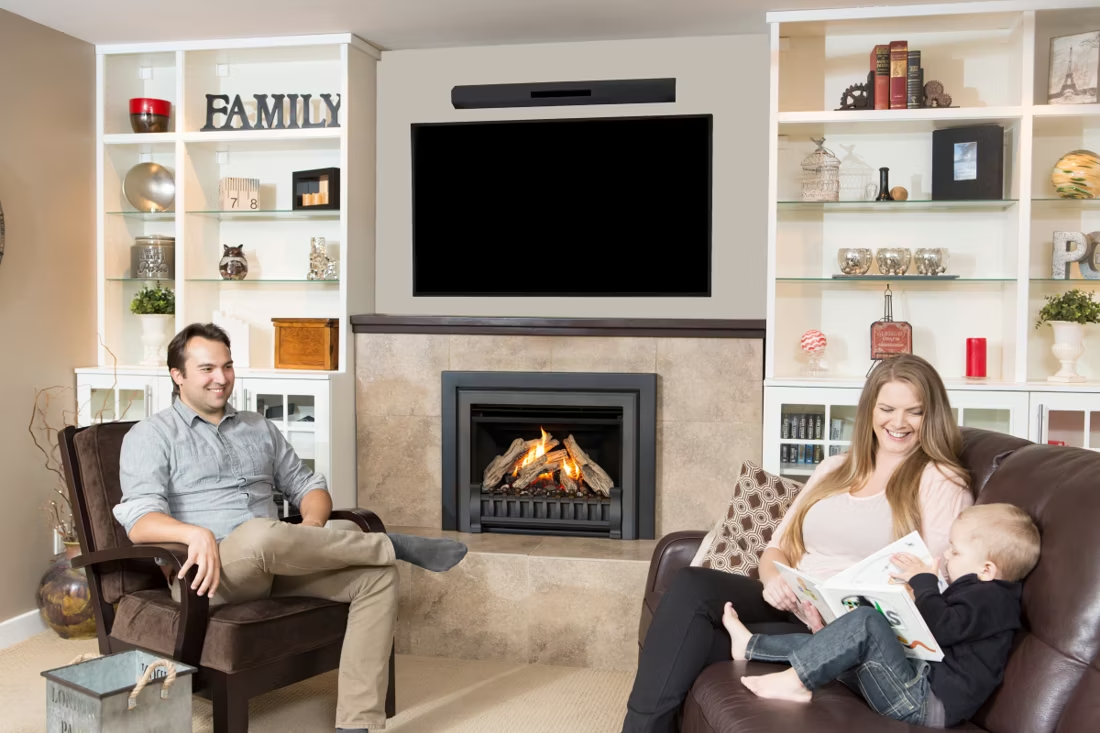
Yes—with an asterisk. Fireplaces are hot and TVs don't like heat. Either put a mantel between them to deflect rising warmth, or choose a fireplace with heat-management technology that creates a cool zone on the wall above—the wall stays around 125 degrees, barely warm, while the room still gets full heat. If you like clean lines and don't want a mantel, heat management is the answer.
What's the difference between an insert and a zero-clearance fireplace?
An insert is a fireplace that slides into a pre-existing wood-burning fireplace—if you don't have one, there's nothing to insert it into. A zero-clearance fireplace is built into a framed wall, which makes it the answer for remodels and new construction. Simple test: existing masonry fireplace means insert; blank or framed wall means zero-clearance.
How much should I budget for a fireplace?
For an average home—covering the fireplace, the vent pipe, and basic installation—a budget between $3,900 and $5,500 gives you a lot of options across wood, gas, and pellet. By the time you add finish work, gas line, and electrical, the average complete installation lands between $5,000 and $12,000 all-in. In a remodel or new build, a good rule is to put about 2.5% of the total project cost toward the fireplace.
Does a fireplace add value to my home?
On average, a fireplace adds back to the home about the same amount you spent installing it. Add the monthly savings from heating the rooms you actually use instead of the whole house—often hundreds of dollars a year—and the value case is strong before you even count what a fire does for how your family uses the room.
Stove and Fireplace Dealers in Haywood County
Albert’s Clean Sweep, The Fireplace Shop
Find your gas fireplace in Haywood County.
Tell us about your home and we'll put together a free Project Guide & Parts List—the exact parts for your gas fireplace project, including the vent kit, plus a match with a trusted local Haywood County dealer to install it.
Find Your Fireplace →