
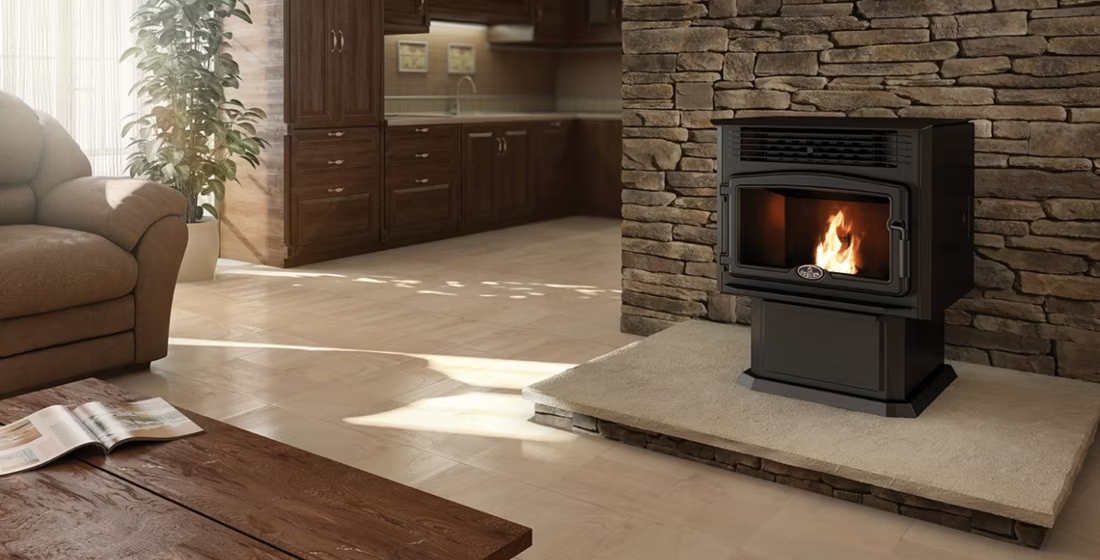
A pellet stove in Gastonia is the exception, not the rule.
With mild Piedmont winters and heat pumps doing most of the work, pellet stoves are a niche choice here—but if you want one, we'll connect you with a local dealer who actually stocks and installs them.
Every Project Starts From One of These Five Situations
Gastonia's mild winters mean most homes don't need it.
Gastonia sits in climate zone 3A at just 744 feet of elevation, with an average winter low around 31°F and a winter heating load of about 3,004—less than half of what a place like Duluth, MN or Burlington, VT racks up to stay warm. Duke Energy Carolinas, Rutherford Electric Member Corporation, and the City of Gastonia's own municipal utility all serve the area with reliable electric service, and most homes here heat with a central heat pump or gas furnace as the default. That's a very different reality than the wood-and-pellet culture you'd find in a place with hard, long winters.
Because of that, pellet stoves are genuinely uncommon in Gastonia—we're not going to pretend otherwise. The homeowners who do install one are usually adding supplemental zone heat to a chilly sunroom or finished basement, want a real flame without the wood-handling and chimney work of a traditional stove, or are looking for a heat source that doesn't depend entirely on the grid. If that's you, regional pellet brands like Lignetics, Hamer Pellet Fuel, and Greenway Renewable Energy are sold through hearth retailers and farm-supply stores across the Charlotte metro, and a trusted local dealer can tell you honestly whether a pellet stove makes sense for your specific room and budget.
Three steps. No salesperson until you're ready.
Tell us about your project
Your zip code, your situation, and the fuel you're leaning toward—or let the answers point you to one.
See what's actually available
The brands dealers within 100 miles genuinely carry—real options, never a catalog mirage.
Get your dealer & Project Guide
A trusted local dealer, plus the free Project Guide & Parts List that names every component of the job.
Frequently Asked Questions
Are pellet stoves actually common in Gastonia?
Not really, and we think you should know that going in. Gastonia's climate zone (3A) and modest winter heating load of around 3,004 mean most homes get through winter fine on a heat pump or gas furnace from Duke Energy Carolinas or one of the area's other utilities. Pellet stoves in this market are almost always a supplemental or lifestyle choice—a second heat source for a sunroom, a hedge against outages, or simply because a homeowner likes the look and ease of a pellet fire over a traditional wood stove. If that describes your situation, it's a fine choice; we just won't tell you it's mainstream here, because it isn't.
What does a pellet stove installation cost in Gastonia?
Expect somewhere in the $3,500 to $6,500 range for a freestanding pellet stove with proper PL-vent installation through an exterior wall, depending on the unit and how far the vent run needs to travel. Because pellet stoves are a smaller share of the local hearth market compared to gas inserts, fewer installers here specialize in them—so it's worth confirming your dealer has actual pellet-venting experience rather than general fireplace or HVAC background. A local dealer can quote a firm number after seeing the room.
Do I need a permit to install a pellet stove in Gastonia?
Yes—a building permit is required through your local jurisdiction, either the City of Gastonia or Gaston County depending on your address, since a pellet stove involves new wall penetrations and venting. The good news is Gastonia has no winter air quality advisories or burn curtailment periods like you'd see in a wood-smoke non-attainment area, so there's no seasonal restriction on when you can run the stove. Most dealers who install pellet stoves locally will pull the permit as part of the job.
Should I get a pellet stove or just install gas heat?
For most Gastonia homes, gas wins on convenience and is the more standard choice in this market—natural gas service is widely available here, and a gas insert or fireplace gives you instant on-off heat with no hopper to fill and no ash to empty. Pellet stoves require you to load fuel regularly and run on electricity for the auger and blower, which is a real tradeoff. Where pellet stoves make more sense is if you specifically want the visual and radiant feel of a real flame-and-ember fire without wood handling, or you're in a home without easy gas access and don't want to run a propane line.
How does a pellet stove compare to just running electric heat here?
Electric heat is genuinely standard in Gastonia—Duke Energy Carolinas serves most of the city at roughly $0.1394 per kWh, while City of Gastonia's municipal service runs closer to $0.124 and Rutherford Electric Member Corporation is around $0.1313, so rates vary a bit by exact address. An electric fireplace or heater is simpler to install and run than a pellet stove, with no fuel deliveries or hopper maintenance. Pellet stoves can still make sense if you want a real fire and lower per-BTU fuel cost than electric resistance heat, but given how mild Gastonia winters run, plenty of homeowners here find electric supplemental heat does the job just fine.
Will a pellet stove keep my house warm if the power goes out?
Not on its own—pellet stoves need electricity to run the auger that feeds fuel and the blower that pushes heat into the room, so a standard unit goes dark in an outage unless you have a battery backup or generator. That's an important thing to know if backup heat during ice storms is your main reason for considering one. If true no-power heat is the priority, a traditional wood stove is the better fit, though wood stoves are just as uncommon here as pellet units given Gastonia's mild climate—most homeowners in this position end up planning around a portable generator instead.
Where can I buy pellets in the Gastonia area?
Regional brands including Lignetics, Hamer Pellet Fuel, and Greenway Renewable Energy are sold through hearth shops and farm-and-home retailers across the Charlotte metro, and most stock hardwood blends made from oak, hickory, and pine byproducts sourced from Piedmont-area mills. Because pellet stoves are a smaller niche in this market, availability is thinner than in wood-heavy climates, so it's worth asking your dealer about local pellet supply and pricing before you commit to a specific stove brand that requires a particular pellet type.
What size pellet stove makes sense for a Gastonia home?
Given the area's average winter low of around 31°F, most Gastonia installations don't need a whole-home-rated unit—a smaller stove sized for supplemental or zone heating, in the 1,200 to 1,800 square foot range, covers the sunroom, den, or basement most homeowners are actually trying to warm. Sizing a unit for the far colder climate loads you'd see in the northern Midwest would be overkill here and would likely lead to short-cycling. A local dealer can size the right unit once they know your room and insulation.
How do I find someone who actually knows pellet stoves in Gastonia?
That's exactly the gap we're built to close. Because pellet stoves are uncommon in this market, general contractors and even some hearth retailers here have far more experience with gas inserts than with pellet venting and hopper systems. Tell us about your home and we'll match you with a trusted local dealer who genuinely carries and installs pellet stoves—not just whoever happens to be closest—and you'll get a free Project Guide & Parts List with the exact vent kit and parts your installer needs before they ever quote the job.
Why is my open fireplace making my house colder?
Open fireplaces suck—literally. As the fire burns, it consumes air your furnace already paid to heat and pulls it out through the chimney, so the house is actually colder after the fire goes out than before you lit it. An insert fixes this: it seals the chimney, puts fixed glass across the front, and turns that hole in your house into a real heat source.
How often does a pellet stove need cleaning?
A clean pellet stove is a happy pellet stove. Plan on cleaning the burn pot about once a week when you're burning regularly—ash and clinkers gum up the air holes just like a pellet barbecue. Most pellet stove problems trace back to skipped cleaning that nobody explained up front. Some designs make it easy with a trapdoor burn pot: pull a lever and the gunk drops into the ash pan.
Can a fireplace actually lower my heating bill?
Yes—by creating a comfort zone. A furnace heats every square foot of the house just to warm the one room you're in; a gas fireplace on low burns roughly a sixth of the gas a typical furnace does. Set the furnace around 55–60 degrees as a baseline, then heat the rooms your family actually uses. Families who heat this way commonly save $20–$60 a month.
How much should I budget for a fireplace?
For an average home—covering the fireplace, the vent pipe, and basic installation—a budget between $3,900 and $5,500 gives you a lot of options across wood, gas, and pellet. By the time you add finish work, gas line, and electrical, the average complete installation lands between $5,000 and $12,000 all-in. In a remodel or new build, a good rule is to put about 2.5% of the total project cost toward the fireplace.
Nearby Dealers
Hearth shops serving Gastonia and the surrounding area. Every listing shows whether it is a WhyFire partner, a dealer we have verified as authorized for the brands we recommend, or a local business carrying hearth products. No manufacturer pays for placement. How we verify dealers →
High Country Fireplaces
Piedmont Chimney & HVAC LLC
Kamin Fireplace & Service
Future Energy Of Shelby
Viridien Patio + Fireplace
Ron Steel Plumbing
EarthCore Industries
Charlotte Grill Co.
Carolina Fireplace & Granite
Quality Propane
Viridien Patio + Fireplace
Home Flame
Queen City Sweeps, LLC
York County Natural Gas
Pellet Brands Stocked Around Gastonia
Manufacturers will point you to the nearest stocking dealer.
Find your pellet stove in Gastonia.
Tell us about your space and we'll match you with a local dealer who actually stocks and installs pellet stoves in Gastonia, plus a free Project Guide & Parts List for your project.
Find Your Fireplace →