
Keep Your Family Warm and Safe—No Matter What
Garner's winters average a low near 28°F and stay short and mild by national standards. Wood stoves aren't the default heat source here, but plenty of homeowners still want one for ambiance, ice-storm backup, or a real fire on the handful of genuinely cold nights. We'll help you find the right fit and a trusted local dealer.
Every Project Starts From One of These Five Situations
A supplemental fire, not a primary heat source.
Garner sits at 290 feet in North Carolina's Piedmont, in climate zone 4A, with a winter heating season that's a fraction of what a place like Burlington, VT or Duluth, MN sees. Most Garner homes heat with a Duke Energy-served heat pump or natural gas system, and for the majority of the winter, that's plenty. Wood stoves aren't a common or necessary purchase here the way they are in colder parts of the country, and we'd rather tell you that upfront than pretend otherwise.
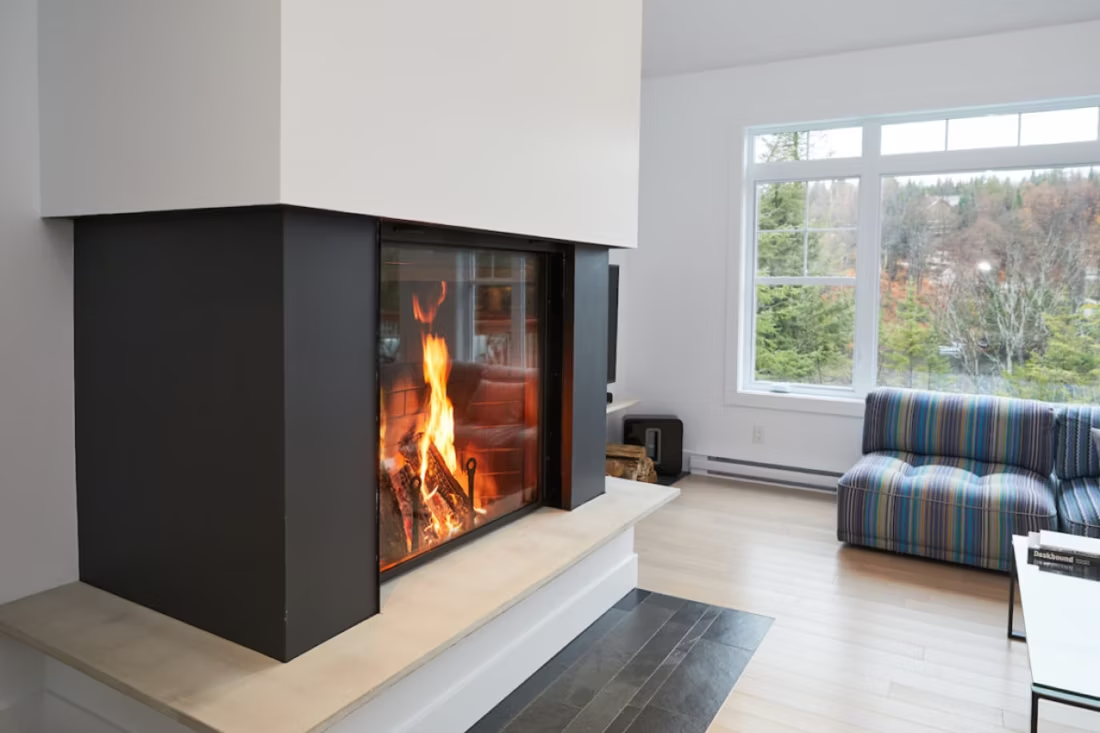
That said, a meaningful number of Garner homeowners still install a wood stove or fireplace insert—not to replace the furnace, but for the ambiance of a real fire, for the backup heat it provides when ice storms knock out Duke Energy Progress or Duke Energy Carolinas service (which happens most winters somewhere in Wake County), or simply because they like burning the oak, hickory, and pine that are abundant and cheap in this part of the state. If that's you, a local dealer can help you size a stove correctly for occasional use rather than round-the-clock heating.
Three steps. No salesperson until you're ready.
Tell us about your project
Your zip code, your situation, and the fuel you're leaning toward—or let the answers point you to one.
See what's actually available
The brands dealers within 100 miles genuinely carry—real options, never a catalog mirage.
Get your dealer & Project Guide
A trusted local dealer, plus the free Project Guide & Parts List that names every component of the job.
Frequently Asked Questions
How much does a wood stove installation cost in Garner?
Most Garner homes don't already have a masonry chimney built for wood burning, since gas and electric heat are the norm, so a new freestanding wood stove typically means building a full venting system from scratch—Class A chimney pipe running through the roof, a code-compliant hearth pad, and clearance work. Nationally that kind of install runs roughly $4,000 to $9,000 depending on the stove and the ceiling height involved. If you're one of the fewer Garner homes with an existing wood-burning fireplace, converting it to a high-efficiency wood insert is usually cheaper since the chimney's already there. A local dealer will give you a firm number after seeing your home.
What size wood stove do I actually need in Garner?
Smaller than you'd think. With winter lows averaging 28°F and a short, mild heating season, Garner doesn't demand the all-night, single-digit-temperature burn times that stoves in places like Bozeman, MT or Fargo, ND are built for. A small to mid-size EPA-certified stove (rated for 1,000–1,800 square feet) is plenty for supplemental heat in a Garner living room or den, even on the occasional 20-degree night. Oversizing a stove for a climate this mild just means smoldering, low fires and creosote buildup—a local dealer can right-size it to how you'll actually use it.
Where do I find a wood stove installer near Garner?
Look for NFI (National Fireplace Institute) or CSIA (Chimney Safety Institute of America) certification—it matters more here, not less, because wood-burning installers are a smaller specialty in the Raleigh-Durham-Garner market than gas or HVAC contractors. A hearth-focused installer will know Wake County's clearance and permitting requirements for a new wood-burning appliance, which a general contractor may not. Avoid handyman installs on venting—a chimney built wrong in a wood-rare market like this one doesn't get caught by chance the way it might where every third house has one and neighbors compare notes.
Wood stove or wood insert—which fits a Garner home?
If your Garner home has an existing wood-burning masonry fireplace—more common in older neighborhoods near downtown Garner than in newer subdivisions—an insert is usually the better move. It uses the chimney you already have and turns an inefficient open hearth into real, controllable heat. If you don't have an existing fireplace, which describes most newer Garner construction built around gas or electric heat, a freestanding stove with new venting is the only path, and it gives you more flexibility on where it goes in the house.
Do I need a permit to install a wood stove in Garner?
Yes—a new wood-burning appliance requires a building permit through Wake County or Town of Garner building inspections, depending on your address, and the unit needs to meet current EPA emissions standards. Unlike mountain or forested parts of the state, there's no nearby national forest cutting-permit system to worry about here—Garner is firmly suburban Piedmont, so firewood is something you buy from a local supplier rather than cut yourself under a Forest Service permit. Air quality isn't a local concern either; Wake County has no wood-smoke non-attainment issues, so there are no seasonal burn curtailments to plan around.
What's the best wood stove for Garner's climate?
Since Garner rarely sees the extended sub-zero stretches that demand a 20-hour catalytic burn, a mid-size non-catalytic EPA-certified stove from a brand like Jøtul, Vermont Castings, or Pacific Energy is usually the better fit—easier to operate for occasional use, less finicky to maintain than a catalytic unit, and sized right for supplemental heat rather than round-the-clock output. If you want a stove primarily for its look and the occasional fire, prioritize glass size and firebox visibility over maximum BTU output.
How often should a wood stove chimney be inspected in Garner?
Once a year, ideally in late summer before the first cool snap. North Carolina's humid subtropical summers mean any moisture that gets into an unused chimney over the warm months can combine with creosote in ways that drier climates don't deal with as much, so an annual CSIA-standard sweep and inspection matters even for a stove that only gets lit a dozen times a winter. Light users in Garner still need this check—infrequent use doesn't mean no creosote, and a chimney that only runs occasionally can actually build up glazed creosote faster from cooler, slower burns.
Where can I get firewood in Garner?
Oak, hickory, maple, and pine are all common locally, and Wake County has several tree services and firewood suppliers that deliver seasoned cordwood—expect $250 to $375 a cord depending on species and how well-seasoned it is, with oak and hickory commanding a premium for their longer, hotter burn. Because Garner isn't near significant public forest land, self-cutting under a Forest Service permit isn't really an option the way it would be in the mountains—buying from a local supplier or a tree-removal service is the standard route here.
Should I get a wood stove or just stick with gas or electric heat in Garner?
For everyday heating, gas or a Duke Energy-served heat pump will outperform wood in Garner on convenience and cost predictability—natural gas is widely available here and electric rates run about 14 to 16 cents per kWh, cheap enough that most homes don't need wood as a cost-saving measure. Where wood earns its place is backup: Garner sees ice storms that knock out power for days some winters, and a wood stove is the one heat source that keeps working with no electricity and no gas line. If that resilience matters to you, or you just want the look and feel of a real fire, wood is worth adding alongside—not instead of—your main system.
Why is a fireplace insert so efficient?
An insert does two things: it seals the chimney completely, so you stop losing air you already paid to heat, and it radiates warmth into the room through the firebox and glass. Most add a heat-exchange fan that pulls cool room air underneath, wraps it around the hot firebox, and pushes it back out warm. Your home is more efficient before you've even lit the first fire.
Why is my open fireplace making my house colder?
Open fireplaces suck—literally. As the fire burns, it consumes air your furnace already paid to heat and pulls it out through the chimney, so the house is actually colder after the fire goes out than before you lit it. An insert fixes this: it seals the chimney, puts fixed glass across the front, and turns that hole in your house into a real heat source.
What is an in-home preview and do I need one?
It's a visit where a hearth professional measures your space, confirms the model you picked actually works in your home, and walks the specs—framing, gas line, venting, finish work—before anything is ordered. Some details you just can't know until you see the house. Never make a down payment without one; it's the single most-skipped step that burns buyers.
Can a fireplace actually lower my heating bill?
Yes—by creating a comfort zone. A furnace heats every square foot of the house just to warm the one room you're in; a gas fireplace on low burns roughly a sixth of the gas a typical furnace does. Set the furnace around 55–60 degrees as a baseline, then heat the rooms your family actually uses. Families who heat this way commonly save $20–$60 a month.
Nearby Dealers
Hearth shops serving Garner and the surrounding area. Every listing shows whether it is a WhyFire partner, a dealer we have verified as authorized for the brands we recommend, or a local business carrying hearth products. No manufacturer pays for placement. How we verify dealers →
Smoke Alert
Oak City Fireplace & Outdoor Living
Fireside Distributors Inc
Pro Source Of Raleigh
Viridien Patio + Fireplace
L.g. Jordan Oil & Gas Co.
Brandco Incorporated
Steve Marcom Services
Parker Gas
The Fireplace Depot
Original Grills - Outdoor Kitchen & Grill Store
Home Flame
Find your wood stove in Garner.
Tell us about your home and how you'd actually use a wood stove—ambiance, backup heat, or both—and we'll match you with a trusted local dealer and a free Project Guide & Parts List sized to your space.
Find Your Fireplace →