
Comfortable heat, without the hassle, for Edgecombe County homes.
Instant, even heat for the mild Coastal Plain winters around Tarboro and Rocky Mount—plus a fireplace that still works when an ice storm or hurricane knocks out the power. Find the right unit and get matched with a trusted local dealer.
Every Project Starts From One of These Five Situations
Mild winters, but people still want real warmth.
Edgecombe County sits in the eastern North Carolina Coastal Plain, in climate zone 3A, with a moderate heating season and an average winter low around 30°F—nowhere near the brutal stretches you'd see in a place like Burlington, VT or Duluth, MN, but cold enough for a fair number of nights that call for real heat, not just a space heater in the corner. Older homes around Tarboro were often built with wood-burning masonry fireplaces trimmed in local oak, hickory, or heart pine, but with winters this mild, wood has largely faded as a practical heat source—which is why most of those historic fireplaces sit unused or get converted rather than fed with cordwood.
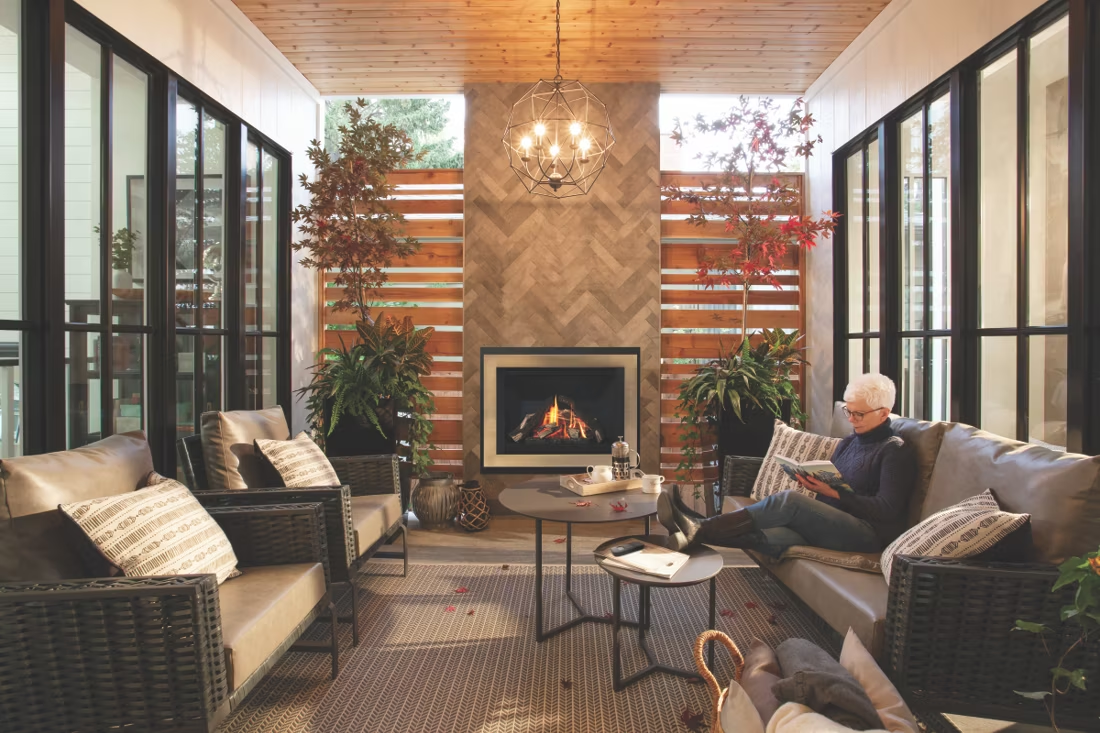
Gas has become the natural replacement. Dominion Energy North Carolina runs natural gas lines through Tarboro and parts of the Rocky Mount side of the county, and propane fills in for homes outside that service area—which is most of rural Edgecombe County. A direct-vent gas fireplace or insert gives you push-button heat for the cool months, a finished look for a living room that no longer needs to double as a woodpile, and—with the right ignition system—a backup heat source when a February ice storm or a lingering tropical system knocks the power out, which isn't a rare event in this part of the state.
Three steps. No salesperson until you're ready.
Tell us about your project
Your zip code, your situation, and the fuel you're leaning toward—or let the answers point you to one.
See what's actually available
The brands dealers within 100 miles genuinely carry—real options, never a catalog mirage.
Get your dealer & Project Guide
A trusted local dealer, plus the free Project Guide & Parts List that names every component of the job.
Frequently Asked Questions
How much does a gas fireplace installation cost in Edgecombe County?
A typical gas fireplace installation in Edgecombe County runs roughly $3,800 to $9,000, depending on the unit and how much gas line and venting work is involved. A direct-vent insert going into an existing masonry fireplace that already has gas nearby sits toward the lower end. A new built-in gas fireplace for a remodel—with framing, a fresh gas line run from the meter, and full venting—lands in the middle to upper range. Homes on propane that need a new tank set typically add to the total. Local dealers give a firm number after seeing the space in person.
Can I convert my existing wood fireplace to gas?
Yes, and it's a common project in the older neighborhoods around Tarboro, where many homes still have their original masonry wood fireplace. A gas insert typically drops into that existing opening and vents through a stainless liner run up the same chimney, so you keep the look of the fireplace without the ash, the creosote, or the need to source oak and hickory every winter. Cost usually falls in the $3,800 to $7,500 range locally, with homes already near a gas line coming in on the lower end and propane conversions running a bit higher once tank work is included.
Do I need natural gas to install a gas fireplace, or can I use propane?
Either works fine. Natural gas service through Dominion Energy North Carolina reaches Tarboro and portions of the Rocky Mount side of Edgecombe County, so homes there with an existing gas water heater or furnace can usually add a fireplace without much extra plumbing. Outside that service footprint—which covers most of the county's rural areas around Pinetops, Speed, Whitakers, and Conetoe—propane from a local supplier is the standard option. Most gas fireplace models can be set up for either fuel; the installer just fits the correct orifice and regulator.
Will my gas fireplace work during a power outage?
Most modern gas fireplaces will, which matters in eastern North Carolina where hurricanes and winter ice storms both cause multi-day outages. Units with intermittent pilot ignition (IPI) run on a small battery backup that kicks in automatically when the power drops, so the fireplace still lights on demand. Valor fireplaces skip the battery question entirely—their pilot system generates its own electricity through the thermocouple, so there's nothing to check or replace. Either way, ask your local dealer which ignition system a given model uses before you buy, since not every unit is built to run without grid power.
What's the difference between a gas fireplace, gas insert, and gas stove?
A gas fireplace is a fully built-in unit installed into a framed wall or new construction opening. A gas insert is sized to slide into an existing masonry fireplace opening, turning an old wood-burning hearth into a sealed, efficient gas unit that vents through the same chimney. A gas stove is a freestanding cast-iron or steel unit that sits out on the floor, similar in shape to a wood stove but running on gas. For Edgecombe County's older homes with an existing fireplace opening, an insert is usually the simplest and most cost-effective upgrade.
Do I need a permit to install a gas fireplace in Edgecombe County?
Yes. Inside Tarboro, permits for a gas fireplace and any associated gas line work go through the Town of Tarboro's building inspections office; for the portion of the county on the Rocky Mount side, permits run through the City of Rocky Mount's inspections department. Everywhere else in unincorporated Edgecombe County, the Edgecombe County Planning & Inspections Department handles it. In every case, a licensed gas installer needs to pull both a building permit and a gas permit, and most established local dealers fold that paperwork into the price of the install so you're not chasing it down yourself.
What's the difference between vented and vent-free gas fireplaces?
Vented (direct-vent) gas fireplaces pull combustion air from outside and exhaust the byproducts back outside through a sealed pipe, which keeps combustion gases out of your living space entirely. Vent-free units burn fuel directly into the room with no outside venting at all—they're legal in North Carolina but come with strict rules on room size, oxygen depletion sensors, and how the room is ventilated. For most Edgecombe County installs, especially anything going into a finished living space, a direct-vent unit is the more common and more broadly recommended choice; it delivers real heat without any tradeoffs on indoor air quality.
How often should my gas fireplace be serviced?
Plan on an annual inspection, ideally in early fall before the first cool nights. A technician checks the burner, pilot assembly, gas connections, and venting, and cleans the glass and interior. It's a lighter lift than a wood chimney sweep, but it's the step that keeps the unit safe and keeps the warranty intact. Local gas appliance service providers typically charge $125 to $225 for the visit.
Gas vs. wood—which is right for my home?
In most of Edgecombe County, this isn't really a close call. With average winter lows around 30°F and a fairly short, mild heating season, wood-burning fireplaces have become mostly decorative here—plenty of older homes still have the masonry chimney and firebox, built when oak, hickory, and pine were the default fuel, but few homeowners are cutting or hauling cordwood for heat anymore. A gas fireplace or insert gives you the same visual warmth with none of the maintenance, lights instantly on cold mornings, and can double as backup heat during a storm-related outage. If you specifically want the smell and crackle of a real wood fire for occasional use, that's still an option through local dealers—it's just no longer the practical choice for regular heating in a climate this mild.
Why is my open fireplace making my house colder?
Open fireplaces suck—literally. As the fire burns, it consumes air your furnace already paid to heat and pulls it out through the chimney, so the house is actually colder after the fire goes out than before you lit it. An insert fixes this: it seals the chimney, puts fixed glass across the front, and turns that hole in your house into a real heat source.
What's the difference between an insert and a zero-clearance fireplace?
An insert is a fireplace that slides into a pre-existing wood-burning fireplace—if you don't have one, there's nothing to insert it into. A zero-clearance fireplace is built into a framed wall, which makes it the answer for remodels and new construction. Simple test: existing masonry fireplace means insert; blank or framed wall means zero-clearance.
How much should I budget for a fireplace?
For an average home—covering the fireplace, the vent pipe, and basic installation—a budget between $3,900 and $5,500 gives you a lot of options across wood, gas, and pellet. By the time you add finish work, gas line, and electrical, the average complete installation lands between $5,000 and $12,000 all-in. In a remodel or new build, a good rule is to put about 2.5% of the total project cost toward the fireplace.
Can I install a fireplace myself?
If you're putting a fire in your house on purpose, it's best to work with an expert. Unless you're genuinely experienced in framing, gas line, vent pipe, and the national code on clearances to combustibles, have a professional do it—and ideally the same company that sells you the fireplace, so warranty, service, and liability all live under one roof.
Stove and Fireplace Dealers in Edgecombe County
Get your free Project Guide & Parts List for a gas fireplace in Edgecombe County.
Tell us about your home and we'll match you with a trusted local dealer and send over a free plan built for your project—the exact parts, the vent kit, and a recommended installer near Tarboro or Rocky Mount.
Find Your Fireplace →