
Find the right fireplace for Edgecombe County.
Fireplace resources for every town in Edgecombe County—from Tarboro to Pinetops to Whitakers. Wood and pellet appliances are uncommon here given the mild Coastal Plain winters, but this hub covers what actually works locally and connects you with a trusted local hearth retailer.
Every Project Starts From One of These Five Situations
Mild Coastal Plain winters shape heating choices in Edgecombe County.
Edgecombe County sits in North Carolina's Coastal Plain, climate zone 3A, with an average winter low around 30°F and a winter heating load only a fraction of what you'd see in a cold-climate city like Duluth, Minnesota—that's a heating season a fraction of the length you'd see in a cold-climate city like Duluth, Minnesota—Edgecombe homes need supplemental heat on cold nights, not a season-long burn. The county is home to about 14,820 residents spread across the county seat of Tarboro and smaller towns like Princeville, Pinetops, Speed, and Whitakers, plus the portion of Rocky Mount that extends into the county. Oak, hickory, maple, and pine grow throughout the area, but with winters this mild, wood heat has never been the primary way most Edgecombe County homes stay warm—gas and electric fireplaces do that work instead.
What you'll find on this hub: gas and electric hearth retailers, service technicians, and fuel suppliers serving every community in the county. Wood-burning and pellet appliances exist here in small numbers—mostly for ambiance or backup during ice storms—so we've noted that honestly rather than pretending they're mainstream. Pick your fuel below to drill into local dealers, installation costs, and recommended units for your specific project in Tarboro, Rocky Mount, or any of the smaller towns in between.
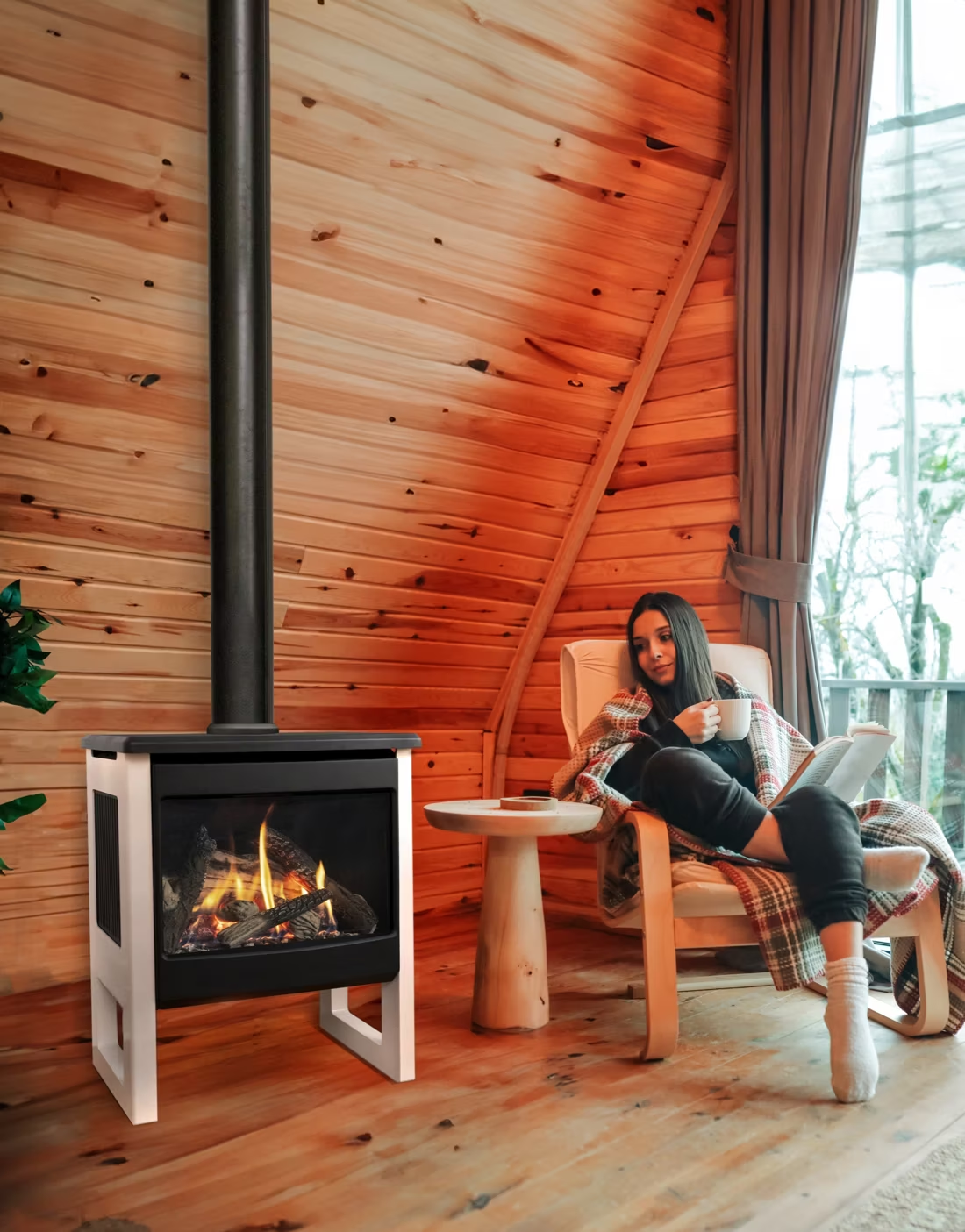
Four fuels. One honest answer for Edgecombe County.
Three steps. No salesperson until you're ready.
Tell us about your project
Your zip code, your situation, and the fuel you're leaning toward—or let the answers point you to one.
See what's actually available
The brands dealers within 100 miles genuinely carry—real options, never a catalog mirage.
Get your dealer & Project Guide
A trusted local dealer, plus the free Project Guide & Parts List that names every component of the job.
Frequently Asked Questions
Which fuel works best in Edgecombe County?
For most Edgecombe County homes, it's gas or electric—not wood or pellet. With only a light winter heating load and winter lows averaging 30°F, this county simply doesn't see the sustained cold that makes wood or pellet heat worth the labor and fuel storage. Gas fireplaces and inserts (natural gas where available, propane elsewhere) give instant, thermostat-controlled heat with none of that upkeep, and work well in a Tarboro or Rocky Mount living room that only needs supplemental heat on the coldest nights. Electric fireplaces are a strong fit too—no venting required, low installed cost, and plenty of heat output for a mild climate like this one. A small number of homeowners still install wood stoves for ambiance or ice-storm backup using local oak or hickory, but it's the exception here, not the rule.
Do I need a permit to install a fireplace in Edgecombe County?
Usually, yes, for gas installations. Gas fireplaces, gas inserts, and gas stoves typically require a building permit through the Edgecombe County Building Inspections Department (or the Town of Tarboro's inspections office if you're inside town limits), plus a separate gas line permit and licensed gas-fitter for the line work itself. Electric fireplaces are generally permit-free for plug-in units, but built-in electric fireplaces that require new wiring or a dedicated circuit do need an electrical permit. Wood stove installations, though uncommon here, still require a permit and must meet current EPA emissions standards if installed new. Most local retailers handle the permitting on your behalf as part of the installation quote.
Are wood-burning fireplaces common in Edgecombe County?
Not really, and that's largely a function of climate. Edgecombe County's winters are mild compared to almost anywhere wood heat is the norm—a heating season closer to a few cold weeks than the months-long burn you'd see in a place like Burlington, Vermont. Local oak, hickory, and pine are plentiful and some rural properties do have wood stoves for occasional use or as a backup during ice storms and power outages, but very few homes here rely on wood as their primary heat source. If you're set on wood heat, a local dealer can still help—just know it's a smaller, more specialized category of installation in this county than gas or electric.
Are pellet stoves available in Edgecombe County?
They exist, but they're rare. Regional pellet suppliers like Lignetics, Hamer Pellet Fuel, and Greenway Renewable Energy operate in the broader Southeast and largely serve colder markets further north and inland—demand for pellet heat in a mild Coastal Plain county like Edgecombe is minimal. Between the short heating season and the wide availability of gas and electric alternatives, most homeowners here have no practical need for a pellet appliance's fuel storage and hopper-feed maintenance. If pellet heat is genuinely what you want, expect to work with a dealer who orders on a case-by-case basis rather than one who stocks pellet units as a routine line.
Can one local dealer handle both gas and electric fireplace installations?
Yes—most Edgecombe County hearth retailers carry both gas and electric lines, since those are the two fuels that actually move here. A dealer based in Tarboro or Rocky Mount will typically have working gas fireplace displays alongside electric wall-mount and built-in units, and can walk you through the trade-offs: gas costs more upfront and needs venting and a gas line, but electric installs faster and cheaper with no venting at all. If your home already has natural gas or propane service, that often tips the decision toward gas; if not, electric is usually the simpler path.
What's the typical cost range for gas and electric fireplace installation in Edgecombe County?
Gas fireplace, insert, or stove: roughly $4,000–$9,000 installed, depending on whether new gas line work and venting are required—conversions where gas service already exists land toward the lower end. Electric fireplace: $200–$2,500 for the unit itself, with $300–$1,000 in labor for anything beyond a plug-and-play install, which covers most wall-mount and insert installations. Wood or pellet installations, while uncommon, run higher—often $4,500 and up—since they involve full chimney or venting systems that aren't already in place in most homes here. See the county + fuel pages above for retailer-specific pricing.
What is an in-home preview and do I need one?
It's a visit where a hearth professional measures your space, confirms the model you picked actually works in your home, and walks the specs—framing, gas line, venting, finish work—before anything is ordered. Some details you just can't know until you see the house. Never make a down payment without one; it's the single most-skipped step that burns buyers.
Can a fireplace actually lower my heating bill?
Yes—by creating a comfort zone. A furnace heats every square foot of the house just to warm the one room you're in; a gas fireplace on low burns roughly a sixth of the gas a typical furnace does. Set the furnace around 55–60 degrees as a baseline, then heat the rooms your family actually uses. Families who heat this way commonly save $20–$60 a month.
Does a fireplace add value to my home?
On average, a fireplace adds back to the home about the same amount you spent installing it. Add the monthly savings from heating the rooms you actually use instead of the whole house—often hundreds of dollars a year—and the value case is strong before you even count what a fire does for how your family uses the room.
Wood, gas, pellet, or electric—how do I choose?
Match the fuel to your life, not the other way around. Wood: lowest fuel cost and total power-outage independence, but you're hauling and stacking. Gas: press a button, set a thermostat, no maintenance to speak of. Pellet: wood economics with automatic feeding, in exchange for weekly cleaning and a need for electricity. Electric: plugs in anywhere with honest supplemental heat. Nobody regrets the fuel that fits how they actually live.
Stove and Fireplace Dealers in Edgecombe County
Listings include WhyFire partner dealers, dealers we have verified as authorized for the brands we recommend, and established local businesses that carry hearth products. Every listing shows which one it is. The ones marked Preferred run on WhyFire's software, so they can show you real pricing and book your appointment right here. No manufacturer pays for placement. How we verify dealers →
Williams Fuel
Super Flame Gas Company
Daughtridge Gas & Oil Company
Daughtridge Gas & Oil Company
Fireplace Creation
Fireplace & Spa Center
Daughtridge Gas & Oil Company
Find your fireplace in Edgecombe County.
Tell us about your home and we'll match you with a trusted local Edgecombe County dealer and send a free Project Guide & Parts List—the exact parts, including venting, and the dealer best suited to install them.
Find Your Fireplace →