
Electric Heat Built for Durham's Short, Mild Winters.
No chimney, no venting, no wood to split—just plug-in warmth and ambiance for Triangle-area homes, from bungalows in Trinity Park to new builds near Southpoint. Find the right unit and a trusted local installer.
Every Project Starts From One of These Five Situations
A no-mess option for Durham's occasional cold snaps.
Durham sits in climate zone 4A at just 366 feet of elevation, with an average winter low around 28°F and a mild, short winter heating season—a fraction of what a place like Duluth, Minnesota logs in a single season. Winters here are short, and most homes lean on heat pumps for whole-house heating rather than a wood stove or furnace running flat-out for months. That makes an electric fireplace a natural fit: it delivers instant supplemental warmth and real ambiance in a den, bedroom, or finished basement, without asking a homeowner to manage combustion, venting, or fuel storage for a heating season that's genuinely mild.
It also matches Durham's housing stock. A lot of the city's growth over the past two decades has been downtown lofts, townhomes near American Tobacco District, and condos and apartments around Duke and Southpoint—spaces where a masonry chimney was never built and HOA or lease terms often rule out solid-fuel appliances entirely. Electric fireplaces sidestep that problem completely: no venting means they can go into an interior wall, a converted closet, or a rental unit. Power comes from Duke Energy Progress or Duke Energy Carolinas depending on the neighborhood, with residential rates running about 13.9¢ to 15.5¢ per kWh—worth knowing since it affects what a unit actually costs to run.
Three steps. No salesperson until you're ready.
Tell us about your project
Your zip code, your situation, and the fuel you're leaning toward—or let the answers point you to one.
See what's actually available
The brands dealers within 100 miles genuinely carry—real options, never a catalog mirage.
Get your dealer & Project Guide
A trusted local dealer, plus the free Project Guide & Parts List that names every component of the job.
Frequently Asked Questions
How much does it cost to install an electric fireplace in Durham?
Plug-in electric inserts and mantel packages start around $400–$1,200 installed, since most units run on a standard 120V outlet and don't require an electrician. Built-in wall units or larger linear electric fireplaces that need a dedicated 20-amp circuit typically run $1,500–$4,000 once you factor in the unit, any custom surround or wall recess, and an electrician to run new wiring. Costs climb toward the top of that range for full built-ins with custom millwork in older Trinity Park or Forest Hills homes where wall cavities need to be opened up. A local dealer can give you a firm number after seeing the space.
What does an electric fireplace cost to run in Durham?
Most electric fireplaces draw about 1,500 watts on the heat setting, or 1.5 kWh per hour. At Duke Energy Progress's residential rate of roughly 15.5¢ per kWh, that's about 23 cents an hour; at Duke Energy Carolinas' rate of about 13.9¢, it's closer to 21 cents an hour. Which utility applies depends on your specific neighborhood—Duke Energy Progress and Duke Energy Carolinas both serve parts of Durham County. Run a couple hours a night through a mild Piedmont winter and you're looking at a few dollars a month, far less than heating the whole house with electric resistance strip heat.
Do I need a permit to install an electric fireplace in Durham?
A simple plug-in unit that uses an existing outlet doesn't require a permit. If your installation needs a new dedicated circuit—common for larger built-in or linear units—that electrical work needs to be pulled by a licensed electrician and typically requires a permit through the City of Durham or Durham County depending on your address. Most hearth dealers who install built-in electric fireplaces either have an electrician on staff or coordinate with one, and they'll handle the permit paperwork as part of the job.
What type of electric fireplace works best for my Durham home?
It depends on your house. In older neighborhoods like Trinity Park, Watts-Hillandale, and Old West Durham, homeowners often want an insert that fits into an existing masonry fireplace opening that's no longer used, or a mantel package that recreates a traditional look without the maintenance. In newer townhomes and condos around Southpoint, downtown, and Brier Creek, a slim linear wall-mount unit is more common since there's rarely an existing hearth to work with. Local dealers stock both styles and can tell you what actually fits your wall cavity and framing before you buy.
Why don't more Durham homes have wood-burning fireplaces?
Some do, mostly older homes built before the 1980s with an existing masonry chimney. But a large share of Durham's housing—downtown lofts, Duke-area apartments, newer townhome developments near Southpoint and RTP—was built without one, and many condo and apartment leases prohibit solid-fuel burning outright. Combined with mild winters that don't demand a heat source that keeps working through a power outage, wood just isn't the default here the way it is in colder, more rural parts of the state. Electric fills that gap: it goes anywhere there's an outlet or a circuit, with none of the chimney or clearance requirements a wood stove needs.
Electric vs. gas fireplace—which is right for my Durham home?
Gas fireplaces produce real, sustained heat and can offset a heating bill during a cold snap, but they need a gas line (natural gas or propane) and venting, which adds cost and construction complexity—especially in condos or homes without existing gas service. Electric fireplaces plug into a wall or a dedicated circuit, need zero venting, and cost far less upfront and to install. Given Durham's mild, short winter heating season, most homeowners here are looking for ambiance and light supplemental warmth rather than a primary heat source, which is exactly what electric does well. If you already have gas service and want a stronger heat output for a larger room, gas is worth a look too—a local dealer can walk you through both.
Can an electric fireplace heat my whole house?
No—electric fireplaces are zone heaters, typically rated to comfortably heat a single room of 400 to 1,000 square feet, not a whole house. Most Durham homes are heated by a central heat pump system, which is efficient enough for the region's mild winters, and an electric fireplace works alongside that system rather than replacing it—useful for taking the chill off a sunroom, finished basement, or bedroom without running the whole-house system harder than it needs to.
Are electric fireplaces efficient to run compared to a heat pump?
A modern heat pump is generally the more efficient way to heat a whole house in Durham's climate, since it moves heat rather than generating it directly with resistance elements the way an electric fireplace does. But for supplemental, on-demand heat in one room—say, an office where you don't want to run the whole system after hours—an electric fireplace can actually save money versus heating the whole house to keep one room comfortable. Think of it as a zone-heating tool that works with your heat pump, not a replacement for it.
How long does an electric fireplace installation take?
A plug-in insert or mantel package is often a same-day job—sometimes just a delivery and setup with no construction involved. Built-in units requiring a new electrical circuit or a custom wall recess typically take one to three days once the electrician and any carpentry work are scheduled, plus permit processing time if new wiring is involved. Local dealers can usually tell you a realistic timeline once they've seen your space and confirmed what electrical work, if any, is needed.
Does an electric fireplace need a vent or chimney?
No—that's its superpower. An electric fireplace needs a wall and an outlet, period. No vent pipe, no gas line, no clearances to design around, which is why it works in bedrooms, offices, apartments, and walls where venting a gas or wood unit would be impractical or impossible. Installation is typically the simplest and least expensive of any fireplace type.
Can I put a TV above my fireplace?
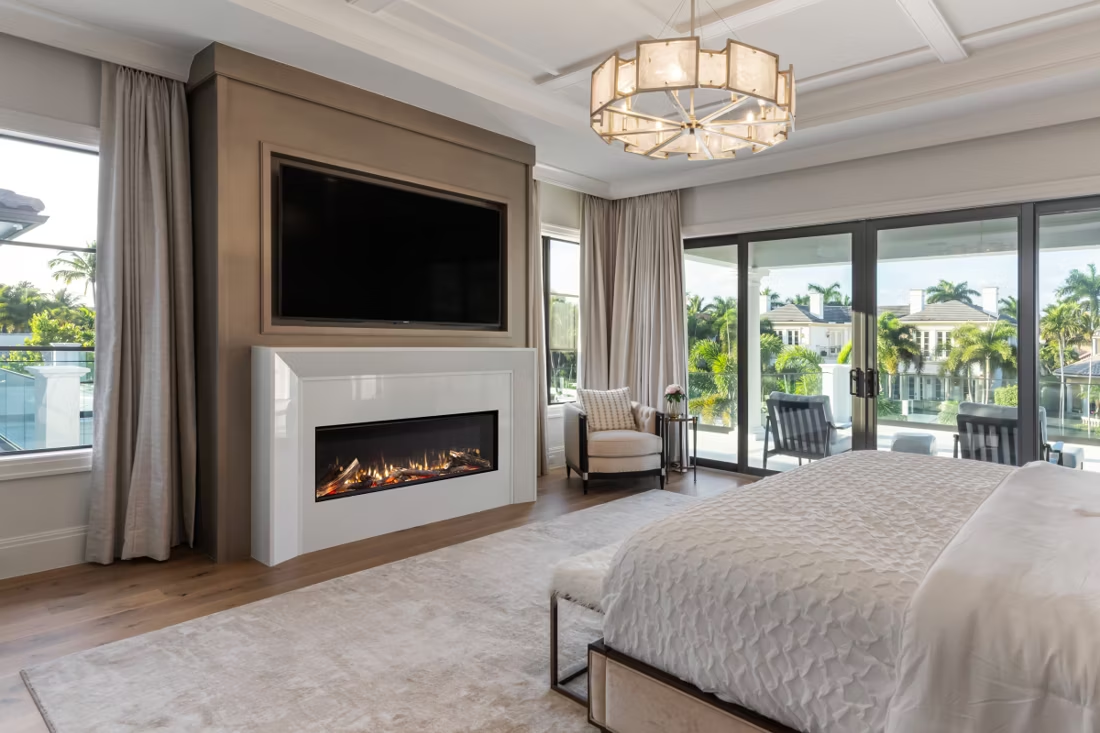
Yes—with an asterisk. Fireplaces are hot and TVs don't like heat. Either put a mantel between them to deflect rising warmth, or choose a fireplace with heat-management technology that creates a cool zone on the wall above—the wall stays around 125 degrees, barely warm, while the room still gets full heat. If you like clean lines and don't want a mantel, heat management is the answer.
What is an in-home preview and do I need one?
It's a visit where a hearth professional measures your space, confirms the model you picked actually works in your home, and walks the specs—framing, gas line, venting, finish work—before anything is ordered. Some details you just can't know until you see the house. Never make a down payment without one; it's the single most-skipped step that burns buyers.
Does a fireplace add value to my home?
On average, a fireplace adds back to the home about the same amount you spent installing it. Add the monthly savings from heating the rooms you actually use instead of the whole house—often hundreds of dollars a year—and the value case is strong before you even count what a fire does for how your family uses the room.
Nearby Dealers
Hearth shops serving Durham and the surrounding area. Every listing shows whether it is a WhyFire partner, a dealer we have verified as authorized for the brands we recommend, or a local business carrying hearth products. No manufacturer pays for placement. How we verify dealers →
Original Grills - Outdoor Kitchen & Grill Store
Brandco Incorporated
Energy United Propane- Creedmoor
L.g. Jordan Oil & Gas Co.
Pro Source Of Raleigh
Fireside Distributors Inc
Viridien Patio + Fireplace
The Fireplace Depot
Smoke Alert
Oak City Fireplace & Outdoor Living
Electric Service in Durham
An electric fireplace's heater draws about 1,500 watts—pennies per hour at local rates.
Duke Energy Progress - (Nc)
Duke Energy Carolinas, LLC
Find your electric fireplace in Durham.
Tell us a bit about your home and we'll match you with the right electric fireplace or insert—and connect you with a trusted local dealer who can hand you a free Project Guide & Parts List for your Durham installation.
Find Your Fireplace →