
Bring real warmth to your Durham County home—no chimney needed.
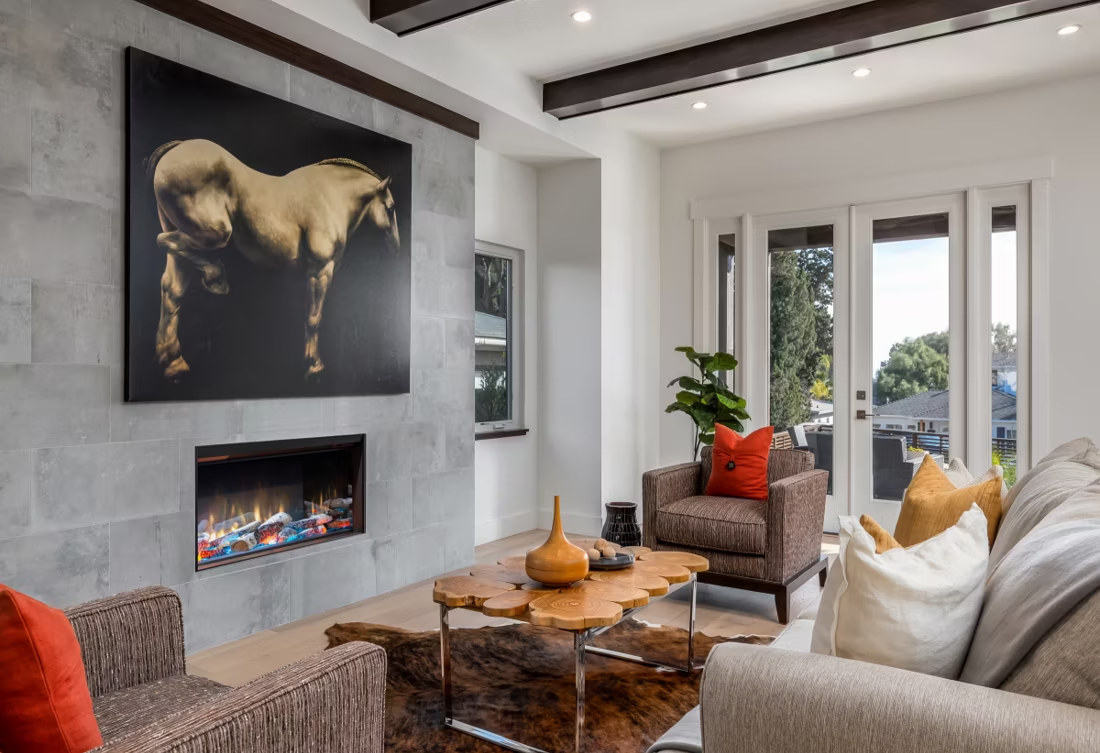
From converted tobacco-warehouse lofts downtown to new builds near RTP, electric fireplaces give Durham County homeowners real ambiance and zone heat without venting, gas lines, or masonry work. Find the right unit and connect with a trusted local dealer.
Every Project Starts From One of These Five Situations
Zone heat for Durham County's mix of old warehouses and new builds.
Durham County sits in climate zone 4A with a mild winter heating season and an average winter low around 28°F—mild by national standards, closer to a typical Richmond or Charlotte winter than anything approaching Duluth or Buffalo territory. That means most Durham County homes don't need a primary wood or pellet heat source; a heat pump handles the bulk of the load, and a fireplace is there for ambiance and supplemental warmth on the coldest nights. It's part of why electric fireplaces have become such a natural fit here, whether in a Trinity Park bungalow, a converted loft at American Tobacco Campus or Golden Belt, or a new townhome off the RTP corridor.
Electric units skip the two biggest headaches other fuels create in a county like Durham: venting and permitting friction. There's no chimney to build, no gas line to run, and no combustion byproducts to worry about—which matters in historic districts like Old West Durham and Trinity Park, where the Historic Preservation Commission restricts exterior alterations, and in the growing number of condos and HOA communities around Southpoint and RTP where a masonry chimney simply isn't an option. Duke Energy Progress serves electric accounts throughout the county, and a licensed electrician can wire a dedicated circuit for a built-in unit in an afternoon—no combustion appliance inspection required.
Three steps. No salesperson until you're ready.
Tell us about your project
Your zip code, your situation, and the fuel you're leaning toward—or let the answers point you to one.
See what's actually available
The brands dealers within 100 miles genuinely carry—real options, never a catalog mirage.
Get your dealer & Project Guide
A trusted local dealer, plus the free Project Guide & Parts List that names every component of the job.
Frequently Asked Questions
How much does an electric fireplace installation cost in Durham County?
Plug-in electric inserts and freestanding units are the least expensive option, often running $500 to $1,800 installed since they just need a standard outlet—common in rental units and apartments around downtown Durham and NC Central. Built-in wall units or electric inserts set into an existing fireplace opening typically run $1,500 to $3,500, including a dedicated 120V or 240V circuit run by a licensed electrician. Larger linear electric fireplaces built into new construction cabinetry, common in newer south Durham and RTP-area homes, can run higher depending on the finish carpentry involved. Local dealers will give you a firm number after seeing your space.
Is an electric fireplace a good fit for a condo or apartment in Durham?
Yes—it's often the only realistic option. Durham County has a growing stock of condos and apartments, from downtown lofts in old tobacco warehouses to newer mid-rise buildings near Duke and RTP, and most of those units have no chimney, no gas line, and HOA or lease restrictions that rule out anything requiring venting. A plug-in or built-in electric fireplace sidesteps all of that: no structural changes, no combustion byproducts, and in most cases no landlord approval beyond running a cord to an outlet. It's the same reason electric units are popular in Durham's historic districts, where preservation rules limit what you can do to the building envelope.
Do I need a permit to install an electric fireplace in Durham County?
A plug-in electric fireplace that uses a standard outlet doesn't require a permit—you're just plugging in an appliance. A built-in electric fireplace that requires a new dedicated circuit does typically need an electrical permit through Durham County Building & Fire Prevention (or the City of Durham's inspections division if the home is within city limits), since it involves new wiring. Most local dealers coordinate with a licensed electrician who pulls that permit as part of the installation, so it's rarely something homeowners have to handle themselves.
Can I install an electric fireplace in a historic Durham home?
Electric fireplaces are one of the easier upgrades for historic homes in districts like Trinity Park, Old West Durham, and Duke Homestead, where the Historic Preservation Commission reviews exterior changes. Because electric units don't require a new chimney, flue, or exterior venting, they generally don't trigger the same review that a masonry fireplace addition or new gas vent penetration would. Many homeowners install an electric insert into an existing, non-functional masonry fireplace opening—preserving the historic mantel and surround while adding real heat and flame effect without touching the exterior of the house.
What's the difference between an electric fireplace, insert, and stove?
An electric fireplace is typically a built-in unit designed to sit in a wall opening or custom cabinetry—common in Durham County new construction and remodels. An electric insert is sized to slide into an existing fireplace opening, which is the most popular route for older Durham homes with a masonry fireplace that's no longer used for wood burning. An electric stove is a freestanding unit styled like a traditional wood stove, useful when you want a stand-alone heat source in a room without an existing fireplace. All three plug into standard or dedicated circuits—none require venting.
How much actual heat will an electric fireplace provide in my Durham County home?
Most electric fireplaces put out around 4,600 to 5,000 BTUs (roughly 1,500 watts), enough to comfortably heat a single room in the 250 to 400 square foot range. Given Durham County's mild winters—an average low around 28°F and a fairly short, mild heating season—that's usually plenty of supplemental heat for a family room or bedroom on a cold night, letting you turn down the central heat pump and zone-heat the room you're actually using. It's not meant to replace your primary HVAC system on a whole-home basis, but for Durham's climate it rarely needs to.
How much does it cost to run an electric fireplace with Duke Energy rates?
A typical 1,500-watt electric fireplace run on high costs roughly 15 to 20 cents an hour at current Duke Energy Progress residential rates, which serves most of Durham County. Run a few hours a night through a mild Durham winter and you're looking at a modest addition to your electric bill—far less than most homeowners expect, and nothing close to the cost of running central heat for the same hours. Most units also let you run the flame effect with the heater off, so you can enjoy the ambiance year-round without adding any heating cost at all.
Electric vs. gas fireplace—which is right for my Durham County home?
Gas fireplaces are common in Durham County too, particularly in homes already served by natural gas in areas like southwest Durham and parts of the city with existing gas infrastructure—they produce real, higher-output heat and can run during a power outage with the right ignition system. Electric fireplaces skip the gas line and venting entirely, install almost anywhere with just an outlet or a dedicated circuit, and cost less upfront and to install. For a primary living space in a home already plumbed for gas, gas often makes sense. For condos, historic homes, rentals, or a secondary room where you want ambiance and zone heat without construction, electric is usually the simpler and more practical choice.
What about wood or pellet stoves in Durham County?
Wood and pellet stoves are uncommon as primary heat sources in Durham County—with a mild climate zone 4A profile and a fairly short, mild heating season, most homes simply don't need the heat output, and Durham's dense, increasingly urban housing stock (rentals, condos, HOA communities) doesn't lend itself to chimney installations the way rural counties do. That said, a small number of homeowners with larger lots or older farmhouses on the county's edges do burn oak, hickory, or maple for ambiance or occasional backup heat, and pellet fuel from suppliers like Lignetics or Hamer Pellet Fuel is available regionally. For the vast majority of Durham County homeowners looking for fireplace ambiance, though, electric is the far more practical fit.
Do electric fireplaces actually produce heat?
Yes—most put out around 4,800–5,000 BTUs from a standard outlet, which comfortably warms a bedroom, office, or den as a comfort-zone heater. What they won't do is carry a whole house the way wood, gas, or pellet can. Think of electric as ambiance-first with honest supplemental heat: flames on with no heat in July, flames plus warmth in January.
Can I put a TV above my fireplace?
Yes—with an asterisk. Fireplaces are hot and TVs don't like heat. Either put a mantel between them to deflect rising warmth, or choose a fireplace with heat-management technology that creates a cool zone on the wall above—the wall stays around 125 degrees, barely warm, while the room still gets full heat. If you like clean lines and don't want a mantel, heat management is the answer.
What is an in-home preview and do I need one?
It's a visit where a hearth professional measures your space, confirms the model you picked actually works in your home, and walks the specs—framing, gas line, venting, finish work—before anything is ordered. Some details you just can't know until you see the house. Never make a down payment without one; it's the single most-skipped step that burns buyers.
Can a fireplace actually lower my heating bill?
Yes—by creating a comfort zone. A furnace heats every square foot of the house just to warm the one room you're in; a gas fireplace on low burns roughly a sixth of the gas a typical furnace does. Set the furnace around 55–60 degrees as a baseline, then heat the rooms your family actually uses. Families who heat this way commonly save $20–$60 a month.
Stove and Fireplace Dealers in Durham County
Listings include WhyFire partner dealers, dealers we have verified as authorized for the brands we recommend, and established local businesses that carry hearth products. Every listing shows which one it is. The ones marked Preferred run on WhyFire's software, so they can show you real pricing and book your appointment right here. No manufacturer pays for placement. How we verify dealers →
Original Grills - Outdoor Kitchen & Grill Store
Brandco Incorporated
Energy United Propane- Creedmoor
Pro Source Of Raleigh
Fireside Distributors Inc
Viridien Patio + Fireplace
L.g. Jordan Oil & Gas Co.
The Fireplace Depot
Oak City Fireplace & Outdoor Living
Smoke Alert
Steve Marcom Services
Find your electric fireplace in Durham County.
Tell us a bit about your home and we'll match you with a trusted local Durham County dealer and send over a free Project Guide & Parts List—the exact parts, including your electrical needs, mapped out for your space.
Find Your Fireplace →