
Pellet heat in a place that rarely needs it.
Dallas has a mild, short heating season and winter lows around 31°F, so pellet heat here is almost always supplemental rather than essential. If you still want one, we'll connect you with a local dealer who installs them correctly.
Every Project Starts From One of These Five Situations
Mild Piedmont winters mean gas and electric usually already do the job.
Dallas sits at 798 feet in Gaston County's Piedmont, in climate zone 3A, where the average winter low hovers around 31°F and the town enjoys a mild, short heating season overall. Compare that to a place like Duluth, Minnesota, which faces a winter heating load nearly three times as demanding, and it's clear why Dallas homes are built around central gas furnaces and electric heat pumps rather than dedicated wood or pellet heating. That's why both wood and pellet fuel show up as niche choices here while gas and electric remain the standard.
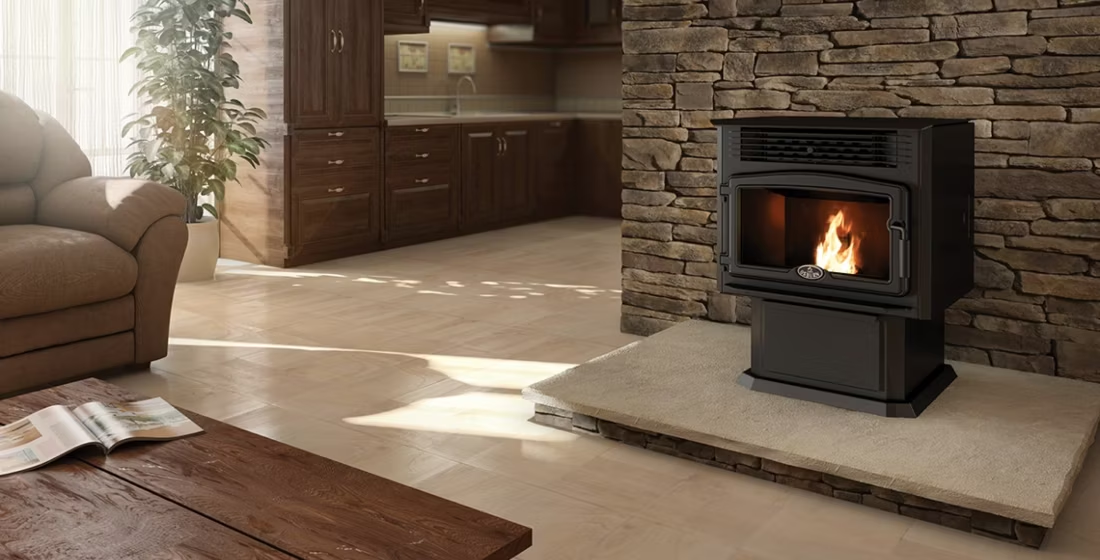
That said, a small number of Dallas homeowners do install pellet stoves—usually for zone heat in a garage or basement, fireplace ambiance, or as a hedge against occasional ice-storm outages from Duke Energy Carolinas, Rutherford Electric Membership Corp, or City of Gastonia electric service. Pellet fuel itself isn't hard to find in this part of North Carolina: regional producers like Lignetics, Hamer Pellet Fuel, and Greenway Renewable Energy all supply the Carolinas. The harder part is finding an installer who regularly works with pellet appliances in a market this small—which is exactly where a trusted local dealer matters.
Three steps. No salesperson until you're ready.
Tell us about your project
Your zip code, your situation, and the fuel you're leaning toward—or let the answers point you to one.
See what's actually available
The brands dealers within 100 miles genuinely carry—real options, never a catalog mirage.
Get your dealer & Project Guide
A trusted local dealer, plus the free Project Guide & Parts List that names every component of the job.
Frequently Asked Questions
Are pellet stoves actually installed in Dallas, NC?
Not often, and it's worth saying plainly: with such a mild, short heating season and winter lows averaging 31°F, most Gaston County homes get through winter fine on a central gas furnace or electric heat pump. Pellet stoves show up here as a secondary appliance—supplemental heat for a bonus room or garage, fireplace-style ambiance, or backup warmth during an ice storm—rather than a whole-home heating solution. If that's your use case, a pellet stove can still make sense; just go in expecting a niche installation rather than a common one.
How much does a pellet stove installation cost in Dallas?
Because pellet installs are uncommon this far into the Piedmont, there isn't a deep local pricing history to pull from, but a freestanding pellet stove with a horizontal vent kit typically runs $3,500 to $6,500 installed across the Carolinas, depending on the unit and whether you're venting through an exterior wall or an existing masonry chimney. Because so few Gaston County installers specialize in pellet appliances, you may end up working with a dealer based closer to Gastonia or Charlotte—a local match will give you a firm number after seeing your space.
Where can I buy pellet fuel near Dallas?
Regional brands like Lignetics, Hamer Pellet Fuel, and Greenway Renewable Energy supply pellets throughout the Carolinas, and you'll typically find bagged pellets at farm supply and hardware stores in Gastonia and the surrounding area rather than in Dallas itself. Expect to pay roughly $230 to $290 per ton for softwood pellets. Because demand is thin in a market this size, stock can be seasonal—it's worth calling ahead before making a trip, especially outside the coldest months.
Will a pellet stove keep my home warm during a winter storm power outage?
Not on its own. Pellet stoves rely on an electric auger to feed fuel and a blower to push heat into the room, so when Duke Energy Carolinas or Rutherford Electric Membership Corp power drops, the stove stops working unless it has a battery backup accessory or you run it off a generator. Piedmont NC generally sees fewer prolonged outages than mountain counties, but ice storms do happen. If outage resilience is your main reason for wanting supplemental heat, ask a local dealer about battery-backup kits or pair the stove with a small generator.
What's the difference between a pellet stove and a pellet insert?
A pellet stove is a freestanding unit that sits on its own hearth pad and vents through a wall or existing chimney chase—it works in homes with or without a fireplace. A pellet insert is built to slide into an existing masonry fireplace opening, which is a common option for older homes in and around downtown Dallas that already have a wood-burning fireplace they'd like to convert to something more automated. For a house with no existing fireplace, a freestanding stove is almost always the simpler, less expensive path.
Do I need a permit to install a pellet stove in Dallas?
Yes. Installations in Dallas fall under Gaston County's building permitting process, and the unit needs to be UL-listed and installed to current North Carolina Residential Code clearance and venting requirements. Most established hearth dealers handle the permit application and inspection scheduling as part of the installation, which is one more reason to work with a dealer experienced in pellet appliances specifically rather than a general contractor.
Pellet vs. gas—which is right for my Gaston County home?
Gas is the standard choice in Dallas for a reason: with mild winters and only a light overall heating season, most homeowners want instant, thermostat-controlled heat without hauling bags of fuel, and a gas fireplace or insert delivers that with a flip of a switch. Pellet stoves require loading a hopper every day or two during use and periodic ash removal, which is more maintenance than most Dallas households want for what amounts to occasional supplemental heat. Pellet tends to appeal to homeowners who specifically like the look of a real flame with visible combustion and don't mind the extra upkeep; gas wins on convenience for nearly everyone else here.
Pellet vs. electric—which makes more sense for supplemental heat?
For a Dallas home that just needs a little extra warmth in one room, an electric fireplace or insert is usually the simpler answer—no venting, no fuel storage, no ash, and installation costs a fraction of a pellet system. At local residential rates (Duke Energy Carolinas around $0.1394/kWh, Rutherford EMC around $0.1313, City of Gastonia around $0.124), running an electric unit for occasional supplemental heat is inexpensive given how few heating hours the climate actually demands. Pellet stoves make more sense if you specifically want a real flame and don't mind managing fuel bags and hopper loading; if you just want warmth and ambiance with zero maintenance, electric is the more common local choice.
What size pellet stove do I need for supplemental heat in Dallas?
Since almost no Dallas home is asking a pellet stove to carry the whole heating load, you generally don't need the largest hopper capacity or longest burn-time models built for places like Duluth or Burlington. A small-to-medium pellet stove rated for 1,000 to 1,500 square feet is usually plenty for zone-heating a den, basement, or garage in this climate. A local dealer can size the unit properly based on the specific room and insulation rather than the whole house, which keeps upfront cost and fuel use in check.
What's the difference between an insert and a zero-clearance fireplace?
An insert is a fireplace that slides into a pre-existing wood-burning fireplace—if you don't have one, there's nothing to insert it into. A zero-clearance fireplace is built into a framed wall, which makes it the answer for remodels and new construction. Simple test: existing masonry fireplace means insert; blank or framed wall means zero-clearance.
Why is a fireplace insert so efficient?
An insert does two things: it seals the chimney completely, so you stop losing air you already paid to heat, and it radiates warmth into the room through the firebox and glass. Most add a heat-exchange fan that pulls cool room air underneath, wraps it around the hot firebox, and pushes it back out warm. Your home is more efficient before you've even lit the first fire.
What is an in-home preview and do I need one?
It's a visit where a hearth professional measures your space, confirms the model you picked actually works in your home, and walks the specs—framing, gas line, venting, finish work—before anything is ordered. Some details you just can't know until you see the house. Never make a down payment without one; it's the single most-skipped step that burns buyers.
Can I install a fireplace myself?
If you're putting a fire in your house on purpose, it's best to work with an expert. Unless you're genuinely experienced in framing, gas line, vent pipe, and the national code on clearances to combustibles, have a professional do it—and ideally the same company that sells you the fireplace, so warranty, service, and liability all live under one roof.
Nearby Dealers
Hearth shops serving Dallas and the surrounding area. Every listing shows whether it is a WhyFire partner, a dealer we have verified as authorized for the brands we recommend, or a local business carrying hearth products. No manufacturer pays for placement. How we verify dealers →
Carolina Fireplace & Granite
Quality Propane
Kamin Fireplace & Service
Piedmont Chimney & HVAC LLC
High Country Fireplaces
Viridien Patio + Fireplace
Queen City Sweeps, LLC
Future Energy Of Shelby
EarthCore Industries
Ron Steel Plumbing
Charlotte Grill Co.
Queen City Fireplace & Outdoor
Viridien Patio + Fireplace
Pellet Brands Stocked Around Dallas
Manufacturers will point you to the nearest stocking dealer.
Find your pellet stove in Dallas.
Tell us about your home and how you plan to use a pellet stove—supplemental heat, backup warmth, or ambiance—and we'll match you with a trusted local dealer and send a free Project Guide & Parts List built around your project in Dallas.
Find Your Fireplace →