
Steady, Efficient Heat for Chowan County Homes.
From historic Edenton to Tyner and Valhalla, pellet stoves give Albemarle Sound homes clean, thermostat-controlled heat without the wood pile. Find the right unit and connect with a trusted local dealer.
Every Project Starts From One of These Five Situations
A mild climate that still rewards efficient heat.
Chowan County sits on the Albemarle Sound in northeastern North Carolina, with Edenton as its historic waterfront seat. Climate zone 3A here means winters are mild by national standards—average lows around 34°F and just 2,868 heating degree days a year, a fraction of what a home in Duluth, MN racks up in a single season. But mild doesn't mean warm: damp, raw stretches from December through February are common on the Sound, and the county's older homes—many with tall ceilings and original single-pane windows in Edenton's historic district—lose heat fast even when the thermostat outside reads temperate.
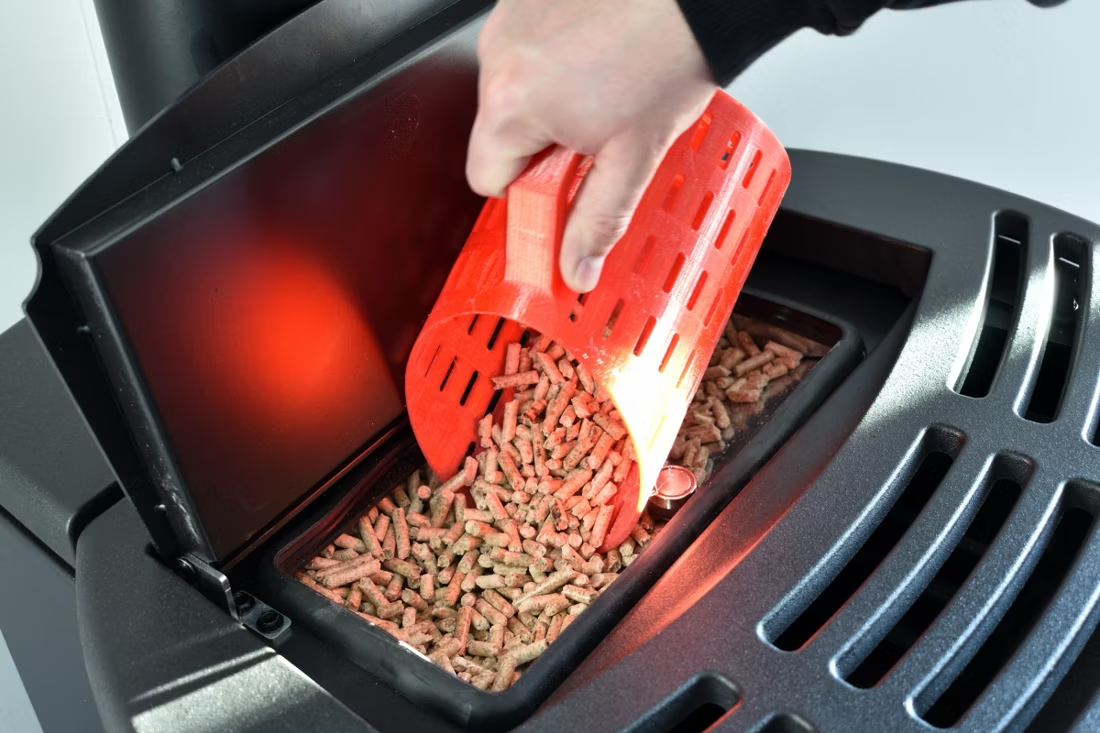
That's exactly the gap a pellet stove fills. Instead of running a whole-home HVAC system hard for a cold snap, a pellet insert or freestanding stove delivers targeted, thermostat-controlled zone heat to the room you actually live in—no cordwood to split, stack, or haul, and no chimney draft issues to manage. Chowan County has no wood-smoke air quality restrictions or winter curtailment periods to work around, and pellet fuel from regional suppliers like Lignetics, Hamer Pellet Fuel, and Greenway Renewable Energy is easy to source locally, which keeps the whole setup simple for a county this size.
Three steps. No salesperson until you're ready.
Tell us about your project
Your zip code, your situation, and the fuel you're leaning toward—or let the answers point you to one.
See what's actually available
The brands dealers within 100 miles genuinely carry—real options, never a catalog mirage.
Get your dealer & Project Guide
A trusted local dealer, plus the free Project Guide & Parts List that names every component of the job.
Frequently Asked Questions
How much does a pellet stove installation cost in Chowan County?
Most pellet stove and insert installations in Chowan County run somewhere between $3,000 and $6,500, depending on the unit and whether you're installing a freestanding stove or converting an existing fireplace to a pellet insert. Inserts into an existing masonry fireplace in one of Edenton's older homes typically land on the lower-to-middle end since the chimney is already in place—the work is mostly the liner, insert, and electrical hookup for the auger and blower. New freestanding installations in a home without an existing hearth run higher once venting and a hearth pad are factored in. A local dealer can give you a firm number after seeing the room and the existing chimney, if any.
What size pellet stove do I need for my home?
Given Chowan County's mild 2,868 heating-degree-day climate, most homeowners here are using a pellet stove for zone heat in a main living area rather than to carry the whole house through winter, so a small-to-medium unit is usually enough—roughly 1,000 to 1,800 square feet of coverage handles a typical living room and adjoining space in an Edenton bungalow or a Tyner farmhouse. Older homes with high ceilings and original windows lose heat faster than their square footage suggests, so a local dealer will usually walk the room, check insulation and window condition, and size up slightly rather than rely on square footage alone.
Where can I find pellet stove dealers and installers near me?
Chowan County is a small, rural county, so most homeowners work with dealers based in Edenton or nearby Elizabeth City who cover the whole county, including Tyner, Valhalla, Rocky Hock, and the rural stretches along US-17. Look for installers with NFI (National Fireplace Institute) certification specifically in pellet appliances—pellet units have electrical and auger components that differ from a straight wood-stove install, so experience with pellet-specific wiring and venting matters. Most dealers who sell the unit also install it, which keeps warranty coverage and code sign-off with one company instead of splitting the job between a retailer and a separate installer.
What's the difference between a pellet stove and a pellet insert?
A pellet stove is a freestanding unit that sits on a hearth pad and vents out through a wall or existing chimney chase—it can go almost anywhere in a room with the right clearances. A pellet insert is built to slide into an existing masonry fireplace opening, which makes it the natural fit for Chowan County's older homes, especially in Edenton's historic district, where many houses already have a working wood fireplace that's rarely used for its original purpose. The insert reuses that opening and typically vents through a stainless liner run up the existing chimney, so you keep the look of the fireplace while gaining real, efficient heat output.
Do I need a permit to install a pellet stove in Chowan County?
Yes—a building permit is required for a new pellet stove or insert installation, and because these units need a dedicated electrical circuit for the auger and blower motor, an electrical permit is often required as well. Homes within Edenton's town limits pull permits through the Town of Edenton, while the rest of the county goes through Chowan County's building inspections office. Most local dealers handle the permitting and inspection scheduling as part of the installation, so you generally don't have to coordinate it yourself.
What's the best pellet stove for a Chowan County home?
Because winters here are mild compared to much of the country, most Chowan County homeowners prioritize convenience and consistent, thermostat-controlled output over raw BTU capacity—brands like Harman, Enviro, and England's Stove Works are common choices from regional dealers and hold up well in humid coastal conditions. Whatever unit you choose, pair it with locally available fuel: Lignetics, Hamer Pellet Fuel, and Greenway Renewable Energy all supply the region, so parts and pellet bags aren't hard to find even in a county this small. A dealer can match stove output to your specific room rather than the whole house, since that's how most units here actually get used.
How much maintenance does a pellet stove need?
Pellet stoves need more routine attention than a wood stove but less than people expect: emptying the ash pan every few days during regular use, cleaning the burn pot weekly to keep the auger feeding properly, and a full professional service once a year to check the exhaust blower, gaskets, and electrical connections. Chowan County's humid, coastal air makes pellet storage the one thing to watch closely—bags left in a damp garage or shed near the Sound can absorb moisture and swell or clump, which clogs the auger. Store pellets in a dry, sealed space off the ground, and most maintenance issues here trace back to that one habit.
Where can I buy pellets in Chowan County?
Pellets are widely available through the same hearth dealers who sell and install the stoves, and regional brands including Lignetics, Hamer Pellet Fuel, and Greenway Renewable Energy supply much of northeastern North Carolina, so bags are generally easy to restock without long drives. Buying a season's supply in late summer or early fall, before cold snaps drive demand up, is the most reliable way to avoid running short mid-winter. Given the county's coastal humidity, keep whatever you buy in a dry, covered space—a leaky shed or an open carport isn't good enough for a full winter's supply.
Pellet vs. wood—which is right for my Chowan County home?
Wood works well here too—oak, hickory, maple, and pine are all common locally and burn reliably in a traditional stove or insert—but it means splitting, stacking, and hauling fuel, and running a real chimney. Pellet stoves trade that labor for hopper-and-thermostat convenience and cleaner burning, which is why they're popular in Chowan County's smaller, mixed-use living spaces. The one honest trade-off: pellet stoves need electricity to run the auger and blower, and coastal Chowan County sees hurricane-season power outages that can last days. If backup heat during an outage matters to you, a wood-burning unit or a pellet stove paired with a small backup generator is worth discussing with your dealer.
Why is my open fireplace making my house colder?
Open fireplaces suck—literally. As the fire burns, it consumes air your furnace already paid to heat and pulls it out through the chimney, so the house is actually colder after the fire goes out than before you lit it. An insert fixes this: it seals the chimney, puts fixed glass across the front, and turns that hole in your house into a real heat source.
What's the difference between an insert and a zero-clearance fireplace?
An insert is a fireplace that slides into a pre-existing wood-burning fireplace—if you don't have one, there's nothing to insert it into. A zero-clearance fireplace is built into a framed wall, which makes it the answer for remodels and new construction. Simple test: existing masonry fireplace means insert; blank or framed wall means zero-clearance.
Can a fireplace actually lower my heating bill?
Yes—by creating a comfort zone. A furnace heats every square foot of the house just to warm the one room you're in; a gas fireplace on low burns roughly a sixth of the gas a typical furnace does. Set the furnace around 55–60 degrees as a baseline, then heat the rooms your family actually uses. Families who heat this way commonly save $20–$60 a month.
Can I install a fireplace myself?
If you're putting a fire in your house on purpose, it's best to work with an expert. Unless you're genuinely experienced in framing, gas line, vent pipe, and the national code on clearances to combustibles, have a professional do it—and ideally the same company that sells you the fireplace, so warranty, service, and liability all live under one roof.
Pellet Brands Stocked Around Chowan County
Manufacturers will point you to the nearest stocking dealer.
Find your pellet stove in Chowan County.
Tell us a bit about your home and we'll match you with the right pellet stove or insert, plus a free Project Guide & Parts List—the exact parts, including the vent kit, and a recommended local dealer for your Chowan County project.
Find Your Fireplace →