
Steady, low-maintenance heat for Carteret County's mild winters.
From Beaufort and Morehead City to Atlantic Beach and Emerald Isle, Carteret County winters are short and mild—which makes a pellet stove a smart, efficient way to heat the rooms you actually live in. Find the right unit and get matched with a trusted local dealer.
Every Project Starts From One of These Five Situations
Reliable heat that adapts to a mild coastal winter.
Carteret County sits at sea level along North Carolina's Crystal Coast, stretching from Beaufort and Morehead City out to Cape Lookout and Emerald Isle. In climate zone 3A, with an average winter low around 36°F and a mild, short heating season, this is a fraction of the heating load carried by a place like Duluth, MN or Burlington, VT. Most local homes don't need—or want—a furnace-sized wood or gas system running all winter. That's exactly where a pellet stove earns its place: a family room, sunroom, or guest cottage on Bogue Sound gets consistent, thermostat-controlled warmth on the handful of genuinely cold nights each year, without the bulk or upkeep of a full wood-burning setup.
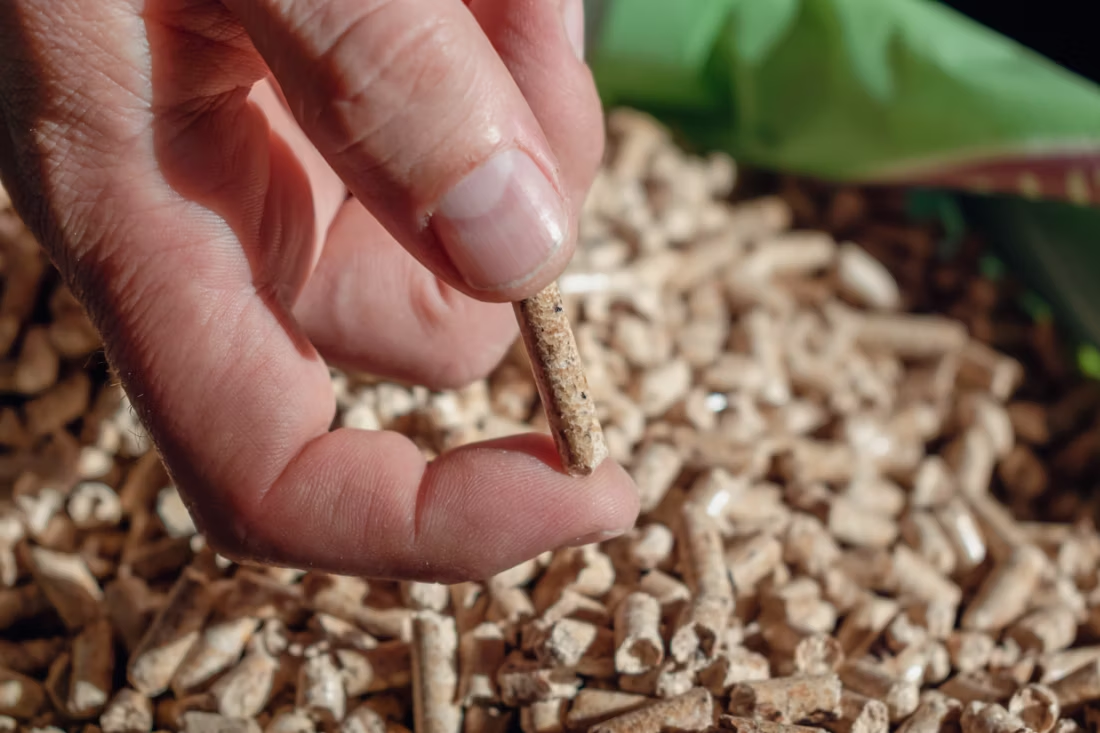
Regional pellet brands including Lignetics, Hamer Pellet Fuel, and Greenway Renewable Energy supply Southern yellow pine pellets that are widely stocked at hardware and farm-supply stores across the county, so fuel is easy to keep on hand. The bigger local consideration is humidity: Carteret County's salt-air, high-moisture climate means pellets need to be stored in a dry garage or shed, off the ground, and ideally in sealed bins—bagged pellets left in a damp outbuilding through a humid August will swell and clump before you ever get to burn them. It's also worth being honest about hurricane season. Pellet stoves rely on electricity to run the auger and combustion blower, so during a tropical storm outage—a real possibility along the Crystal Coast from June through November—a pellet stove won't run without a generator or battery backup, unlike a wood stove.
Three steps. No salesperson until you're ready.
Tell us about your project
Your zip code, your situation, and the fuel you're leaning toward—or let the answers point you to one.
See what's actually available
The brands dealers within 100 miles genuinely carry—real options, never a catalog mirage.
Get your dealer & Project Guide
A trusted local dealer, plus the free Project Guide & Parts List that names every component of the job.
Frequently Asked Questions
How much does a pellet stove installation cost in Carteret County?
A typical pellet stove installation in Carteret County runs roughly $3,000 to $6,500, depending on whether you're installing a freestanding stove or a pellet insert into an existing fireplace, and how much venting work is involved. Because pellet stoves vent through a small-diameter wall or roof pipe rather than a full masonry chimney, install costs tend to run lower than wood or gas conversions. In coastal Carteret homes, it's worth asking your installer about corrosion-resistant stainless vent components—salt air off Bogue Sound and Pamlico Sound accelerates wear on standard galvanized parts over time.
What size pellet stove do I need for my home?
Because Carteret County's winters are mild—average lows around 36°F and a short, light heating season overall—most homes here don't need a large, whole-house-rated unit. A small to mid-size pellet stove rated around 40,000 to 50,000 BTU is usually enough to heat a main living area, sunroom, or open-plan kitchen and den, even on the county's coldest nights. Homes further inland toward Croatan National Forest with less coastal wind buffering may run slightly cooler and benefit from a stove at the upper end of that range. A local dealer will size the unit to your square footage and layout during an in-home visit rather than guessing off a chart.
Do I need a permit to install a pellet stove in Carteret County?
Yes—a new pellet stove installation generally requires a building permit, whether you're in unincorporated Carteret County or inside a municipality like Beaufort, Morehead City, or Atlantic Beach, each of which handles its own permitting within the county. The permit process confirms the unit is listed and installed to its manufacturer specs, with correct clearances and venting through an exterior wall or roof. Most established local hearth dealers include permit filing as part of the installation quote, so you're not left coordinating it yourself.
Will my pellet stove work during a hurricane-related power outage?
Not without a backup power source. Pellet stoves depend on electricity to run the hopper auger and the combustion/convection blowers, so a grid outage—which happens along the Crystal Coast during tropical storms and hurricanes—will shut a pellet stove down even with a full hopper of fuel. If backup heat during storm season matters to your household, ask a local dealer about pairing the stove with a small battery backup system or a portable generator sized to the stove's draw, which is typically modest (100–500 watts). Homes that want heat that runs with zero electricity should also consider a wood stove as a companion appliance rather than relying on pellet alone.
Where can I get pellet fuel in Carteret County, and how should I store it?
Regional brands like Lignetics, Hamer Pellet Fuel, and Greenway Renewable Energy are commonly stocked at hardware and farm-supply retailers throughout the county, and most dealers can point you to the nearest reliable source. The bigger issue locally is storage, not supply: Carteret County's humid, salt-air climate will ruin pellets fast if they're left in a damp shed or garage. Keep bags sealed, stacked off a concrete floor, and in the driest indoor space available—a rule that matters more here than it would in a drier inland climate.
How much maintenance does a pellet stove need?
Pellet stoves need more routine attention than a gas unit but far less than a wood stove. Plan on emptying the ash pan every few days to weekly depending on use, wiping down the glass, and vacuuming the burn pot every couple of weeks during regular winter use. Most manufacturers recommend a full professional cleaning of the hopper, auger, exhaust fan, and venting once a year, ideally before the start of the season each fall. Given the county's humidity, it's also worth checking gaskets and vent seals annually—moisture in the air can degrade seals faster here than in a drier climate.
Pellet stove vs. wood stove—which makes more sense in Carteret County?
Both are viable here, but they suit different households. Wood is abundant locally—oak, hickory, maple, and pine are all common in the county and around Croatan National Forest—and a wood stove will keep running through a power outage, which matters during hurricane season. A pellet stove trades that off-grid resilience for convenience: no splitting or stacking cordwood, a thermostat instead of manual damper adjustments, and a cleaner burn with far less creosote buildup. For most Carteret County homes using the stove as supplemental heat in a family room or sunroom rather than off-grid backup, pellet's convenience tends to win out.
Pellet stove vs. propane or gas—which is right for my home?
Natural gas service is limited outside the more developed parts of the county, so propane is the common gas alternative in much of Carteret County. A propane fireplace or insert offers instant on/off heat and doesn't require refueling a hopper, but it does require a propane tank and regular fuel deliveries. A pellet stove requires more hands-on tending—loading the hopper, emptying ash—but generally has a lower cost per BTU than propane and gives you the visual of an actual flame with real fuel. If your home already has a propane tank for cooking or water heating, adding a gas fireplace is often the simpler path; if not, a pellet stove avoids the tank and delivery logistics entirely.
Are there rebates or efficiency incentives for installing a pellet stove?
EPA-certified pellet stoves burn cleaner and more efficiently than older wood stoves, and some qualify for federal biomass stove tax credits—worth confirming with your installer since eligible models and credit amounts change periodically. North Carolina doesn't run a dedicated statewide wood-heat rebate program the way some colder states do, but your local dealer can tell you which current-model pellet stoves qualify for any active federal efficiency credit at the time of purchase, and can provide the manufacturer certification paperwork you'd need to claim it.
How often does a pellet stove need cleaning?
A clean pellet stove is a happy pellet stove. Plan on cleaning the burn pot about once a week when you're burning regularly—ash and clinkers gum up the air holes just like a pellet barbecue. Most pellet stove problems trace back to skipped cleaning that nobody explained up front. Some designs make it easy with a trapdoor burn pot: pull a lever and the gunk drops into the ash pan.
Why is a fireplace insert so efficient?
An insert does two things: it seals the chimney completely, so you stop losing air you already paid to heat, and it radiates warmth into the room through the firebox and glass. Most add a heat-exchange fan that pulls cool room air underneath, wraps it around the hot firebox, and pushes it back out warm. Your home is more efficient before you've even lit the first fire.
Can I install a fireplace myself?
If you're putting a fire in your house on purpose, it's best to work with an expert. Unless you're genuinely experienced in framing, gas line, vent pipe, and the national code on clearances to combustibles, have a professional do it—and ideally the same company that sells you the fireplace, so warranty, service, and liability all live under one roof.
What is an in-home preview and do I need one?
It's a visit where a hearth professional measures your space, confirms the model you picked actually works in your home, and walks the specs—framing, gas line, venting, finish work—before anything is ordered. Some details you just can't know until you see the house. Never make a down payment without one; it's the single most-skipped step that burns buyers.
Stove and Fireplace Dealers in Carteret County
Pellet Brands Stocked Around Carteret County
Manufacturers will point you to the nearest stocking dealer.
Find your pellet stove in Carteret County.
Tell us about your home and how you plan to use the heat, and we'll match you with a trusted local dealer and a free Project Guide & Parts List—sized right for your space and Carteret County's coastal climate.
Find Your Fireplace →