
Set-it-and-forget-it heat for Caldwell County's foothills winters.
From Lenoir to Hudson, Granite Falls, and Sawmills, Caldwell County's winters call for real heat—thermostatically controlled, hopper-fed, and easy to run. Find the right pellet stove or insert, and connect with a trusted local dealer.
Every Project Starts From One of These Five Situations
Steady warmth without the daily wood-tending.
Caldwell County sits in the North Carolina foothills at the edge of the Blue Ridge, with Lenoir as the county seat and communities like Hudson, Granite Falls, and Sawmills spread across rolling hardwood terrain. At climate zone 4A with a moderate winter heating season, winters here are real but moderate—average lows settle around 27°F, a fraction of what places like Fargo, ND or Duluth, MN see over a season, but still enough to run a stove most nights from November through March. The county's oak, hickory, maple, and pine forests have long supplied both firewood and the raw material for the region's wood-products industry, including the biomass feedstock that regional pellet mills use.
Pellet stoves have become a popular fit for Caldwell County homeowners who want consistent, thermostatically controlled heat without splitting, stacking, or feeding a fire by hand. Caldwell County has no air quality non-attainment designation and no winter burn curtailment—unlike some mountain counties farther west—so pellet appliances run here with a clean track record and no seasonal restrictions. Regional brands like Lignetics, Hamer Pellet Fuel, and Greenway Renewable Energy supply bagged pellets throughout the Carolinas, and most local hearth dealers carry at least one of them by the ton or the pallet.
Three steps. No salesperson until you're ready.
Tell us about your project
Your zip code, your situation, and the fuel you're leaning toward—or let the answers point you to one.
See what's actually available
The brands dealers within 100 miles genuinely carry—real options, never a catalog mirage.
Get your dealer & Project Guide
A trusted local dealer, plus the free Project Guide & Parts List that names every component of the job.
Frequently Asked Questions
How much does a pellet stove installation cost in Caldwell County?
A freestanding pellet stove installation in Caldwell County typically runs $3,000 to $6,000, depending on the unit, whether you need a new through-wall vent kit, and whether electrical work is required for the outlet the stove's auger and blower motor need. Converting an existing masonry fireplace to a pellet insert usually falls in a similar range, since most of the cost is in the appliance and venting rather than structural changes. Homes without an existing hearth or chimney chase run toward the higher end once wall penetration and venting are factored in. A local dealer will give you a firm number after seeing your specific installation site.
What size pellet stove do I need for a Caldwell County home?
Sizing depends on square footage, ceiling height, and how open your floor plan is, but Caldwell County's moderate winters—a modest heating season and average lows around 27°F—mean most homes here don't need the oversized units you'd see in a harder-winter market like Fargo or Duluth. A small pellet stove (up to around 1,000 sq ft) suits a single living area or addition; a medium stove (1,000 to 2,000 sq ft) covers most Lenoir and Hudson-area homes; larger stoves make sense for open-concept homes or families relying on pellet heat as their primary source rather than a supplement. A local dealer can size your space accurately during an in-home visit.
Which pellet brands are sold and stocked in Caldwell County?
Lignetics, Hamer Pellet Fuel, and Greenway Renewable Energy are the regional brands most commonly stocked by Caldwell County hearth dealers and feed/farm supply stores, and all three source hardwood and softwood material from Appalachian and Carolina Piedmont mills. Pellet quality varies by ash content and BTU output, so it's worth asking your dealer which brand runs cleanest in the specific stove model you buy—some stoves are tuned for a particular pellet density and burn less consistently on off-brand fuel.
Do I need a permit to install a pellet stove in Caldwell County?
Yes—a new pellet stove or insert installation typically requires a building permit through Caldwell County's building inspections department, since it involves a wall penetration for venting and, often, new electrical work for the outlet. Most local hearth dealers handle the permit application and inspection scheduling as part of the installation, so you generally don't have to coordinate it yourself. There's no burn-season restriction to worry about here—pellet stoves are exempt from curtailment rules in the counties that have them, and Caldwell County doesn't have any air quality non-attainment restrictions in the first place.
What's the difference between a pellet stove and a pellet insert?
A pellet stove is a freestanding appliance that sits on the floor and vents through an exterior wall or existing chimney—it can go almost anywhere with a clear path to outside air. A pellet insert is built to slide into an existing masonry fireplace opening, turning a wood-burning fireplace into a hopper-fed pellet appliance while reusing the existing chimney as part of the vent path. For Caldwell County homes with an older masonry fireplace—common in the county's mid-century Lenoir and Granite Falls neighborhoods—an insert is often the more efficient upgrade since it repurposes what's already there.
Pellet vs. wood—which is right for my Caldwell County home?
Wood is the traditional choice in this part of the foothills, and Caldwell County residents have easy access to oak, hickory, maple, and pine, plus cutting permits through the Nantahala-Pisgah National Forests for around $20 per cord during the May-through-October season. Wood also keeps working without electricity, which matters during ice storms when the power grid in the foothills can take a hit. Pellet stoves trade that off-grid backup for convenience—load the hopper, set the thermostat, and the stove runs itself with far less ash and no splitting or stacking. For Caldwell County homeowners without the time or physical ability to process firewood, or who want cleaner, more consistent heat, pellet is usually the better daily-use choice; some households keep a wood stove for outages and a pellet stove for everyday convenience.
Pellet vs. gas—which is right for my home?
Gas fireplaces offer instant on-off heat at the flip of a switch and don't require any fuel handling, but they depend on either a natural gas line or a propane tank and delivery contract. Pellet stoves require loading a hopper every day or two and burning a bag or two of fuel, but the fuel itself—bagged pellets from Lignetics, Hamer, or Greenway—is often cheaper per BTU than propane in areas of Caldwell County outside natural gas service, which covers only parts of Lenoir and the more built-up corridors. For rural parts of the county on propane, pellet heat is frequently the more economical everyday choice; for homes already on natural gas, the fuel cost gap narrows and the choice comes down more to convenience versus hands-on control.
How much pellet fuel will I need for a Caldwell County winter, and how do I store it?
A pellet stove used as a primary heat source typically burns 2 to 3 tons of pellets over a Caldwell County winter, given the county's moderate heating season; a stove used for supplemental heat in one room might use closer to 1 ton. Pellets come in 40-pound bags, usually sold by the ton (50 bags) or by the pallet, and need to stay dry—a garage, shed, or covered porch works, but pellets that absorb moisture will jam the auger and burn poorly. Buying your season's supply in late summer or early fall, before demand picks up, is common practice among Caldwell County pellet stove owners.
How often does a pellet stove need cleaning and maintenance?
Pellet stoves need more frequent attention than a gas fireplace but less than a wood stove's annual chimney sweep. Plan on emptying and cleaning the ash pot every few days during regular use, a deeper burn-pot and glass cleaning every one to two weeks, and a full professional inspection and cleaning once a year—ideally before the heating season starts. The auger motor, blower, and exhaust vent should all be checked annually since pellet stoves rely on those moving parts to feed fuel and exhaust properly; a stove that's neglected on cleaning tends to show reduced heat output and more visible ash before it ever fails outright.
How often does a pellet stove need cleaning?
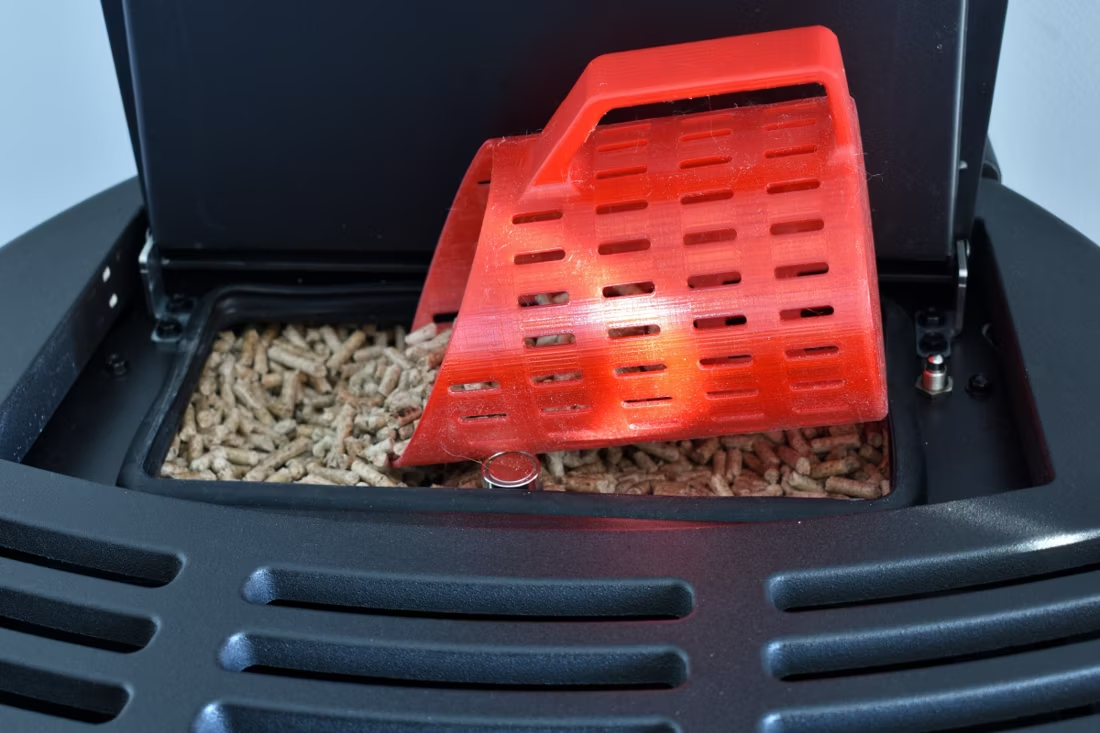
A clean pellet stove is a happy pellet stove. Plan on cleaning the burn pot about once a week when you're burning regularly—ash and clinkers gum up the air holes just like a pellet barbecue. Most pellet stove problems trace back to skipped cleaning that nobody explained up front. Some designs make it easy with a trapdoor burn pot: pull a lever and the gunk drops into the ash pan.
Why is my open fireplace making my house colder?
Open fireplaces suck—literally. As the fire burns, it consumes air your furnace already paid to heat and pulls it out through the chimney, so the house is actually colder after the fire goes out than before you lit it. An insert fixes this: it seals the chimney, puts fixed glass across the front, and turns that hole in your house into a real heat source.
What is an in-home preview and do I need one?
It's a visit where a hearth professional measures your space, confirms the model you picked actually works in your home, and walks the specs—framing, gas line, venting, finish work—before anything is ordered. Some details you just can't know until you see the house. Never make a down payment without one; it's the single most-skipped step that burns buyers.
How much should I budget for a fireplace?
For an average home—covering the fireplace, the vent pipe, and basic installation—a budget between $3,900 and $5,500 gives you a lot of options across wood, gas, and pellet. By the time you add finish work, gas line, and electrical, the average complete installation lands between $5,000 and $12,000 all-in. In a remodel or new build, a good rule is to put about 2.5% of the total project cost toward the fireplace.
Stove and Fireplace Dealers in Caldwell County
Pellet Brands Stocked Around Caldwell County
Manufacturers will point you to the nearest stocking dealer.
Find your pellet stove in Caldwell County.
Tell us a bit about your home in Caldwell County and we'll put together a free Project Guide & Parts List—the right pellet stove or insert, the exact vent kit and parts needed, and a trusted local dealer matched to your project.
Find Your Fireplace →