
Find the right pellet stove for your Cabarrus County home.
Cabarrus County winters are mild by national standards, but consistent, low-maintenance heat still matters—from Concord to Kannapolis to Mount Pleasant. Get matched with a trusted local dealer who can size and install the right unit.
Every Project Starts From One of These Five Situations
Efficient, low-hassle heat for a mild-winter Piedmont climate.
Cabarrus County sits in Climate Zone 3A with a moderate winter heating season and average winter lows around 29°F—nowhere near the deep-freeze demands of a place like Duluth or Fargo, but still enough cold weeks each winter that supplemental heat pays for itself. Cabarrus has grown fast, with more than 367,000 residents now spread across Concord, Kannapolis, Harrisburg, and outlying communities, and a lot of that growth is newer-construction homes where a pellet insert or freestanding stove fits cleanly into an existing hearth or a great room without the chimney and clearance headaches that come with wood.
There's no air quality non-attainment designation in this part of North Carolina, so pellet appliances here are chosen less for regulatory reasons and more for convenience: consistent thermostatic heat, minimal ash, and none of the splitting, stacking, or seasoning that wood requires. Regional pellet supply is solid—brands like Lignetics, Hamer Pellet Fuel, and Greenway Renewable Energy are common on shelves at hardware stores and farm supply retailers throughout the Charlotte metro area, so fuel availability isn't a concern even during a cold snap.
Three steps. No salesperson until you're ready.
Tell us about your project
Your zip code, your situation, and the fuel you're leaning toward—or let the answers point you to one.
See what's actually available
The brands dealers within 100 miles genuinely carry—real options, never a catalog mirage.
Get your dealer & Project Guide
A trusted local dealer, plus the free Project Guide & Parts List that names every component of the job.
Frequently Asked Questions
How much does a pellet stove installation cost in Cabarrus County?
A pellet stove or insert installation in Cabarrus County typically runs in the range most Piedmont NC installers quote for a straightforward job—expect variation based on whether you're installing into an existing masonry fireplace opening (lower end) or need a fresh hearth pad, wall penetration, and PL vent run for a freestanding unit in a new location (higher end). Homes in newer Concord and Harrisburg subdivisions with an existing gas or wood fireplace shell to convert usually see faster, less expensive installs than older Kannapolis homes needing custom venting work. A local dealer will give you a firm number after seeing your space.
Do I need a chimney for a pellet stove?
No—this is one of the biggest advantages of pellet appliances for Cabarrus County homes. Pellet stoves and inserts vent through a small-diameter PL (pellet vent) pipe that can run horizontally through an exterior wall, rather than requiring a full masonry chimney or Class A vertical stack. That makes them a practical option for newer Concord and Midland homes that were never built with a chimney, as well as for retrofitting a den or bonus room that doesn't have existing venting infrastructure.
Is pellet heat worth it in a mild climate like Cabarrus County?
With a moderate winter heating season, Cabarrus County doesn't have the brutal, months-long cold of the northern Midwest or interior West, so a pellet stove here is more often supplemental or zone heat than a primary furnace replacement. That said, plenty of homeowners in Concord, Kannapolis, and the surrounding county use a pellet insert to knock down heating bills on the coldest nights of the year, keep a great room comfortable without running central HVAC constantly, and add a backup heat source that doesn't depend on a working gas line. It's a reasonable, cost-effective upgrade rather than a climate necessity—a local dealer can help you decide if it fits your household's habits.
Where can I buy pellet fuel in Cabarrus County?
Regional pellet brands including Lignetics, Hamer Pellet Fuel, and Greenway Renewable Energy are widely stocked at hardware stores, farm and home supply retailers, and hearth dealers throughout the Charlotte metro area, including Cabarrus County. Because winters here are relatively mild, most households burn through fewer bags per season than colder-climate homes, and it's common to buy a season's supply in the fall before demand picks up rather than restocking bag by bag all winter.
What's the difference between a pellet stove and a pellet insert?
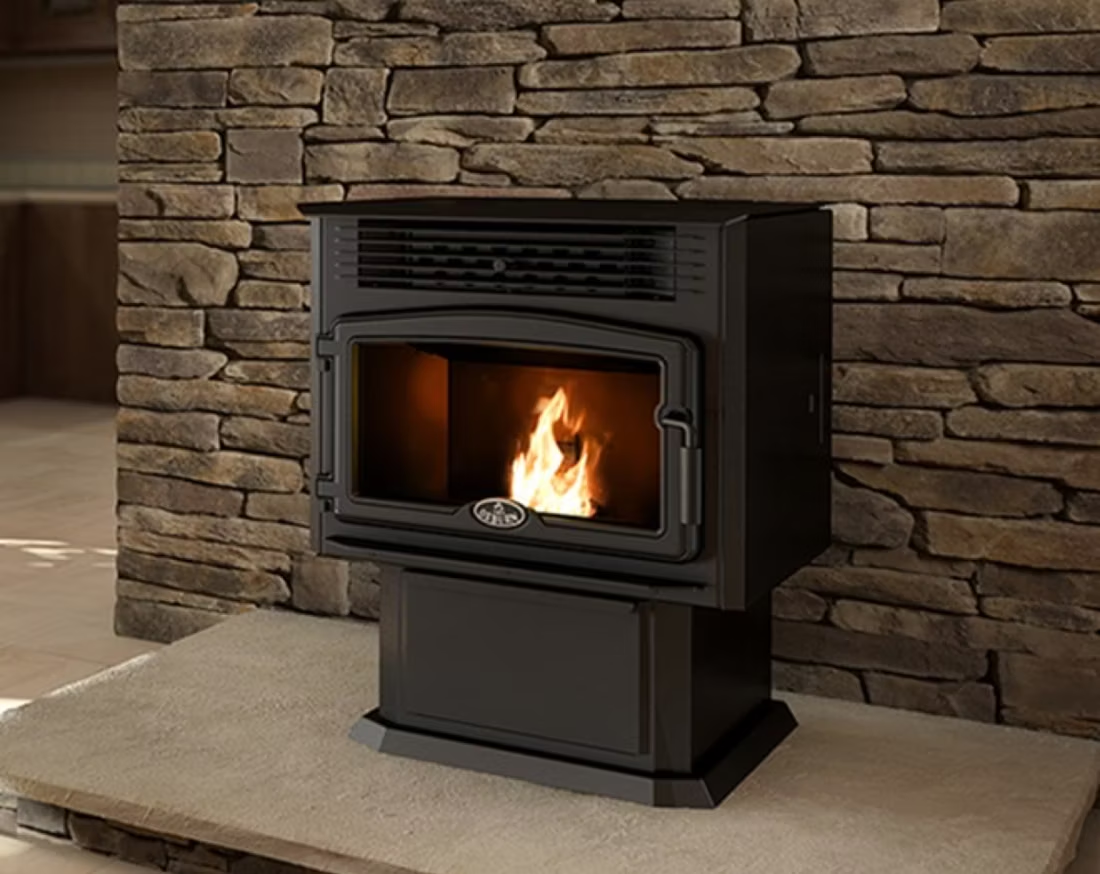
A pellet stove is a freestanding unit that sits on a hearth pad and can be placed almost anywhere with the right wall or ceiling venting—a good option for Cabarrus County homes without an existing fireplace. A pellet insert is built to slide into an existing masonry or built-in fireplace opening, converting it into an efficient heat source while keeping the original look of the fireplace. For the many Concord and Kannapolis homes with an underused wood or gas fireplace already in place, an insert is usually the simpler, less invasive route.
Do I need a permit to install a pellet stove in Cabarrus County?
Most pellet stove and insert installations require a building permit through the local jurisdiction—Cabarrus County or the city building department for Concord, Kannapolis, or Harrisburg depending on where the home sits. Permitting confirms the vent termination clearances and hearth protection meet code. Local dealers who handle pellet installs regularly typically manage this paperwork as part of the job, so you're not stuck tracking down the right office yourself.
How often does a pellet stove need to be cleaned or serviced?
Pellet stoves need more frequent attention than gas units but less than wood—plan on emptying the ash pan every few days during regular use and doing a deeper clean of the burn pot, exhaust fan, and glass every few weeks depending on how many hours you're running it. An annual professional service check, ideally in late summer or early fall before the first cold snap hits Cabarrus County, covers the auger, hopper, gaskets, and venting to keep everything running efficiently through the season.
Will my pellet stove work during a power outage?
Not without a backup power source. Pellet stoves rely on electricity to run the auger that feeds fuel, the igniter, and the combustion blower, so a standard unit will shut down when the power drops—something worth planning for given that Cabarrus County does see occasional ice storms and severe thunderstorms that knock out power for hours or days. Some homeowners pair a pellet stove with a small battery backup or generator specifically for this reason. If uninterrupted heat during outages is the priority, a wood stove is the more reliable fallback since it needs no electricity to burn.
Pellet vs. wood—which is right for my Cabarrus County home?
Wood offers real fire ambiance, lower fuel cost if you're sourcing your own oak, hickory, maple, or pine, and heat that keeps working through a power outage—but it requires splitting, stacking, seasoning, and regular chimney sweeping. Pellet stoves trade that labor for convenience: load a hopper, set a thermostat, and let the auger do the rest, with far less ash and no chimney fire risk, but they depend on electricity and a steady bag supply. For Cabarrus County's mild winters, many homeowners in newer subdivisions lean toward pellet for the low-maintenance factor, while those with existing wood infrastructure or acreage to source their own fuel often stick with wood. A local dealer can walk through both options based on your home and habits.
What's the difference between an insert and a zero-clearance fireplace?
An insert is a fireplace that slides into a pre-existing wood-burning fireplace—if you don't have one, there's nothing to insert it into. A zero-clearance fireplace is built into a framed wall, which makes it the answer for remodels and new construction. Simple test: existing masonry fireplace means insert; blank or framed wall means zero-clearance.
Why is my open fireplace making my house colder?
Open fireplaces suck—literally. As the fire burns, it consumes air your furnace already paid to heat and pulls it out through the chimney, so the house is actually colder after the fire goes out than before you lit it. An insert fixes this: it seals the chimney, puts fixed glass across the front, and turns that hole in your house into a real heat source.
What is an in-home preview and do I need one?
It's a visit where a hearth professional measures your space, confirms the model you picked actually works in your home, and walks the specs—framing, gas line, venting, finish work—before anything is ordered. Some details you just can't know until you see the house. Never make a down payment without one; it's the single most-skipped step that burns buyers.
Does a fireplace add value to my home?
On average, a fireplace adds back to the home about the same amount you spent installing it. Add the monthly savings from heating the rooms you actually use instead of the whole house—often hundreds of dollars a year—and the value case is strong before you even count what a fire does for how your family uses the room.
Stove and Fireplace Dealers in Cabarrus County
Listings include WhyFire partner dealers, dealers we have verified as authorized for the brands we recommend, and established local businesses that carry hearth products. Every listing shows which one it is. The ones marked Preferred run on WhyFire's software, so they can show you real pricing and book your appointment right here. No manufacturer pays for placement. How we verify dealers →
Thomas Gas Company
Fireplace & Granite Distributors – North Charlotte Showroom
Tucker Furniture & Appliance Company
Viridien Patio + Fireplace
EarthCore Industries
Ron Steel Plumbing
Queen City Fireplace & Outdoor
Charlotte Grill Co.
Queen City Sweeps, LLC
South Central Oil
Owens Chimney Systems, Inc
Carolinas Stone Marble And Granite
High Country Fireplaces
Yadkin Propane
Viridien Patio + Fireplace
Contractors Building Supply
Pellet Brands Stocked Around Cabarrus County
Manufacturers will point you to the nearest stocking dealer.
Get matched with a pellet stove dealer in Cabarrus County.
Tell us about your home and we'll put together a free Project Guide & Parts List—the right pellet stove or insert, the exact vent kit your install needs, and a trusted local dealer to install it.
Find Your Fireplace →