
Keep Your Family Warm and Safe—No Matter What
In Avery Creek, gas and electric do most of the heavy lifting—but wood still has a place for backup heat, ambiance, and self-sufficiency. We'll connect you with a local dealer who knows exactly what that looks like.
Every Project Starts From One of These Five Situations
Wood plays a supporting role here, not the leading one.
Avery Creek sits in Buncombe County at about 2,216 feet in the foothills south of Asheville, in climate zone 4A. Winters are mild by mountain standards—average lows around 25°F and a fairly short, mild heating season each year, less than half the winter heating load a place like Burlington, VT sees annually. That milder heating load, combined with a well-built-out electric and natural gas infrastructure, means most homes here are designed around central HVAC and gas or electric heat rather than wood as a primary source.
That said, wood hasn't disappeared from the picture. Duke Energy Progress, Duke Energy Carolinas, and French Broad Electric Membership Corporation all serve the area, and gas and electric systems handle the bulk of day-to-day heating. But Avery Creek backs up to the Nantahala-Pisgah National Forest, where cutting permits run about $20 per cord during the May-to-October season, and oak, hickory, maple, and pine are all common locally. A smaller number of homeowners here install a wood stove or insert specifically for backup heat during winter storm outages, for the ambiance of a real fire, or because they already have access to cheap, abundant firewood and want to use it.
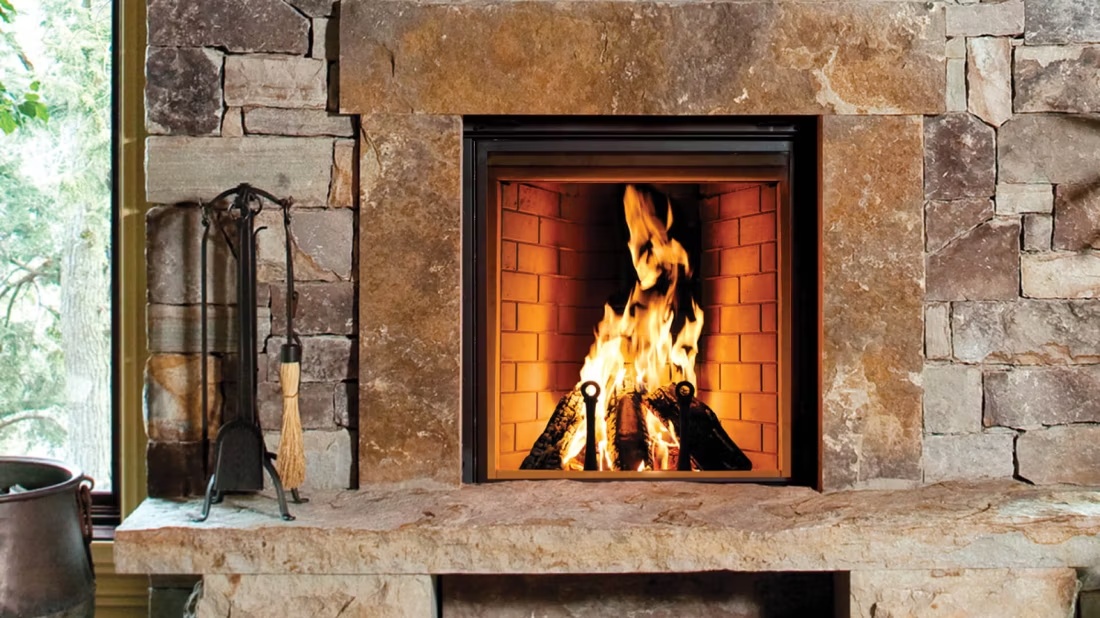
Firewood Cutting Permits Near Avery Creek
Three steps. No salesperson until you're ready.
Tell us about your project
Your zip code, your situation, and the fuel you're leaning toward—or let the answers point you to one.
See what's actually available
The brands dealers within 100 miles genuinely carry—real options, never a catalog mirage.
Get your dealer & Project Guide
A trusted local dealer, plus the free Project Guide & Parts List that names every component of the job.
Frequently Asked Questions
How much does a wood stove installation cost in Avery Creek?
Because wood heat is a smaller niche in this part of Buncombe County than in colder, more wood-dependent parts of western North Carolina, there isn't a large local sample to draw a tight number from. Regionally, a freestanding wood stove installation typically runs $3,500 to $8,000 depending on whether you need new Class A chimney pipe, a hearth pad upgrade, or structural work to run venting through a roof. Installing into an existing masonry fireplace as an insert is usually on the lower end since the chimney already exists. A local dealer serving the Asheville area can give you a firm number after seeing your home.
What size wood stove do I need for my home in Avery Creek?
Given the relatively mild winters here—average lows near 25°F rather than the single digits you'd see in a place like Bozeman, MT—most Avery Creek homes don't need a stove sized for around-the-clock primary heat. A small to mid-size stove (rated for 1,000 to 1,800 square feet) is usually plenty for supplemental heat in a main living area or as backup during outages. If you're planning to heat a larger footprint as your main source, a local dealer should size it based on your square footage and insulation rather than a generic chart—an oversized stove in a mild climate like this will smolder and build creosote fast.
Where can I find a certified wood stove installer near Avery Creek?
Because wood stoves are less common in Avery Creek proper, most certified installers serving this zip code are based in the greater Asheville metro and work outward into Buncombe County. Look for NFI (National Fireplace Institute) certification or CSIA (Chimney Safety Institute of America) credentials—both indicate real training in wood-burning appliance clearances and venting, which matters more here precisely because it's not the default install crews are doing every day. We match homeowners with trusted local dealers rather than a generalist contractor, which matters for a fuel type that's less routine in this market.
Should I get a wood stove or a wood insert?
If your Avery Creek home already has a masonry fireplace, an insert is usually the better call—it uses the chimney you already have and turns a fireplace that loses most of its heat up the flue into a genuinely efficient heat source. A freestanding stove makes more sense if you don't have an existing fireplace, or if you want the flexibility to place it wherever venting is practical. Either way, oak and hickory—both common species in this part of the Blue Ridge foothills—burn hot and long, which is useful if you're using the stove mainly as backup heat during winter power outages rather than daily.
Do I need a permit to install a wood stove in Avery Creek?
Yes—new wood stove and insert installations in unincorporated Buncombe County, which includes Avery Creek, require a building permit through Buncombe County Permits & Inspections. Most local hearth dealers handle the permit application and inspection scheduling as part of the install. One upside for this area: Avery Creek has no listed air quality concerns or winter inversion issues, so unlike some western mountain and valley towns, you won't be dealing with seasonal burn curtailment periods here.
What's the best wood stove for Avery Creek's climate?
Since winters here are moderate rather than brutal—nowhere near the extended sub-zero stretches you'd get in International Falls, MN—you don't need an oversized, all-night catalytic monster to stay comfortable. Mid-size non-catalytic stoves from brands like Jotul, Pacific Energy, or Vermont Castings tend to be a good fit: efficient, clean-burning, and sized appropriately for supplemental or backup heat rather than 24/7 primary use. A local dealer can walk you through catalytic options too if you want longer overnight burn times, but for most Avery Creek homes it's not strictly necessary.
How often should my chimney be inspected in Avery Creek?
The CSIA recommends an annual inspection for any wood-burning appliance, and that holds even for lighter-use setups. If your stove is mainly backup heat used a handful of times a winter, creosote builds up more slowly than in a home burning it nightly, but you still want a Level 1 sweep and inspection before burning season each year—moisture and animal nesting in an unused flue are common issues in the humid Blue Ridge foothills climate. Asheville-area chimney sweeps regularly service Buncombe County, including Avery Creek.
Where can I get firewood in Avery Creek?
Cutting permits through the Nantahala-Pisgah National Forest run about $20 per cord during the May-through-October season, and oak, hickory, maple, and pine are all common species in the surrounding forest. If you'd rather not cut your own, local firewood suppliers around Buncombe County typically deliver seasoned oak or hickory for roughly $250 to $325 per cord—oak and hickory both burn hotter and longer than the pine that's also plentiful here, which matters if you're relying on the stove for backup heat during an outage.
Is a wood stove worth it in Avery Creek if gas and electric already cover my heating?
For most homes here, gas or electric heat pumps handle day-to-day comfort fine—Duke Energy Progress, Duke Energy Carolinas, and French Broad Electric Membership Corporation all serve reliable power to the area, and residential rates run roughly 14 to 15.5 cents per kWh. Where a wood stove earns its keep in Avery Creek is winter ice storms, which do periodically knock out power in this part of the Blue Ridge foothills—a wood stove keeps working when the grid doesn't. If you value that kind of independence, or you like the ambiance of a real fire and have easy access to cheap Forest Service firewood, it's a reasonable add-on. If you're purely optimizing for lowest-maintenance daily heat, gas or electric will likely serve you better as the primary system.
Why is my open fireplace making my house colder?
Open fireplaces suck—literally. As the fire burns, it consumes air your furnace already paid to heat and pulls it out through the chimney, so the house is actually colder after the fire goes out than before you lit it. An insert fixes this: it seals the chimney, puts fixed glass across the front, and turns that hole in your house into a real heat source.
What's the difference between an insert and a zero-clearance fireplace?
An insert is a fireplace that slides into a pre-existing wood-burning fireplace—if you don't have one, there's nothing to insert it into. A zero-clearance fireplace is built into a framed wall, which makes it the answer for remodels and new construction. Simple test: existing masonry fireplace means insert; blank or framed wall means zero-clearance.
What is an in-home preview and do I need one?
It's a visit where a hearth professional measures your space, confirms the model you picked actually works in your home, and walks the specs—framing, gas line, venting, finish work—before anything is ordered. Some details you just can't know until you see the house. Never make a down payment without one; it's the single most-skipped step that burns buyers.
Can I install a fireplace myself?
If you're putting a fire in your house on purpose, it's best to work with an expert. Unless you're genuinely experienced in framing, gas line, vent pipe, and the national code on clearances to combustibles, have a professional do it—and ideally the same company that sells you the fireplace, so warranty, service, and liability all live under one roof.
Nearby Dealers
Hearth shops serving Avery Creek and the surrounding area. Every listing shows whether it is a WhyFire partner, a dealer we have verified as authorized for the brands we recommend, or a local business carrying hearth products. No manufacturer pays for placement. How we verify dealers →
Outdoor Living & More
Blossman Gas
Firelight Hearth & Patio
Pisgah Insulation & Fireplace
Mf Masonry, LLC
Black Mountain Stove & Chimney
Massie Furniture
Shaw Lp Gas Inc.
Find your wood stove in Avery Creek.
Tell us about your home and how you'd use a wood stove—daily heat, storm backup, or ambiance—and we'll match you with a trusted local dealer and send over a free Project Guide & Parts List, including the exact vent kit your install needs.
Find Your Fireplace →