
Set It, Forget It: Pellet Heat for Anson County's Mild Winters.
Thermostat-simple heat for Wadesboro, Polkton, Lilesville, and the rest of Anson County—no wood splitting, no ash mess. Find the right pellet stove or insert and connect with a trusted local dealer.
Every Project Starts From One of These Five Situations
A steady heat source built for Anson County's in-between winters.
Anson County sits along the Pee Dee River in the Piedmont, with Wadesboro as the county seat and smaller communities like Polkton, Lilesville, Peachland, Ansonville, Morven, and McFarlan spread across roughly 530 square miles of mostly rural, agricultural land. This is climate zone 3A—mixed-humid, with an average winter low around 32°F and a winter heating load that's a fraction of what a place like Bismarck, ND or Minneapolis, MN logs in a typical winter. Winters here are short and generally mild, but January and February still bring cold snaps and damp, chilly stretches that push heating bills up fast in a county where a lot of housing stock is manufactured or older single-family homes without efficient central systems.
That's exactly the gap a pellet stove or insert fills well. It's not the only heat source in most Anson County homes—plenty of households run on heat pumps or propane as their primary system—but a pellet appliance in the main living area gives you consistent, thermostat-controlled zone heat for the coldest weeks without the labor of cutting and stacking wood. Bagged pellets from regional producers like Lignetics, Hamer Pellet Fuel, and Greenway Renewable Energy are available through farm supply and co-op outlets in the area, and with no air quality non-attainment status or winter burn restrictions on the books here, there's nothing standing between you and running the stove whenever it's cold enough to need it.
Three steps. No salesperson until you're ready.
Tell us about your project
Your zip code, your situation, and the fuel you're leaning toward—or let the answers point you to one.
See what's actually available
The brands dealers within 100 miles genuinely carry—real options, never a catalog mirage.
Get your dealer & Project Guide
A trusted local dealer, plus the free Project Guide & Parts List that names every component of the job.
Frequently Asked Questions
How much does a pellet stove installation cost in Anson County?
A typical pellet stove or insert installation in Anson County runs roughly $3,000 to $6,000, depending on the unit, whether you're venting through an exterior wall or an existing chimney, and whether any electrical work is needed for the hopper and blower circuit. Inserts going into an existing masonry fireplace tend to land on the lower end since the chimney chase is already there; freestanding stoves in homes without one—including many of the manufactured and modular homes common throughout the county—may need a new through-wall vent kit, which adds to the total. A local dealer will give you a firm number after seeing your home.
What size pellet stove do I need for my Anson County home?
Sizing comes down to square footage, ceiling height, and how open your floor plan is—and in a county with a substantial share of manufactured and single-wide or double-wide homes, floor construction and clearance requirements matter as much as BTU output. A small pellet stove (rated for roughly 1,000-1,300 sq ft) is plenty for a single living area or a smaller home outside Wadesboro or Polkton; a mid-size unit handles most standard homes in Lilesville, Peachland, or Ansonville looking for whole-house supplemental heat. Because Anson County's winters are relatively mild, oversizing is a more common mistake here than in colder climates—most homes don't need a stove built for sub-zero performance. A local dealer will size the unit to your actual layout during an in-home visit.
Where can I find pellet stove dealers and installers near me?
Anson County is rural, so dealer options directly in Wadesboro or Polkton may be limited—many homeowners end up working with retailers based in the Charlotte metro area or in nearby Rockingham, roughly 20-30 minutes south. Look for NFI-certified installers regardless of where they're based; certification means they're trained specifically on pellet appliance venting, clearances, and electrical hookup, not just general contracting. Ask about travel charges up front if the dealer is coming from outside the county—it's common for rural installs and usually reasonable.
What's the difference between a pellet stove and a pellet insert?
A pellet stove is a freestanding unit that sits on its own hearth pad and vents through a wall or existing chimney—it can go in almost any room with the right clearances, which makes it a good fit for homes without a fireplace at all, common throughout Anson County's manufactured and ranch-style housing stock. A pellet insert is built to slide into an existing masonry fireplace opening, using your current chimney (with a proper liner) as the vent path. If you've got an old open wood fireplace in a Wadesboro-area home that you never use, an insert converts it into an efficient, thermostat-controlled heater without changing the room's layout.
Do I need a permit to install a pellet stove in Anson County?
Yes—new pellet stove and insert installations require a building permit through the Anson County Planning & Inspections Department, and most installs also require an electrical permit since pellet appliances need a dedicated outlet for the auger and combustion blower. Most established dealers pull these permits as part of the installation, so you generally don't have to handle the paperwork yourself. Unlike some wood-burning installs in other parts of the state, there's no EPA curtailment or air quality restriction to navigate here—Anson County has no non-attainment designation, so there's no seasonal burn restriction to plan around.
What's the best pellet stove for Anson County's climate?
Because Anson County's winters are mild by national standards—average lows around 32°F and a heating season that's short compared to much of the country—you don't need a stove engineered for extreme cold-climate output. Mid-efficiency units from brands commonly carried by Charlotte-area and Rockingham dealers, such as Harman, Englander, or Quadra-Fire, are generally well matched to the supplemental-heat role most Anson County households want. If your home is older with drafty windows or you're heating a larger open floor plan, ask your dealer about a model with a larger hopper capacity so you're not refilling constantly during the coldest snaps.
How much maintenance does a pellet stove need?
Pellet stoves need more routine upkeep than a gas unit but far less than wood. Plan on emptying the ash pan every few days during regular use, a full glass and burn-pot cleaning weekly, and a professional service visit once a year to check the auger motor, exhaust blower, and venting for creosote buildup—creosote is minimal with pellets compared to cordwood, but it isn't zero. Given the limited number of dealers serving Anson County directly, it's worth scheduling your annual service in late summer before the first cold snap rather than waiting until winter demand backs up local technicians.
Where can I buy pellets in Anson County?
Regional producers including Lignetics, Hamer Pellet Fuel, and Greenway Renewable Energy supply bagged pellets that are commonly stocked at farm supply and co-op stores throughout the Carolinas, and many Anson County households buy pellets in bulk pallet quantities (roughly 50 forty-pound bags) ahead of winter to lock in pricing and avoid mid-season shortages. Softwood pellets from Southeast producers tend to burn a bit hotter with less ash than some Northern hardwood blends, which is worth asking about if you're comparing brands side by side.
Pellet stove vs. wood stove—which is right for my Anson County home?
Wood is the traditional choice in this part of North Carolina—oak, hickory, and maple are abundant locally, and a wood stove works without electricity, which matters during the occasional ice storm or downed-line outage that hits rural Anson County. A pellet stove trades that off-grid capability for convenience: load the hopper, set the thermostat, and let it run without splitting or stacking cordwood, with a cleaner burn and far less ash to deal with. Given how mild Anson County's winters generally run, most homeowners here are choosing a secondary or zone-heat source rather than a survival heater, and for that role, a pellet stove's low-maintenance, consistent output is hard to beat—as long as you've got reliable power or a plan for outages.
How often does a pellet stove need cleaning?
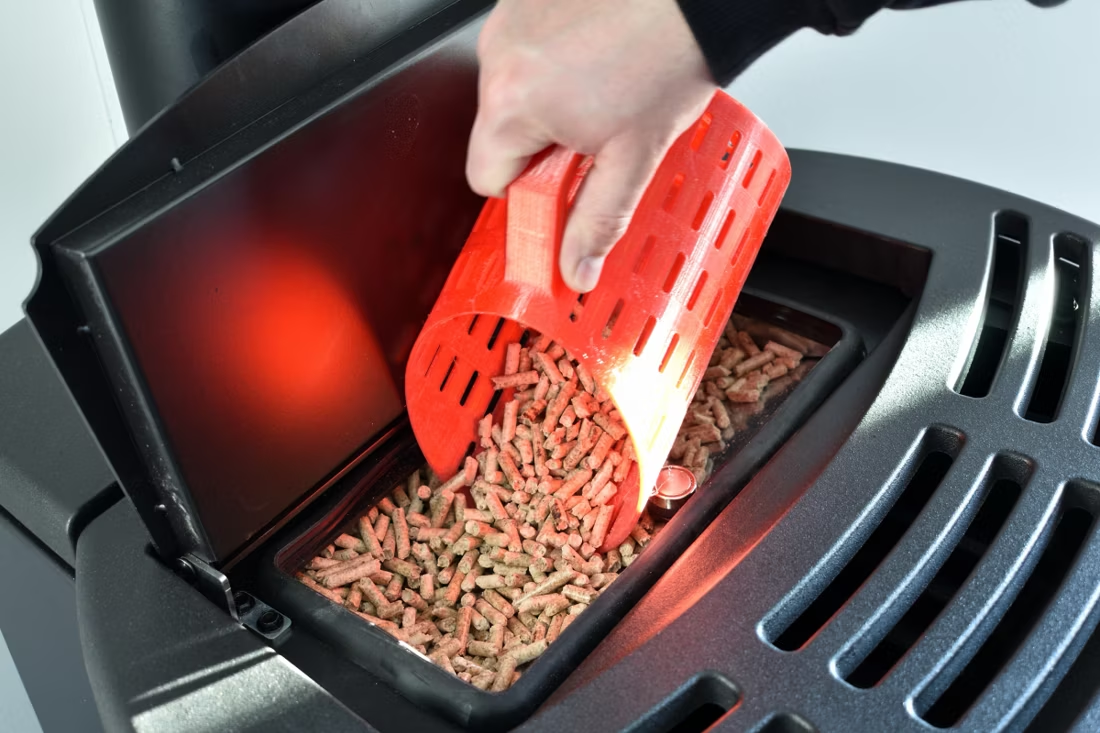
A clean pellet stove is a happy pellet stove. Plan on cleaning the burn pot about once a week when you're burning regularly—ash and clinkers gum up the air holes just like a pellet barbecue. Most pellet stove problems trace back to skipped cleaning that nobody explained up front. Some designs make it easy with a trapdoor burn pot: pull a lever and the gunk drops into the ash pan.
What's the difference between an insert and a zero-clearance fireplace?
An insert is a fireplace that slides into a pre-existing wood-burning fireplace—if you don't have one, there's nothing to insert it into. A zero-clearance fireplace is built into a framed wall, which makes it the answer for remodels and new construction. Simple test: existing masonry fireplace means insert; blank or framed wall means zero-clearance.
Can a fireplace actually lower my heating bill?
Yes—by creating a comfort zone. A furnace heats every square foot of the house just to warm the one room you're in; a gas fireplace on low burns roughly a sixth of the gas a typical furnace does. Set the furnace around 55–60 degrees as a baseline, then heat the rooms your family actually uses. Families who heat this way commonly save $20–$60 a month.
Can I install a fireplace myself?
If you're putting a fire in your house on purpose, it's best to work with an expert. Unless you're genuinely experienced in framing, gas line, vent pipe, and the national code on clearances to combustibles, have a professional do it—and ideally the same company that sells you the fireplace, so warranty, service, and liability all live under one roof.
Stove and Fireplace Dealers in Anson County
Pellet Brands Stocked Around Anson County
Manufacturers will point you to the nearest stocking dealer.
Find your pellet stove in Anson County.
Tell us a bit about your home and we'll match you with a trusted local dealer and send over a free Project Guide & Parts List—the exact stove or insert, vent kit, and installation plan for your Anson County home.
Find Your Fireplace →