
Find the right pellet stove for Alleghany County's Blue Ridge winters.
Steady, thermostat-controlled heat for the high country around Sparta, Piney Creek, and the New River valley—matched to a trusted local dealer who can actually get it installed.
Every Project Starts From One of These Five Situations
Convenient heat for a county that already burns wood.
Alleghany County sits high in North Carolina's Blue Ridge, with the Parkway running along its southern edge and Doughton Park and New River State Park bracketing the county on either side. At around 5,148 heating degree days and average winter lows near 22°F, it's a real cold-climate zone 5A county—nowhere near as brutal as Duluth or Burlington, but enough for a solid six-month heating season where a stove is working hard, not decorative. With roughly 1,800 residents spread across a mostly rural, mountainous county, the housing stock leans toward older farmhouses, cabins, and manufactured homes rather than dense subdivisions—the kind of building stock where a well-sized pellet appliance can genuinely carry a room, or a whole floor, through winter.
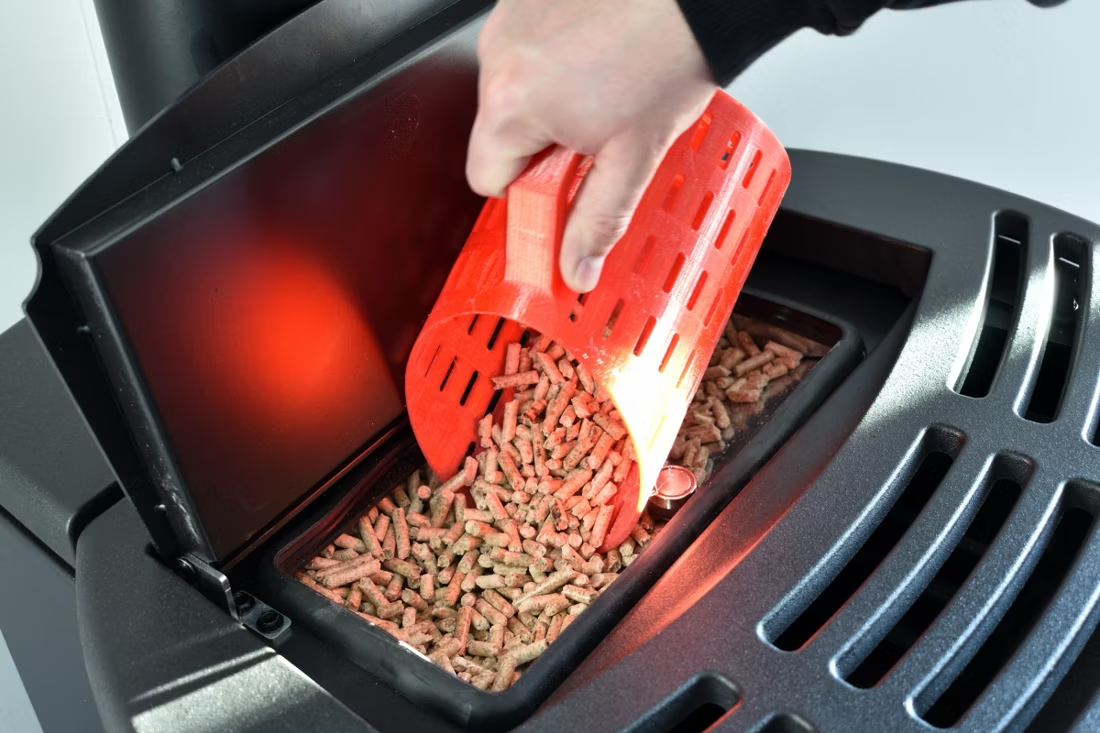
Cordwood culture runs deep here—oak, hickory, maple, and pine grow on the ridges and get cut and split every fall—but pellet stoves have carved out a real niche for homeowners who want consistent, thermostat-set heat without splitting and stacking wood or feeding a firebox every few hours. Regional pellet brands including Lignetics, Hamer Pellet Fuel, and Greenway Renewable Energy supply the Blue Ridge and Piedmont, and bags are typically stocked at farm-supply outlets in and around Sparta rather than big-box chains. A properly sized, correctly vented pellet stove from a local dealer gives Alleghany County homes clean, even heat with far less daily labor than a wood stove—while still running on a fuel that's produced from the same regional forests.
Three steps. No salesperson until you're ready.
Tell us about your project
Your zip code, your situation, and the fuel you're leaning toward—or let the answers point you to one.
See what's actually available
The brands dealers within 100 miles genuinely carry—real options, never a catalog mirage.
Get your dealer & Project Guide
A trusted local dealer, plus the free Project Guide & Parts List that names every component of the job.
Frequently Asked Questions
How much does a pellet stove installation cost in Alleghany County?
A freestanding pellet stove installation in Alleghany County typically runs $3,500 to $6,500, depending on the model, whether new venting has to be run through an exterior wall, and whether a hearth pad or clearance work is needed. A pellet insert that fits into an existing masonry fireplace tends to land a bit lower, often $3,000 to $5,500, since it can use the existing chimney chase for the vent liner. Homes in the more remote reaches of the county—out toward Piney Creek or Glade Valley—may see a modest travel charge added to the quote. A local dealer will give you a firm number after seeing the space in person.
What size pellet stove do I need for my home?
Sizing comes down to square footage, ceiling height, insulation, and whether the stove is meant to be primary or supplemental heat. In Alleghany County's older farmhouses and cabins—often less insulated than newer construction—it's common to size up slightly rather than down, since a stove that can't keep pace on a 22°F night with wind off the ridge is a daily frustration. Small units (roughly up to 1,000 sq ft) suit a single main living space; medium units (1,000–2,000 sq ft) cover most of the county's typical home footprint; larger units can carry a well-insulated whole house. A local dealer will walk your floor plan and give you an actual recommendation rather than a chart guess.
Where can I buy pellet fuel near me in Alleghany County?
Pellet fuel in this part of the Blue Ridge is mostly sold through farm-supply and hardware retailers rather than big-box stores, and regional brands like Lignetics, Hamer Pellet Fuel, and Greenway Renewable Energy are common on shelves and through seasonal pallet orders in Sparta and the surrounding towns. Because Alleghany is a small, rural county, it's worth calling ahead in early fall to reserve pallets before cold weather drives up demand—running out mid-January and having to drive into Wilkes or Ashe County for bags is a common complaint among first-year pellet stove owners here.
What's the difference between a pellet stove and a pellet insert?
A pellet stove is a freestanding appliance that sits on a hearth pad and vents through a wall or existing chimney chase—it can go almost anywhere in a room with the right clearances. A pellet insert is built to slide into an existing masonry fireplace opening, turning a drafty open hearth into a sealed, high-efficiency heat source using a vent liner run up the existing flue. For the many older homes in Alleghany County that already have a wood-burning fireplace, an insert is often the simpler retrofit. Homes without an existing fireplace, or newer construction, are usually better suited to a freestanding stove.
Do I need a permit to install a pellet stove in Alleghany County?
Yes—a building permit is generally required for a new pellet stove or insert installation through the Alleghany County Building Inspections Department, covering the appliance placement, clearances, and venting. Because pellet appliances vent mechanically through a small-diameter pipe rather than a traditional masonry chimney, the inspection is usually quicker than a wood stove permit review. Most local dealers handle the permit paperwork as part of the installation, so it's rarely something the homeowner has to manage directly.
What's the best pellet stove for Alleghany County's climate?
For a zone 5A county with winter lows regularly in the low 20s and a real six-month heating season, look for a pellet stove with a strong high-burn BTU rating and a hopper large enough to reduce how often you're refilling overnight. Larger hopper capacities matter more here than in milder Piedmont counties, since a family running the stove as primary or near-primary heat through a Blue Ridge winter doesn't want to be reloading at 2 a.m. Ask a local dealer to match hopper size and BTU output to your specific square footage and how exposed your home is to wind—a ridge-top property near Sparta will lose heat faster than a sheltered spot down in a river valley.
How often does a pellet stove need to be cleaned and serviced?
Pellet stoves need more frequent attention than people expect, even though they're cleaner-burning than cordwood. Plan on emptying and brushing the burn pot every few days during heavy use, a deeper cleaning of the exhaust passages every few weeks, and a full annual service—including the exhaust fan, gaskets, and vent pipe—before each heating season starts. Local dealers who sell pellet stoves in Alleghany County typically offer this annual service, and it's worth scheduling in late summer before the fall rush rather than waiting until the first cold snap.
Will a pellet stove work if the power goes out?
No—this is the biggest trade-off to understand before buying. Pellet stoves rely on an electric auger to feed fuel and a blower to move exhaust and heat, so they shut down when the power does. In a rural mountain county like Alleghany, where winter storms can knock out power for a day or more along the ridges, that matters. Some homeowners pair a pellet stove with a small battery backup or generator specifically to ride out outages; others keep a wood stove or fireplace as backup heat for exactly that reason. A local dealer can talk through backup power options if outage risk is a concern for your property.
Pellet vs. wood—which is right for my home in Alleghany County?
Wood is the traditional choice here for good reason—oak, hickory, maple, and pine are all cut locally, a wood stove runs with no electricity at all, and fuel cost can be near zero if you're cutting your own. Pellet stoves trade that self-sufficiency for convenience: load a hopper instead of feeding a firebox every few hours, get a more even thermostat-controlled burn, and deal with far less ash and creosote. For Alleghany County homeowners who want low-maintenance daily heat and don't mind depending on the grid, pellet is a strong fit. For those who value backup heat during power outages or already have a wood supply, a wood stove may still make more sense—and plenty of local homes run both.
How often does a pellet stove need cleaning?
A clean pellet stove is a happy pellet stove. Plan on cleaning the burn pot about once a week when you're burning regularly—ash and clinkers gum up the air holes just like a pellet barbecue. Most pellet stove problems trace back to skipped cleaning that nobody explained up front. Some designs make it easy with a trapdoor burn pot: pull a lever and the gunk drops into the ash pan.
What's the difference between an insert and a zero-clearance fireplace?
An insert is a fireplace that slides into a pre-existing wood-burning fireplace—if you don't have one, there's nothing to insert it into. A zero-clearance fireplace is built into a framed wall, which makes it the answer for remodels and new construction. Simple test: existing masonry fireplace means insert; blank or framed wall means zero-clearance.
Can I install a fireplace myself?
If you're putting a fire in your house on purpose, it's best to work with an expert. Unless you're genuinely experienced in framing, gas line, vent pipe, and the national code on clearances to combustibles, have a professional do it—and ideally the same company that sells you the fireplace, so warranty, service, and liability all live under one roof.
Can a fireplace actually lower my heating bill?
Yes—by creating a comfort zone. A furnace heats every square foot of the house just to warm the one room you're in; a gas fireplace on low burns roughly a sixth of the gas a typical furnace does. Set the furnace around 55–60 degrees as a baseline, then heat the rooms your family actually uses. Families who heat this way commonly save $20–$60 a month.
Stove and Fireplace Dealers in Alleghany County
Pellet Brands Stocked Around Alleghany County
Manufacturers will point you to the nearest stocking dealer.
Get your pellet stove Project Guide & Parts List for Alleghany County.
Tell us about your home and we'll match you with a trusted local dealer and send a free Project Guide & Parts List—the exact stove or insert, vent kit, and installation plan for your Alleghany County home.
Find Your Fireplace →