
Warm your Alamance County home with clean, low-maintenance heat.
From Burlington to Graham, Mebane to Elon, pellet stoves give Alamance County homeowners thermostat-controlled warmth without splitting a woodpile. Find the right unit and connect with a trusted local dealer.
Every Project Starts From One of These Five Situations
Efficient heat, without the woodpile, for Piedmont winters.
Alamance County sits in the North Carolina Piedmont, roughly between Greensboro and Durham, in climate zone 4A with a mixed-humid winter that averages a low of 31°F and a solid, moderate heating season. That's a real heating season—cold enough for consistent evening fires from November through February—but nowhere near the sub-zero stretches of places like Duluth or Burlington, Vermont. Alamance County also has no air quality non-attainment designations or winter inversion concerns, so there's no local burn-ban culture limiting pellet or wood-burning appliances the way there is in some western basins.
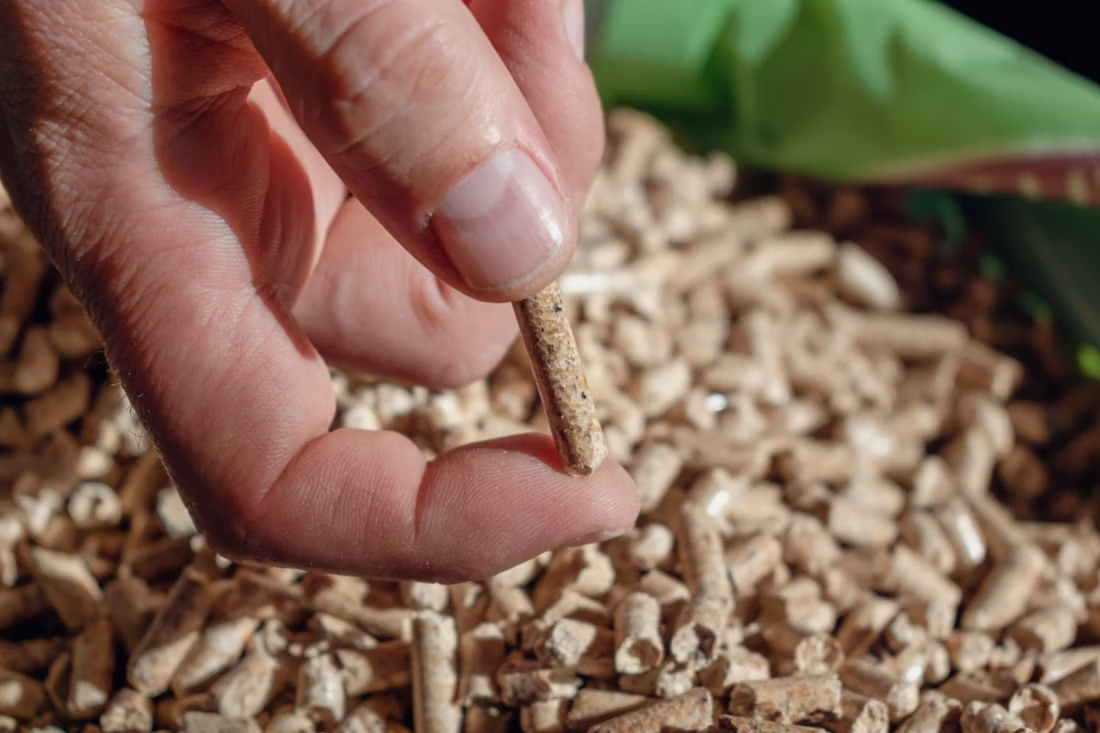
That combination—moderate heating need, no air quality restrictions, and a lot of split-level and ranch-style housing stock in Burlington, Graham, and Mebane—makes pellet stoves a practical fit. You load a hopper instead of hauling and splitting oak, hickory, or pine rounds, set a thermostat, and get a steady, even burn with far less ash than a wood stove. Regional pellet supply is solid too: brands like Lignetics, Hamer Pellet Fuel, and Greenway Renewable Energy distribute throughout the Piedmont, so you're not depending on a single retailer or long-haul trucking for fuel.
Three steps. No salesperson until you're ready.
Tell us about your project
Your zip code, your situation, and the fuel you're leaning toward—or let the answers point you to one.
See what's actually available
The brands dealers within 100 miles genuinely carry—real options, never a catalog mirage.
Get your dealer & Project Guide
A trusted local dealer, plus the free Project Guide & Parts List that names every component of the job.
Frequently Asked Questions
How much does a pellet stove installation cost in Alamance County?
Most pellet stove and insert installations in Alamance County run in the $3,500 to $7,000 range, depending on the unit, whether you're installing into an existing masonry fireplace (insert) or placing a freestanding stove that needs a new hearth pad and through-wall vent, and how far the pellet vent run has to travel. Freestanding installs in a room without an existing chimney tend to land on the higher end once wall penetration and venting are factored in. A trusted local dealer will give you a firm number after seeing your space, but pellet installs are typically less expensive than a comparable wood stove install since venting requirements are less demanding.
What size pellet stove do I need for my home?
Because Alamance County's winters are moderate—average lows around 31°F and a solid, moderate heating season—most homes here use a pellet stove for zone heating in a main living area rather than as sole whole-house heat, so a small-to-medium unit (rated for 1,000 to 1,800 square feet) covers most Burlington and Graham living rooms and open-concept great rooms. Larger, well-insulated homes or ranch-style layouts with an open floor plan in Mebane and Elon may want a stove rated closer to 2,000 square feet. A local dealer will factor in ceiling height, insulation, and floor plan during an in-home consult—sizing is one of the few things worth getting a professional opinion on rather than guessing from the box label.
Where can I find certified pellet stove installers near me?
Look for installers with NFI (National Fireplace Institute) pellet-specialist certification, which covers proper venting, clearance, and combustion-air requirements specific to pellet appliances. Trusted local dealers serving Alamance County—covering Burlington, Graham, Mebane, and Elon—typically handle both the sale and the install, which keeps warranty coverage and code compliance under one roof. Avoid having a general handyman cut a wall vent for you; pellet vent terminations have specific clearance-to-grade and clearance-to-window rules that a certified installer will already know.
What's the difference between a pellet stove and a pellet insert?
A pellet stove is a freestanding unit that sits on a hearth pad and vents through an exterior wall or existing chimney chase—it can go almost anywhere in a room with the right clearances. A pellet insert is built to slide into an existing masonry fireplace opening, converting an old wood-burning fireplace into a sealed, high-efficiency pellet appliance while reusing the chimney chase (with a vent liner) for exhaust. For the many older homes around Burlington and Graham with an existing brick fireplace, an insert is usually the simpler and less invasive option. Homes without an existing fireplace opening are better suited to a freestanding stove.
Do I need a permit to install a pellet stove in Alamance County?
Yes—a building permit is required for new pellet stove and insert installations, issued through the Alamance County Inspections Department (or the local municipal building department if you're inside Burlington, Graham, or Mebane city limits). The permit process typically checks hearth clearances, vent termination location, and combustion-air provisions. Most local dealers handle the permit filing and inspection scheduling as part of the installation, so it's rarely something you have to manage yourself. Because Alamance County has no air quality non-attainment designation, there are no seasonal curtailment or burn-ban periods to plan around, unlike some western counties.
What's the best pellet stove for Alamance County's climate?
Since Alamance County's winters are moderate rather than extreme, most homeowners don't need a stove built for 20-hour, sub-zero burns—a mid-size unit from a mainstream pellet stove manufacturer with a reliable auto-ignition system and a thermostat or room-sensing control is usually enough. Look for a hopper capacity of at least 40 pounds if you want overnight burns without a refill, and confirm the unit is rated to burn softwood pellets, since regional supply from brands like Lignetics and Hamer Pellet Fuel is predominantly softwood. A local dealer can walk through hopper size, ash-pan capacity, and noise level (the auger and combustion blower run continuously) based on where the stove will sit in your home.
How often does a pellet stove need to be cleaned and serviced?
Pellet stoves need more frequent light maintenance than wood stoves but less heavy cleaning overall. Plan on emptying the ash pan every few days during regular use, cleaning the burn pot weekly to keep airflow holes clear, and scheduling a full professional service—including venting, gasket, and blower inspection—once a year, ideally in late summer before the Piedmont's heating season starts. Skipping the annual service is the most common cause of ignition failures and uneven burns partway through winter.
Where can I buy pellet fuel in Alamance County?
Regional pellet brands including Lignetics, Hamer Pellet Fuel, and Greenway Renewable Energy are widely distributed through hardware stores, farm supply retailers, and hearth dealers across the Piedmont, including Burlington, Graham, and Mebane. Pellets typically run in the $250 to $300 per ton range in this part of North Carolina, sold in 40-pound bags, with better pricing on multi-ton or pallet purchases in fall before demand peaks. Buying early—August or September—usually means better selection and avoids the price bump that hits once cold weather arrives.
Pellet stove vs. wood stove—which is right for my Alamance County home?
Wood stoves burn oak, hickory, maple, or pine rounds, work without electricity, and are a real option during the ice storms that occasionally knock out power across the Piedmont in January and February. Pellet stoves are more convenient—no splitting or stacking, a cleaner burn, and thermostat-style control—but they need electricity to run the auger and combustion blower, so they go dark in an outage unless you add a battery backup. For an Alamance County home used mainly for comfort and zone heating in a living room or den, pellet is usually the easier day-to-day choice. For anyone wanting a heat source that still works when Duke Energy service goes down during a winter storm, wood remains the more resilient backup.
Why is my open fireplace making my house colder?
Open fireplaces suck—literally. As the fire burns, it consumes air your furnace already paid to heat and pulls it out through the chimney, so the house is actually colder after the fire goes out than before you lit it. An insert fixes this: it seals the chimney, puts fixed glass across the front, and turns that hole in your house into a real heat source.
What does it take to replace an existing fireplace?
Fireplaces are like icebergs—bigger behind the wall than in front of it. Replacement means removing the surrounding tile or stone (the finish material laps onto the fireplace face), pulling the old unit, setting the new one in the same enclosure, and re-finishing the wall. A hearth professional can determine what's behind your wall without demolition during an in-home preview.
What is an in-home preview and do I need one?
It's a visit where a hearth professional measures your space, confirms the model you picked actually works in your home, and walks the specs—framing, gas line, venting, finish work—before anything is ordered. Some details you just can't know until you see the house. Never make a down payment without one; it's the single most-skipped step that burns buyers.
How much should I budget for a fireplace?
For an average home—covering the fireplace, the vent pipe, and basic installation—a budget between $3,900 and $5,500 gives you a lot of options across wood, gas, and pellet. By the time you add finish work, gas line, and electrical, the average complete installation lands between $5,000 and $12,000 all-in. In a remodel or new build, a good rule is to put about 2.5% of the total project cost toward the fireplace.
Stove and Fireplace Dealers in Alamance County
Pellet Brands Stocked Around Alamance County
Manufacturers will point you to the nearest stocking dealer.
Find your pellet stove in Alamance County.
Tell us a bit about your home and we'll match you with the right pellet stove or insert, plus a free Project Guide & Parts List—the exact parts, including the vent kit, and a recommended local Alamance County dealer.
Find Your Fireplace →