
Consistent heat for Yates County's long, cold winters.
With a long, cold winter season and winter lows averaging 18°F around Keuka Lake, Yates County homes need heat that doesn't quit. A pellet stove loads once, runs on a thermostat, and holds steady through the vineyard country's coldest stretches. We'll match you with a local dealer who can size and install one right.
Every Project Starts From One of These Five Situations
Automated warmth for vineyard country winters.
Yates County is small and rural—just under 8,900 people spread across Penn Yan, Dundee, Rushville, and the farmland and vineyard land that rolls down to Keuka Lake. Winters here sit in climate zone 5A, with an average annual heating load of 6,505 degree days and lows that regularly settle around 18°F between the lake-effect snow bands. That's a longer, colder heating season than most people picture for New York's Finger Lakes—closer to what you'd see in Madison, Wisconsin than a typical mid-Atlantic winter.
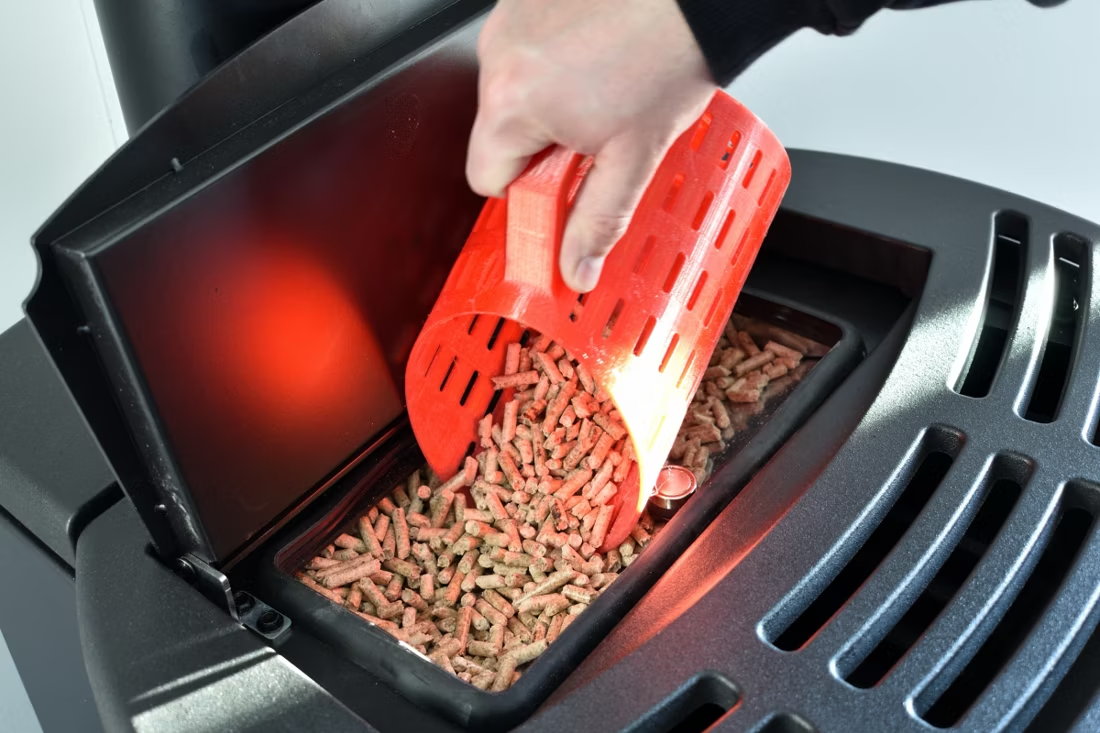
For a lot of Yates County households, that combination of a long season and a rural, spread-out county makes pellet heat an easy sell: no cutting or splitting, no chimney to sweep, and a hopper that can run 24 to 50 hours unattended depending on the unit. Regional bagged pellets from Energex, Hamer Pellet Fuel, and Greene Team Pellet Fuel are all common in this part of upstate New York, so fuel isn't hard to source even out past Middlesex or Italy Hill. A pellet stove or insert sized to your square footage gives you steady, thermostat-controlled heat through the whole Finger Lakes winter without the daily labor of a wood stove.
Three steps. No salesperson until you're ready.
Tell us about your project
Your zip code, your situation, and the fuel you're leaning toward—or let the answers point you to one.
See what's actually available
The brands dealers within 100 miles genuinely carry—real options, never a catalog mirage.
Get your dealer & Project Guide
A trusted local dealer, plus the free Project Guide & Parts List that names every component of the job.
Frequently Asked Questions
How much does a pellet stove installation cost in Yates County?
A typical pellet stove installation runs roughly $3,000 to $6,000 depending on the unit, whether you're venting through an existing masonry chimney or running new PL (pellet-listed) vent through an exterior wall, and whether a hearth pad upgrade is needed for clearance. A pellet insert dropped into an existing fireplace, using the chimney with a liner, tends to fall in the same range. Rural properties farther from Penn Yan may see a modest travel charge added to the quote, but a local dealer will give you a firm number after seeing your fireplace or install site in person.
What size pellet stove do I need for my home in Yates County?
Sizing comes down to square footage, insulation quality, and ceiling height, but with a long, cold winter season on the books, most Yates County homes should size on the higher end of a manufacturer's range rather than the low end. A small unit works for a single room or an older farmhouse's main living space; a mid-size stove handles 1,200 to 2,000 square feet; larger stoves can carry a well-insulated whole home as primary heat. Homes with drafty original construction—common in the older housing stock around Penn Yan and Dundee—often need to size up a step. A local dealer will walk your space and size it for free rather than guessing off a chart.
Where can I buy pellet fuel in Yates County?
Energex, Hamer Pellet Fuel, and Greene Team Pellet Fuel are the regional brands most commonly stocked by dealers and farm supply stores serving this part of the Finger Lakes. Bagged premium hardwood pellets typically run somewhere in the $250 to $300 per ton range locally, sold by the ton (usually fifty 40-lb bags) and often discounted if you buy a full season's supply in the fall before demand picks up. Buying early matters here—rural Yates County dealers can sell through inventory fast once the first hard cold snap hits in November or December.
What's the difference between a pellet stove and a pellet insert?
A pellet stove is a freestanding, self-contained unit that sits on a hearth pad and vents through a wall or existing chimney—it can go almost anywhere in a room with proper clearances. A pellet insert is built to slide into an existing masonry fireplace opening, converting an old wood-burning fireplace into an automated, thermostat-controlled heat source while using the existing chimney (with a liner) as the vent path. For Yates County's older farmhouses that already have a fireplace, an insert is often the cleaner upgrade; homes without one usually go with a freestanding stove instead.
Do I need a permit to install a pellet stove in Yates County?
Most new pellet stove or insert installations require a building permit through your local code enforcement office, since the work involves a UL-listed appliance and dedicated venting. Requirements can vary slightly between the Village of Penn Yan, Dundee, and the surrounding unincorporated towns, so it's worth confirming with your municipality before work starts. In practice, most established local dealers handle the permit paperwork as part of the installation, so it's rarely something the homeowner has to manage alone.
What's the best pellet stove for Yates County's climate?
For a heating season with 6,505 degree days and regular sub-20°F nights, look for a stove with a larger hopper capacity—40 to 80 pounds—so it can run overnight without a refill, and check the manufacturer's rated heating area against your actual square footage rather than sizing down for price. Models with a firebox designed for continuous, higher-output burns hold up better through a full Finger Lakes winter than units marketed mainly for supplemental or occasional use. A local dealer familiar with the county's older, often less-insulated housing stock can point you toward a model that won't struggle on the coldest nights.
How much maintenance does a pellet stove need?
Pellet stoves need more frequent attention than a wood stove but far less than most people expect: emptying and cleaning the ash pan every few days during heavy use, wiping the burn pot weekly to keep airflow clear, and vacuuming the hopper and auger area periodically through the season. Plan on one full professional service and inspection per year—typically in late summer before the burning season starts—to check the exhaust fan, gaskets, and venting. Skipping the annual service is the most common reason pellet stoves lose efficiency or start smoking mid-winter.
Will my pellet stove work during a power outage?
Not on its own—pellet stoves rely on electricity to run the auger, combustion blower, and igniter, so a power outage stops the stove even with a full hopper. This matters in Yates County, where ice storms and lake-effect snow events around Keuka Lake can knock out rural power for hours or occasionally longer. Some homeowners pair a pellet stove with a small battery backup or generator sized to the stove's low wattage draw specifically for this reason. If uninterrupted heat during outages is a priority, it's worth discussing a wood-burning backup option with your dealer alongside the pellet unit.
Pellet stove vs. wood stove—which is right for my home?
Wood stoves run on cordwood—oak, maple, birch, and ash are all common species around Yates County—burn without electricity, and give you the classic look and radiant heat of an open fire, but they require cutting, splitting, stacking, and daily tending. Pellet stoves run on bagged fuel from brands like Energex or Greene Team Pellet Fuel, load easily, hold a steady thermostat-set temperature for a day or more per load, and produce far less mess, but they need continuous electricity to operate. For a household that values hands-off convenience through a long, 6,500-degree-day winter, pellet usually wins; for a rural property that wants heat independent of the grid, wood is the safer bet. A number of local homes end up with both.
Can a pellet stove heat a whole house?
It genuinely can. I burned a pellet stove as my only heat source for years after a furnace died, and it kept the entire house warm. Pellets feed automatically from a hopper, so you get wood-heat economics with thermostat-style control. Two honest caveats: it needs weekly cleaning during the season, and most models need electricity to run—ask about battery backup if outages are a concern.
What do I measure to size a fireplace insert?
Four numbers tell you what fits: the front width, the front height, the back width, and the overall depth of your existing fireplace opening. Grab a tape measure, jot those down, and snap a photo of the wall—those two things do more to move your project forward than anything else you can do today.
Does a fireplace add value to my home?
On average, a fireplace adds back to the home about the same amount you spent installing it. Add the monthly savings from heating the rooms you actually use instead of the whole house—often hundreds of dollars a year—and the value case is strong before you even count what a fire does for how your family uses the room.
How much should I budget for a fireplace?
For an average home—covering the fireplace, the vent pipe, and basic installation—a budget between $3,900 and $5,500 gives you a lot of options across wood, gas, and pellet. By the time you add finish work, gas line, and electrical, the average complete installation lands between $5,000 and $12,000 all-in. In a remodel or new build, a good rule is to put about 2.5% of the total project cost toward the fireplace.
Stove and Fireplace Dealers in Yates County
Pellet Brands Stocked Around Yates County
Manufacturers will point you to the nearest stocking dealer.
Find your pellet stove in Yates County.
Tell us about your home and heating goals, and we'll match you with a trusted local dealer and send over your free Project Guide & Parts List—a plan for your pellet install in Yates County with the exact parts, including the vent kit, and a recommended local dealer to install it.
Find Your Fireplace →