
Find the right electric fireplace for your Wayne County home.
From the Lake Ontario shoreline to the orchards around Williamson and Palmyra, electric fireplaces give Wayne County homeowners instant ambiance and supplemental warmth without a chimney. Find the right unit and connect with a trusted local dealer.
Every Project Starts From One of These Five Situations
Zone heat and easy installs for a genuinely cold county.
Wayne County sits in climate zone 5A along the Lake Ontario shoreline, with roughly 7,006 heating degree days a year and average winter lows around 16°F—a heating season on par with Madison, Wisconsin. Most Wayne County homes rely on propane, oil, or natural gas furnaces for whole-house heat, and plenty burn oak, maple, and birch from local woodlots as a backup. Electric fireplaces fit into that picture differently: they're not the primary heat source, but they're an easy way to add a focal point and a bit of zone warmth to a family room, bedroom, or finished basement in Sodus, Newark, Lyons, or Palmyra without touching a gas line or chimney.
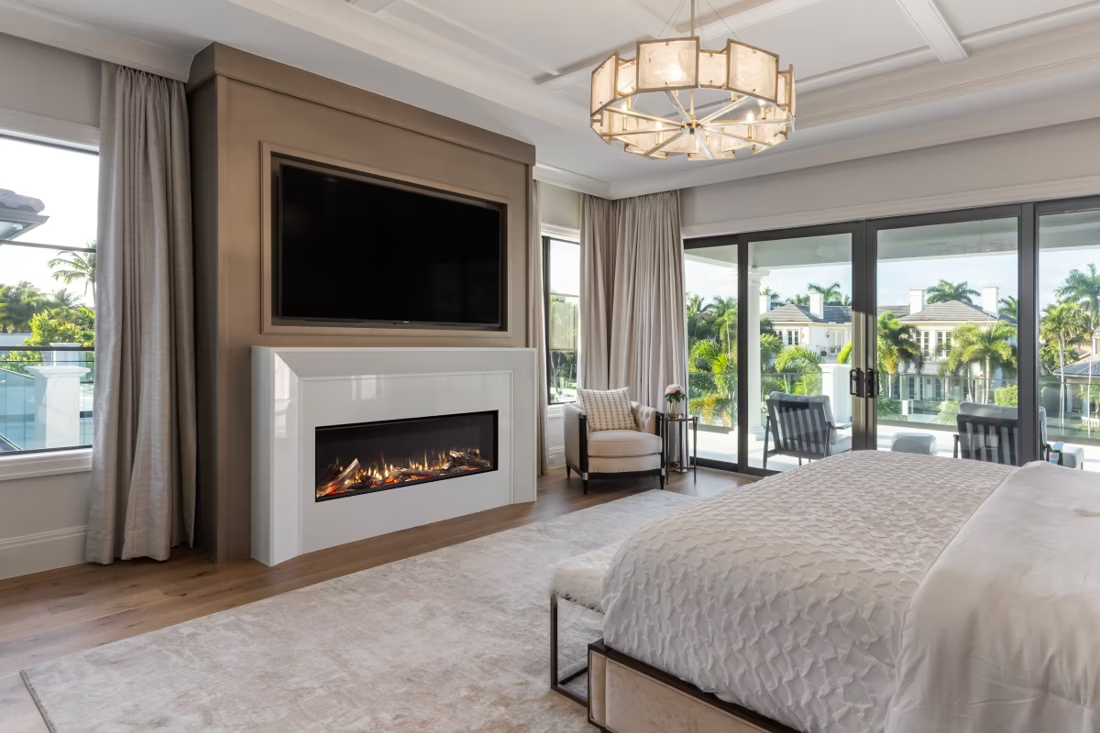
Because electric units need no venting and no combustion air, they're often the fastest and least invasive hearth project available in the county—a plug-in or 120V-hardwired insert can go into an existing masonry opening, a stud wall, or new construction in an afternoon. That simplicity matters in older Wayne County housing stock around the historic village centers, where running new gas line or breaking into a chimney for a wood insert isn't always practical. A local dealer can size the right unit for your room and walk you through the electrical requirements before you buy.
Three steps. No salesperson until you're ready.
Tell us about your project
Your zip code, your situation, and the fuel you're leaning toward—or let the answers point you to one.
See what's actually available
The brands dealers within 100 miles genuinely carry—real options, never a catalog mirage.
Get your dealer & Project Guide
A trusted local dealer, plus the free Project Guide & Parts List that names every component of the job.
Frequently Asked Questions
How much does an electric fireplace installation cost in Wayne County?
Most electric fireplace and insert installations in Wayne County run $400 to $1,200, which is a fraction of what wood or gas installs cost because there's no venting, chimney work, or gas line to run. A simple plug-in insert into an existing fireplace opening sits at the low end. A built-in unit that needs a dedicated 120V or 240V circuit run by an electrician—common in older homes around Lyons or Palmyra with limited existing outlets near the install location—runs closer to the higher end. Ask your local dealer whether your chosen model needs a dedicated circuit before you commit to a spot for it.
Is an electric fireplace enough heat for a Wayne County winter?
Not as a whole-house solution—with 7,006 heating degree days and average lows around 16°F, Wayne County winters call for a real furnace or boiler as primary heat, and most electric fireplaces top out around 5,000-8,000 BTU of supplemental output. What an electric unit does well is zone heat: taking the chill off a bonus room, sunroom, or bedroom so you can turn the thermostat down elsewhere in the house. Think of it as a heating assist for the room you're actually sitting in, not a replacement for your furnace during a Lake Ontario lake-effect cold snap.
Do I need an electrician to install an electric fireplace in Wayne County?
It depends on the unit. Smaller plug-in inserts and freestanding electric stoves typically just need a standard household outlet and no electrician is required. Larger built-in models, especially 240V units or anything requiring a new dedicated circuit, need a licensed electrician to run the wiring safely and to code. Wayne County building permits generally aren't required for a simple plug-in swap, but any new circuit or wall-opening work should be pulled through the local town or village building department—your dealer can tell you which category your chosen model falls into and coordinate with an electrician if needed.
What's the difference between an electric insert and an electric stove?
An electric insert is built to slide into an existing masonry fireplace opening or be framed into a wall, giving you a built-in look with a flush face. An electric stove is a freestanding unit styled like a traditional wood stove, meant to sit on the floor and just be plugged in—no fireplace opening needed. For Wayne County homes with an existing but rarely-used wood fireplace, an insert is usually the simpler retrofit. For a room with no fireplace at all—a finished basement in Newark or a sunroom addition—a freestanding electric stove is often the easier install.
Can an electric fireplace run during a power outage?
No—electric fireplaces require power to run the heater and, in most models, the flame-effect display, so they go dark along with everything else in a lake-effect ice storm or wind event. This is worth flagging directly for Wayne County homeowners near the lake, where winter power outages do happen. If backup heat during an outage matters to you, a wood stove or a battery-backed gas fireplace insert is the better fit; an electric unit should be thought of purely as everyday ambiance and zone heat, not emergency heat.
What size electric fireplace do I need for my room?
Sizing an electric fireplace is mostly about the visual scale of the room and secondary heat coverage rather than BTU math for the whole house. As a rough guide, a 30-36 inch insert suits a smaller bedroom or den common in Wayne County's older village homes, while a 40-50 inch unit fills a great room or open living space in newer construction around the county. Since heat output tops out around 5,000-8,000 BTU regardless of size on most models, pick primarily for the wall or opening you're filling—a local dealer can confirm the dimensions will work with your existing fireplace surround or framing.
Are electric fireplaces expensive to run in Wayne County?
Electric fireplaces are inexpensive to operate compared to running your furnace harder to heat the whole house. A typical unit on its heat setting draws around 1,500 watts, which costs roughly 15-25 cents an hour depending on your electric rate—a modest add to a monthly bill even with regular evening use through a long Wayne County heating season. Many owners run the flame effect alone, with the heater off, for most of the year and only switch on the heat function during the coldest stretches, which keeps running costs even lower.
How does wood or pellet heat compare to electric for Wayne County homes?
Wood stoves burning local oak, maple, and ash deliver real whole-room heat output and keep working through a power outage, which matters given Wayne County's exposure to lake-effect storms—but they need a chimney, clearances, and regular firewood handling. Pellet stoves, often fed by regional brands like Energex or Greene Team Pellet Fuel, offer more consistent heat and less mess than cordwood but still need electricity to run the auger and blower, so they share electric's outage vulnerability. Electric fireplaces beat both on install simplicity and upfront cost, but they can't replace either as a real heat source in a 7,006-HDD climate. Most Wayne County homes that add electric do so for a secondary room, while keeping wood or gas as the workhorse elsewhere in the house.
Can I put an electric fireplace in a rental or apartment in Wayne County?
Yes—this is one of the more common electric fireplace uses in Wayne County, precisely because plug-in units require no permanent modification to the structure. A freestanding electric stove or a wall-mounted unit can be installed and removed without altering the property, which makes it a practical option for renters in Newark, Sodus, or Palmyra who want supplemental warmth and ambiance without asking a landlord to approve venting or gas line work. Just confirm the unit's amperage draw doesn't overload an older building's electrical panel before plugging in a larger model.
Can I put a TV above my fireplace?
Yes—with an asterisk. Fireplaces are hot and TVs don't like heat. Either put a mantel between them to deflect rising warmth, or choose a fireplace with heat-management technology that creates a cool zone on the wall above—the wall stays around 125 degrees, barely warm, while the room still gets full heat. If you like clean lines and don't want a mantel, heat management is the answer.
Does an electric fireplace need a vent or chimney?
No—that's its superpower. An electric fireplace needs a wall and an outlet, period. No vent pipe, no gas line, no clearances to design around, which is why it works in bedrooms, offices, apartments, and walls where venting a gas or wood unit would be impractical or impossible. Installation is typically the simplest and least expensive of any fireplace type.
How much should I budget for a fireplace?
For an average home—covering the fireplace, the vent pipe, and basic installation—a budget between $3,900 and $5,500 gives you a lot of options across wood, gas, and pellet. By the time you add finish work, gas line, and electrical, the average complete installation lands between $5,000 and $12,000 all-in. In a remodel or new build, a good rule is to put about 2.5% of the total project cost toward the fireplace.
Can a fireplace actually lower my heating bill?
Yes—by creating a comfort zone. A furnace heats every square foot of the house just to warm the one room you're in; a gas fireplace on low burns roughly a sixth of the gas a typical furnace does. Set the furnace around 55–60 degrees as a baseline, then heat the rooms your family actually uses. Families who heat this way commonly save $20–$60 a month.
Stove and Fireplace Dealers in Wayne County
Get your free Wayne County electric fireplace Project Guide.
Tell us about your room and we'll match you with a trusted local Wayne County dealer and send a free Project Guide & Parts List—sized for your space, with the exact parts and their recommendation, no guesswork.
Find Your Fireplace →