
Heat your home through the long Lake Ontario winter.
Wood, gas, pellet, and electric fireplace resources for every town in Wayne County—from the orchard country around Williamson and Sodus to the canal towns of Lyons, Newark, and Clyde. Find the right unit and connect with a trusted local hearth dealer.
Every Project Starts From One of These Five Situations
Lake-effect winters and orchard country heat in Wayne County, New York.
Wayne County stretches from the Lake Ontario shoreline down through apple and cherry orchard country to the Erie Canal towns of Lyons, Newark, Clyde, and Palmyra. At roughly 7,006 heating degree days and a winter low averaging 16°F, the climate here sits in Zone 5A—a heating load closer to Burlington, Vermont than to most of downstate New York. Lake-effect squalls off Ontario add sudden, heavy snow to towns like Wolcott, Red Creek, and North Rose, and the heating season typically runs from October into April. Firewood here leans on oak, maple, birch, and ash from local woodlots, and orchard trimmings from the county's apple operations give a fair number of wood-burning households a distinctive, well-seasoned fuel source most counties don't have.
What you'll find on this hub: hearth retailers, service technicians, and fuel suppliers covering every community in the county—from the Sodus Bay shoreline to Macedon and Marion in the south, and out through Butler, Savannah, and Huron. Pick your fuel below to drill into local dealers, installation costs, and unit recommendations specific to your town. Whether you're heating a farmhouse near Williamson or a lake cottage on Sodus Bay, this is the starting point.
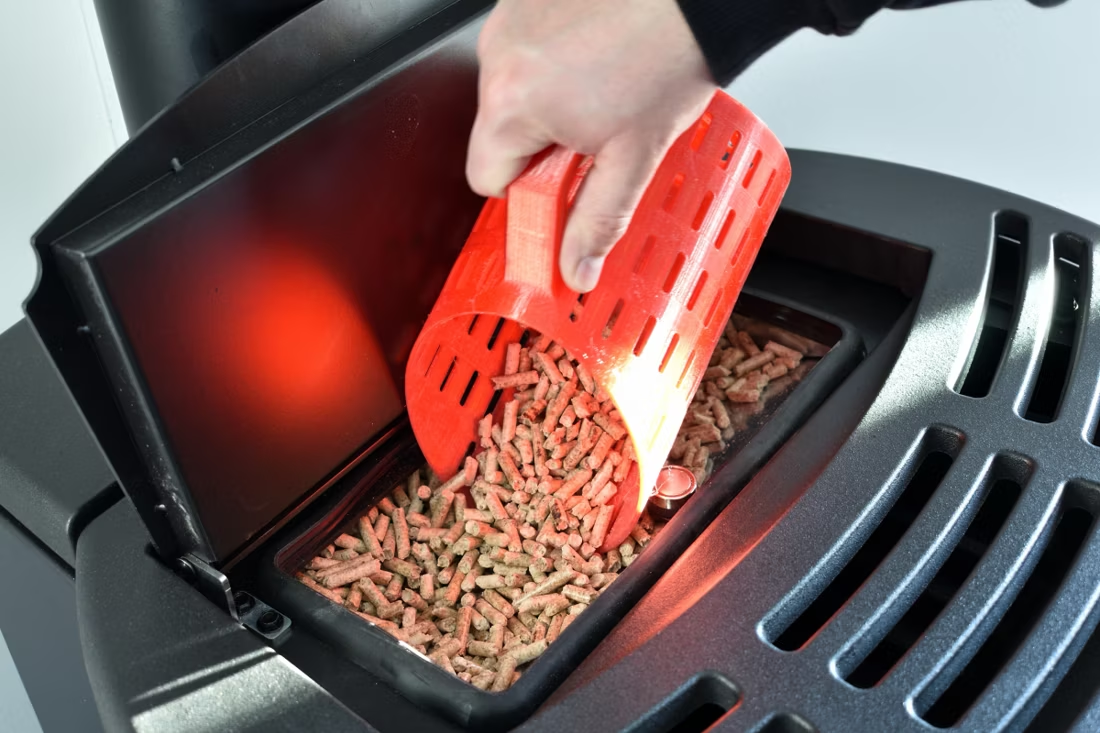
Four fuels. One honest answer for Wayne County.
Three steps. No salesperson until you're ready.
Tell us about your project
Your zip code, your situation, and the fuel you're leaning toward—or let the answers point you to one.
See what's actually available
The brands dealers within 100 miles genuinely carry—real options, never a catalog mirage.
Get your dealer & Project Guide
A trusted local dealer, plus the free Project Guide & Parts List that names every component of the job.
Frequently Asked Questions
Which fuel works best in Wayne County?
It depends on the home and the budget. Wood remains a strong choice for rural Wayne County properties—oak, maple, birch, and ash from local woodlots are the standard cordwood species, and some households burn seasoned apple wood sourced from the county's orchard operations, which burns hot and clean once properly dried. Gas is the convenience pick in towns along the Route 104 corridor where National Grid service reaches, and propane fills the same role in outlying farmland. Pellet stoves are a solid middle ground here—Energex, Hamer Pellet Fuel, and Greene Team are all regional brands sold through Northeast dealers and co-ops, so supply isn't an issue even in a tight winter. Electric fireplaces work well as supplemental heat for bedrooms, sunrooms, and the seasonal cottages around Sodus Bay, but with 7,006 heating degree days and lake-effect cold snaps, electric alone isn't enough for a primary heat source in most Wayne County homes.
Do I need a permit to install a fireplace in Wayne County?
In most cases, yes. Wayne County doesn't run permitting through a single county hearth office—each town and village (Newark, Palmyra, Sodus, Williamson, Lyons, and the rest) issues its own building permits under the New York State Uniform Fire Prevention and Building Code. New wood stoves and inserts need to meet EPA 2020 NSPS emissions standards, and gas installations require a licensed gas fitter along with a separate gas line permit in most jurisdictions. Electric fireplaces generally don't need a permit unless you're hardwiring a built-in unit into a new circuit. Most local hearth retailers pull the permit as part of the installation, so you typically don't have to navigate your town clerk's office yourself—worth confirming when you get a quote.
Are there air quality restrictions on wood burning in Wayne County?
No—Wayne County isn't a designated non-attainment area, and there's no local wood-smoke advisory system like counties in wildfire-prone or basin-inversion regions have. That said, EPA 2020 NSPS emissions standards still apply to any new wood stove or insert installation, regardless of local air quality status. Given the county's humid climate and lake-effect winters, well-seasoned hardwood (oak, maple, birch, ash, or dried apple wood) matters as much for efficiency as for the neighbors—green or wet wood burns dirtier and loses a meaningful chunk of usable heat. A modern EPA-certified stove will also throw noticeably more heat per cord than an older pre-2020 unit, which matters over a 7,006-HDD heating season.
Can one local hearth retailer handle all four fuel types?
Some can, some specialize. Wayne County's hearth retailers vary in how many fuel types they stock—a few dealers along the Route 104 corridor carry wood, gas, pellet, and electric under one roof, which is useful if you're still comparing fuels and want to see working displays side by side. Others focus more narrowly, particularly on wood and pellet, given how common cordwood and bagged fuel are in this part of the county. The retailer directory above notes each dealer's specific fuel coverage, so you can see at a glance who to call for your particular fuel before you drive out to Newark or Palmyra.
How does service work in rural areas of Wayne County?
Most chimney sweeps and gas techs serving Wayne County are based near the canal towns—Newark, Lyons, Palmyra—and travel out to the orchard-country towns and the Sodus Bay lakeshore for service calls. Expect a modest travel fee, typically in the $40–$90 range, for stops out toward Wolcott, Red Creek, or the more remote farmland along the county's northern edge. Seasonal lake cottages around Sodus Bay have their own rhythm—many owners schedule a spring opening inspection and a fall closing sweep rather than a single mid-winter appointment. Booking service in late summer or early fall, before the first lake-effect cold snap, is the easiest way to avoid the mid-winter backlog that hits every hearth tech in the region.
What's the typical cost range for fireplace installation across all fuel types in Wayne County?
Costs vary by fuel and by how much venting or gas line work is involved. Wood stove or insert installation: roughly $4,000–$8,500 for a typical install, higher if new masonry chimney work is required. Gas fireplace, insert, or stove: roughly $4,000–$10,000, with National Grid-connected homes generally on the lower end and propane conversions or new gas line runs pushing costs up. Pellet stove or insert: roughly $4,200–$7,000 for a standard install. Electric fireplace: $200–$3,000 for the unit itself, with $300–$1,000 in labor for anything beyond a simple plug-and-play placement. The county + fuel pages above break these ranges down further with local retailer pricing.
Can I install a fireplace myself?
If you're putting a fire in your house on purpose, it's best to work with an expert. Unless you're genuinely experienced in framing, gas line, vent pipe, and the national code on clearances to combustibles, have a professional do it—and ideally the same company that sells you the fireplace, so warranty, service, and liability all live under one roof.
How much should I budget for a fireplace?
For an average home—covering the fireplace, the vent pipe, and basic installation—a budget between $3,900 and $5,500 gives you a lot of options across wood, gas, and pellet. By the time you add finish work, gas line, and electrical, the average complete installation lands between $5,000 and $12,000 all-in. In a remodel or new build, a good rule is to put about 2.5% of the total project cost toward the fireplace.
Does a fireplace add value to my home?
On average, a fireplace adds back to the home about the same amount you spent installing it. Add the monthly savings from heating the rooms you actually use instead of the whole house—often hundreds of dollars a year—and the value case is strong before you even count what a fire does for how your family uses the room.
What is an in-home preview and do I need one?
It's a visit where a hearth professional measures your space, confirms the model you picked actually works in your home, and walks the specs—framing, gas line, venting, finish work—before anything is ordered. Some details you just can't know until you see the house. Never make a down payment without one; it's the single most-skipped step that burns buyers.
Stove and Fireplace Dealers in Wayne County
Listings include WhyFire partner dealers, dealers we have verified as authorized for the brands we recommend, and established local businesses that carry hearth products. Every listing shows which one it is. The ones marked Preferred run on WhyFire's software, so they can show you real pricing and book your appointment right here. No manufacturer pays for placement. How we verify dealers →
Heritage Fireplace
Shadow Hill Landscape
Sensenig's Landscape Supply
Martin's Outdoor Power Equip
Townley Coal, LLC
Martin's Stove & Fireplace
Ace Swim & Leisure - Webster
Fayette Sales And Service
Get matched with a Wayne County hearth dealer.
Pick your fuel below and I'll match you with a trusted local dealer and send a free Project Guide & Parts List—the exact parts, including the vent kit, for your specific home in Wayne County.
Find Your Fireplace →