
Pellet Stoves Are Uncommon in Spring Valley—Here's When They Still Work.
Most Spring Valley homes heat with natural gas, and pellet stoves are a niche choice here. For the right home, though, they're still worth a serious look—and we'll connect you with a local dealer who can tell you honestly if yours qualifies.
Every Project Starts From One of These Five Situations
Spring Valley runs on natural gas, not pellet bags.
Spring Valley is a dense village of about 33,000 people packed into a few square miles of Rockland County, with a housing stock heavy on attached homes, co-ops, and smaller lots close to Route 59 and the village center. Natural gas service is standard throughout the area, and it's the default heat source for the overwhelming majority of local homes—which is a big part of why pellet stoves never took hold here the way they have in more rural parts of the Hudson Valley. Winters are moderate by Northeast standards (climate zone 5A, roughly 5,100 heating degree days, average lows in the low 20s), not the kind of sustained deep cold that pushes homeowners toward a dedicated solid-fuel backup heater.
That doesn't mean pellet heat is impossible in Spring Valley—it means it's a specialty request. A single-family home on a larger lot at the edge of the village, with a basement or attached garage to store a ton of bagged fuel, is a realistic candidate. Regional pellet brands like Energex, Hamer Pellet Fuel, and Greene Team Pellet Fuel are all sold at hearth dealers within driving distance of Rockland County, so fuel supply isn't the obstacle—floor space, venting access, and electrical draw for the auger and blower are the real questions. If that's your situation, I'll match you with a local dealer who installs pellet appliances regularly and can tell you straight whether your home is a good fit, plus a free Project Guide & Parts List so you know exactly what the job involves before you commit.
Three steps. No salesperson until you're ready.
Tell us about your project
Your zip code, your situation, and the fuel you're leaning toward—or let the answers point you to one.
See what's actually available
The brands dealers within 100 miles genuinely carry—real options, never a catalog mirage.
Get your dealer & Project Guide
A trusted local dealer, plus the free Project Guide & Parts List that names every component of the job.
Frequently Asked Questions
Are pellet stoves actually a good fit for homes in Spring Valley?
For most homes in the village, not really—and it's worth saying that plainly. Spring Valley's housing stock leans toward attached homes, co-ops, and smaller-lot single-families where natural gas service is already run and where there isn't a good spot for a hopper-fed appliance and a season's worth of pellet bags. Pellet stoves make more sense in a detached single-family home with a basement, garage, or utility room for fuel storage—think the larger lots toward the edges of the village near Hillcrest or bordering unincorporated Ramapo. If that describes your property, it's a legitimate option. If you're in a condo, co-op, or tightly attached rowhouse, a local dealer will likely steer you toward a gas insert instead, and that's honest advice, not a sales pitch.
What does a pellet stove installation cost in Spring Valley?
Because pellet installs are infrequent requests locally, there isn't a deep well of area-specific pricing data, but a realistic range for a freestanding pellet stove with venting and a hearth pad runs roughly $3,500 to $6,500 depending on the unit and whether you need new electrical work for the auger and blower. A pellet insert into an existing masonry fireplace typically lands in a similar range once the liner and venting are accounted for. Get a firm number from a local dealer after an in-home look—with so few installs happening in the immediate area, phone quotes tend to be rough guesses.
Where can I buy pellet fuel near Spring Valley?
Regional brands including Energex, Hamer Pellet Fuel, and Greene Team Pellet Fuel are distributed through hearth and hardware dealers around the lower Hudson Valley, though you likely won't find them stocked at every big-box store in the village itself. Most pellet stove owners in this area either buy a season's supply (about 3-6 tons for a primary heat source, fewer for supplemental use) in the fall from a dealer that restocks seasonally, or have it delivered by pallet. A local hearth dealer can tell you which brands they carry or regularly order for customers.
Do I need a permit to install a pellet stove in Spring Valley?
Yes—a building permit is required for a new pellet stove installation, whether you're inside village limits (through the Village of Spring Valley's building department) or in an unincorporated part of Rockland County (through the county building department). The permit covers the appliance clearance, hearth pad, and vent termination. Because pellet stoves are an uncommon request here, it's worth confirming with your installer that they've pulled pellet-specific permits before—the process is straightforward, but not every local contractor handles it regularly.
Pellet stoves need electricity to run—is that a problem in Spring Valley?
It's a real consideration. Unlike a wood stove, a pellet stove needs electricity to run the auger that feeds fuel and the blower that distributes heat, so it won't function during a power outage without a battery backup or generator. Orange & Rockland Utilities serves electric customers here at a residential rate around 21.4 cents per kWh—on the higher end nationally, though running a pellet stove's auger and blower is a modest draw compared to running an electric furnace or baseboard heat. If backup heat during outages is your main goal, a wood stove or battery-backed gas insert is generally the more reliable choice; if convenience and clean burning matter more, the pellet stove's electrical dependence is a minor tradeoff.
Should I get a gas insert instead of a pellet stove?
For the majority of Spring Valley homes, yes—gas is the more practical answer, and it's why gas fireplaces and inserts are common here while pellet stoves are rare. Natural gas service already reaches most of the village, gas appliances need no fuel storage or hopper refilling, and installation is generally simpler when the gas line is already run to the house. Pellet stoves still have an edge if you specifically want a real flame with visible fuel and don't have gas service on your street, but for most homeowners here, a direct-vent gas insert into an existing fireplace ends up being the simpler, less expensive project.
What kind of venting does a pellet stove need?
Pellet stoves vent through a small-diameter PL (pellet vent) pipe, typically 3 or 4 inches, that can run horizontally through an exterior wall rather than requiring a full masonry chimney. That's actually one advantage over wood stoves in a house without an existing chimney—the venting is less invasive to install. In a village with a lot of attached and multi-story housing, though, wall placement, setbacks from windows and neighboring structures, and snow-load clearance for the exterior vent cap all need to be checked by whoever pulls your permit, since row-style construction can limit where a through-wall vent can actually go.
Where would I even put a pellet stove in a smaller Spring Valley home?
This is the real constraint more often than cost or venting. A pellet stove needs floor space for the unit itself plus code-required clearances, and a nearby storage area for bagged fuel—40-lb bags stack up fast if you're burning several tons a season. In the village's smaller lots, co-ops, and attached homes, that combination of clearance and storage space is genuinely hard to find, which is a big part of why pellet stoves stay rare here. Homes with a basement, attached garage, or mudroom have a much easier time making it work than homes without one.
Who in Spring Valley actually ends up installing a pellet stove?
In practice, it's usually a homeowner in a detached single-family house with some storage space, who wants supplemental heat with real visible fuel and flame rather than a gas insert's flip-a-switch convenience, or who's specifically drawn to burning pellets over propane or gas for personal or cost reasons. It's a smaller slice of the market than in more rural parts of the Hudson Valley, but it's not nonexistent—a trusted local dealer can tell you honestly, based on your specific house, whether you're a good candidate or whether your money is better spent on a gas or electric option instead.
Why is a fireplace insert so efficient?
An insert does two things: it seals the chimney completely, so you stop losing air you already paid to heat, and it radiates warmth into the room through the firebox and glass. Most add a heat-exchange fan that pulls cool room air underneath, wraps it around the hot firebox, and pushes it back out warm. Your home is more efficient before you've even lit the first fire.
How often does a pellet stove need cleaning?
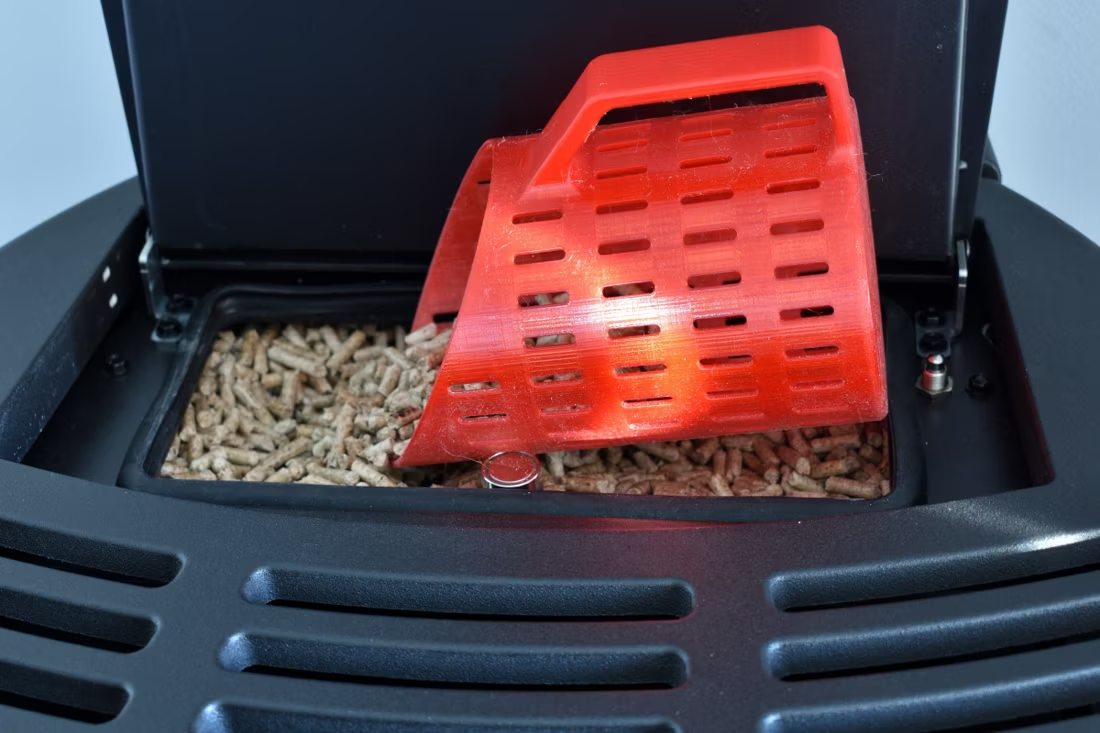
A clean pellet stove is a happy pellet stove. Plan on cleaning the burn pot about once a week when you're burning regularly—ash and clinkers gum up the air holes just like a pellet barbecue. Most pellet stove problems trace back to skipped cleaning that nobody explained up front. Some designs make it easy with a trapdoor burn pot: pull a lever and the gunk drops into the ash pan.
What is an in-home preview and do I need one?
It's a visit where a hearth professional measures your space, confirms the model you picked actually works in your home, and walks the specs—framing, gas line, venting, finish work—before anything is ordered. Some details you just can't know until you see the house. Never make a down payment without one; it's the single most-skipped step that burns buyers.
Can a fireplace actually lower my heating bill?
Yes—by creating a comfort zone. A furnace heats every square foot of the house just to warm the one room you're in; a gas fireplace on low burns roughly a sixth of the gas a typical furnace does. Set the furnace around 55–60 degrees as a baseline, then heat the rooms your family actually uses. Families who heat this way commonly save $20–$60 a month.
Nearby Dealers
Hearth shops serving Spring Valley and the surrounding area.
Pellet Brands Stocked Around Spring Valley
Manufacturers will point you to the nearest stocking dealer.
Find your pellet stove in Spring Valley.
Tell us about your home and we'll give you an honest read on whether a pellet stove makes sense for it, then match you with a trusted local dealer and a free Project Guide & Parts List for your specific project.
Find Your Fireplace →