
Pellet Heat Built for Saratoga County's Long Winters.
From Saratoga Springs and Ballston Spa down to Clifton Park and Malta, up through Corinth and Hadley toward the Adirondack foothills—Saratoga County sees a long winter heating season and winter lows averaging 14°F. A thermostat-controlled pellet stove keeps that kind of cold in check without the splitting and stacking. Find the right unit and connect with a trusted local dealer.
Every Project Starts From One of These Five Situations
Consistent, thermostat-controlled heat for Capital Region winters.
Saratoga County runs from the horse country and historic downtown of Saratoga Springs through fast-growing suburban towns like Malta and Clifton Park, up into the more rural stretches near Corinth, Hadley, and the edge of the Adirondack Park. Climate zone 5A and a long winter heating season put the county's winter demands close to what a home in Burlington, Vermont deals with—long heating seasons and overnight lows that average around 14°F. The county's oak, maple, birch, and ash forests have supplied firewood to local households for generations, but a growing number of homeowners are choosing pellet stoves instead, drawn by the hands-off convenience and even heat output.
Saratoga County has no air quality nonattainment designation, so pellet and wood burning here isn't subject to the curtailment rules some Western counties face—it's simply a matter of picking the fuel that fits your household. Regional hardwood pellet brands including Energex, Hamer Pellet Fuel, and Greene Team Pellet Fuel are widely stocked at hearth shops, feed stores, and hardware retailers throughout the county, so fuel supply isn't a concern even in a hard winter. For residents who'd rather not deal with the cutting, splitting, and seasoning that a Green Mountain & Finger Lakes National Forest cutting permit requires (permits run about $20 per cord, cut between May and October), a pellet stove delivers similar radiant warmth with a bag of pellets and a thermostat instead of a woodpile.
Three steps. No salesperson until you're ready.
Tell us about your project
Your zip code, your situation, and the fuel you're leaning toward—or let the answers point you to one.
See what's actually available
The brands dealers within 100 miles genuinely carry—real options, never a catalog mirage.
Get your dealer & Project Guide
A trusted local dealer, plus the free Project Guide & Parts List that names every component of the job.
Frequently Asked Questions
How much does a pellet stove installation cost in Saratoga County?
Most pellet stove installations in Saratoga County land somewhere between $3,500 and $6,500, depending on the stove model, whether you're installing a freestanding unit or converting an existing masonry fireplace with a pellet insert, and how much venting work is involved. Pellet stoves vent through a wall with PL (pellet vent) pipe rather than a full masonry chimney, which typically keeps installation simpler and less expensive than a comparable wood stove install. Homes in newer developments around Malta and Clifton Park with no existing chimney usually fall on the lower end since the vent run is short and direct; older homes in Saratoga Springs or Ballston Spa converting a full masonry fireplace to a pellet insert can run a bit higher once liner and surround work is factored in.
Why would I choose a pellet stove over a wood stove in Saratoga County?
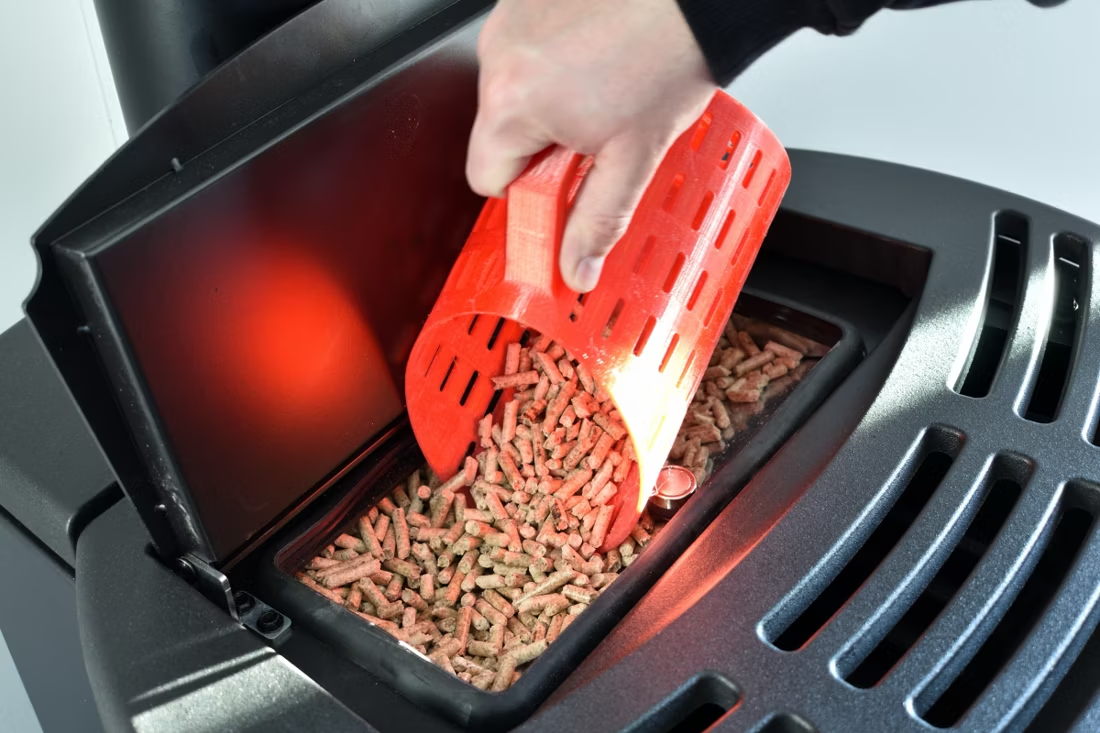
Plenty of Saratoga County households still heat with cordwood cut from their own land or from a Green Mountain & Finger Lakes National Forest permit—those run about $20 per cord during the May-through-October cutting season, and the county's oak, maple, birch, and ash supply burns well. But a pellet stove skips the splitting, stacking, and seasoning entirely: you're loading a hopper with bagged pellets instead of managing a woodpile. Pellet stoves also burn more evenly and can be set to a thermostat, which matters over a winter that runs long and cold. The tradeoff is that pellet stoves need electricity to run the auger and combustion blower, so unlike a wood stove they won't operate during a power outage without a battery backup or generator.
What size pellet stove do I need for my home?
Sizing depends on square footage, ceiling height, and how well-insulated the home is. Smaller pellet stoves (rated for roughly 1,000-1,300 sq ft) suit a single large room, a converted garage, or supplemental heat in a well-insulated newer home near Malta or Clifton Park. Mid-size units (1,300-2,000 sq ft) cover most main living areas, and larger units are appropriate for whole-home heating in older, less-insulated farmhouses common in the county's more rural northern stretches near Corinth and Hadley. Given the county's average winter low of 14°F and long heating season, it's worth erring toward a slightly larger hopper capacity too—a bigger hopper means fewer refills during a multi-day cold snap. A local dealer will size the unit correctly during an in-home visit.
What pellet brands are available in Saratoga County?
Regional hardwood pellet brands including Energex, Hamer Pellet Fuel, and Greene Team Pellet Fuel are commonly stocked at hearth retailers, feed and farm stores, and hardware stores throughout the county. Pellets are sold by the ton (roughly fifty 40-lb bags), and pricing fluctuates from year to year along with propane and fuel oil costs regionally, so it's worth asking a local dealer for current per-ton pricing rather than relying on a fixed figure. Buying a season's supply in late summer, before the fall rush, is a common local practice.
Do I need a permit to install a pellet stove in Saratoga County?
Yes—pellet stove installations require a building permit, but in Saratoga County that permit is issued at the town or village level rather than by a single countywide office. Saratoga Springs, Ballston Spa, Clifton Park, Malta, and the county's other municipalities each run their own building department, so the specific process and inspection timeline can vary slightly depending on where you live. Most local hearth dealers handle the permit application and schedule the inspection as part of the installation, so homeowners typically don't have to navigate it themselves.
What's the best pellet stove for Saratoga County's climate?
With winter lows averaging 14°F and a heating season that stretches past 6,500 degree days, look for a pellet stove with enough rated BTU output to serve as more than occasional supplemental heat—models from Harman, Enviro, and Quadra-Fire are widely available through Capital Region dealers and are built for sustained cold-climate use. A larger hopper capacity (40+ lbs) is worth prioritizing here too, since it means fewer refills during an extended cold snap or a stretch of nor'easter weather when getting out to the stove every few hours isn't convenient. Ask a local dealer about auger feed rate and hopper size relative to your square footage before settling on a model.
Will my pellet stove work during a power outage?
Not without backup power. Pellet stoves rely on an electric auger to feed fuel and a blower to distribute heat and exhaust combustion gases, so a standard unit shuts down the moment the power goes out. This matters in Saratoga County, where ice storms and heavy nor'easters can knock out power for a day or more, particularly in the more rural northern parts of the county near Corinth and Hadley. Many homeowners pair a pellet stove with a small battery backup unit (some pellet stove manufacturers sell dedicated battery packs) or a portable generator sized to run the stove's electrical draw. If backup heat during outages without any generator is a priority, a wood stove is worth considering alongside the pellet stove—a number of local homes run both.
Can I install a pellet insert into my existing fireplace?
Yes—a pellet insert fits into an existing masonry fireplace opening and vents through the existing chimney using a smaller stainless liner sized for pellet exhaust, which runs cooler than a wood fire's flue gases. This is a common upgrade in older Saratoga Springs and Ballston Spa homes with a fireplace that's rarely used because it's inefficient or drafty. The insert converts that opening into a controllable, efficient heat source without the structural work a full wood stove chimney retrofit sometimes requires.
Pellet stove vs. wood stove—which is right for my Saratoga County home?
Wood stoves work without electricity, pair with the oak, maple, birch, and ash that's abundant locally, and appeal to households already set up to cut or buy cordwood—including those using Green Mountain & Finger Lakes National Forest permits at around $20 per cord. Pellet stoves trade that self-sufficiency for convenience: consistent thermostat-controlled heat, easier loading, and cleaner burning, at the cost of needing electricity to run. For a household in a Clifton Park or Malta subdivision without woodlot access or storage space for a cord or two of firewood, pellet is often the more practical fit. For a rural property near Corinth or Hadley with land, a chainsaw, and a woodshed, wood may still make more sense—and plenty of county residents end up with one of each.
How often does a pellet stove need cleaning?
A clean pellet stove is a happy pellet stove. Plan on cleaning the burn pot about once a week when you're burning regularly—ash and clinkers gum up the air holes just like a pellet barbecue. Most pellet stove problems trace back to skipped cleaning that nobody explained up front. Some designs make it easy with a trapdoor burn pot: pull a lever and the gunk drops into the ash pan.
Why is my open fireplace making my house colder?
Open fireplaces suck—literally. As the fire burns, it consumes air your furnace already paid to heat and pulls it out through the chimney, so the house is actually colder after the fire goes out than before you lit it. An insert fixes this: it seals the chimney, puts fixed glass across the front, and turns that hole in your house into a real heat source.
How much should I budget for a fireplace?
For an average home—covering the fireplace, the vent pipe, and basic installation—a budget between $3,900 and $5,500 gives you a lot of options across wood, gas, and pellet. By the time you add finish work, gas line, and electrical, the average complete installation lands between $5,000 and $12,000 all-in. In a remodel or new build, a good rule is to put about 2.5% of the total project cost toward the fireplace.
What is an in-home preview and do I need one?
It's a visit where a hearth professional measures your space, confirms the model you picked actually works in your home, and walks the specs—framing, gas line, venting, finish work—before anything is ordered. Some details you just can't know until you see the house. Never make a down payment without one; it's the single most-skipped step that burns buyers.
Stove and Fireplace Dealers in Saratoga County
Pellet Brands Stocked Around Saratoga County
Manufacturers will point you to the nearest stocking dealer.
Find your pellet stove in Saratoga County.
Tell us a bit about your home and heating goals, and we'll match you with a trusted local Saratoga County dealer plus a free Project Guide & Parts List—the exact parts, including the vent kit, for your pellet stove project.
Find Your Fireplace →