
Reliable Warmth for Port Chester's Long Winters, On Demand.
Clean, instant gas heat for Port Chester's older rowhouses and colonials—no wood storage, no ash, just a switch. Find the right unit and connect with a trusted local dealer.
Every Project Starts From One of These Five Situations
Instant heat that fits village life.
Port Chester sits on the Long Island Sound in southern Westchester County, a dense village of attached homes, early-1900s colonials, and multi-family buildings built long before central heating was standard. Winters here are milder than upstate New York—Buffalo has a noticeably longer, harsher heating season—but with an average winter low of 22°F and a solid winter heating season, Port Chester still gets plenty of raw, damp cold off the Sound. Wood-burning isn't practical for most homes here: yard space for firewood storage is scarce, many properties are attached or multi-family, and the village's building stock favors sealed, code-friendly heat sources.
That's where gas fits in. Con Edison, which also serves as Port Chester's electric utility, supplies natural gas throughout most of the village, and a large share of local homes already have gas service for cooking or water heating—which makes adding a fireplace or insert straightforward. It's also an economic case: Con Edison's residential electric rate runs about 34 cents per kWh, among the highest in the country, so a gas insert in the living room does a lot more for a lot less than running electric resistance heat. For Port Chester's older masonry fireplaces—common in the village's pre-war colonials—a direct-vent gas insert is often the single highest-impact upgrade a homeowner can make.
Three steps. No salesperson until you're ready.
Tell us about your project
Your zip code, your situation, and the fuel you're leaning toward—or let the answers point you to one.
See what's actually available
The brands dealers within 100 miles genuinely carry—real options, never a catalog mirage.
Get your dealer & Project Guide
A trusted local dealer, plus the free Project Guide & Parts List that names every component of the job.
Frequently Asked Questions
How much does a gas fireplace installation cost in Port Chester?
Installed cost for a gas fireplace or insert in the Port Chester area typically runs $5,000 to $12,000, reflecting both the unit and New York metro-area labor rates. A direct-vent insert into an existing masonry fireplace with gas already run to the room sits toward the lower end; a new built-in unit in a remodel—with framing, venting through an exterior wall, and a fresh gas line from the meter—lands toward the higher end. Homes without existing gas service may also need Con Edison to extend a line to the house, which is a separate cost local retailers can help you estimate.
Can I convert my existing fireplace to gas?
Yes, and it's one of the most common projects in Port Chester's older housing stock. Many of the village's colonials and rowhouses built in the early-to-mid 1900s have a masonry firebox that was rarely used for real wood fires even when new. A gas insert drops into that opening and uses a stainless liner run up the existing chimney for venting, typically running $4,500 to $9,000 depending on the insert and whether a new gas line is needed. It's a fast way to turn a decorative, drafty fireplace into a real heat source without touching the exterior of the house.
Do I need natural gas, or can I use propane in Port Chester?
Most of Port Chester is served by Con Edison's natural gas mains, so the large majority of installations here use natural gas rather than propane. If you already have a gas range, water heater, or furnace, adding a fireplace is usually a matter of extending a line from an existing gas riser. Propane is uncommon within the village itself but does show up in a handful of older homes on the edges of Con Edison's service territory that were never connected to gas mains—those homes typically use a small propane tank set outside. Your local dealer can confirm which fuel your address is set up for.
Will my gas fireplace work during a power outage?
Most modern gas fireplaces will, which matters in a Sound-side village like Port Chester where nor'easters and summer storms regularly knock out Con Edison power for a day or more. Units with intermittent pilot ignition (IPI) run on a small battery backup that automatically kicks in when the power drops, so the fireplace lights normally even with no electricity to the house. Valor's gas fireplaces go a step further—the pilot's thermocouple generates its own electricity, so there's no battery to remember to replace. Ask your installer about the ignition system on any unit you're considering if outage performance matters to you.
What's the difference between a gas fireplace, insert, and stove?
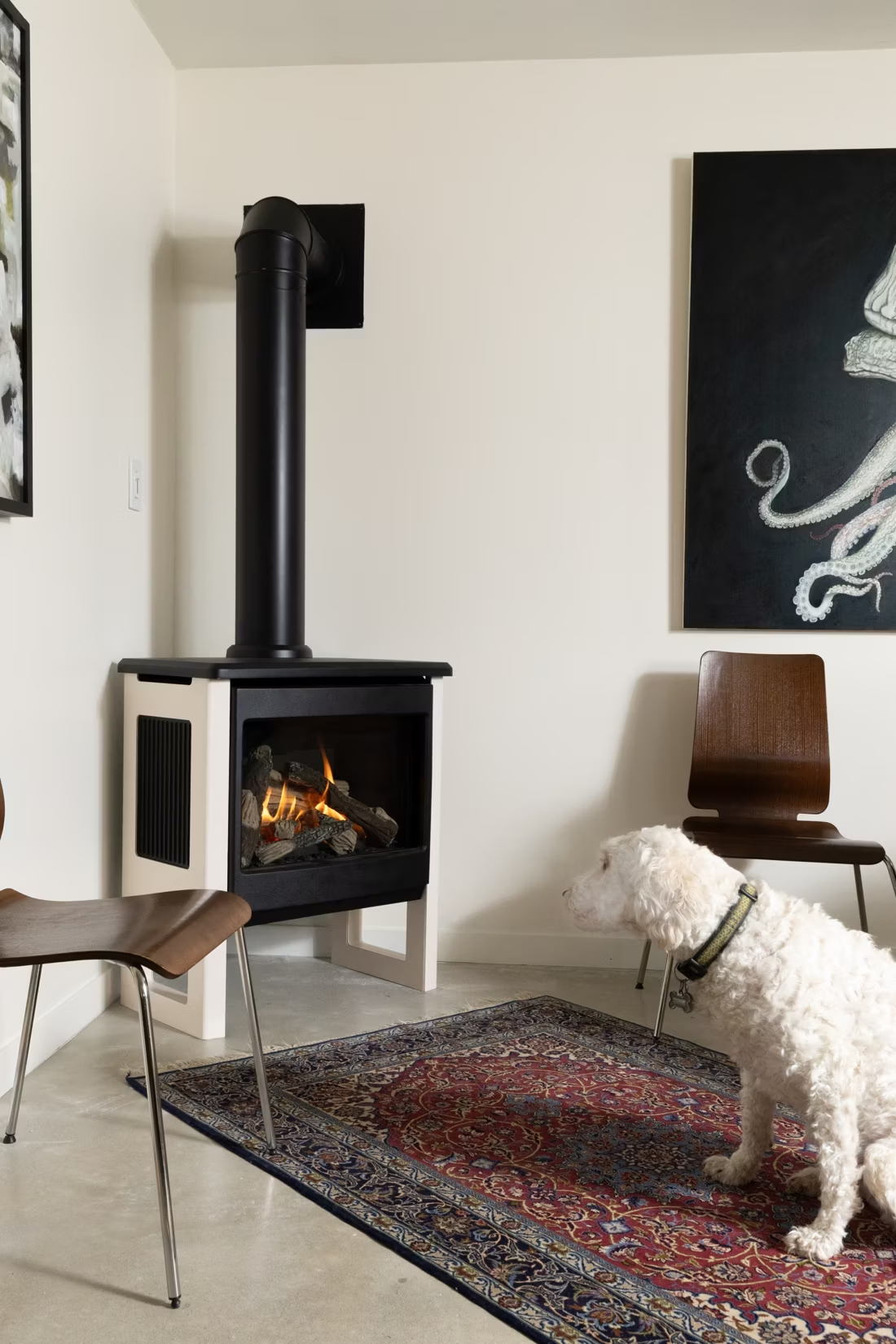
A gas fireplace is a fully built-in, framed-in unit used for new construction or a full remodel. A gas insert is built to slide into an existing masonry firebox, which describes a large share of Port Chester's pre-war housing stock. A gas stove is a freestanding, cast-iron-look unit that sits on the floor and vents through a wall or existing chimney, useful in smaller rooms or homes without a fireplace opening at all. Given how many Port Chester homes already have a working masonry fireplace, an insert is the answer for most homeowners here—new construction and additions are usually better suited to a built-in fireplace.
Do I need a permit to install a gas fireplace in Port Chester?
Yes. The Village of Port Chester Building Department requires a building permit for the installation, and any new or modified gas line requires a licensed gas-fitter and sign-off through Westchester County code. Most hearth retailers who install in the village handle this paperwork as part of the job, coordinating the gas line, the venting, and the inspection so you're not managing multiple trades and permits yourself.
What's the difference between vented and vent-free gas fireplaces?
Vented (direct-vent) gas fireplaces draw combustion air from outside and exhaust the byproducts back outside through a sealed pipe. Vent-free units burn gas directly into the room with no outside venting at all. New York permits vent-free units only under strict room-size and ventilation rules, and in practice most Westchester building departments—including Port Chester's—steer installers toward direct-vent units for any real heating application. Given the village's older, often-tighter housing stock, direct-vent is also simply the safer and more common choice locally; nearly every installer you'll talk to will default to it.
How often should my gas fireplace be serviced?
Plan on an annual inspection, ideally in early fall before the heating season starts. A technician checks the burner, pilot assembly, gas connections, and venting, and cleans the glass and interior—a much smaller job than wood-stove chimney sweeping but still important, especially on Sound-adjacent homes where salt air can accelerate corrosion on exterior vent caps. Local gas appliance servicers in the Port Chester area typically charge $150 to $250 for this visit.
Gas vs. electric fireplace—which makes more sense in Port Chester?
This is a real question here because Con Edison's residential electric rate runs about 34 cents per kWh, one of the highest rates in the country—running an electric fireplace as anything more than occasional supplemental heat gets expensive fast. A gas insert or fireplace, by contrast, delivers real heat output at natural gas prices, which is why gas is the more common choice for anyone who wants their fireplace to actually offset the furnace on cold nights. Electric units still make sense for renters, apartments without gas service, or homeowners who want ambiance without any venting or gas line work at all—installation is simple and inexpensive, typically under $1,500. For a real heat source in a Port Chester home with gas already available, gas wins on operating cost every time.
What's the difference between an insert and a zero-clearance fireplace?
An insert is a fireplace that slides into a pre-existing wood-burning fireplace—if you don't have one, there's nothing to insert it into. A zero-clearance fireplace is built into a framed wall, which makes it the answer for remodels and new construction. Simple test: existing masonry fireplace means insert; blank or framed wall means zero-clearance.
Are new gas fireplaces really better than old ones?
Two ways, and they're both big. Looks: modern gas fireplaces are realistic enough that it's hard to believe they aren't burning wood. Cost: old units burn a standing pilot year-round (roughly $200 a year), while new ones use pilot-on-demand ignition and modern burners. Add remote controls and thermostat operation, and the day-to-day experience isn't close.
How much should I budget for a fireplace?
For an average home—covering the fireplace, the vent pipe, and basic installation—a budget between $3,900 and $5,500 gives you a lot of options across wood, gas, and pellet. By the time you add finish work, gas line, and electrical, the average complete installation lands between $5,000 and $12,000 all-in. In a remodel or new build, a good rule is to put about 2.5% of the total project cost toward the fireplace.
What is an in-home preview and do I need one?
It's a visit where a hearth professional measures your space, confirms the model you picked actually works in your home, and walks the specs—framing, gas line, venting, finish work—before anything is ordered. Some details you just can't know until you see the house. Never make a down payment without one; it's the single most-skipped step that burns buyers.
Nearby Dealers
Hearth shops serving Port Chester and the surrounding area.
Find your gas fireplace in Port Chester.
Tell us a bit about your home and we'll match you with the right gas fireplace, insert, or stove—and connect you with a trusted local dealer who'll put together a free Project Guide & Parts List for your project.
Find Your Fireplace →