
Steady heat for the snowiest county in New York.
From the lake-effect bands off Ontario near the city of Oswego to inland towns like Parish and Central Square, this county sees a long, demanding heating season nearly every winter. Find the right pellet stove or insert, and connect with a trusted local dealer.
Every Project Starts From One of These Five Situations
Thermostat-controlled warmth for a county that measures snow in feet.
Oswego County sits on the eastern shore of Lake Ontario, and its lake-effect snow bands are legendary—the city of Oswego routinely posts some of the highest annual snowfall totals in the eastern United States. With a climate zone 5A rating, average winter lows near 19°F, and a long, demanding heating season, the heating season here runs long, closer in severity to a place like Duluth, MN than to most of the Northeast. Homes across Fulton, Mexico, Pulaski, Hannibal, and Central Square are built to handle a real winter, and that's exactly the kind of climate where a pellet appliance earns its keep.
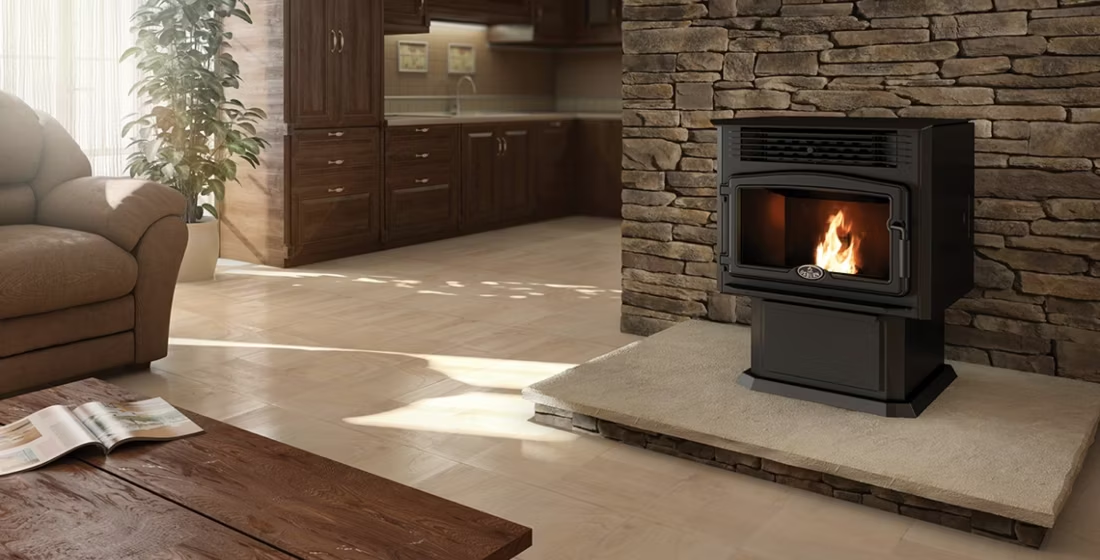
Pellet stoves give Oswego County homeowners hopper-fed, thermostat-controlled heat without the splitting, stacking, and daily tending that cordwood requires—a real advantage during a multi-week stretch of lake-effect snow when nobody wants to be outside hauling wood. Regional pellet brands including Energex, Hamer Pellet Fuel, and Greene Team Pellet Fuel are sold through dealers and farm/hardware retailers throughout the region, so fuel supply is generally reliable even in a heavy snow year. The county has no air-quality nonattainment designation, so permitting here is driven by standard building and fire code—venting clearances and hearth protection—rather than smoke curtailment rules you'll find in some Western counties.
Three steps. No salesperson until you're ready.
Tell us about your project
Your zip code, your situation, and the fuel you're leaning toward—or let the answers point you to one.
See what's actually available
The brands dealers within 100 miles genuinely carry—real options, never a catalog mirage.
Get your dealer & Project Guide
A trusted local dealer, plus the free Project Guide & Parts List that names every component of the job.
Frequently Asked Questions
How much does a pellet stove installation cost in Oswego County?
Costs vary with the unit, hopper size, and venting path, but a freestanding pellet stove venting through an exterior wall is typically the most affordable hearth appliance to install, since it doesn't require a masonry chimney. A pellet insert going into an existing fireplace costs more, since the installer is working around your existing firebox and liner. Older farmhouses common in towns like Mexico and Volney sometimes need extra work if the wall cavity isn't set up for a pellet vent kit. A local dealer will give you a firm number after seeing your home and your hearth or wall location.
What size pellet stove do I need for my Oswego County home?
Sizing depends on square footage, ceiling height, insulation, and whether the stove is your primary heat or a supplement to a furnace. Given the county's long heating season and regular sub-20°F nights, homeowners here often size up slightly compared to milder climates—a stove rated for the low end of a room's square footage may struggle during a hard January cold snap. Older, less-insulated farmhouses near Pulaski or Sandy Creek typically need more capacity than a newer, tightly-built home in a Fulton subdivision at the same square footage. A local dealer will walk your space and size it based on your actual house, not just a chart.
Where can I find certified pellet stove installers near me in Oswego County?
Look for installers with NFI (National Fireplace Institute) certification, which covers pellet-specific venting, clearances, and hopper setup. A pellet vent run through an exterior wall looks simple, but incorrect pitch or termination clearance from windows and soffits is a common mistake for unlicensed installers. Trusted local dealers serving Oswego, Fulton, and the surrounding towns handle the permit, the vent kit, and the warranty registration as part of the install, which is worth more than saving a little on a big-box unit you install yourself.
What's the difference between a pellet stove and a pellet insert?
A pellet stove is a freestanding unit that vents through an exterior wall or existing chimney and can go almost anywhere in the house with the right clearances. A pellet insert is built to slide into an existing wood-burning masonry fireplace, using a liner run up your current chimney. For Oswego County homes with an older fireplace that's rarely used because it's inefficient, an insert converts that fireplace into a real, controllable heat source. Homes without an existing fireplace opening are generally better candidates for a freestanding stove.
Do I need a permit to install a pellet stove in Oswego County?
Yes—a building permit is required, and it's issued locally rather than through the county: the city of Oswego, and towns like Mexico, Fulton, Pulaski, and Central Square each run their own permitting through their building or code enforcement office. Because Oswego County has no air-quality nonattainment designation, you won't run into smoke-curtailment restrictions that some Western counties impose—the permit here is strictly about safe venting, clearances, and hearth protection to current code. Most dealers pull the permit as part of the installation.
What's the best pellet stove for Oswego County's climate?
Look for a stove with a large hopper capacity—40 to 60 pounds—so it can run through a long overnight burn without a refill, since this county's long, demanding heating season means the stove is working hard for months at a stretch. Because pellet stoves rely on electricity to run the auger, igniter, and combustion blower, and Oswego County's lake-effect storms can knock out power for extended stretches, ask your dealer about models compatible with a battery backup or small generator setup. That single detail matters more here than in a milder or less snow-prone county.
How often does a pellet stove need to be cleaned and serviced?
Plan on emptying and vacuuming the burn pot every few days during heavy winter use, a deeper ash-pan cleaning weekly, and a full professional service—including the exhaust fan, hopper, and venting—once a year, typically before the season starts in the fall. Homes running a pellet stove as primary heat through Oswego County's long winters burn through more fuel and generate more ash than a supplemental-use setup, so heavier users may want a mid-season inspection as well.
Where can I buy pellet fuel in Oswego County?
Regional brands including Energex, Hamer Pellet Fuel, and Greene Team Pellet Fuel are widely carried by hearth dealers and farm and hardware retailers throughout the county. Prices fluctuate by season and are usually lowest if you buy a full winter's supply—often a ton or more—in late summer before demand picks up. Your local dealer can point you toward the pellet brands that burn cleanest in the specific stove model you buy, since ash content varies noticeably between brands.
Pellet stove vs. wood stove—which is right for my Oswego County home?
Wood stoves burn cordwood—plentiful locally given the oak, maple, birch, and ash common to the county's forests—and keep working with zero electricity, which matters when a lake-effect storm off Ontario takes down power for days at a time. Pellet stoves are easier to run day to day, produce less ash, and give you thermostat-style control, but the auger, igniter, and blower all need power, so a pellet stove alone isn't a reliable outage backup unless it's paired with a battery system or generator. Many Oswego County households land on a hybrid approach: pellet for daily convenience, with a wood stove or a battery-backed pellet setup as the fallback when the power goes out.
Why is my open fireplace making my house colder?
Open fireplaces suck—literally. As the fire burns, it consumes air your furnace already paid to heat and pulls it out through the chimney, so the house is actually colder after the fire goes out than before you lit it. An insert fixes this: it seals the chimney, puts fixed glass across the front, and turns that hole in your house into a real heat source.
Why is a fireplace insert so efficient?
An insert does two things: it seals the chimney completely, so you stop losing air you already paid to heat, and it radiates warmth into the room through the firebox and glass. Most add a heat-exchange fan that pulls cool room air underneath, wraps it around the hot firebox, and pushes it back out warm. Your home is more efficient before you've even lit the first fire.
How much should I budget for a fireplace?
For an average home—covering the fireplace, the vent pipe, and basic installation—a budget between $3,900 and $5,500 gives you a lot of options across wood, gas, and pellet. By the time you add finish work, gas line, and electrical, the average complete installation lands between $5,000 and $12,000 all-in. In a remodel or new build, a good rule is to put about 2.5% of the total project cost toward the fireplace.
Can a fireplace actually lower my heating bill?
Yes—by creating a comfort zone. A furnace heats every square foot of the house just to warm the one room you're in; a gas fireplace on low burns roughly a sixth of the gas a typical furnace does. Set the furnace around 55–60 degrees as a baseline, then heat the rooms your family actually uses. Families who heat this way commonly save $20–$60 a month.
Stove and Fireplace Dealers in Oswego County
Pellet Brands Stocked Around Oswego County
Manufacturers will point you to the nearest stocking dealer.
Find your pellet stove in Oswego County.
Tell us a bit about your home and we'll match you with the right pellet stove or insert, plus a free Project Guide & Parts List with the exact parts—including the vent kit—and a recommended local Oswego County dealer to install it.
Find Your Fireplace →