
Add real heat to a Mohawk Valley room without opening a wall.
Zone heat and ambiance for Oneida County homes—from Utica to Rome to New Hartford—with no chimney, no gas line, and in most cases no permit. Find the right unit and connect with a trusted local dealer.
Every Project Starts From One of These Five Situations
Zone heat that works alongside a furnace built for real cold.
Oneida County racks up roughly 7,092 heating degree days a year—more than Buffalo NY sees on the other side of the state—with winter lows averaging 14°F across Utica, Rome, New Hartford, Whitesboro, and Sherrill. Add in the lake-effect bands that spill off the Tug Hill Plateau, and it's a Zone 6A climate where the furnace or boiler is doing the heavy lifting all winter long. Electric fireplaces don't try to replace that system—they fill a specific gap: a cold living room addition, a finished basement the ductwork never reached, a bedroom that stays chilly no matter what the thermostat says.
Because Oneida County has no wood-smoke air quality restrictions and National Grid serves electric service across most of the county, the appeal of electric heat here is convenience rather than regulation. A plug-in insert or wall-mounted unit needs nothing more than a standard outlet in most cases—no permit, no venting, no chimney sweep. Larger built-in units that call for a dedicated 240-volt circuit are a bigger step, usually requiring a licensed electrician and a permit through your local town or city building department (Utica's Codes Department and Rome's Department of Community and Economic Development both handle these locally). Either way, a trusted local dealer can tell you which option actually fits your room and your panel.
Three steps. No salesperson until you're ready.
Tell us about your project
Your zip code, your situation, and the fuel you're leaning toward—or let the answers point you to one.
See what's actually available
The brands dealers within 100 miles genuinely carry—real options, never a catalog mirage.
Get your dealer & Project Guide
A trusted local dealer, plus the free Project Guide & Parts List that names every component of the job.
Frequently Asked Questions
How much does an electric fireplace installation cost in Oneida County?
Plug-in electric inserts and freestanding units typically run $300 to $1,200 installed, since most just need an existing outlet and a bit of trim work if they're going into an old masonry firebox. Built-in wall-mount or linear units that require a new 240-volt circuit run higher—usually $1,500 to $3,500 once you factor in the electrician's time to run wire and install a dedicated breaker. Recessed or fully built-in units set into new construction or a remodel land at the top of that range, especially in older Utica and Rome homes where panel upgrades are sometimes needed. A local dealer can give you a firm number once they've seen your room and your electrical panel.
Do I need a permit to install an electric fireplace in Oneida County?
In most cases, no. A plug-in electric insert or freestanding unit that runs off a standard 120-volt outlet doesn't require a permit anywhere in Oneida County—it's treated like any other appliance. The exception is a hardwired unit on a dedicated 240-volt circuit, which involves new electrical work and typically does require a permit through your local jurisdiction—Utica's Codes Department, Rome's Department of Community and Economic Development, or your town building office if you're in New Hartford, Whitesboro, or one of the smaller municipalities. A licensed electrician handling the circuit work will usually pull that permit as part of the job.
Electric vs. gas vs. wood—which is right for my Oneida County home?
Wood is the traditional choice here, with oak, maple, birch, and ash all common firewood species across the county, but it means chimney maintenance and a real fire to tend. Gas delivers strong, consistent heat and can run during a power outage, but it requires either a natural gas line or a propane tank plus proper venting. Electric is the simplest install of the three—no venting, no fuel storage, no combustion byproducts—but it produces less raw heat per unit and won't run at all without power, which matters during the ice storms that occasionally roll off the Tug Hill Plateau. For a supplemental heat source in a specific room, electric is hard to beat on convenience. For backup heat during an outage, wood or gas is the safer bet.
Will an electric fireplace heat my whole room, or my whole house?
Most electric fireplaces are rated around 4,600 to 5,000 BTUs (roughly 1,500 watts), which is enough to comfortably warm a single room of 300 to 400 square feet—not a whole house. In a Zone 6A climate like Oneida County's, with winter lows averaging 14°F, an electric unit is best thought of as zone heating: it takes the edge off a specific space so you can turn the thermostat down elsewhere, rather than replacing your furnace or boiler. Homeowners who want to substantially cut whole-home heating costs usually look at wood or pellet instead.
What types of electric fireplaces are available?
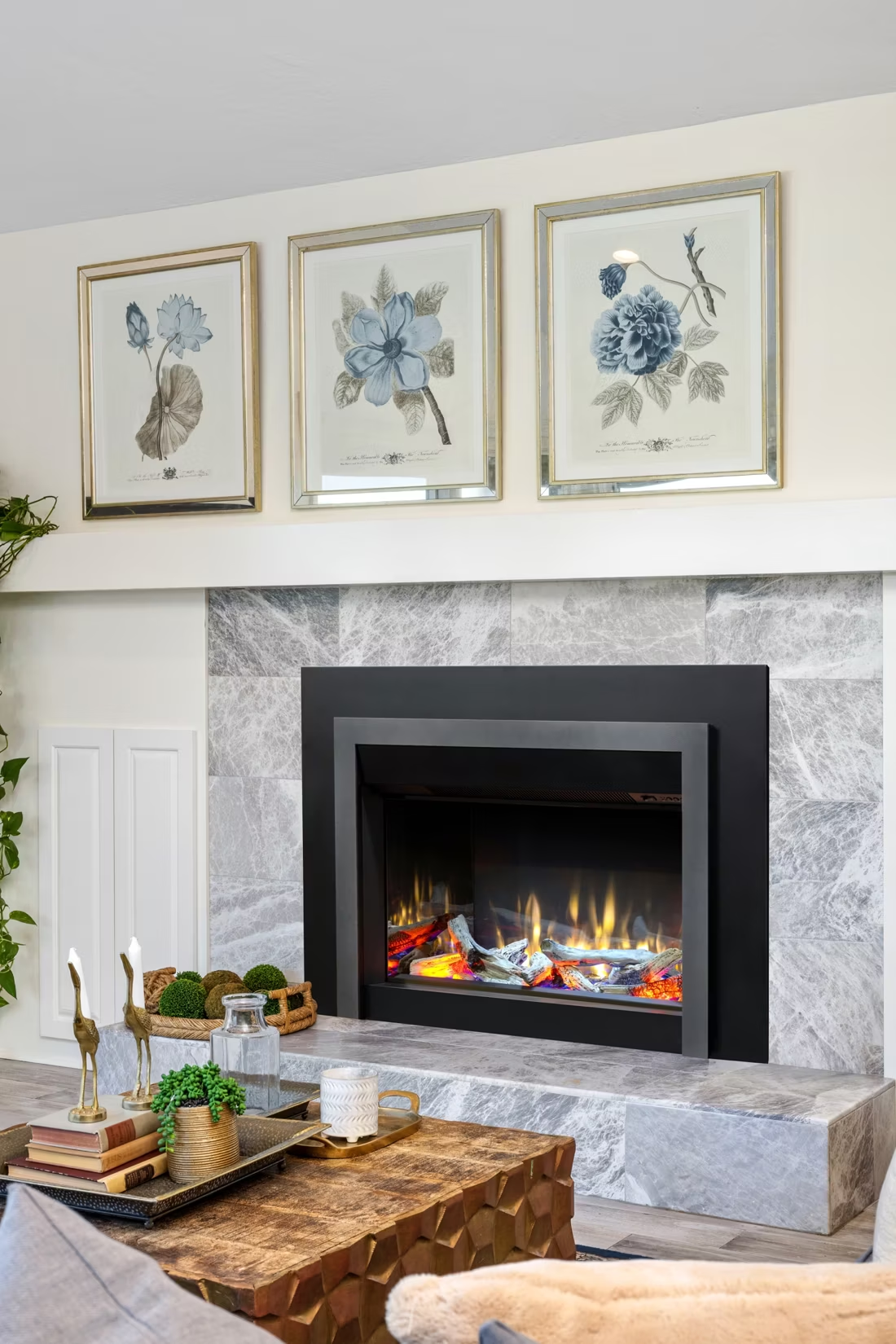
There are four common formats: freestanding stoves that plug in and sit anywhere in a room, inserts that slide into an existing masonry firebox to replace an old wood-burning setup, wall-mounted linear units that hang like a piece of art with a slim profile, and built-in units framed into a wall or media console during a remodel. For Oneida County's older housing stock—a lot of it in Utica and Rome—inserts into existing fireplace openings are an especially popular way to bring a dated masonry fireplace back into daily use without touching the chimney.
Will my electric fireplace still work during a power outage?
No—electric fireplaces require power to run, so they go dark along with everything else if you lose electricity. That's worth planning around in Oneida County, where ice storms and heavy lake-effect snow off the Tug Hill Plateau can knock out power for stretches during the winter. If backup heat during an outage is a priority for your household, a wood stove or a gas unit with a battery-backup ignition system is the better primary choice, with electric reserved for everyday convenience and ambiance rather than emergency heat.
How much does it cost to run an electric fireplace in Oneida County?
A typical 1,500-watt electric fireplace costs somewhere in the range of 15 to 25 cents per hour to run at full heat, based on National Grid's residential electric rates, which serve most of the county. Running one for four hours a night through a Mohawk Valley winter adds up to a modest but real line item on your bill—generally far less than running a space heater of the same wattage nonstop, since most electric fireplaces let you run the flame effect without the heater engaged. Local dealers can walk you through the wattage and expected running cost for specific models.
Can I put an electric insert into my existing wood-burning fireplace?
Yes, and it's one of the more common projects in Oneida County's older homes. An electric insert slides into the existing firebox opening, uses the existing surround, and needs nothing from the old chimney—no liner, no cleaning, no more creosote to worry about. It's a straightforward way to convert an unused or deteriorating masonry fireplace in a Utica or Rome home into a working heat source and focal point again, usually in an afternoon, without touching the flue.
What electric fireplace brands are worth considering?
Dimplex, Napoleon, and Touchstone are all widely available through hearth dealers serving the Oneida County area and cover the range from basic plug-in inserts to higher-end linear wall units with adjustable flame effects and heat output. The right choice depends more on the size of your room and whether you need a 120-volt plug-in or a 240-volt hardwired unit than on brand alone—a local dealer can match the unit to your space and your panel rather than just selling you whatever's in stock.
Can I put a TV above my fireplace?
Yes—with an asterisk. Fireplaces are hot and TVs don't like heat. Either put a mantel between them to deflect rising warmth, or choose a fireplace with heat-management technology that creates a cool zone on the wall above—the wall stays around 125 degrees, barely warm, while the room still gets full heat. If you like clean lines and don't want a mantel, heat management is the answer.
Do electric fireplaces actually produce heat?
Yes—most put out around 4,800–5,000 BTUs from a standard outlet, which comfortably warms a bedroom, office, or den as a comfort-zone heater. What they won't do is carry a whole house the way wood, gas, or pellet can. Think of electric as ambiance-first with honest supplemental heat: flames on with no heat in July, flames plus warmth in January.
Can I install a fireplace myself?
If you're putting a fire in your house on purpose, it's best to work with an expert. Unless you're genuinely experienced in framing, gas line, vent pipe, and the national code on clearances to combustibles, have a professional do it—and ideally the same company that sells you the fireplace, so warranty, service, and liability all live under one roof.
Can a fireplace actually lower my heating bill?
Yes—by creating a comfort zone. A furnace heats every square foot of the house just to warm the one room you're in; a gas fireplace on low burns roughly a sixth of the gas a typical furnace does. Set the furnace around 55–60 degrees as a baseline, then heat the rooms your family actually uses. Families who heat this way commonly save $20–$60 a month.
Stove and Fireplace Dealers in Oneida County
Find your electric fireplace in Oneida County.
Tell us a bit about your home and we'll match you with the right electric fireplace or insert, plus a free Project Guide & Parts List—the exact parts and your recommended local dealer—for your Oneida County project.
Find Your Fireplace →