
Zero-clearance heat for Hamilton College's coldest nights.
No chimney, no gas line, no permit headaches—just a clean electric fireplace sized for the village's older homes and campus-area rentals. We'll help you find a trusted local dealer.
Every Project Starts From One of These Five Situations
Electric fireplaces fit village life near the College.
Hamilton College sits just under 900 feet in elevation in the Town of Kirkland, in the snowbelt fringe of the Mohawk Valley, where winters average a 14°F low and the area has a heating season long and cold enough to add up to more total heating demand than Buffalo, NY, and in the same range as Burlington, Vermont. The village itself is small, with a population under 2,000 built largely around campus-affiliated rentals, faculty housing, and older homes near the green. That housing mix matters: landlords and rental agreements often restrict open-flame wood stoves, there's no natural gas main serving much of the immediate area, and insurance carriers covering student and faculty rentals are frequently reluctant to underwrite a wood-burning appliance.
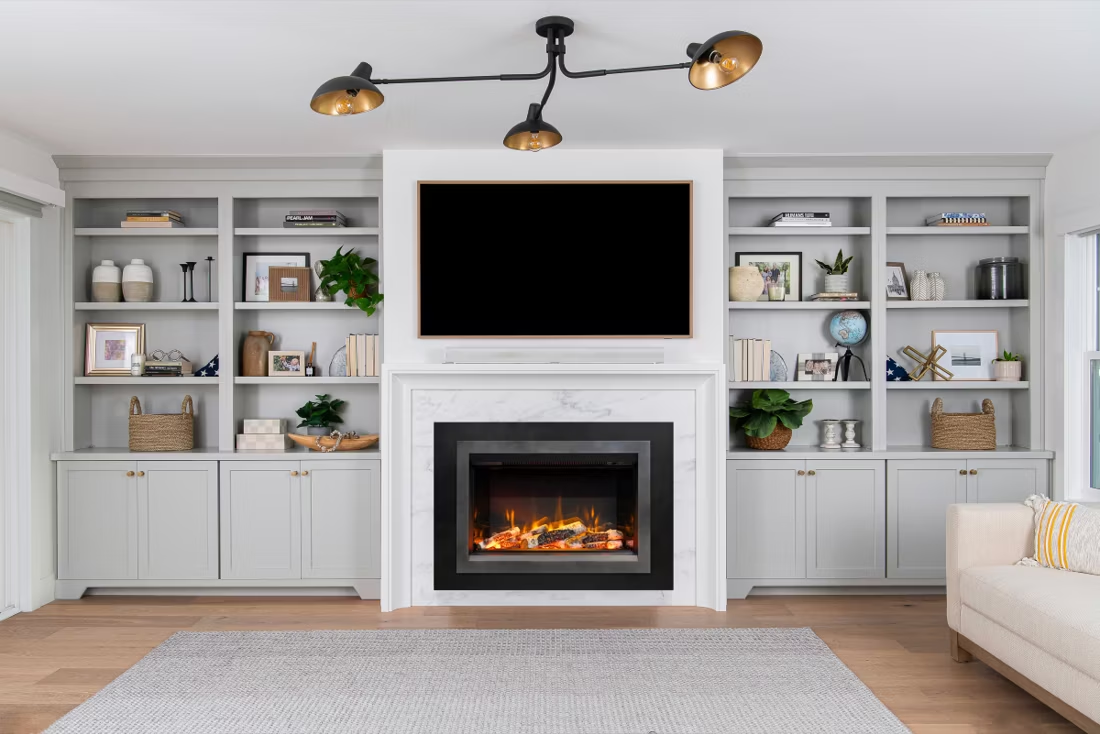
That's exactly why electric fireplaces are the standard, practical choice here rather than an afterthought. Power comes through Niagara Mohawk (National Grid) or Oneida-Madison Electric Cooperative depending on the parcel, at a residential rate around 16.67 cents per kWh—a known, budgeted cost with no fuel delivery, no chimney sweep, and no cutting permit to track down. An electric insert or wall-mounted unit gives a rental-friendly, plug-in or simple-hardwire way to add real zone warmth to a drafty 19th-century house near the College, without touching venting, gas lines, or masonry.
Three steps. No salesperson until you're ready.
Tell us about your project
Your zip code, your situation, and the fuel you're leaning toward—or let the answers point you to one.
See what's actually available
The brands dealers within 100 miles genuinely carry—real options, never a catalog mirage.
Get your dealer & Project Guide
A trusted local dealer, plus the free Project Guide & Parts List that names every component of the job.
Frequently Asked Questions
How much does it cost to install an electric fireplace near Hamilton College?
Plug-in electric fireplace inserts and mantel packages typically run $400 to $1,500 installed, since there's no venting or gas line to run—often just a dedicated outlet or existing circuit. Built-in, hardwired electric fireplaces set into a wall or existing masonry opening run higher, generally $1,500 to $3,000, once an electrician runs a dedicated 20-amp circuit and a carpenter frames the surround. Because so much of the housing stock here is older village homes and campus-area rentals, the most common project we see is a insert-style unit dropped into an existing fireplace opening—it looks finished without any structural work.
Why electric instead of wood or gas in Hamilton College?
It's a fair question in a place with such a long, cold heating season—you'd expect wood heat to dominate. In practice, most of the housing near the College is rental or campus-affiliated, and both landlords and rental insurance policies here routinely prohibit wood-burning appliances. There's also no natural gas main reaching much of the immediate village, which rules out a gas fireplace for most addresses without a costly propane tank setup. Electric sidesteps both problems—no combustion, no venting, and no insurance flag—which is why it's the fuel type that actually gets installed and approved here, even though the winters are cold enough to justify a wood stove elsewhere in Oneida County.
Will an electric fireplace actually keep up with a 14°F winter night?
Not as a whole-home furnace replacement—no electric fireplace is designed for that. Most units run a standard 1,500-watt heater good for roughly 5,000 BTU, enough to noticeably warm a single room (400–600 sq ft) while your existing furnace or baseboard system handles the rest of the house. For Hamilton College's climate, think of it as zone heat: the room you're actually sitting in on a January night stays warmer, and you can turn the thermostat down elsewhere. If you're trying to heat a whole floor of a drafty older home, talk to a local dealer about a larger built-in unit or multiple units rather than expecting one insert to do it all.
Do I need a permit to install an electric fireplace here?
A plug-in electric fireplace or insert generally doesn't require any permit—it's treated like any other appliance you'd plug into an existing outlet. A hardwired built-in unit, which needs a dedicated circuit run by a licensed electrician, typically does require an electrical permit through the Town of Kirkland. If you're renting near campus, check with your landlord or property manager first regardless of permit requirements—many campus-affiliated leases have their own rules about what can be mounted or wired into the wall.
What size electric fireplace do I need for a village home near the College?
For a single room in one of the older homes near the green—living room, den, or a converted rental bedroom—a standard 1,500-watt insert or wall-mount in the 30 to 50 inch width range covers most cases. If you're heating an open-concept space or a larger addition, look at units rated for 400+ sq ft or plan on a local dealer recommending two smaller units instead of one oversized one. Ceiling height and how leaky the windows are (common in this area's older housing stock) matter more than square footage alone—a local installer can size this correctly during an in-home look.
What electric fireplace brands are available through local dealers?
Dimplex, Napoleon, and Amantii are the three brands most regional hearth dealers in Central New York carry and service, ranging from simple insert-style units to full linear built-ins with realistic flame effects. Dimplex in particular is widely stocked because of its straightforward plug-in options, which suit rental and campus-adjacent housing well. A local dealer can tell you which of these are actually in stock and installable on your specific electrical setup rather than just what's listed on a manufacturer's website.
What does it cost to run an electric fireplace at local electric rates?
At the residential rate of roughly 16.67 cents per kWh from Niagara Mohawk or Oneida-Madison Electric Cooperative, a standard 1,500-watt electric fireplace running on high costs about 25 cents per hour to operate. Run it for a typical evening—say four to five hours—and you're looking at roughly $1 to $1.25 in electricity. Most units also run a heat-only or flame-only mode that draws far less power, useful if you want the ambiance without the heat output on milder shoulder-season nights.
Insert, built-in, or freestanding—what's the difference?
An electric insert is built to drop into an existing fireplace opening, which is common in the older masonry-front homes near the College—it plugs into a rear outlet or gets hardwired, and covers the old firebox cleanly. A built-in unit is framed into a wall from scratch, common in newer construction or a remodel, and usually needs the dedicated circuit mentioned above. A freestanding or mantel-package unit is furniture—no installation beyond plugging it in—which makes it the go-to option for campus-area renters who can't modify the wall at all. Most of what we see requested here splits between inserts (existing fireplace homes) and freestanding units (rentals).
How long do electric fireplaces last, and what maintenance do they need?
Electric fireplaces are low-maintenance by design—there's no chimney, no venting, and no combustion byproducts to manage. The main wear item is the heater element and the LED or flame-effect mechanism, both of which typically last 10 to 15 years of regular seasonal use before needing service or replacement. Occasional dusting of the vents and a check that nothing is blocking the heater intake is about the extent of upkeep. Because there's no annual chimney sweep or gas technician visit required, electric units generally have the lowest total cost of ownership of any fireplace fuel type—a real advantage for rental properties near campus where nobody wants a recurring maintenance visit.
Does an electric fireplace need a vent or chimney?
No—that's its superpower. An electric fireplace needs a wall and an outlet, period. No vent pipe, no gas line, no clearances to design around, which is why it works in bedrooms, offices, apartments, and walls where venting a gas or wood unit would be impractical or impossible. Installation is typically the simplest and least expensive of any fireplace type.
Can I put a TV above my fireplace?
Yes—with an asterisk. Fireplaces are hot and TVs don't like heat. Either put a mantel between them to deflect rising warmth, or choose a fireplace with heat-management technology that creates a cool zone on the wall above—the wall stays around 125 degrees, barely warm, while the room still gets full heat. If you like clean lines and don't want a mantel, heat management is the answer.
Can a fireplace actually lower my heating bill?
Yes—by creating a comfort zone. A furnace heats every square foot of the house just to warm the one room you're in; a gas fireplace on low burns roughly a sixth of the gas a typical furnace does. Set the furnace around 55–60 degrees as a baseline, then heat the rooms your family actually uses. Families who heat this way commonly save $20–$60 a month.
Does a fireplace add value to my home?
On average, a fireplace adds back to the home about the same amount you spent installing it. Add the monthly savings from heating the rooms you actually use instead of the whole house—often hundreds of dollars a year—and the value case is strong before you even count what a fire does for how your family uses the room.
Nearby Dealers
Hearth shops serving Hamilton College and the surrounding area. Every listing shows whether it is a WhyFire partner, a dealer we have verified as authorized for the brands we recommend, or a local business carrying hearth products. No manufacturer pays for placement. How we verify dealers →
We’ve paused dealer listings for this connection today. Enter your zip or postal code above to find dealers near you, or come back tomorrow.
Popular Electric Brands
Where each brand came from, what's inside it today, and every current model. No brand pays to be here. Not every dealer carries every brand, so enter your zip code to see what's sold near Hamilton College.
Fireplace Xtrordinair
Fireplace Xtrordinair, now often called FireplaceX, is the fireplace brand of Travis Industries, Inc., of Mukilteo, Washington.
5 electric models →DaVinci
DaVinci Custom Fireplaces is a brand of Travis Industries, Inc., of Mukilteo, Washington, the company behind Lopi and Fireplace Xtrordinair.
5 electric models →Kozy Heat
Kozy Heat was founded in 1976 by Dudley Hussong in Lakefield, Minnesota, and incorporated as Hussong Manufacturing Co., Inc. in 1978.
3 electric models →Forge & Flame
Forge & Flame is the stove brand Hearth & Home Technologies introduced in August 2023 to bring Vermont Castings, Harman, and Quadra-Fire under one name.
1 electric model →Electric Service in Hamilton College
An electric fireplace's heater draws about 1,500 watts—pennies per hour at local rates.
Niagara Mohawk Power Corp.
Oneida-Madison Elec Coop, Inc
Find your electric fireplace in Hamilton College.
Tell us a bit about your home or rental near the College and we'll put together a free Project Guide & Parts List—sized right for your space, with the parts list and a trusted local dealer who can install it.
Find Your Fireplace →