
Reliable heat for a lake-effect winter that averages 6,366 heating degree days.
Niagara Falls sits at 572 feet in the same lake-effect snowbelt as Buffalo, with winter lows averaging 19°F. I'll match you with a trusted local dealer who knows the venting, the gas line work, and what's actually installable in your neighborhood.
Every Project Starts From One of These Five Situations
The fuel most homes here already run to the furnace.
Niagara Falls sits in climate zone 5A with 6,366 heating degree days a year—a workload closer to Buffalo or Madison than to milder parts of the Northeast—and the city's housing stock, much of it built decades ago in tight rowhouse and bungalow neighborhoods near Pine Avenue and LaSalle, was largely wired for gas heat from the start. That existing infrastructure makes a direct-vent gas fireplace or insert one of the more straightforward hearth upgrades available in the city, since most homes already have a gas line running to the water heater or furnace that a fireplace installer can tie into.
Oak, maple, birch, and ash are the hardwoods most familiar to anyone in Western New York who grew up around a woodstove, but in Niagara Falls proper, standalone wood and pellet systems have become the exception rather than the rule—the city carries no air quality non-attainment designation, so there's no burn-ban pressure pushing people toward wood, and the density of gas infrastructure makes gas the default for anyone adding real heat rather than ambiance. Electric service through Niagara Mohawk Power Corp. (residential rates run around 16.67 cents per kWh) covers battery-backup ignition and electric fireplace options, but for whole-room heat output during a Great Lakes cold snap, gas remains the fuel most local dealers install.
Three steps. No salesperson until you're ready.
Tell us about your project
Your zip code, your situation, and the fuel you're leaning toward—or let the answers point you to one.
See what's actually available
The brands dealers within 100 miles genuinely carry—real options, never a catalog mirage.
Get your dealer & Project Guide
A trusted local dealer, plus the free Project Guide & Parts List that names every component of the job.
Frequently Asked Questions
How much does a gas fireplace installation cost in Niagara Falls?
Costs typically run in the $4,000 to $9,000 range, with the spread driven mostly by whether you're dropping a direct-vent insert into an existing masonry firebox—common in the older brick homes around the Pine Avenue and Highland Avenue neighborhoods—or building out a new gas line and venting run for a fresh installation. Homes with an existing gas line to the furnace or water heater usually see the lower end of that range, since the hookup is a simpler tie-in rather than a new trench or riser.
Can I convert my existing wood fireplace to gas?
Yes, and it's a common project in Niagara Falls' older housing stock, where masonry fireplaces built decades ago were originally sized for oak, maple, or ash logs. A gas insert with a stainless liner run through the existing chimney is the standard approach, and it eliminates the ash cleanup and wood storage that a lot of homeowners in tighter city lots don't have space for anyway. Expect the conversion to land in the same general cost range as a new gas insert install, since the chimney structure doing most of the heavy lifting is already in place.
Do most Niagara Falls homes already have natural gas service?
The majority do—gas heat and gas cooking are the norm across most of the city's zip codes, from 14301 near downtown to 14304 and 14305 further out, which is exactly why gas fireplaces are the most commonly installed hearth product here rather than wood or pellet units. If your home is on natural gas for its furnace or range, adding a fireplace is generally a matter of running a new branch line, not bringing gas service to the house for the first time.
Will a gas fireplace still work if the power goes out?
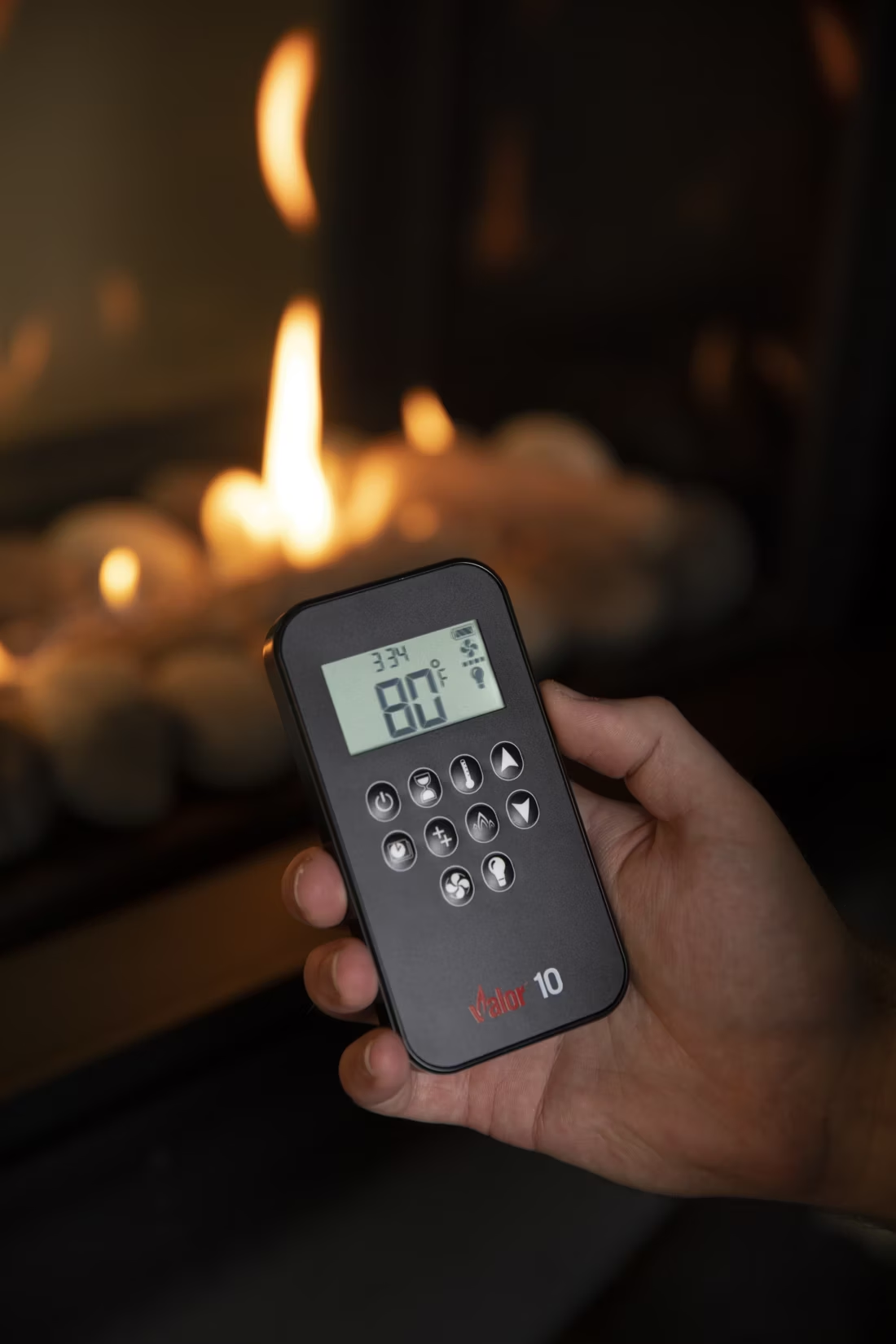
Most will, which is worth planning for given how often Great Lakes winter storms knock out power across the Niagara Mohawk service territory. Units with intermittent pilot ignition (IPI) run on AA battery backup that kicks in automatically when the power drops. Millivolt or standing-pilot systems don't need house power at all to keep the burner running. Either way, ask your dealer which ignition system is on any model you're considering—for a city that sees its share of lake-effect outages, it's a real functional difference, not a minor spec.
What's the difference between a gas fireplace, insert, and stove for my house?
A gas fireplace is a built-in unit framed into a wall, which fits new construction or a full remodel. A gas insert slides into an existing masonry firebox, which is the more common route in Niagara Falls' older neighborhoods where a wood-burning fireplace built for oak or birch logs is already in the wall. A gas stove is freestanding on a hearth pad, similar footprint to a wood stove but running off a gas line instead of cordwood—a good option if you want supplemental heat somewhere without an existing fireplace opening.
Do I need a permit to install a gas fireplace in Niagara Falls?
Yes. You'll need a building permit through the City of Niagara Falls building department, plus gas line work has to be done by a licensed gas fitter and inspected before it's signed off. Most hearth dealers who install regularly in the city handle both the permit filing and the final inspection as part of the job, so you're not coordinating separately with the trade and the inspector.
Should I get a direct-vent or vent-free gas fireplace in Niagara Falls?
Direct-vent units pull combustion air from outside and exhaust it back outside, which most local dealers recommend as the default given how many hours a gas fireplace runs during a 6,366-heating-degree-day winter—daily use for months adds up, and sealed venting keeps that combustion byproduct out of the living space. Vent-free units are legal in New York and can work for occasional supplemental use in a room with adequate square footage, but for a fireplace running as real backup heat through a Niagara Falls winter, direct-vent is the more common and more durable choice.
How often does a gas fireplace need to be serviced?
An annual check is the standard recommendation, ideally scheduled in late summer or early fall before the first cold snap rather than mid-winter when technicians are booked solid. A tech checks the burner, pilot assembly, gas connections, and venting, and cleans the glass—typically a $150 to $250 visit. Skipping it on a unit that runs daily through a long Niagara Falls heating season is how a pilot or ignition issue turns up on the coldest night rather than during a routine appointment.
Why don't more Niagara Falls homes use wood or pellet stoves?
Oak, maple, birch, and ash are all common regional hardwoods, and wood heat is genuinely practical in the more rural stretches of Niagara County—but inside city limits, dense gas infrastructure and a lack of any air-quality non-attainment restriction have made gas the practical default rather than wood or pellet. Standalone wood stoves and pellet units are uncommon installs here; when they do show up, it's usually as a secondary heat source in an older home that still has its original masonry chimney, rather than as a primary system. For most homeowners in the city, gas delivers the reliable, low-maintenance heat that wood or pellet would require more ongoing effort to match.
Is my gas fireplace wasting gas?
If it was installed more than 15 years ago, probably. Older gas fireplaces keep a standing pilot light burning all the time, and that little flame can cost a couple hundred dollars a year. Newer models use pilot-on-demand ignition—the pilot lights only when you use the fireplace and goes out when you turn it off.
Can I put a TV above my fireplace?
Yes—with an asterisk. Fireplaces are hot and TVs don't like heat. Either put a mantel between them to deflect rising warmth, or choose a fireplace with heat-management technology that creates a cool zone on the wall above—the wall stays around 125 degrees, barely warm, while the room still gets full heat. If you like clean lines and don't want a mantel, heat management is the answer.
Can a fireplace actually lower my heating bill?
Yes—by creating a comfort zone. A furnace heats every square foot of the house just to warm the one room you're in; a gas fireplace on low burns roughly a sixth of the gas a typical furnace does. Set the furnace around 55–60 degrees as a baseline, then heat the rooms your family actually uses. Families who heat this way commonly save $20–$60 a month.
How much should I budget for a fireplace?
For an average home—covering the fireplace, the vent pipe, and basic installation—a budget between $3,900 and $5,500 gives you a lot of options across wood, gas, and pellet. By the time you add finish work, gas line, and electrical, the average complete installation lands between $5,000 and $12,000 all-in. In a remodel or new build, a good rule is to put about 2.5% of the total project cost toward the fireplace.
Nearby Dealers
Hearth shops serving Niagara Falls and the surrounding area.
Get your free Project Guide & Parts List for a Niagara Falls gas fireplace.
Tell me about your home and your existing gas service, and I'll match you with a trusted local dealer and send a free Project Guide & Parts List with the exact vent kit and parts your project needs.
Find Your Fireplace →