
Instant heat and ambiance for Niagara Falls homes—no chimney required.
From historic two-family homes near downtown to riverside condos, electric fireplaces bring real warmth to Niagara Falls without venting, gas lines, or masonry work. Find the right unit and connect with a trusted local dealer.
Every Project Starts From One of These Five Situations
Electric heat that fits Niagara Falls's older homes and newer builds alike.
Niagara Falls sits at just under 600 feet elevation along the Niagara River, in climate zone 5A with a long, cold winter season and average winter lows near 19°F—cold enough that furnaces run hard from November through March, the same Great Lakes snowbelt pattern shared with nearby Buffalo. What's less common here is solid-fuel heating: there's no real cutting-permit infrastructure nearby, no local pellet-delivery culture beyond a handful of regional brands like Energex and Hamer Pellet Fuel, and a housing stock—two-family homes near downtown (14303), postwar ranches out toward LaSalle (14304), apartment stock throughout the 14305 corridor—where a big share of units simply have no chimney or hopper space to work with.
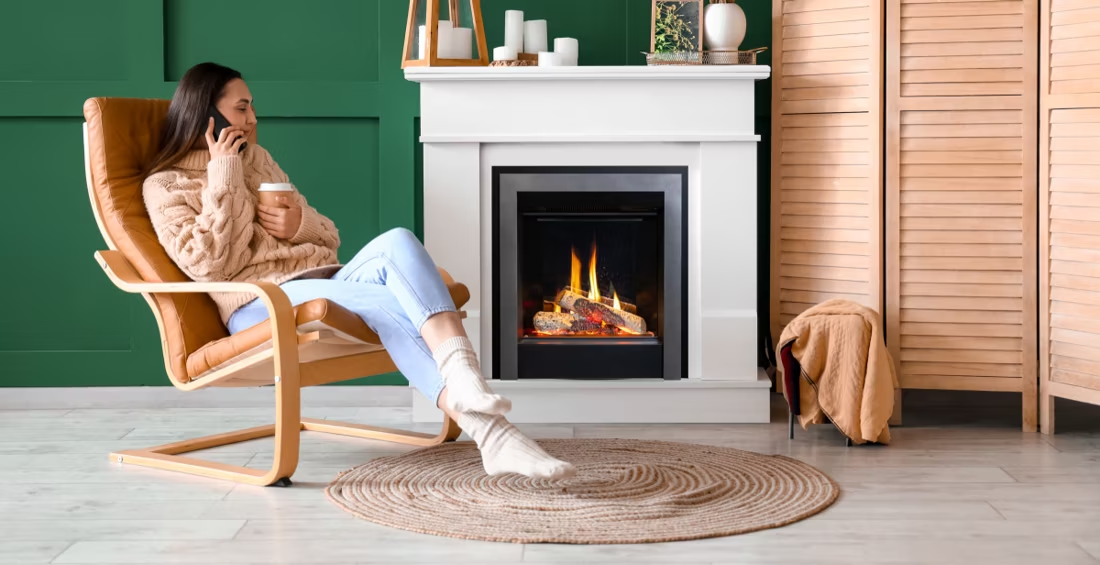
That gap is exactly what electric fireplaces fill. Niagara Mohawk Power Corp serves nearly every household in the city at a residential rate around 16.67 cents per kWh, and a modern electric insert or wall-mount unit plugs into a standard outlet with no venting, no gas line, and no flue inspection. For older homes near the falls with an existing but unused masonry firebox, an electric insert restores a working fireplace without touching the chimney. For newer condos and rental units along the river where solid fuel was never on the table, a built-in or wall-mount unit adds genuine supplemental heat and ambiance in a single afternoon of work.
Three steps. No salesperson until you're ready.
Tell us about your project
Your zip code, your situation, and the fuel you're leaning toward—or let the answers point you to one.
See what's actually available
The brands dealers within 100 miles genuinely carry—real options, never a catalog mirage.
Get your dealer & Project Guide
A trusted local dealer, plus the free Project Guide & Parts List that names every component of the job.
Frequently Asked Questions
How much does it cost to install an electric fireplace in Niagara Falls?
Plug-in electric inserts and freestanding units that use an existing outlet typically run $300 to $1,200 installed, since there's no venting or gas line to run. Built-in wired units—recessed into a wall or a custom mantel surround—usually land between $1,500 and $3,000 once an electrician runs a dedicated circuit and a carpenter builds out the surround. Homes near downtown Niagara Falls converting an old masonry fireplace to an electric insert tend to fall in the middle of that range, since the existing firebox opening simplifies the fit.
Do I need a permit to install an electric fireplace in Niagara Falls?
Usually not for a plug-in insert or wall-mount unit—if it plugs into an existing 120-volt outlet, there's nothing to permit. If you're having a dedicated circuit run for a larger built-in unit, that electrical work should be done by a licensed electrician and may require sign-off through the City of Niagara Falls Building & Code Enforcement Department. Since these units don't burn fuel, none of the solid-fuel permitting or curtailment rules that apply elsewhere in New York come into play here.
How much does it cost to run an electric fireplace in Niagara Falls?
At Niagara Mohawk's residential rate of roughly 16.67 cents per kWh, a typical 1,500-watt electric fireplace running on full heat costs about 25 cents an hour. Running it on flame-effect-only mode, without the heater engaged, draws closer to 50–100 watts—a few cents an hour—which is what most homeowners use it on outside of the coldest stretches. Running one for a few hours most winter evenings adds up to a modest line item on your Niagara Mohawk bill, nowhere near what it would cost to heat the same space with resistance baseboard alone.
Electric vs. gas fireplace—which is right for my Niagara Falls home?
Gas fireplaces put out more heat and can run through a power outage with the right battery-backup ignition system, but they need a gas line and proper venting, which pushes installed cost higher and isn't always feasible in older downtown Niagara Falls buildings or rentals. Electric units cost less upfront, install in an afternoon, and work in any unit with a standard outlet—including apartments and condos where running new gas isn't an option. For a primary living space that needs real supplemental heat on the coldest nights, gas usually wins; for ambiance, zone heat, or a rental property, electric is often the more practical call.
What's the difference between an electric insert, wall-mount, and mantel package?
An electric insert is built to slide into an existing masonry fireplace opening—the most common upgrade for older Niagara Falls homes with a fireplace that's gone unused for years. A wall-mount unit hangs directly on a wall like a flat-screen TV, popular in condos and newer builds along the river with no fireplace opening at all. A mantel package pairs an electric firebox with a surrounding cabinet or mantel surround, giving a freestanding, furniture-like look that works well in a living room without any existing masonry. Local dealers can tell you which fits your framing and outlet situation.
Will my electric fireplace work during a power outage?
No—unlike a gas unit with battery-backup ignition, an electric fireplace is entirely dependent on grid power and shuts off the moment Niagara Mohawk's lines go down. Lake-effect snow events occasionally knock out power in the Niagara Falls area for stretches in the winter, so an electric fireplace shouldn't be treated as your emergency heat plan. If outage backup matters to you, pair it with a battery-backup gas unit or a portable propane heater rather than relying on electric alone.
What about wood or pellet stoves in Niagara Falls—are they an option?
They're genuinely rare inside the city. Niagara Falls doesn't have the forest-permit infrastructure or wood-delivery culture that drives wood heat elsewhere in the Northeast, and the dense two-family and apartment housing stock in zip codes like 14303 and 14305 often lacks a usable chimney to begin with. Regional pellet brands like Energex, Hamer Pellet Fuel, and Greene Team Pellet Fuel do serve the broader region, mostly for rural Niagara County customers with the space for bulk storage—but within city limits, electric and gas are what dealers actually stock and install.
What are the best electric fireplace brands available near Niagara Falls?
Dimplex, Napoleon, Touchstone, and SimpliFire are the brands most local hearth dealers in the Niagara region carry, and all four make inserts, wall-mounts, and mantel packages with independent flame and heat controls—useful since you'll often want the flame effect running without the heater on, especially outside the coldest months. Amantii is another option for larger linear wall-mount units in newer builds. A local dealer can show you which lines they stock and service directly.
Can an electric fireplace be my primary heat source in a Niagara Falls winter?
No—with a long, cold winter season and average winter lows around 19°F, a single electric fireplace can't carry a whole house through a Niagara Falls winter. Most units are rated for zone heating of roughly 400 to 1,000 square feet, enough to noticeably warm the room they're in, but your furnace or boiler still needs to handle the rest of the house. Where electric fireplaces earn their keep is cutting the furnace's workload in the main living space and adding real ambiance the rest of the year.
Can I put a TV above my fireplace?
Yes—with an asterisk. Fireplaces are hot and TVs don't like heat. Either put a mantel between them to deflect rising warmth, or choose a fireplace with heat-management technology that creates a cool zone on the wall above—the wall stays around 125 degrees, barely warm, while the room still gets full heat. If you like clean lines and don't want a mantel, heat management is the answer.
Do electric fireplaces actually produce heat?
Yes—most put out around 4,800–5,000 BTUs from a standard outlet, which comfortably warms a bedroom, office, or den as a comfort-zone heater. What they won't do is carry a whole house the way wood, gas, or pellet can. Think of electric as ambiance-first with honest supplemental heat: flames on with no heat in July, flames plus warmth in January.
Can I install a fireplace myself?
If you're putting a fire in your house on purpose, it's best to work with an expert. Unless you're genuinely experienced in framing, gas line, vent pipe, and the national code on clearances to combustibles, have a professional do it—and ideally the same company that sells you the fireplace, so warranty, service, and liability all live under one roof.
Does a fireplace add value to my home?
On average, a fireplace adds back to the home about the same amount you spent installing it. Add the monthly savings from heating the rooms you actually use instead of the whole house—often hundreds of dollars a year—and the value case is strong before you even count what a fire does for how your family uses the room.
Nearby Dealers
Hearth shops serving Niagara Falls and the surrounding area.
Electric Service in Niagara Falls
An electric fireplace's heater draws about 1,500 watts—pennies per hour at local rates.
Niagara Mohawk Power Corp.
Find your electric fireplace in Niagara Falls.
Tell us about your home and we'll match you with a trusted local Niagara Falls dealer and send your free Project Guide & Parts List—the right electric insert, wall-mount, or mantel unit for your space, sized correctly for the job.
Find Your Fireplace →