
Keep Your Family Warm and Safe—No Matter What
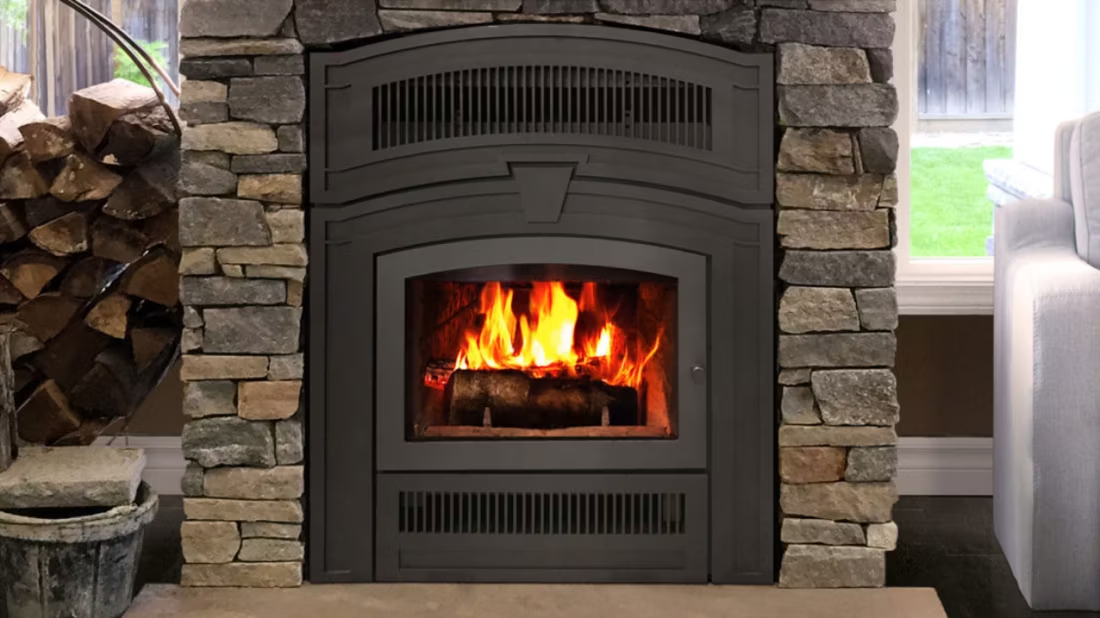
Wood-burning fireplaces are the exception here, not the rule—but original masonry hearths in prewar townhouses and brownstones can still be brought back to life with the right insert and a trusted local installer.
Every Project Starts From One of These Five Situations
Steam heat runs this borough—wood fireplaces are the exception.
Manhattan is a borough of 1.6 million people living mostly in high-rise co-ops and condos with shared mechanical systems, radiator steam heat, and no chimney access—which is why a working wood-burning fireplace is genuinely uncommon here. The exception is the borough's stock of prewar townhouses and brownstones in neighborhoods like Greenwich Village, the West Village, Harlem, and the Upper West Side, where original masonry hearths were built into parlor floors a century ago and, in many cases, still stand behind a mantel that hasn't seen a fire in decades. With a climate zone of 4A, 4,553 heating degree days, and winter lows averaging around 28°F, Manhattan is far milder than a place like Duluth, MN or Burlington, VT—so wood was never the primary heat source here the way it is in colder, more rural climates. It's ambiance, backup, and character.
The practical hurdles matter more than the climate. Any new or reactivated wood-burning appliance needs a New York City Department of Buildings permit, and because Manhattan is a designated non-attainment area for particulate matter, new installations generally need to be EPA-certified low-emission stoves or inserts rather than open hearths. If your building sits in a historic district—Greenwich Village Historic District and the Upper West Side/Central Park West Historic District both apply to large swaths of the borough—any exterior chimney or flue work also needs Landmarks Preservation Commission sign-off. And for anyone in a co-op or condo, the building's board is usually the real gatekeeper: shared flues, fire liability, and insurance concerns mean most boards restrict new solid-fuel installations, even when a unit technically has an old chimney running through it. None of this makes wood heat impossible in Manhattan—it just means the path runs through a local installer who already knows DOB, FDNY, and Landmarks requirements cold.
Three steps. No salesperson until you're ready.
Tell us about your project
Your zip code, your situation, and the fuel you're leaning toward—or let the answers point you to one.
See what's actually available
The brands dealers within 100 miles genuinely carry—real options, never a catalog mirage.
Get your dealer & Project Guide
A trusted local dealer, plus the free Project Guide & Parts List that names every component of the job.
Frequently Asked Questions
How much does a wood fireplace or insert installation cost in Manhattan?
There's no single number, because so much depends on building type and access. Reactivating an existing masonry fireplace in a townhouse with a stainless steel liner and a certified insert typically runs well above what you'd see in most of the country—often $9,000 to $20,000 once you account for chimney relining, scaffolding or roof access, and co-op or Landmarks paperwork. A dormant flue that hasn't been used in 30 years usually needs a Level 2 chimney inspection before anyone will quote the job at all. Local installers who work regularly in prewar Manhattan buildings can give you a realistic number after seeing the flue and your building's rules—get that inspection before you budget anything.
Can I install a wood stove or fireplace in my co-op or condo?
Sometimes, but it's the exception rather than the rule. Most Manhattan co-op and condo boards restrict new solid-fuel installations because of shared flue systems, fire code liability, and building insurance—even in buildings where individual units technically have a chimney. Ground-floor and duplex units in smaller prewar buildings have better odds, especially if the building already has working fireplaces elsewhere. If you're serious about it, get board approval in writing before you spend a dollar on design or permitting—a local installer who's navigated Manhattan co-op boards before can tell you fairly quickly whether your building is a realistic candidate.
What permits do I need for a wood-burning fireplace in NYC?
Any new or reactivated wood-burning appliance requires a New York City Department of Buildings permit, and the chimney sweep or installer doing liner work typically needs an FDNY Certificate of Fitness. If your building is in a designated historic district—which covers large parts of Greenwich Village, the West Village, and the Upper West Side—any visible chimney or flue modification also needs Landmarks Preservation Commission review before DOB will sign off. Most reputable Manhattan hearth installers handle this paperwork as part of the job, since navigating three different city agencies isn't something most homeowners want to do solo.
My brownstone already has a wood-burning fireplace—can I just use it?
Not without a proper inspection first. A huge number of Manhattan's original masonry fireplaces have sat unused for decades, and an old flue can have cracked mortar, animal nests, or structural issues that make it unsafe to fire up as-is. A CSIA Level 2 inspection—recommended any time a chimney has been dormant, changed use, or hasn't been swept in years—will tell you whether the existing flue can be used safely or needs a stainless steel liner. Many owners of Greenwich Village and Harlem brownstones end up installing a certified wood insert at the same time, which both solves the safety issue and dramatically improves how much heat the fireplace actually puts into the room.
Where does firewood come from if there's no national forest near Manhattan?
Unlike wood-heavy regions out west, there's no nearby public land or cutting permit system here—all firewood in Manhattan is purchased and delivered. Regional suppliers deliver seasoned oak, maple, birch, and ash by the rick or half-cord, and logistics matter more than price: buildings without loading docks or freight elevators sometimes require wood to be hand-carried in, which some delivery services charge extra for. If you're in a walk-up or a building with tight street access, ask your supplier about delivery logistics before you order—it affects both cost and how much wood you can reasonably store.
Is wood heat actually practical for Manhattan's climate?
Not as a primary heat source—and it was never really meant to be. Manhattan's winter lows average around 28°F with about 4,553 heating degree days a season, which is mild compared to a genuinely cold climate like Burlington, VT or Duluth, MN. Nearly every apartment and townhouse in the borough is heated by steam or hot water from a central boiler, often run by Con Edison's district steam system in parts of the city. A wood fireplace or insert here functions as supplemental heat and ambiance in a parlor-floor living room, and occasionally as backup during a rare extended power outage—not as the thing keeping the building warm in January.
Wood stove or wood insert—which fits a Manhattan townhouse better?
For nearly every prewar Manhattan property with an existing masonry fireplace, an insert is the better fit. It uses the chimney that's already built into the wall, requires no new floor clearance in a typically tight parlor room, and can dramatically improve the heat output of a fireplace that was originally designed for looks more than warmth. Freestanding wood stoves are rare in Manhattan simply because most brownstone rooms don't have the clearance-to-combustibles space a stove needs, and high-rise apartments have no chimney to vent one through at all. If you don't already have a working masonry fireplace, a stove usually isn't a realistic option here.
What does Manhattan's air quality non-attainment status mean for wood burning?
Manhattan is designated a non-attainment area for fine particulate matter, which is part of why new wood-burning installations need to be EPA-certified low-emission stoves or inserts rather than older, uncertified units. In practice this affects what your installer can legally put in—certified units burn cleaner and more efficiently, which also means less creosote and fewer chimney fires. It's a stricter standard than a lot of the country operates under, but it's not a ban: certified wood stoves and inserts are legal and installable in Manhattan, they just have to meet a higher emissions bar than an old smoke-belching unit would.
Wood vs. electric or pellet—which makes sense for a Manhattan apartment?
It depends almost entirely on whether you have an existing masonry fireplace. If you do, a wood insert gives you real radiant heat, the ambiance of an actual fire, and a source of warmth that doesn't depend on the electrical grid—worth something in a city where Con Edison's residential rate runs around 34 cents per kWh, among the highest in the country. If you don't have a chimney, a zero-clearance electric fireplace is usually the only realistic option in a high-rise unit, since it needs no venting and no permit beyond an outlet. Pellet stoves—often stocked locally under brands like Energex, Hamer, or Greene Team—sit in between: cleaner and more efficient than wood, but they still need venting and rely on electricity to run the auger, so they don't help during an outage. For most Manhattan apartments without a chimney, electric wins on simplicity; for the townhouses that do have a hearth, wood is usually worth the extra permitting effort.
Why is a fireplace insert so efficient?
An insert does two things: it seals the chimney completely, so you stop losing air you already paid to heat, and it radiates warmth into the room through the firebox and glass. Most add a heat-exchange fan that pulls cool room air underneath, wraps it around the hot firebox, and pushes it back out warm. Your home is more efficient before you've even lit the first fire.
Why is my open fireplace making my house colder?
Open fireplaces suck—literally. As the fire burns, it consumes air your furnace already paid to heat and pulls it out through the chimney, so the house is actually colder after the fire goes out than before you lit it. An insert fixes this: it seals the chimney, puts fixed glass across the front, and turns that hole in your house into a real heat source.
How much should I budget for a fireplace?
For an average home—covering the fireplace, the vent pipe, and basic installation—a budget between $3,900 and $5,500 gives you a lot of options across wood, gas, and pellet. By the time you add finish work, gas line, and electrical, the average complete installation lands between $5,000 and $12,000 all-in. In a remodel or new build, a good rule is to put about 2.5% of the total project cost toward the fireplace.
What is an in-home preview and do I need one?
It's a visit where a hearth professional measures your space, confirms the model you picked actually works in your home, and walks the specs—framing, gas line, venting, finish work—before anything is ordered. Some details you just can't know until you see the house. Never make a down payment without one; it's the single most-skipped step that burns buyers.
Nearby Dealers
Hearth shops serving Manhattan and the surrounding area. Every listing shows whether it is a WhyFire partner, a dealer we have verified as authorized for the brands we recommend, or a local business carrying hearth products. No manufacturer pays for placement. How we verify dealers →
Big Apple Fireplaces
Harris Hearth And Home
D & D Design Center
All Shore Appliance
Flue Tech
Costello's Hearth & Spa - Garden City Park
Hot Concepts Fireplaces
County Woodstoves Inc
The Valley Fireplace
Mcnamara Fireplace And Stove
L&r Fireplace & Barbecue
Westchester Fireplace
Kjb Fireplaces
Light N Grid
Fireplace And Outdoor Living
Find your wood fireplace in Manhattan.
Tell us about your building—co-op, condo, or townhouse—and whether you already have a chimney. We'll match you with a trusted local Manhattan installer and send over a free Project Guide & Parts List with the exact parts, including the vent kit, for your wood fireplace project.
Find Your Fireplace →