
The one fireplace fuel that works in almost any Manhattan apartment.
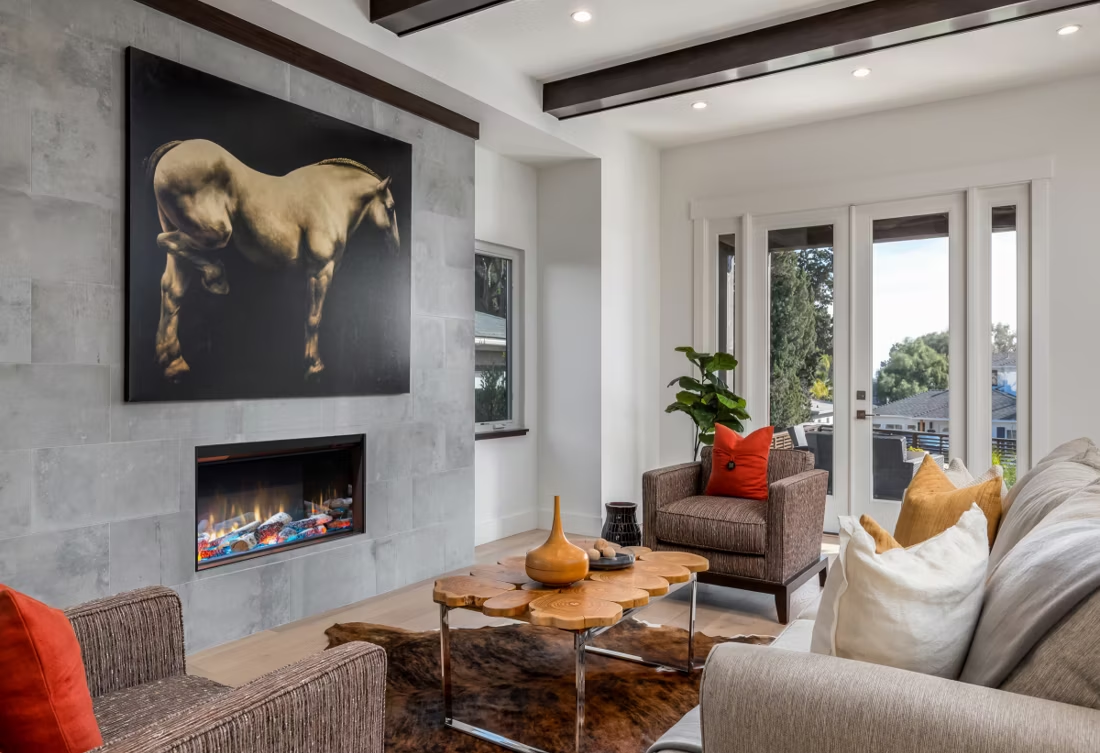
No chimney, no gas line, no venting through a pre-war party wall—just a dedicated circuit and the right unit. Find a trusted local dealer who installs electric fireplaces in buildings like yours.
Every Project Starts From One of These Five Situations
Built for buildings that were never designed for open flame.
Most Manhattan housing stock—pre-war co-ops on the Upper West Side, postwar high-rises in Midtown, brownstone walk-ups in the East Village—was never built to accommodate a modern wood or gas hearth. Decorative fireplaces in older buildings are frequently sealed or capped per FDNY and DOB rules, running a new gas line through a shared wall usually requires board sign-off and a licensed plumber, and true wood burning is rare outside a handful of townhouses with working flues. Electric sidesteps all of it: no chimney, no combustion, no venting requirement, which is why it's become the default hearth option across zip codes from Battery Park City to Washington Heights.
With winters averaging a 28°F low and a moderate winter heating season, Manhattan's climate zone 4A doesn't demand a primary wood or gas heat source the way upstate New York does—most buildings already run steam or forced-air heat. That makes electric fireplaces here primarily a zone-heat and ambiance play, though Con Edison's residential rate (currently around $0.3424 per kWh, among the highest in the country) is worth factoring into how you plan to use one. A unit run mainly on flame-effect mode with the heater off costs pennies a day; running the 1,500-watt heat setting for hours at a stretch adds up fast on a Con Ed bill.
Three steps. No salesperson until you're ready.
Tell us about your project
Your zip code, your situation, and the fuel you're leaning toward—or let the answers point you to one.
See what's actually available
The brands dealers within 100 miles genuinely carry—real options, never a catalog mirage.
Get your dealer & Project Guide
A trusted local dealer, plus the free Project Guide & Parts List that names every component of the job.
Frequently Asked Questions
How much does an electric fireplace installation cost in Manhattan?
A plug-in freestanding or wall-mounted electric fireplace typically runs $300 to $1,500 for the unit itself, with no installation cost beyond hanging it—many renters and co-op owners choose this route specifically because it requires no electrician or board approval. A built-in wall unit or insert into an existing decorative fireplace, wired to a dedicated 20-amp circuit by a licensed NYC electrician, generally runs $800 to $3,500 including labor, with custom mantel surrounds or millwork pushing costs higher. Manhattan labor rates and building access logistics (freight elevator scheduling, work-hour restrictions) tend to add to installed pricing compared to a single-family home elsewhere in the state.
Do I need co-op or condo board approval to install an electric fireplace?
It depends on the building and the unit. A freestanding or tabletop electric fireplace that simply plugs into an existing outlet generally doesn't require board approval since nothing is altered. A built-in unit that requires a new circuit, wall modification, or work inside a shared chase, however, typically falls under your proprietary lease or condo bylaws and needs board sign-off plus an alteration agreement. Many Manhattan co-op boards also require proof of a licensed, insured electrician and a certificate of insurance before work begins—a local dealer who's done installs in your building's neighborhood will usually know what your specific board tends to require.
What permits are needed for an electric fireplace in Manhattan?
Plug-in units need no permit at all. A built-in electric fireplace wired to a new dedicated circuit generally requires an electrical permit filed with the NYC Department of Buildings, pulled by a licensed electrician, along with final sign-off inspection. This is a much lighter lift than the plumbing and combustion-venting permits required for gas fireplaces, which is part of why electric has become the practical default in older buildings where running new gas lines through shared walls is either prohibited or prohibitively expensive.
How much does it cost to run an electric fireplace with Con Edison rates?
At Con Edison's residential rate of roughly $0.34 per kWh, a typical 1,500-watt electric fireplace running on its heat setting costs about $0.51 per hour, or a little over $2.50 for a five-hour evening. Running the same unit on flame-effect only, with the heater switched off, draws closer to 30–100 watts depending on the model—a few cents an hour. Because Con Edison's rate is among the highest in the country, most Manhattan owners use their electric fireplace primarily for ambiance and occasional zone heat rather than as a daily supplemental heat source, especially in buildings where steam heat is already included in maintenance or rent.
What's the best type of electric fireplace for a Manhattan apartment?
For rentals and most co-ops, a freestanding electric stove or a wall-mounted unit is the simplest option—no wiring, no board paperwork, and it moves with you. For owners with an existing decorative fireplace opening (common in prewar buildings on the Upper East Side and in Harlem brownstones), an electric insert sized to the existing firebox restores the look of a working fireplace without touching the sealed flue behind it. Built-in linear electric fireplaces set into a wall or media console work well in newer condo construction where a dedicated circuit can be run during a renovation. A local dealer can measure your specific opening or wall space and tell you what's realistic given your building's electrical capacity.
Electric vs. gas fireplace—which makes more sense in Manhattan?
Gas is far harder to pull off in most Manhattan buildings: it requires a new or existing gas line, direct-vent or B-vent penetration through an exterior wall (often impossible above the first few floors of a high-rise or in a building with landmark facade restrictions), and typically a full board alteration approval plus DOB gas-work permits. Electric requires none of that. For the handful of townhouses and lower-floor units where a gas line and vent penetration are actually feasible, gas offers more realistic heat output and a more authentic flame; for the vast majority of Manhattan apartments, electric is simply the only fuel that clears the building's physical and bureaucratic hurdles.
Why don't more Manhattan apartments have wood-burning fireplaces?
Many older buildings do have decorative fireplace openings with oak, maple, or birch trim original to the construction, but the flues behind them are frequently capped, shared with neighboring units, or simply not rated for solid-fuel use under current FDNY and DOB code. Manhattan is also a designated air quality non-attainment area, which adds another layer of scrutiny to any new combustion appliance. Between the building code realities and air quality considerations, true wood burning is rare here—electric inserts have become the common way to bring a fireplace opening back to life without reopening any of those questions.
Will an electric fireplace actually heat my apartment?
Most electric fireplaces are rated to supplement heat in a single room of 300 to 600 square feet—enough for a living room or bedroom in a typical Manhattan layout, but not a substitute for your building's central steam or forced-air system across an entire apartment. Given the city's moderate winter heating season, most owners use their electric fireplace as a zone heater on shoulder-season days when the building heat hasn't kicked on yet, or as visual warmth in a room with no supplemental heat source. If you're trying to heat an unusually large or open loft-style space, ask a local dealer about larger linear units with higher BTU heat output rather than a standard mantel-style unit.
Are electric fireplaces safe for rental apartments and co-ops with shared walls?
Yes—this is one of the main reasons they've become standard in dense Manhattan buildings. There's no open flame, no combustion byproducts, no carbon monoxide risk, and no venting through a shared wall or chase, which eliminates the fire code concerns that apply to gas or wood units in multi-unit construction. Most models include cool-touch glass and automatic shutoff if tipped, and many can run the flame effect with the heater off, which is popular in warmer months or smaller studios where extra heat isn't wanted. That said, always plug directly into a wall outlet rather than an extension cord or power strip, and avoid overloading a circuit shared with other high-draw appliances in an older apartment's electrical panel.
Can I put a TV above my fireplace?
Yes—with an asterisk. Fireplaces are hot and TVs don't like heat. Either put a mantel between them to deflect rising warmth, or choose a fireplace with heat-management technology that creates a cool zone on the wall above—the wall stays around 125 degrees, barely warm, while the room still gets full heat. If you like clean lines and don't want a mantel, heat management is the answer.
Does an electric fireplace need a vent or chimney?
No—that's its superpower. An electric fireplace needs a wall and an outlet, period. No vent pipe, no gas line, no clearances to design around, which is why it works in bedrooms, offices, apartments, and walls where venting a gas or wood unit would be impractical or impossible. Installation is typically the simplest and least expensive of any fireplace type.
How much should I budget for a fireplace?
For an average home—covering the fireplace, the vent pipe, and basic installation—a budget between $3,900 and $5,500 gives you a lot of options across wood, gas, and pellet. By the time you add finish work, gas line, and electrical, the average complete installation lands between $5,000 and $12,000 all-in. In a remodel or new build, a good rule is to put about 2.5% of the total project cost toward the fireplace.
Can a fireplace actually lower my heating bill?
Yes—by creating a comfort zone. A furnace heats every square foot of the house just to warm the one room you're in; a gas fireplace on low burns roughly a sixth of the gas a typical furnace does. Set the furnace around 55–60 degrees as a baseline, then heat the rooms your family actually uses. Families who heat this way commonly save $20–$60 a month.
Nearby Dealers
Hearth shops serving Manhattan and the surrounding area. Every listing shows whether it is a WhyFire partner, a dealer we have verified as authorized for the brands we recommend, or a local business carrying hearth products. No manufacturer pays for placement. How we verify dealers →
Big Apple Fireplaces
Harris Hearth And Home
D & D Design Center
All Shore Appliance
Flue Tech
Costello's Hearth & Spa - Garden City Park
Hot Concepts Fireplaces
County Woodstoves Inc
The Valley Fireplace
Mcnamara Fireplace And Stove
L&r Fireplace & Barbecue
Westchester Fireplace
Kjb Fireplaces
Light N Grid
Fireplace And Outdoor Living
Electric Service in Manhattan
An electric fireplace's heater draws about 1,500 watts—pennies per hour at local rates.
Consolidated Edison Co-Ny Inc
Find your electric fireplace in Manhattan.
Tell us about your apartment, co-op, or brownstone and we'll match you with a trusted local dealer and send over your free Project Guide & Parts List—the exact unit, mounting or insert parts, and electrical requirements for your space.
Find Your Fireplace →