
Pellet heat built for Livingston County's long winters.
Steady, automated warmth for Genesee Valley farmhouses and Geneseo-area homes—from Mount Morris to Dansville to Avon. Find the right pellet stove or insert, and get matched with a trusted local dealer.
Every Project Starts From One of These Five Situations
Reliable heat that doesn't need tending every hour.
Livingston County sits in the Genesee River Valley of western New York, anchored by Geneseo—home to SUNY Geneseo—and farm towns like Mount Morris, Dansville, Avon, Nunda, Livonia, and Caledonia. At climate zone 5A with average winter lows near 18°F, the county's winters run comparable in length to Madison, Wisconsin, though usually a few degrees milder. That's a long stretch of cold for the county's mix of older farmhouses, ranch homes, and newer construction spread across rolling hills and open valley farmland.
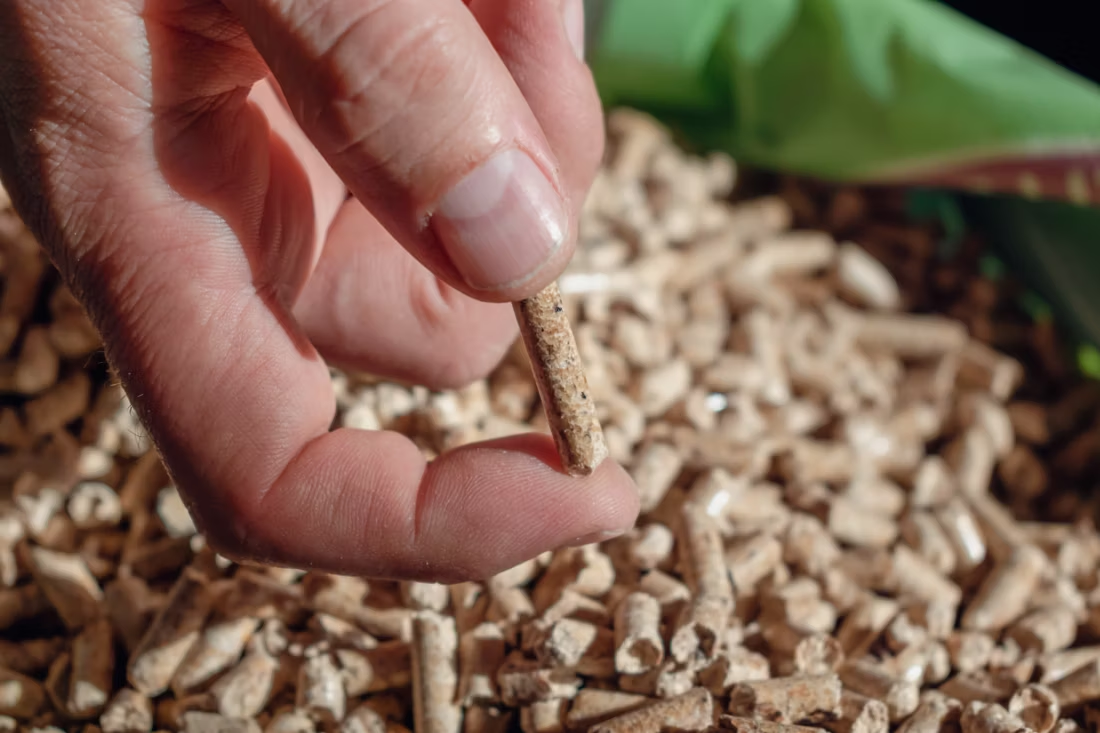
For a lot of Livingston County households—especially those on rural routes without easy fuel-oil delivery access or looking to supplement an aging furnace—a pellet stove offers something wood can't: consistent, thermostatically controlled heat without the daily work of splitting and stacking cordwood. Regional pellet brands like Energex, Hamer Pellet Fuel, and Greene Team Pellet Fuel are all produced within a reasonable drive of the county, using local hardwood byproduct from the oak, maple, birch, and ash that fill Genesee Valley woodlots. And with no air quality restrictions or burn-ban days on record in the county, pellet stoves here run on their own schedule all winter long.
Three steps. No salesperson until you're ready.
Tell us about your project
Your zip code, your situation, and the fuel you're leaning toward—or let the answers point you to one.
See what's actually available
The brands dealers within 100 miles genuinely carry—real options, never a catalog mirage.
Get your dealer & Project Guide
A trusted local dealer, plus the free Project Guide & Parts List that names every component of the job.
Frequently Asked Questions
How much does a pellet stove installation cost in Livingston County?
Most pellet stove and insert installations in the Genesee Valley run in the neighborhood of $3,500 to $6,500, depending on the unit, whether you're venting through an existing masonry chimney or running new PL-vent through a wall, and whether any hearth pad or floor protection work is needed. A pellet insert dropped into an existing fireplace using a stainless liner tends to land toward the lower end of that range; a freestanding stove in a room without existing venting—common in older Livingston County farmhouses—runs a bit higher once wall penetration and venting materials are factored in. A local dealer can give you a firm number after seeing your space.
What size pellet stove do I need for my Livingston County home?
Sizing depends on square footage, ceiling height, and how well-insulated the home is—and Livingston County has a lot of variation here, from tight newer construction around Avon to drafty 1800s farmhouses outside Nunda and Springwater. As a rough guide: stoves rated for 1,000 to 1,500 square feet handle a single large room or open living area, while units in the 1,800- to 2,500-square-foot range can carry a modest-sized whole home as primary or near-primary heat. Older, less-insulated farmhouses typically need to size up a notch compared to a newer home of the same square footage. A local dealer will walk your space and size the unit based on your actual layout rather than square footage alone.
Where can I find certified pellet stove installers near me?
Look for installers with NFI (National Fireplace Institute) pellet certification—it specifically covers pellet appliance venting, clearances, and hopper/auger systems, which differ from wood stove installs. Hearth dealers serving Livingston County typically cover the whole county from a base in Geneseo, Avon, or nearby Rochester-area shops, with a modest travel charge for more remote addresses out toward Nunda or Springwater. Since pellet stoves involve an electrical hookup for the auger and blower motor in addition to venting, it's worth confirming your installer handles both pieces rather than subcontracting the electrical work separately.
What's the difference between a pellet stove and a pellet insert?
A pellet stove is a freestanding unit that sits on a hearth pad and vents through a wall or existing chimney—it can go almost anywhere in the house with the right clearances. A pellet insert is built to slide into an existing masonry fireplace opening, turning an old wood-burning fireplace into a high-efficiency, thermostat-controlled heat source using the same chimney with a liner. For Livingston County's older farmhouses that still have a working masonry fireplace, an insert is often the simpler retrofit. Homes without an existing fireplace, or newer construction, are usually better matched to a freestanding stove.
Do I need a permit to install a pellet stove in Livingston County?
Yes—a building permit is generally required for a new pellet stove or insert installation, issued through the code enforcement office of the town or village where you live rather than a single countywide office, since Livingston County is made up of individual towns like Geneseo, Avon, Mount Morris, and Dansville, each with its own code enforcement officer. Most hearth dealers handle the permit paperwork as part of the installation, so you typically don't have to track it down yourself. There's no burn-ban or air-quality permit to worry about day-to-day—Livingston County has no reported air quality non-attainment issues, so pellet stoves run freely through the winter.
What's the best pellet stove for Livingston County's climate?
With average winter lows around 18°F and a heating season that stretches from October into April, look for a pellet stove with a large-capacity hopper—40 to 80 pounds—so you're not refilling multiple times a day during a cold stretch. Brands like Harman, Lopi, and Enviro build units designed for extended, unattended burn cycles, which matters if you're running the stove as a primary heat source in a farmhouse rather than just supplemental warmth in one room. Look for a model with a battery backup or DC-compatible blower too, since pellet stoves rely on electricity to run the auger and combustion blower—worth planning for given the occasional winter power outage in rural parts of the county.
Where can I buy pellet fuel in Livingston County?
Regional pellet brands including Energex, Hamer Pellet Fuel, and Greene Team Pellet Fuel are widely stocked at hearth dealers and farm supply stores throughout the Genesee Valley, and all are produced within trucking distance of the county using hardwood sawmill byproduct. Pellets typically run in the $5 to $6.50 per 40-pound bag range, or somewhat less per ton when bought by the pallet—roughly 50 bags—which is the more economical way to buy if you have dry storage space in a garage or barn, not uncommon on Livingston County's farm properties. Buying early in the fall, before the first cold snap drives up local demand, is the standard advice from dealers here.
How often should a pellet stove be serviced?
Plan on a full professional cleaning and inspection once a year, ideally at the end of burn season or before it starts back up in the fall. Pellet stoves need the burn pot, exhaust venting, and combustion blower cleaned out—ash and clinker buildup is different from wood-stove creosote but just as important to stay on top of for efficient, safe operation. Homes running a pellet stove as primary heat through a full Livingston County winter often need a mid-season ash removal and glass cleaning as well, which most owners handle themselves between professional service visits.
Pellet stove vs. wood stove—which is right for my Livingston County home?
Wood stoves work without electricity—a real advantage during a winter power outage in the rural stretches of the county—and pair well with the oak, maple, birch, and ash common in local woodlots, if you're willing to cut, split, and season your own supply. Pellet stoves trade that self-sufficiency for convenience: load the hopper, set the thermostat, and let the auger do the rest, with less ash and no chimney creosote to manage. For a lot of Livingston County households juggling farm work or off-property jobs, the lower daily time commitment of a pellet stove tips the decision, while households that already have access to a woodlot and want backup heat that doesn't depend on the grid often lean wood. Local dealers carry both and can walk you through the trade-off for your specific home.
Why is a fireplace insert so efficient?
An insert does two things: it seals the chimney completely, so you stop losing air you already paid to heat, and it radiates warmth into the room through the firebox and glass. Most add a heat-exchange fan that pulls cool room air underneath, wraps it around the hot firebox, and pushes it back out warm. Your home is more efficient before you've even lit the first fire.
How often does a pellet stove need cleaning?
A clean pellet stove is a happy pellet stove. Plan on cleaning the burn pot about once a week when you're burning regularly—ash and clinkers gum up the air holes just like a pellet barbecue. Most pellet stove problems trace back to skipped cleaning that nobody explained up front. Some designs make it easy with a trapdoor burn pot: pull a lever and the gunk drops into the ash pan.
Can a fireplace actually lower my heating bill?
Yes—by creating a comfort zone. A furnace heats every square foot of the house just to warm the one room you're in; a gas fireplace on low burns roughly a sixth of the gas a typical furnace does. Set the furnace around 55–60 degrees as a baseline, then heat the rooms your family actually uses. Families who heat this way commonly save $20–$60 a month.
How much should I budget for a fireplace?
For an average home—covering the fireplace, the vent pipe, and basic installation—a budget between $3,900 and $5,500 gives you a lot of options across wood, gas, and pellet. By the time you add finish work, gas line, and electrical, the average complete installation lands between $5,000 and $12,000 all-in. In a remodel or new build, a good rule is to put about 2.5% of the total project cost toward the fireplace.
Stove and Fireplace Dealers in Livingston County
Pellet Brands Stocked Around Livingston County
Manufacturers will point you to the nearest stocking dealer.
Find your pellet stove in Livingston County.
Tell us a bit about your home and we'll match you with the right pellet stove or insert, plus a free Project Guide & Parts List—your recommended local dealer, the exact parts including the vent kit, and a plan built for your Livingston County home.
Find Your Fireplace →