
Pellet Heat Is Rare Here—But Not Impossible.
Pellet stoves aren't common in Huntington Station's gas- and oil-heated suburbs, but a small number of homeowners install them for supplemental warmth, ambiance, or a finished basement retreat. We'll help you find out if one makes sense for your house.
Every Project Starts From One of These Five Situations
A mild coastal climate and suburban density favor other fuels.
Huntington Station sits on the North Shore of Long Island in climate zone 4A, with roughly 5,218 heating degree days and average winter lows around 24°F—moderated by the surrounding waters of Long Island Sound. Compare that to a genuinely wood-and-pellet-heating climate like Burlington, VT, which sees closer to 7,500 HDD and much harder winters: the heating load here simply doesn't push homeowners toward supplemental biomass heat the way it does further north or upstate.
Suffolk County homes are also built and heated differently than rural New England housing stock. Most Huntington Station houses run on natural gas or heating oil furnaces, sit on smaller suburban lots, and often have attached garages or finished basements rather than the mudrooms and woodsheds that make pellet or wood stoves practical elsewhere. Regional pellet brands like Energex, Hamer Pellet Fuel, and Greene Team Pellet Fuel are sold across the broader Northeast, but local demand on Long Island is thin compared to upstate New York or New England—which is exactly why working with a dealer who actually stocks and installs pellet equipment here matters more than it would in a pellet-heavy market.
Three steps. No salesperson until you're ready.
Tell us about your project
Your zip code, your situation, and the fuel you're leaning toward—or let the answers point you to one.
See what's actually available
The brands dealers within 100 miles genuinely carry—real options, never a catalog mirage.
Get your dealer & Project Guide
A trusted local dealer, plus the free Project Guide & Parts List that names every component of the job.
Frequently Asked Questions
Does a pellet stove actually make sense for a home in Huntington Station?
For most Huntington Station homes, natural gas is the more practical choice—it's the standard fuel here, and a gas insert or fireplace delivers instant heat without fuel storage. A pellet stove can still make sense as supplemental heat in a finished basement, den, or family room, especially if you like the lower smoke and easier loading compared to cordwood. It's a smaller-scale project here than in colder climates, and worth a real conversation with a local dealer before assuming it's the right fit.
What does a pellet stove installation cost in Huntington Station?
Because pellet stoves are a niche product on Long Island rather than a mainstream one, pricing varies more by dealer availability than it does in pellet-heavy regions. Nationally, a straightforward pellet stove installation with PL-vent typically runs in the $4,000–$7,500 range depending on the unit and venting path; homes needing a longer vent run or hearth pad work land toward the higher end. Because so few Suffolk County retailers stock pellet inventory, getting a firm local quote from a dealer who actually carries the equipment is the more useful number than a national average.
Will a pellet stove keep my house warm during a Long Island power outage?
Not reliably. Pellet stoves need electricity to run the auger that feeds fuel and the blower that pushes heat into the room—so when PSEG Long Island or LIPA service drops during a nor'easter or hurricane, most pellet stoves shut down along with everything else. Some models offer a battery backup option that keeps the unit running for a limited time, but that's an added cost and not standard equipment. If backup heat during outages is your main concern, a gas fireplace with battery-backed ignition is generally the more dependable choice in this area.
What size pellet stove would a Huntington Station home need?
Given the area's moderate heating load—about 5,218 heating degree days and winter lows around 24°F—most homeowners here are looking at a pellet stove for zone or supplemental heat rather than whole-house heating. A small to medium unit (rated for 800–1,500 sq ft) is usually enough to warm a finished basement, den, or open living area. A local dealer can size it properly based on your room's insulation and layout, which matters more for a supplemental-heat install than a hard square-footage number does.
Where can I buy pellet fuel near Huntington Station?
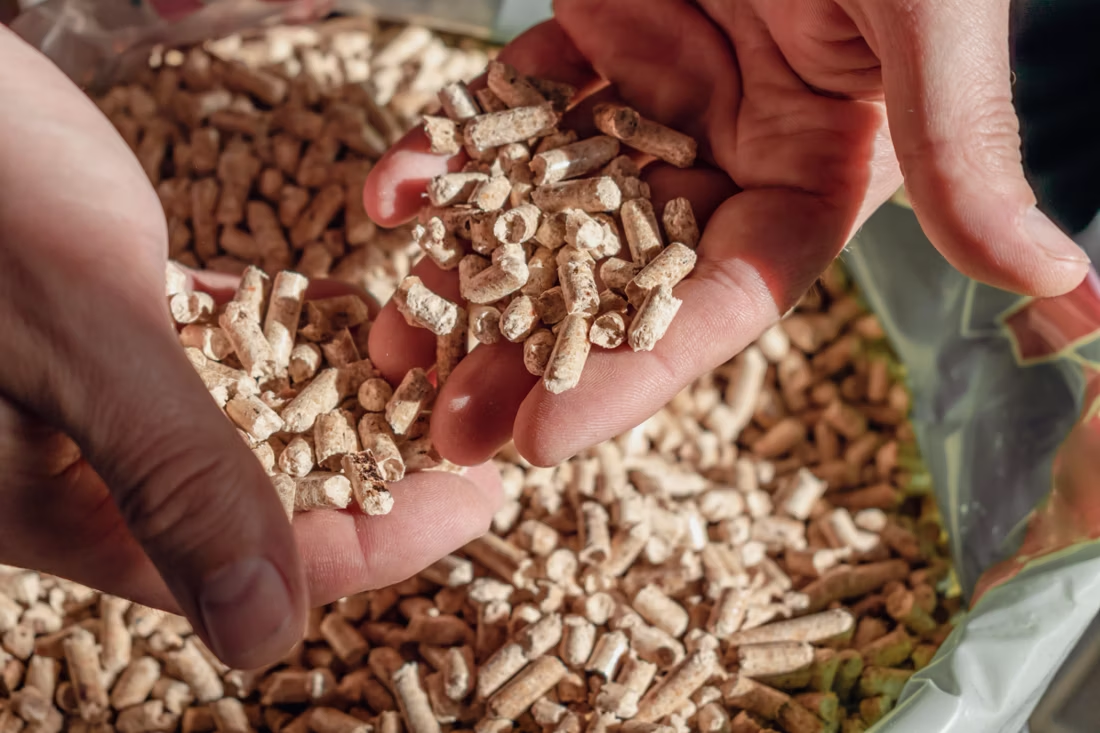
Pellet bags aren't stocked as widely on Long Island as they are upstate or in New England, so supply tends to come through hardware stores, home centers, and heating oil dealers who've added pellets as a side product, along with regional producers like Energex, Hamer Pellet Fuel, and Greene Team Pellet Fuel. Because this isn't a high-volume market locally, it's worth confirming with your installer where they source fuel and whether it's available year-round rather than assuming curbside pallets are as easy to find as they'd be in Vermont or upstate New York.
Do I need a permit to install a pellet stove in Huntington Station?
Yes—installations require a building permit through the Town of Huntington, and the work needs to meet current mechanical and fire code for direct-vent PL pipe. Compared to a masonry wood chimney, pellet venting is a simpler through-wall run, which usually keeps permitting and inspection straightforward. Most established hearth dealers handle the permit filing and inspection scheduling as part of the installation, which is one more reason to go through a dealer who does this regularly rather than a general contractor unfamiliar with the process.
Pellet stove or gas insert—which fits a Huntington Station home better?
Natural gas is the standard, dominant heating fuel in this area, and a direct-vent gas insert or fireplace offers instant on-demand heat with no fuel storage, no hopper to load, and no ash to empty—a better match for how most Long Island households actually live. Pellet stoves offer a more authentic flame and lower ongoing fuel cost per BTU in some markets, but they require regular loading, ash removal, and a steady pellet supply that's harder to source locally. Unless you specifically want the pellet-burning experience, gas is generally the more practical recommendation for this area.
How much does it cost to run a pellet stove with Long Island electric rates?
Long Island's residential electric rates run high—LIPA customers pay around $0.2457/kWh, and Fishers Island Utility customers even more at roughly $0.3817/kWh—but a pellet stove's auger motor and blower are modest draws, typically 100–400 watts, so the electric cost of actually running the unit stays relatively small even at these rates. The real ongoing cost is the pellet fuel itself, not the electricity, though it's worth factoring the higher local kWh rate into your decision if you're weighing a pellet stove against an all-electric heater for the same space.
Why are both wood and pellet stoves considered unusual choices in Huntington Station?
Both fuels are flagged as uncommon here for related reasons: Huntington Station's suburban lot sizes, established gas and oil heating infrastructure, and mild coastal winters don't create the same demand for solid-fuel heat you'd see in a rural or colder market. There's no local cutting-permit culture like you'd find near national forest land, and most homes simply weren't built with the chimney or hearth space that makes wood or pellet appliances an easy retrofit. That said, a handful of local homeowners still choose one or the other for ambiance or supplemental heat—it's just a smaller, more deliberate decision here than in a place where solid-fuel heating is the norm.
Why is my open fireplace making my house colder?
Open fireplaces suck—literally. As the fire burns, it consumes air your furnace already paid to heat and pulls it out through the chimney, so the house is actually colder after the fire goes out than before you lit it. An insert fixes this: it seals the chimney, puts fixed glass across the front, and turns that hole in your house into a real heat source.
How often does a pellet stove need cleaning?
A clean pellet stove is a happy pellet stove. Plan on cleaning the burn pot about once a week when you're burning regularly—ash and clinkers gum up the air holes just like a pellet barbecue. Most pellet stove problems trace back to skipped cleaning that nobody explained up front. Some designs make it easy with a trapdoor burn pot: pull a lever and the gunk drops into the ash pan.
How much should I budget for a fireplace?
For an average home—covering the fireplace, the vent pipe, and basic installation—a budget between $3,900 and $5,500 gives you a lot of options across wood, gas, and pellet. By the time you add finish work, gas line, and electrical, the average complete installation lands between $5,000 and $12,000 all-in. In a remodel or new build, a good rule is to put about 2.5% of the total project cost toward the fireplace.
Does a fireplace add value to my home?
On average, a fireplace adds back to the home about the same amount you spent installing it. Add the monthly savings from heating the rooms you actually use instead of the whole house—often hundreds of dollars a year—and the value case is strong before you even count what a fire does for how your family uses the room.
Nearby Dealers
Hearth shops serving Huntington Station and the surrounding area.
Pellet Brands Stocked Around Huntington Station
Manufacturers will point you to the nearest stocking dealer.
Find Out If Pellet Heat Makes Sense in Huntington Station.
Tell us about your home and we'll give you an honest read on whether pellet heat fits, match you with a trusted local dealer who actually stocks it, and send over a free Project Guide & Parts List with the exact equipment—including the vent kit—for your project.
Find Your Fireplace →