
Keep Your Family Warm and Safe—No Matter What
A wood stove or insert gives Holbrook homes real heat that doesn't depend on LIPA's grid staying up. Find the right unit and connect with a trusted local dealer.
Every Project Starts From One of These Five Situations
Wood heat that doesn't need the grid.
Holbrook sits in the Town of Islip on Long Island, where the Atlantic and Long Island Sound keep winters milder than inland New England—average lows hover around 25°F and the area's winter heating load is well below places like Burlington, VT, whose winters run much colder and longer. That moderate climate means wood is rarely anyone's only heat source here. What it is, reliably, is backup: Long Island's exposure to nor'easters and hurricanes means multi-day power outages aren't rare, and a wood stove keeps a home warm—and a stovetop capable of boiling water—when LIPA lines come down.
Suffolk County has no current air quality non-attainment issues, so wood burning here doesn't face the smoke-advisory restrictions common in western valleys. New York State's Uniform Fire Prevention and Building Code still requires EPA-certified stoves, and the Town of Islip Building Department handles permitting for new installations. One thing that's different from more rural parts of the country: Long Island has essentially no public forest land, so there's no Forest Service cutting-permit system here. Firewood—mostly local oak, maple, birch, and ash—comes from commercial tree services and firewood dealers rather than a self-cut permit.
Three steps. No salesperson until you're ready.
Tell us about your project
Your zip code, your situation, and the fuel you're leaning toward—or let the answers point you to one.
See what's actually available
The brands dealers within 100 miles genuinely carry—real options, never a catalog mirage.
Get your dealer & Project Guide
A trusted local dealer, plus the free Project Guide & Parts List that names every component of the job.
Frequently Asked Questions
How much does a wood stove installation cost in Holbrook?
On Long Island, a wood insert installed into an existing masonry fireplace typically runs $4,000 to $9,000, depending on the unit and whether a new stainless liner is needed for the chimney. A freestanding stove in a home without an existing chimney—which requires new Class A pipe run through the roof or an exterior wall—usually lands higher, often $9,000 to $15,000 once framing and hearth pad work are included. The Town of Islip requires a building permit for new solid-fuel appliances, and most local installers fold that into their quote.
What size wood stove do I need for my Holbrook home?
Because Holbrook's winter lows average around 25°F rather than the single digits, most homes here don't need the largest catalytic stoves built for extreme cold. A medium-sized stove (rated for 1,000–2,000 sq ft) is usually plenty for a typical Long Island cape, colonial, or split-level used as supplemental or backup heat. Homes planning to lean on wood heavily during extended outages—or with open floor plans—may want to size up. A local dealer will walk your space and account for insulation, ceiling height, and how you plan to use it before recommending a specific model.
Where can I find certified wood stove installers near Holbrook?
Look for NFI (National Fireplace Institute) certified installers or CSIA (Chimney Safety Institute of America) credentialed technicians—both indicate real training on solid-fuel clearances and venting, not just general contracting experience. On Long Island, most hearth retailers employ their own certified install crews, which keeps warranty coverage and Town of Islip permit sign-off under one roof. Skipping a certified installer for a wood-burning unit is the most common way homeowners end up with improper clearances or an under-sized liner.
Wood insert or freestanding wood stove—which fits my Holbrook home better?
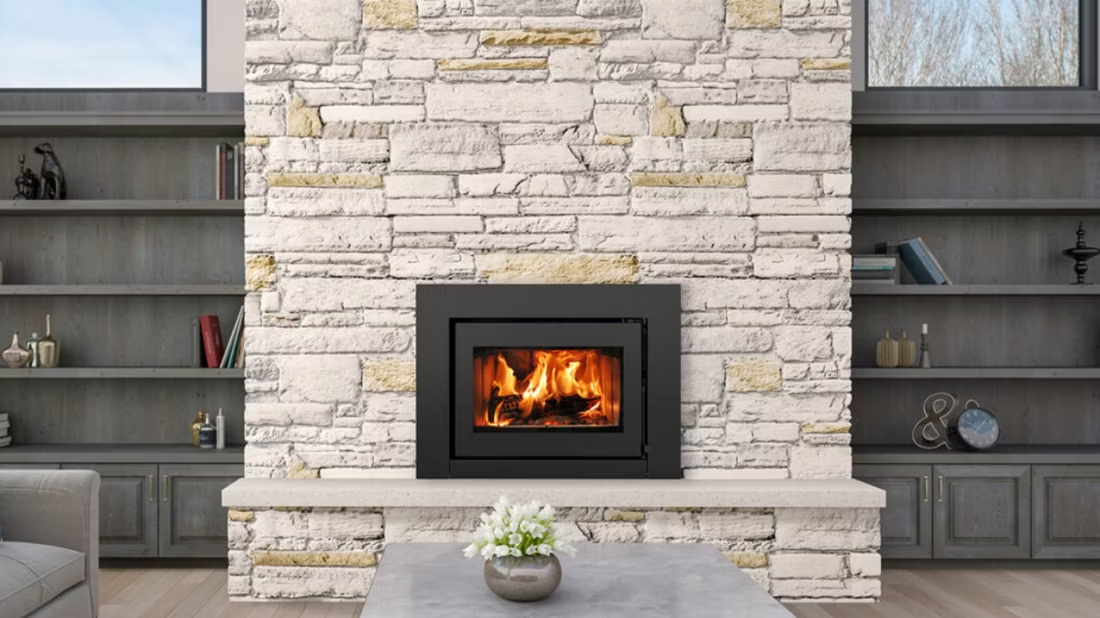
Many Holbrook homes—especially the capes and colonials built through the 1950s–70s—already have a masonry fireplace, and for those, a wood insert is usually the better move: it drops into the existing opening, uses a new stainless liner inside your current chimney, and turns a heat-losing open hearth into an efficient, closed-combustion heat source. Homes without an existing fireplace, or additions and garages being converted to living space, are better candidates for a freestanding stove with new Class A chimney pipe. A local retailer can tell you which your house is set up for during a quick site visit.
Do I need a permit to install a wood stove in Holbrook?
Yes. The Town of Islip Building Department requires a permit for new wood stove and insert installations, and the unit itself needs to meet current EPA emissions standards under New York's Uniform Fire Prevention and Building Code. Suffolk County has no active air quality non-attainment designation, so unlike some western regions, Holbrook doesn't have winter burn-ban advisories to work around—but the permit and inspection step for the installation itself is still required, and most local installers handle the paperwork as part of the job.
What's the best wood stove for Holbrook's climate?
Given Holbrook's relatively mild winters, a solid non-catalytic stove from a brand like Pacific Energy, Jøtul, or Lopi covers most homes well without the premium of a long-burn catalytic unit. Where a catalytic stove earns its keep is storm season: models like Blaze King's can hold a fire 15–20 hours on a load, which matters if you're relying on wood heat through a multi-day post-storm outage rather than just a cold snap. A local dealer can match burn time and heat output to how you actually plan to use the stove—daily supplemental heat versus occasional emergency backup are different sizing conversations.
How often should my chimney be inspected in Holbrook?
CSIA guidelines call for an annual inspection on any wood-burning appliance, and that holds for Holbrook whether the stove is your daily supplemental heat or mostly sits ready for the next nor'easter. Plan the sweep for late summer or early fall, ahead of burning season. Homes that lean on wood heat more heavily through a full Long Island winter—several cords a season—sometimes need a mid-winter check if creosote builds up faster than expected, particularly with less-seasoned local hardwood.
Where can I get firewood delivered in Holbrook?
Since Suffolk County has no public forest land, there's no Forest Service cutting permit system here the way there is out west—firewood on Long Island comes from commercial tree services, landscapers, and dedicated firewood dealers who deliver by the cord. Oak, maple, birch, and ash are the common local hardwoods, and cord prices in the Holbrook area typically run $300 to $400, reflecting Long Island's higher cost of living compared to more rural regions. Buying well-seasoned wood (six-plus months dried) matters here—green oak in particular burns poorly and builds creosote fast.
Wood stove vs. pellet stove—which makes more sense in Holbrook?
Pellet stoves burning regional brands like Energex, Hamer, or Greene Team are convenient—load the hopper, set a thermostat, less ash than cordwood—and several Long Island retailers carry them. But pellet stoves need electricity to run the auger and blower, and LIPA's residential rates here run notably high (around $0.25/kWh), plus the outages that follow coastal storms mean a pellet stove goes cold exactly when you need heat most. A wood stove keeps working with no power at all. For Holbrook homes where storm-driven outages are the main reason for having backup heat, wood is usually the more resilient choice; for households that just want easy, clean supplemental warmth on calm winter nights, pellet is worth a look too.
Why is a fireplace insert so efficient?
An insert does two things: it seals the chimney completely, so you stop losing air you already paid to heat, and it radiates warmth into the room through the firebox and glass. Most add a heat-exchange fan that pulls cool room air underneath, wraps it around the hot firebox, and pushes it back out warm. Your home is more efficient before you've even lit the first fire.
Can a wood stove burn all night?
The right one can. If waking up to a warm house and live coals matters to you, say exactly that when you're shopping—firebox size and burn-rate control determine overnight performance far more than any number on a spec sheet. It's a much more useful question than asking about BTUs.
Does a fireplace add value to my home?
On average, a fireplace adds back to the home about the same amount you spent installing it. Add the monthly savings from heating the rooms you actually use instead of the whole house—often hundreds of dollars a year—and the value case is strong before you even count what a fire does for how your family uses the room.
Should the dealer who sells my fireplace also install it?
Ideally, yes. A fireplace project involves vent pipe, gas line, electrical, and often tile or stone. Hire three or four separate trades and you own the liability and the game of telephone between them. One company selling and installing means one accountable party, start to finish—ask about factory training, on-time completion records, and what happens if an inspection fails.
Nearby Dealers
Hearth shops serving Holbrook and the surrounding area.
Find your wood stove in Holbrook.
Tell us a bit about your home and we'll match you with a trusted local dealer and send over your free Project Guide & Parts List—the exact stove or insert, vent kit, and installer recommended for your Holbrook home.
Find Your Fireplace →