
Warm up Harrison without splitting a single log.
Direct-vent gas heat built for Westchester winters—instant warmth at 22-degree overnight lows, no chimney sweep required. Find the right unit and connect with a trusted local dealer.
Every Project Starts From One of These Five Situations
Clean, code-friendly heat for a dense suburban county.
Harrison sits about 25 miles north of Manhattan at 210 feet in elevation, with a Climate Zone 4A profile: winter lows averaging 22°F and a heating season lasting roughly seven months out of the year—a milder, wetter cold than places like Buffalo, NY, but still enough to run a heating appliance most of the year. Between close lot lines across neighborhoods like West Harrison and Purdys, HOA and co-op restrictions in some of the town's condo developments, and a general preference for low-maintenance heat, wood-burning has largely fallen out of everyday use here. Gas has become the default upgrade for both older colonials with existing masonry fireplaces and newer construction.
Con Edison delivers both electricity and natural gas across most of Harrison's zip codes (10580, 10577, 10604, 10528), which means most homes already have gas service run to the house for cooking, hot water, or furnace heat—extending a line to a fireplace is usually straightforward. A direct-vent gas fireplace or insert gives Harrison homeowners instant, thermostatically controlled heat, the option to run during a storm-related power outage with the right ignition system, and none of the ash, smoke, or chimney maintenance that comes with wood.
Three steps. No salesperson until you're ready.
Tell us about your project
Your zip code, your situation, and the fuel you're leaning toward—or let the answers point you to one.
See what's actually available
The brands dealers within 100 miles genuinely carry—real options, never a catalog mirage.
Get your dealer & Project Guide
A trusted local dealer, plus the free Project Guide & Parts List that names every component of the job.
Frequently Asked Questions
How much does a gas fireplace installation cost in Harrison?
Expect a range of roughly $5,500 to $12,000 in Harrison, which runs a bit above national averages given Westchester County's labor and permitting costs. A direct-vent insert dropped into an existing masonry fireplace that already has a gas line nearby sits at the lower end. A new built-in gas fireplace as part of a renovation—with framing, venting through an exterior wall, and a fresh gas branch line from the Con Edison meter—lands in the middle to upper range. Homes on propane, or those requiring a longer gas line run from the street, tend to land toward the higher end. A local dealer will give you a firm number after seeing the space in person.
Can I convert my existing wood-burning fireplace to gas?
Yes, and it's the most common gas project in Harrison. Many of the town's older colonials and Tudor-style homes were built with a masonry fireplace and chimney that's rarely if ever used for an actual wood fire anymore. A gas insert converts that fireplace into a sealed, high-efficiency heat source using the existing chimney as the vent path (typically with a stainless liner), and the whole project usually runs $4,800 to $9,500 depending on the insert and whether the flue needs relining. It's a popular way to get real heat and flame out of a fireplace that's otherwise decorative.
Does my home already have natural gas, or would I need propane?
Most of Harrison, including the 10580, 10577, and 10604 zip codes, is served by Con Edison for both electric and natural gas, so if your home already uses gas for the furnace, range, or water heater, adding a fireplace typically means running a branch line off existing service. A smaller number of larger properties on the town's outer edges, particularly toward the Purdys and Armonk town lines, are far enough from the gas main that propane tanks are the more practical option. Either fuel works in nearly any gas fireplace model—your installer just sets the correct orifice and regulator for the fuel you have.
Will my gas fireplace still work if the power goes out?
For most models, yes. Nor'easters and summer thunderstorms regularly knock out Con Edison service across Westchester for hours or occasionally days, so this matters here. Units with intermittent pilot ignition (IPI) run on a small battery backup that keeps the fireplace lighting on demand even with the power out—as long as the batteries are fresh. Valor's lineup takes a different approach: the pilot's thermocouple generates its own electricity, so there's no battery to remember at all. Ask your local dealer which ignition system is on any unit you're considering if outage resilience matters to you.
What's the difference between a gas fireplace, gas insert, and gas stove?
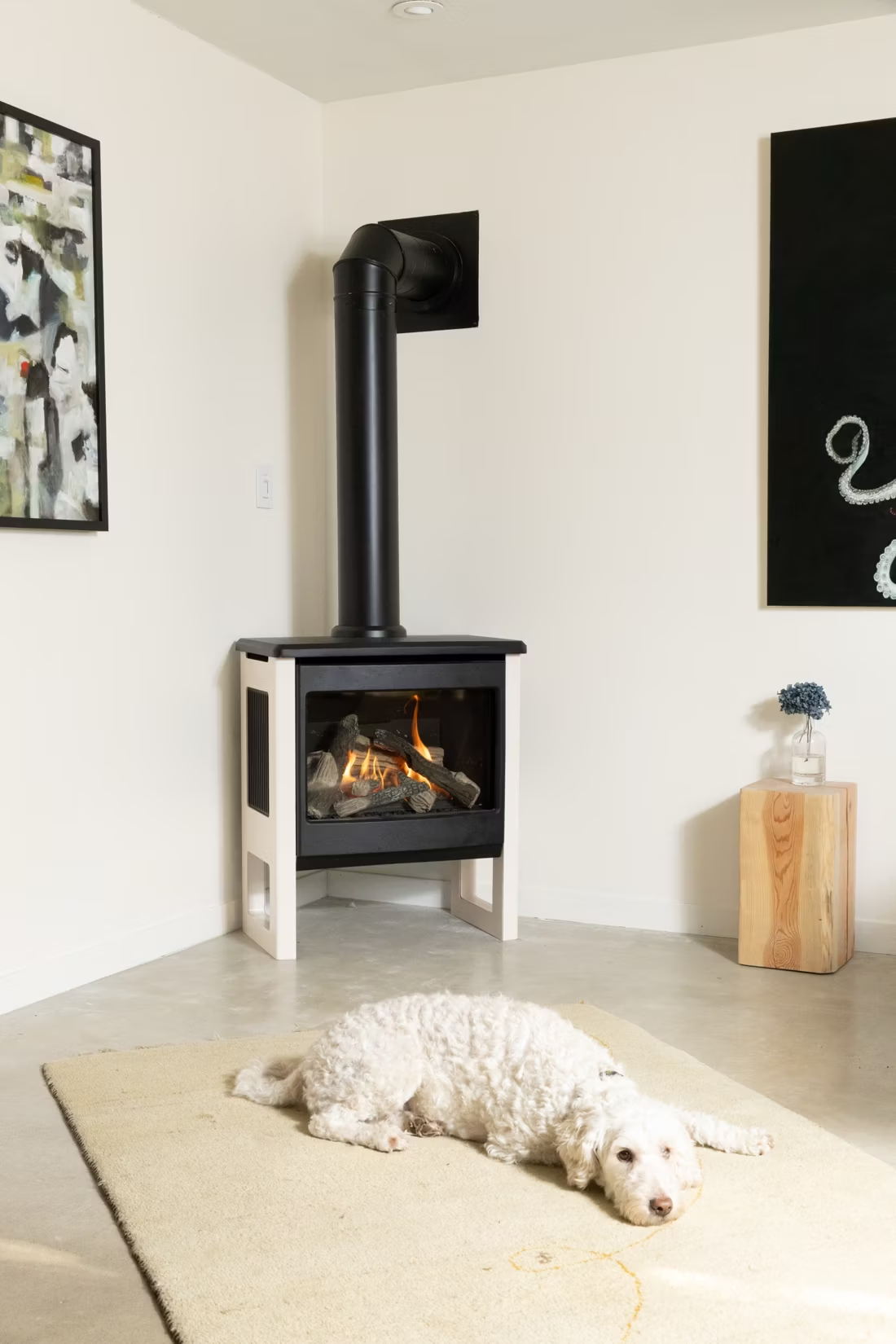
A gas fireplace is a fully built-in unit framed into a wall—the right call for a remodel or new construction without an existing hearth. A gas insert slides into an existing masonry fireplace opening and uses the chimney as its vent path, which fits the many older Harrison homes with a fireplace that's more decorative than functional today. A gas stove is a freestanding cast-iron or steel unit that sits on the floor, more common in a den or finished basement than a formal Westchester living room. For most Harrison homeowners with an existing fireplace, an insert is the straightforward upgrade.
Do I need a permit to install a gas fireplace in Harrison?
Yes. The Town of Harrison Building Department requires a building permit for the fireplace installation and a separate gas permit for any new gas line work, and the gas piping itself has to be run by a licensed plumber or gas fitter. Most established hearth retailers coordinate all of this—the permit, the gas hookup, and the final inspection—as part of the installation, so homeowners generally don't have to manage multiple trades or file paperwork themselves.
What's the difference between vented and vent-free gas fireplaces?
Direct-vent (vented) gas fireplaces draw combustion air from outside and exhaust it back outside through a sealed pipe, keeping combustion byproducts out of the living space entirely. Vent-free units burn gas directly into the room air and rely on oxygen depletion sensors and strict room-sizing rules for safety. Many Westchester County jurisdictions, including Harrison, apply tighter local code restrictions on vent-free installations—particularly in bedrooms—so the large majority of installations here are direct-vent. It's a straightforward choice for most homeowners: direct-vent units are more broadly permitted and don't ask you to weigh any indoor air quality trade-offs.
How often does a gas fireplace need to be serviced?
Plan on an annual inspection, ideally before the heating season ramps up in the fall. A technician checks the burner, pilot assembly, gas connections, and venting, and cleans the glass and interior—a quicker and less involved visit than chimney sweeping for a wood-burning unit, but still important for safe operation. Local gas appliance service providers typically charge $150 to $250 for this annual visit, and it's worth keeping on the same schedule as your furnace tune-up.
Gas fireplace vs. electric fireplace—which makes more sense in Harrison?
Con Edison's residential electric rate runs around 34 cents per kWh, among the highest in the country, which changes the math compared to lower-cost utility areas. An electric fireplace is cheap to install, requires no venting or gas line, and works in a condo or rental where a real flame isn't an option—but running one as a genuine heat source at Con Ed's rates gets expensive fast, and most units are really built for ambiance rather than whole-room heat. A gas fireplace costs more upfront but delivers real BTU output at a lower cost per hour, which matters through a Westchester winter with several months of sub-30-degree nights. For most Harrison homes looking for actual heat rather than just a flame effect, gas wins; electric is the better fit when venting isn't possible or the goal is purely visual.
Can I put a TV above my fireplace?
Yes—with an asterisk. Fireplaces are hot and TVs don't like heat. Either put a mantel between them to deflect rising warmth, or choose a fireplace with heat-management technology that creates a cool zone on the wall above—the wall stays around 125 degrees, barely warm, while the room still gets full heat. If you like clean lines and don't want a mantel, heat management is the answer.
Is my gas fireplace wasting gas?
If it was installed more than 15 years ago, probably. Older gas fireplaces keep a standing pilot light burning all the time, and that little flame can cost a couple hundred dollars a year. Newer models use pilot-on-demand ignition—the pilot lights only when you use the fireplace and goes out when you turn it off.
Does a fireplace add value to my home?
On average, a fireplace adds back to the home about the same amount you spent installing it. Add the monthly savings from heating the rooms you actually use instead of the whole house—often hundreds of dollars a year—and the value case is strong before you even count what a fire does for how your family uses the room.
How much should I budget for a fireplace?
For an average home—covering the fireplace, the vent pipe, and basic installation—a budget between $3,900 and $5,500 gives you a lot of options across wood, gas, and pellet. By the time you add finish work, gas line, and electrical, the average complete installation lands between $5,000 and $12,000 all-in. In a remodel or new build, a good rule is to put about 2.5% of the total project cost toward the fireplace.
Nearby Dealers
Hearth shops serving Harrison and the surrounding area.
Find your gas fireplace in Harrison.
Tell us about your home and we'll match you with a trusted local Westchester County dealer and send over a free Project Guide & Parts List—the exact parts, vent kit, and recommended dealer for your gas fireplace project in Harrison.
Find Your Fireplace →